Right On Hue

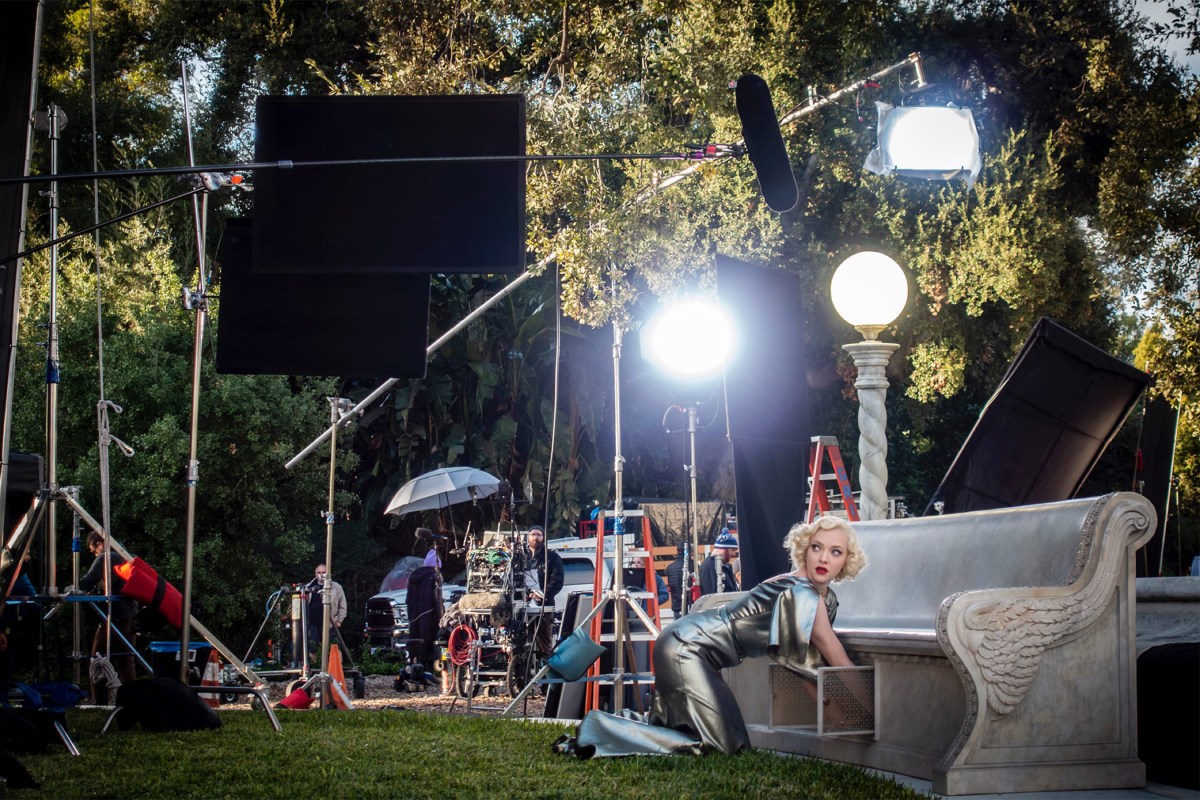
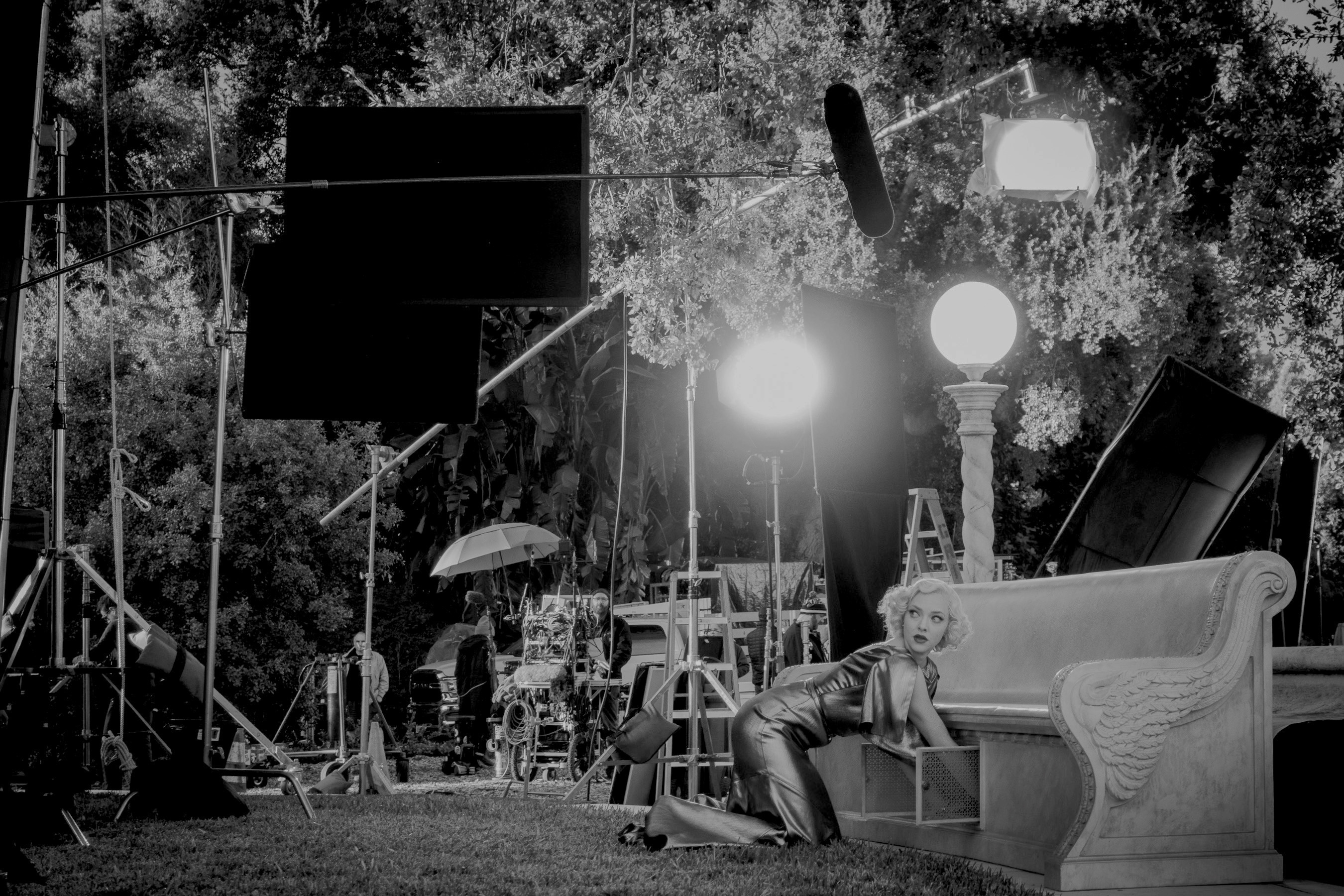
Photo by Nikolai Loveikis

David Fincher’s black-and-white tribute to Old Hollywood took a radically different approach to the role of color in design.

January 29, 2021
Netflix Queue

In the annals of Hollywood, Herman Mankiewicz will forever be remembered as the screenwriter of Orson Welles’s towering classic Citizen Kane, but his impact on the history of cinema doesn’t stop there. Mankiewicz also served as an early, uncredited writer on The Wizard of Oz. His contribution? Suggesting that once Dorothy Gale travels over the rainbow, the film transitions from black and white to glorious Technicolor. “He walked away from that [project] saying, ‘This is all I can come up with,’” laughs director David Fincher. “It might be the greatest special effect in the history of the movies.”

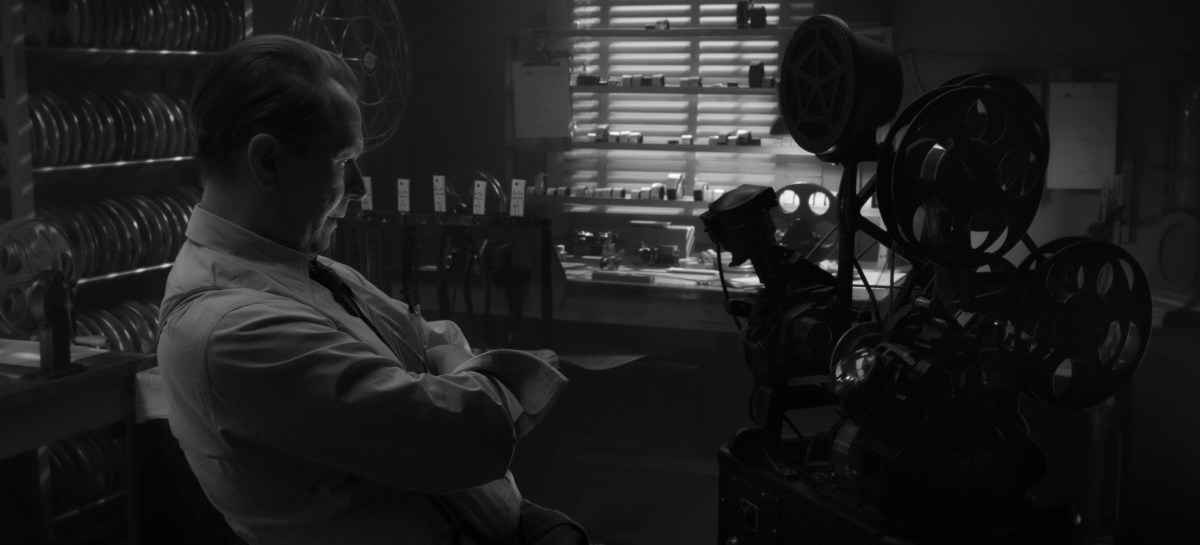
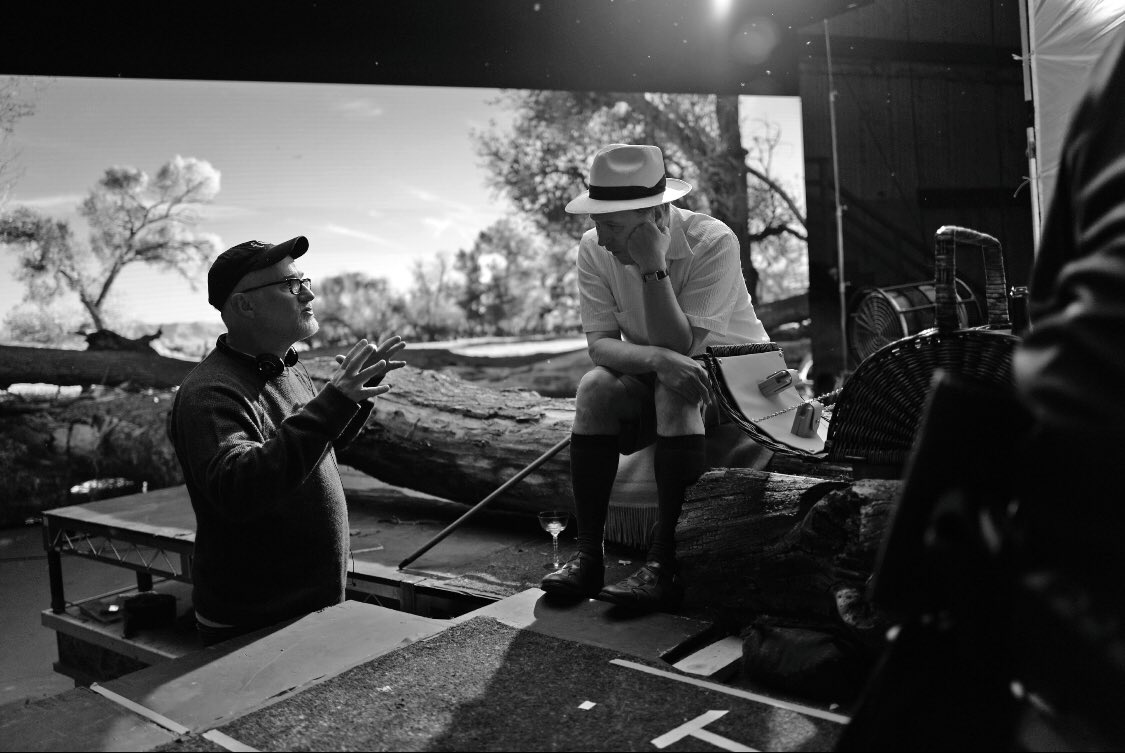
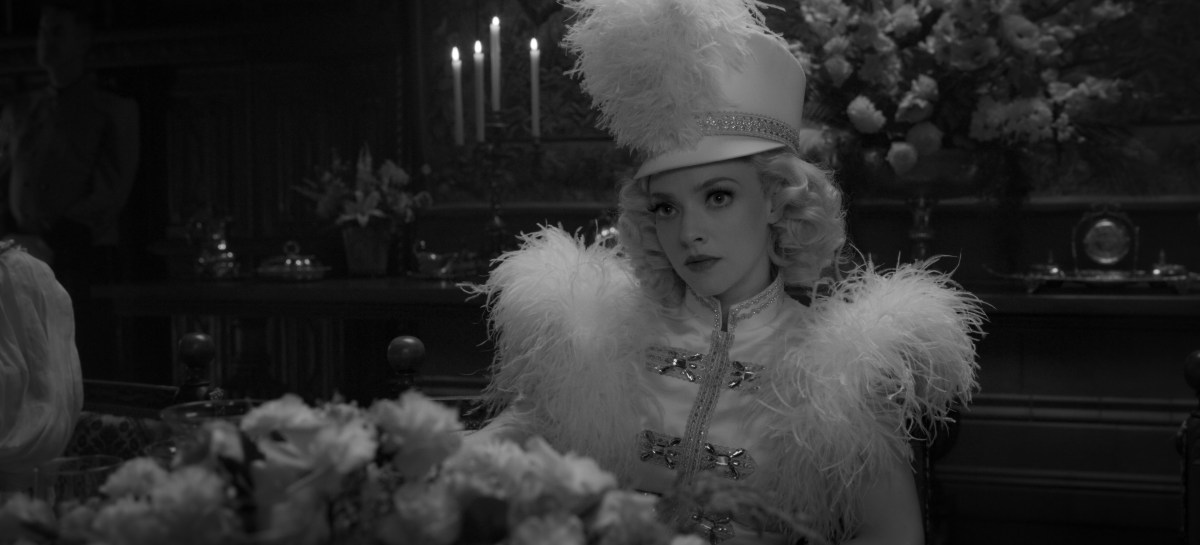
For Mank, Fincher’s backstage drama about the screenwriter’s life and his work on Kane, the director and his creative team journeyed from a world of color to one rendered entirely in black and white, shooting eye-catching sets and costumes with the RED 8K Helium Monochrome camera. That created an interesting artistic puzzle for Fincher and his collaborators to solve. From cinematography and production design to costumes and hair and makeup, each department needed to determine the best way to manipulate color to achieve the proper register of lights and darks onscreen.

“We had to train our senses to see through a lens of black and white,” explains Oscar-winning production designer Donald Graham Burt (The Curious Case of Benjamin Button). “It mandated a palette based on tone and contrast.”

Fortunately, they proved more than up to the challenge.

Read the full article

The Hollywood Reporter: Producers Roundtable

Tatiana Siegel
January 22, 2021
The Hollywood Reporter

Andy Samberg, Dede Gardner, Charles D. King, Ashley Levinson, Marc Platt and Eric Roth on the Streaming Rise Amid COVID and Their Awards Contenders. They also discuss adapting to a year of seismic changes in the film industry: “We started rethinking everything.”

Shepherding a film from a nebulous idea to a locked print is fraught with interruptions and surprises. As such, no profession in Hollywood requires greater dexterity than that of a producer. And unlike any other time in cinematic history, 2020 was a year of overnight transformation amid the novel coronavirus pandemic, leaving producers with no choice but to adapt fast.

Two producers from this year’s roundtable — Judas and the Black Messiah‘s Charles D. King and The Trial of the Chicago 7‘s Marc Platt — saw their theater-bound films take a detour to a streaming platform (HBO Max and Netflix, respectively). Although Eric Roth, who produced David Fincher‘s Mank, was always poised for a streamer release via Netflix for that film, he also experienced the great sweep to HBO Max with the upcoming tentpole Dune, which he wrote. Ashley Levinson, whose Pieces of a Woman and Malcolm & Marie are both in the awards season conversation, oversaw the writing and production of the latter during the COVID-19 lockdown. Minari‘s Dede Gardner, the only female producer with two best picture Oscar wins (for 12 Years a Slave and Moonlight), and Palm SpringsAndy Samberg were the lone two of the group lucky enough to see their films premiere in a packed, mask-less theater (both films made their debuts at Sundance in January 2020).

On Jan. 8, at The Hollywood Reporter‘s invitation, Gardner, King, Levinson, Platt, Roth and Samberg converged via Zoom to discuss the great cinematic reset, this year’s awards season controversies and what they’d fix about Hollywood.

Read the full roundtable

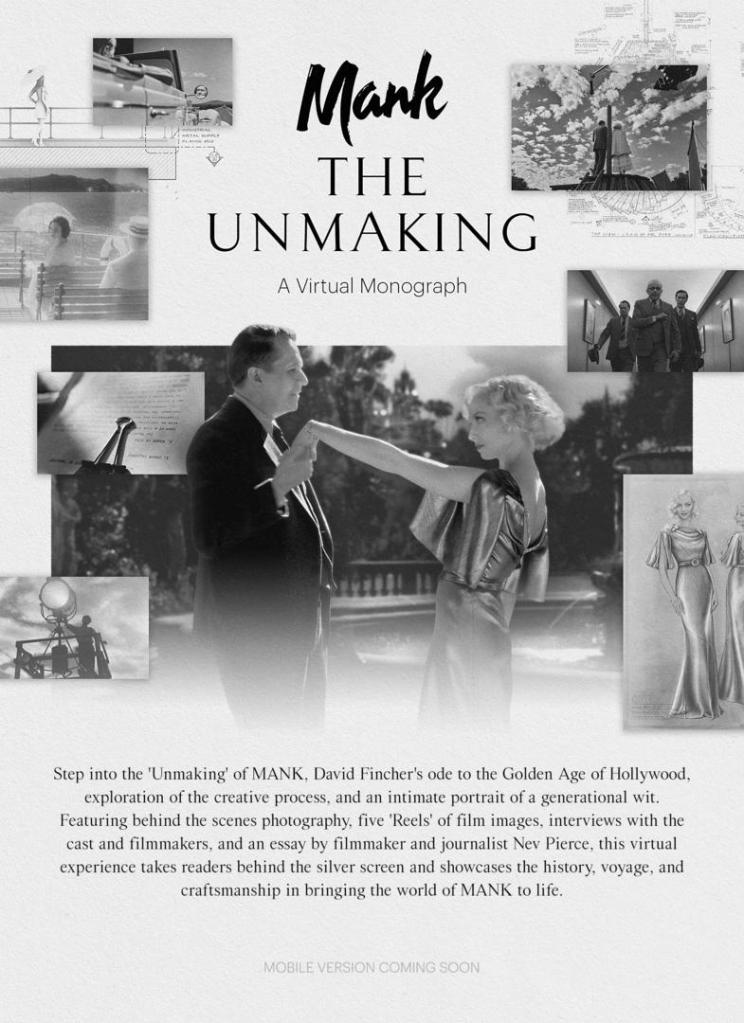
Mank, The Unmaking

January 28, 2021
Netflix

manktheunmaking.com [Old Domain]

mank.aristidebenoist.com

Text by:

Nev Pierce

Photography by:

Erik Messerschmidt
Miles Crist
Gisele Schmidt-Oldman
Gary Oldman
Ceán Chaffin
Nikolai Loveikis

Design and development by:

Watson Design Group, Inc.
Aristide Benoist

Art Of The Cut Podcast: “Mank” Editor Kirk Baxter, ACE

Steve Hullfish (Twitter)
January 27, 2021
Art Of The Cut Podcast (ProVideo Coalition)

The Art of the Cut podcast brings the fantastic conversations that Steve Hullfish has with world renowned editors into your car, living room, editing suite and beyond. In each episode, Steve talks with editors ranging from emerging stars to Oscar and Emmy winners. Hear from the top editors of today about their careers, editing workflows and about their work on some of the biggest films and TV shows of the year.

On this episode of the Art of the Cut Podcast, Steve talks with multi-award winning editor Kirk Baxter, ACE about editing the Netflix film “Mank.” You likely know Kirk from his Oscar winning work on “The Girl with the Dragon Tattoo” and “The Social Network” as well as his Oscar nominated work on “The Curious Case of Benjamin Button.” In addition to his feature film work, Kirk was nominated for Prime Time Emmy’s for “House of Cards” and “Big Love.” All of this just scratches the surface of Kirks filmography, check out his IMDb page for a full breakdown!

This episode of the Art of the Cut Podcast is brought to you by Filmtools.com, Hollywood’s trusted one-stop shop for all things production and post.

Want to read/ listen to more interviews from Steve Hullfish? Check out The Art of the Cut Archive for more than 200 interviews with some of the top film and TV editors of today!

The Art of the Cut podcast is available on:

ProVideo Coalition
Apple Podcasts
Spotify
Anchor
Google Podcasts
Breaker
Pocket Casts
Overcast
Radio Public

If you like the podcast, make sure to subscribe so you don’t miss future episodes and tell an editor friend.

Read the transcription of this interview:

ART OF THE CUT with Kirk Baxter, ACE on editing Fincher’s “Mank”

Steve Hullfish
February 2, 2021
ProVideo Coalition

Mank: Method to the Monochrome

January 26, 2021
Netflix Film Club (YouTube)

Mank director David Fincher, cinematographer Erik Messerschmidt and costume designer Trish Summerville detail the approach to shooting the acclaimed slice of Hollywood history in black and white. How does the absence of color distill the visual storytelling? How do different colors in the costume and production design read when captured in black and white? Learn about all of that and more.

David Fincher & Kent Jones on Mank, Hollywood History, and Filmmaking

Kent Jones
January 27, 2021
Film at Lincoln Center

This week on the Film at Lincoln Center podcast, we’re presenting a special conversation between filmmakers David Fincher and Kent Jones on Mank. Fincher’s first film since his NYFF Opening Night selection Gone Girl follows the 1930s Hollywood screenwriter Herman J. Mankiewicz, played by Gary Oldman, as he develops the screenplay for Citizen KaneMank is now available on Netflix.

This talk was first available to FLC members, who play such a vital role in all we do. Memberships start at just $85 and offer year-round discounts to films and festivals, exclusive invitations to sneak previews, filmmaker conversations, Film Clubs, and much more. If you’re interested in supporting FLC by becoming a member, learn more here.

Listen to the conversation:

Film at Lincoln Center
Apple Podcasts
Spotify
SoundCloud
Stitcher

Composer Roundtable: Pros From ‘Mank,’ ‘Soul,’ ‘Minari’ and More Talk Remote Recording Sessions and Finding Creativity in Isolation

Scott Roxborough
January 26, 2021
The Hollywood Reporter

Film composers may be accustomed to working alone, but they weren’t immune to the tumult of 2020. Six film music specialists came together — virtually — to discuss the key to writing an effective score, even when creatively challenged by the pandemic: “What I really miss is playing music with human beings.”

2020 was a year like no other, so it’s fitting that The Hollywood Reporter’s Composer Roundtable was unlike any that had gone before.

On Jan. 8, six of Hollywood’s leading film composers came together via Zoom, across three continents, to talk shop: Ludwig Göransson followed up his Oscar-winning Black Panther score with a thumping, time-shifting soundtrack to Christopher Nolan’s Tenet; Tamar-kali offered up a dissonant, daring soundscape for Shirley that won praise from the likes of Iggy Pop; Trent Reznor and Atticus Ross had a busy year with work that included the wall-to-wall 1940s orchestral score for David Fincher’s Mank and the ethereal, synthetic sound of Pixar feature Soul; Terence Blanchard, Spike Lee‘s go-to composer, delivered the majestic musical backdrop for the war drama Da 5 Bloods; and Emile Mosseri, who has quickly established himself as one of indie cinema’s most in-demand music makers, created an affecting, ethereal soundscape for Lee Isaac Chung‘s Minari.

In a lively discussion, this eclectic group of film music veterans and newer talents who find themselves — and their music — in the awards-season conversation discussed the art and craft of film composing, the value of defying expectations and how each of them would score 2020.

Read the full roundtable

Trent Reznor and Atticus Ross (‘Mank,’ ‘Soul’ composers): Working with David Fincher and Pete Docter because they are ‘geniuses’

Chris Beachum
January 26, 2021
Gold Derby

2020 was certainly a tough year for everyone, but there were some bright spots for Trent Reznor and Atticus Ross. The composer duo won their first Emmy Award in September for “Watchmen.” Their band Nine Inch Nails was inducted (although virtually) into the Rock and Roll Hall of Fame in November. And the end of the year brought the film releases of “Mank” for Netflix and “Soul” for Disney/Pixar, for which they composed the score of each.

In our recent webchat (watch the exclusive video above), Reznor says, “When I heard you say that about the list of accomplishments this past year, set against the backdrop of the brutality and relentlessness of the pandemic and politically what’s happening. As parents trying to keep our kids safe and sane and happy and some sense of normality, it has been a weird juxtaposition of accolades set against this year we’d all like to put in the rear-view mirror.”

Reznor and Ross won an Oscar for Best Original Score on their first feature film (“The Social Network,” 2010). They have teamed with that movie’s director, David Fincher, several times, including for “Mank,” the behind-the-scenes story of writer Herman J. Mankiewicz and his work on the classic 1941 film “Citizen Kane.” They have collaborated for the first time with Pixar chief Pete Docter on his animated feature “Soul,” about a jazz musician who wants to navigate his way back to his body from the afterlife.

On working with two such distinctive and varied directors, Reznor adds, “The similarities of Pete and David are that they’re both geniuses, different styles of genius, but they’re both the very best at what they do. Being around them is… that we thrive on that. We’re searching out excellence because we are inspired by it.”

The Next Best Picture Podcast: A Behind The Scenes Look At “Mank”

Will Mavity
January 26, 2021
Next Best Picture

Mank” is one of 2020’s most technically dazzling films. David Fincher‘s perfectionism transported us back to the Golden Age of Hollywood to tell us the story of Academy Award winning screenwriter Herman Mankiewicz (played by Gary Oldman) and the film has been hailed as one of the year’s best, most recently being rewarded as one of the Top 10 films of the year by the American Film Institute (AFI). Many members from the film’s production were kind enough to give us a behind-the-scenes look into the making of the film including Academy Award-nominated sound designer Ren Klyce, Costume Designer Trish Summerville & Co-Producer/VFX Producer, Peter Mavromates.

The Next Best Picture Podcast is proud to be a part of the Evergreen Podcasts Network. Listen to the podcast:

NextBestPicture.com
Apple Podcasts
Spotify
SoundCloud
Google Podcasts

Megaphone
Stitcher
TuneIn
PlayerFM
Acast
Castbox

Please take a moment to review us on Apple Podcasts here. And if you’re feeling generous, you enjoy what you hear and want to hear more, please help support us on Patreon for as little as $1 a month and you’ll receive some exclusive podcast content.

Six directors on the illusion of control and ‘the pitiless exposure of your weaknesses’

David Fincher (Frank Ockenfels/Netflix)

“The notion that any one person has control over 90 people who are playing dress-up is the greatest fallacy of our profession.”

Mark Olsen
January 26, 2021
Los Angeles Times

Control. When six film directors got together virtually for The Envelope Roundtable in December, the issue of control — both when you have it and when you don’t — came up again and again.

Regina King, the Oscar-, Emmy– and Golden Globe-winning actress who makes her feature debut as director with One Night In Miami,” a fictional telling of the real-life night that Malcom X, Cassius Clay, Jim Brown and Sam Cooke spent together in a motel room, described herself as “a control enthusiast.”

In explaining how she moved from making Nomadland,” a stripped-down road movie starring Frances McDormand, to the upcoming Marvel action ensemble “Eternals,” Chloé Zhao said she reflected on an older interview with David Fincher, where he spoke about balancing between having a plan and allowing things to happen on set.

For his part, the notoriously exacting Fincher, director of Mank,” the story of how Herman J. Mankiewicz came to write the script that would become “Citizen Kane,” spoke candidly about how control is an illusion, “the greatest fallacy of our profession,” whereas Aaron Sorkin, director of the 1960s historical drama “The Trial of the Chicago 7” and an Oscar winner for his screenplay to Fincher’s own “The Social Network,” admitted how intimidated he was to be on a panel as a director alongside his former collaborator.

The British Paul Greengrass, who made the elegiac post-Civil War-set western News of the World,” added that for him, “the pitiless exposure of your weaknesses is the essence of directing.”

When asked how he came to a particularly bold creative decision in making Da 5 Bloods,” his drama about Black soldiers who fought in Vietnam, Oscar winner Spike Lee simply referred to trusting his four decades of moviemaking experience.

All six filmmakers also shared their thoughts on the future of the film industry and how they can’t wait for audiences to return to movie theaters.

Watch and read the full roundtable

Six directors tackle the idea (or is it a myth?) of controlling a film set

Oscar nominated director David Fincher on resurrecting his late father’s screenplay for “Mank.”