Filmmaking Masterclass: Recreating THE KILLER with Anamorphic DZO PAVO Lenses

June 21, 2024
Media Division

With The Killer, David Fincher created a masterpiece of cinematic storytelling.

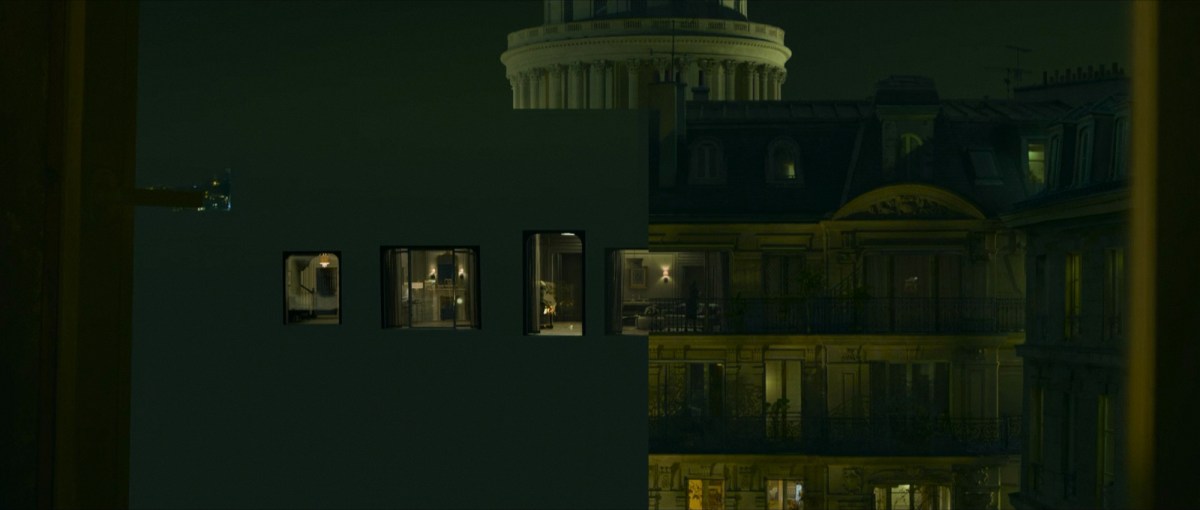
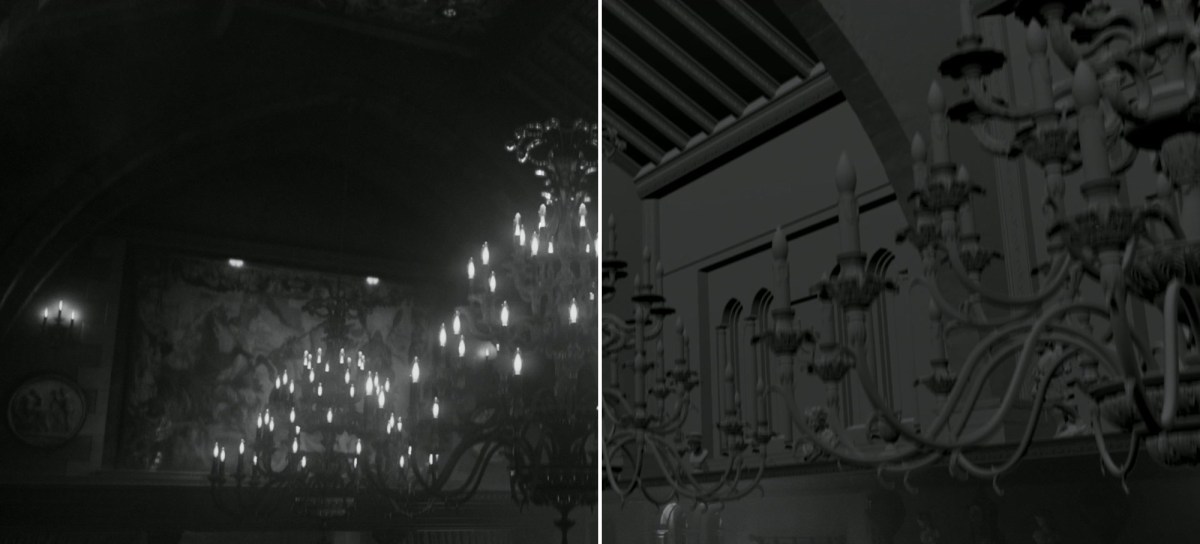
In the first act – the Paris hit – Fincher and his team combined three sets in post. They also added typical artifacts like horizontal flares and distortions to give The Killer an anamorphic vibe.

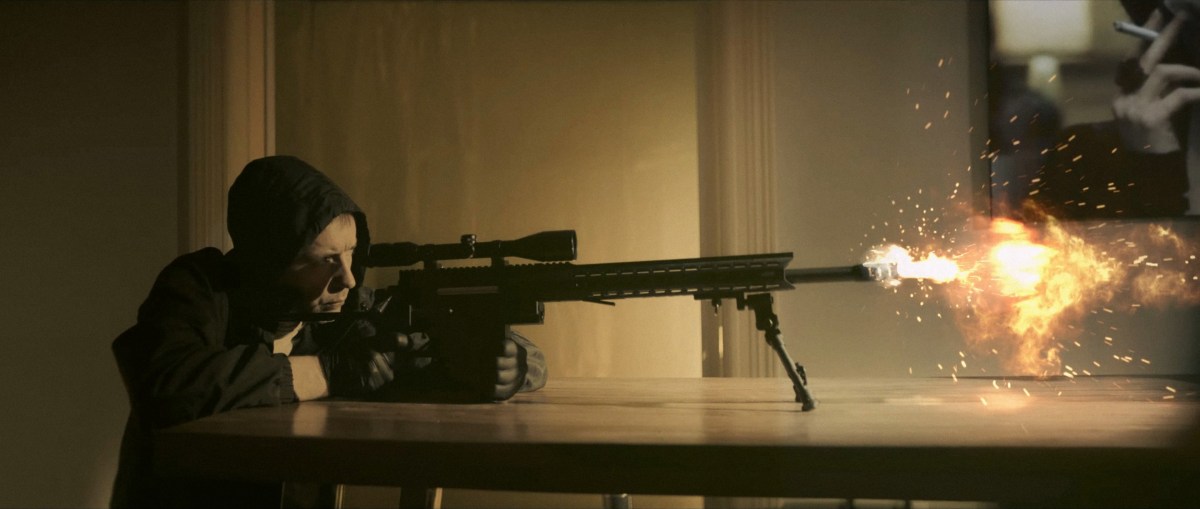
To learn and explore, we set out to recreate the climax of the first act of The Killer, BUT to do it for real: One real location and real anamorphic lenses. We even developed a way to do film through a real rifle scope – anamorphic of course.

This was possible as DZO just introduced three new focal lengths to their awesome PAVO lineup of 2x anamorphic lenses, a 135mm, a 180mm, and a 65mm Macro. This new focal length and the general short minimum focus distance of the PAVO made them the ideal companions to shoot our short.

We take you behind the scenes, share our experiences with you, and, of course, show you the result: “The Killers” gives the original a slightly different spin…

Disclaimer: We collaborated with DZOfilm and got the full PAVO set of 9 lenses to shoot our short. As always, we strive to give you our honest opinion based on our experience and tests.

Please join the ranks of the Media Division: YouTube, Instagram, Facebook

Links to Collaborators and Partners: Morty Films, Chris Karibu (behind the scenes footage), Matthias Herrmann & Valentin Loustalet (location visit in Paris), Tim from Lemac Film and Digital (rentals for the Fujinon images), Artemple (VFX Breakdown).

00:00: Intro & Contents
02:48: The Killer / A Cinematic Masterpiece
03:44: Subjective Camera Movement
05:00: Subjective Sound Design
05:41: Subjective Edit
06:25: Paris: A Real Fake Location
10:08: Faking the Anamorphic Look|
12:14: Reimagining The Killer
15:49: Gear: The Lenses
23:18: The Rifle Scope
25:01: Gear: The Cameras
27:45: Feature: The Killers
31:08: A Second Killer & Verdict
33:16: Thank You
34:02: Member Shout Out

Not a Long Tail, Not by a Long Shot, for “The Killer”

Trevor Hogg
February 20, 2024
VFX Voice (VES)

Producer and long-time David Fincher collaborator Peter Mavromates extend their partnership in The Killer where an assassin seeks revenge after a botched assignment. The Netflix feature consists of 900 digitally-augmented shots that range from shortening the tail of a dog to CG airplanes, tasked to a vendor list that includes Ollin VFX, Artemple-Hollywood, Savage VFX, and Wylie Co. as well as an in-house team. “Visual Effects Compositor Christopher Doulgeris and I will go into the color bay with [Colorist] Eric Weidt and talk about some issue that we had,” Mavromates explains. “Even sometimes if it’s an outside vendor, we’ll focus to help problem-solve. It’s this wonderful and fluid atmosphere, and it works for David Fincher because he’s always got ideas flowing. He doesn’t want to be on a clock at a facility where you’ve got from 2 p.m. to 5 p.m. and then it’s overtime. There’s none of that. David will walk the halls and stop in on people to check on stuff.”

Read the full profile

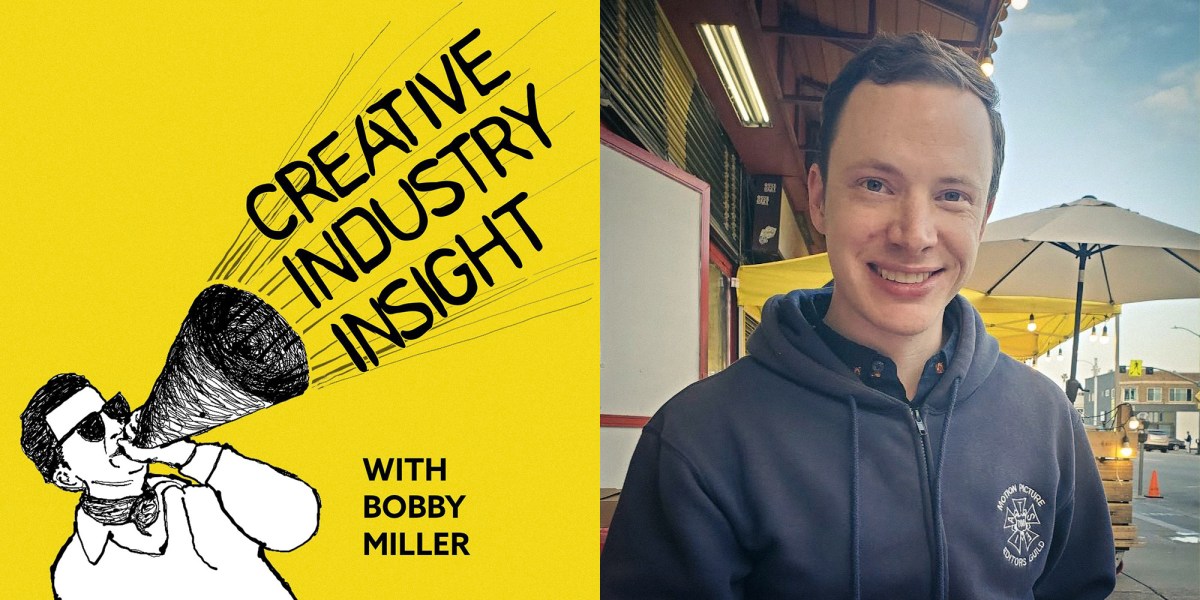
Creative Industry Insight Podcast: “The Killer” with VFX Editor Casey Curtiss

Bobby Miller
January 11, 2024
Creative Industry Insight

In this episode, we welcome VFX Editor Casey Curtiss who joins us to talk about his work on The Killer. Casey walks us through what the role of a VFX editor entails and how those skills were used on The Killer.

Listen to the podcast:

Apple Podcasts
Spotify

Executive Produced by Daniel Miller and Monika Ditton. Artwork Designed by Piotr Motyka. Music by ELPHNT.

Follow Creative Industry Insight on Ex-Twitter and Instagram.

Artemple: The Killer VFX Breakdown

November 24, 2023
Artemple – Hollywood

David Fincher‘s Digital Effects Finesse in The Killer.

Watch the VFX Breakdown on YouTube

Visual Effects By: Artemple – Hollywood LLC

Visual Effects Supervisor: Wei Zheng
Digital Production Manager: Alexander Beale
Lead Digital Artists: Kyle Hause, Zach Miller
Digital Artists: Greg Szafranski, Anthony Davis, Yusei Uesugi, David Sudd, Derek Bird

In Place

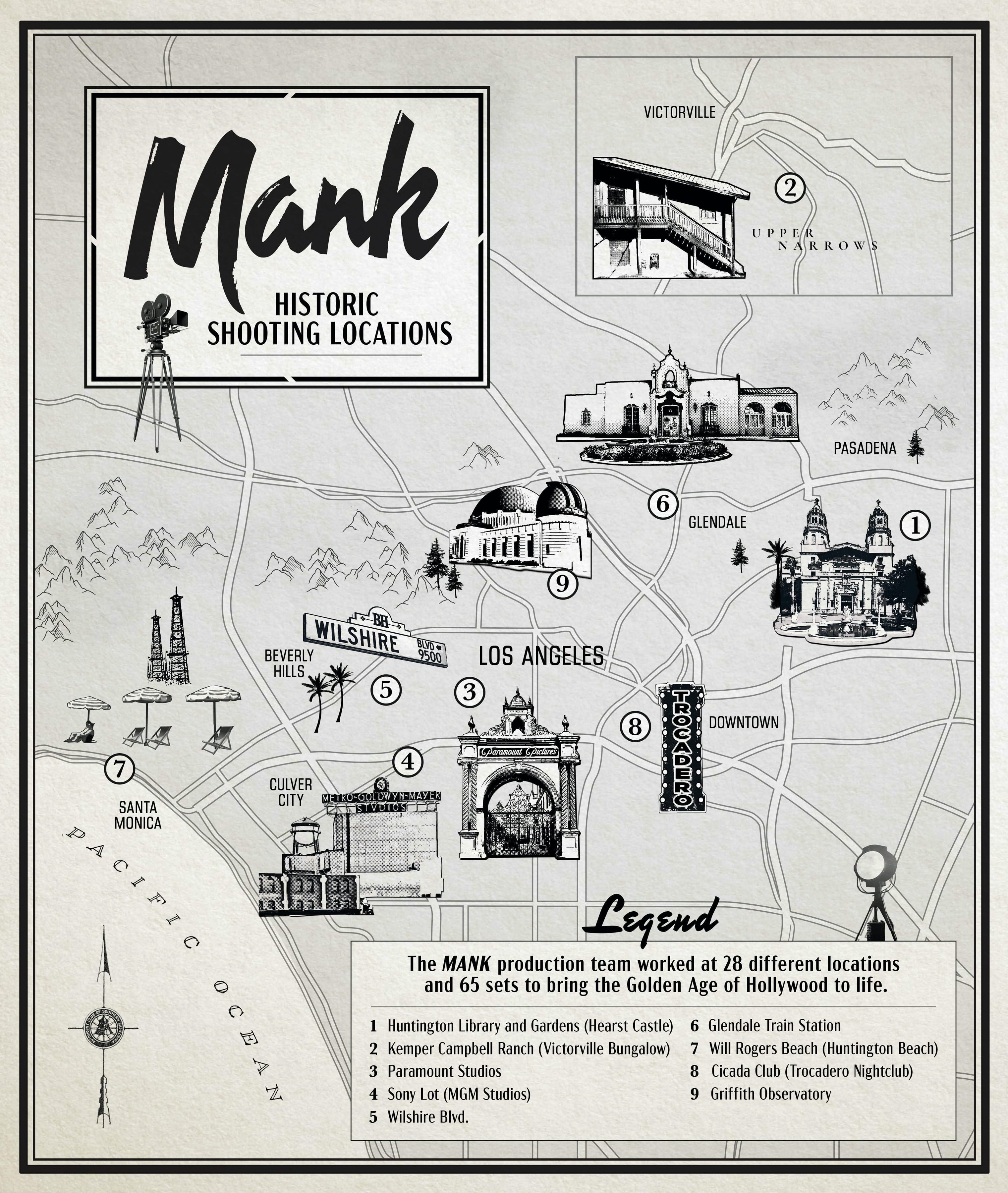
Queue gets behind the scenes with a look at Mank’s defining locations.

March 9, 2021
Netflix Queue

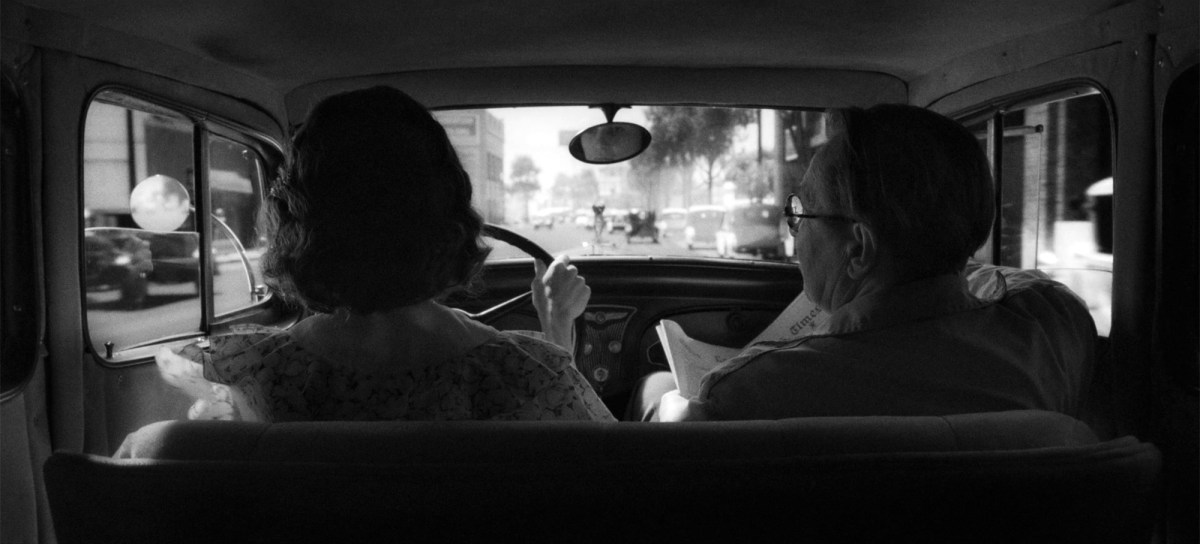
Shot in black and white, David Fincher’s Mank transports audiences through the sights and scenery of Golden Age Hollywood and 1930s and 40s California. With the help of soundstages, matte paintings, and a lot of research, the team behind Mank’s locations communicates the glamour and history of an epic era of moviemaking. 

Queue explores some favorites.

“Art Deco Buildings, Puffy Clouds & Palm Trees”: How ‘Mank’ VFX Supervisor Wei Zheng Brought Old Hollywood To Life For Longtime Collaborator David Fincher

Matt Grobar
March 5, 2021
Deadline

On Mank, VFX supervisor Wei Zheng paired state-of-the-art technology with old-school filmmaking techniques, to help David Fincher craft a singular portrait of Hollywood’s Golden Age. Marking Zheng’s sixth collaboration with the director, the Netflix drama follows alcoholic screenwriter Herman J. Mankiewicz (Gary Oldman), as he finishes the script for Citizen Kane.

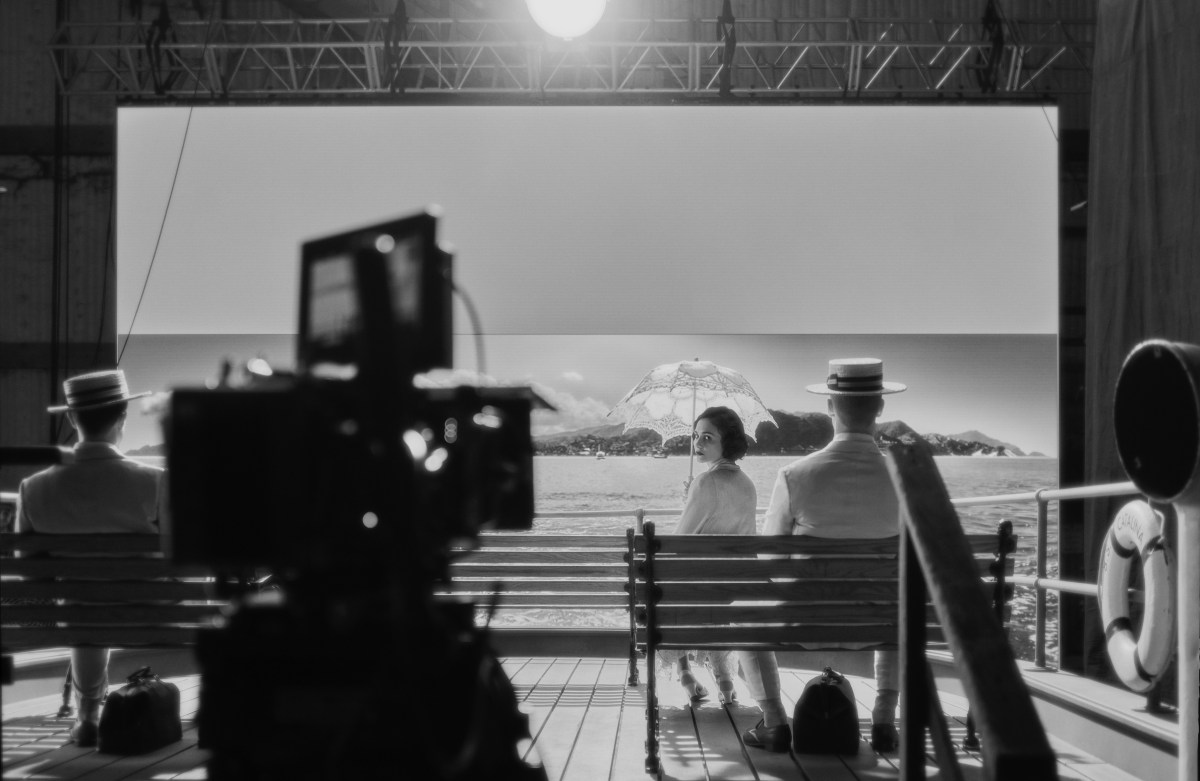
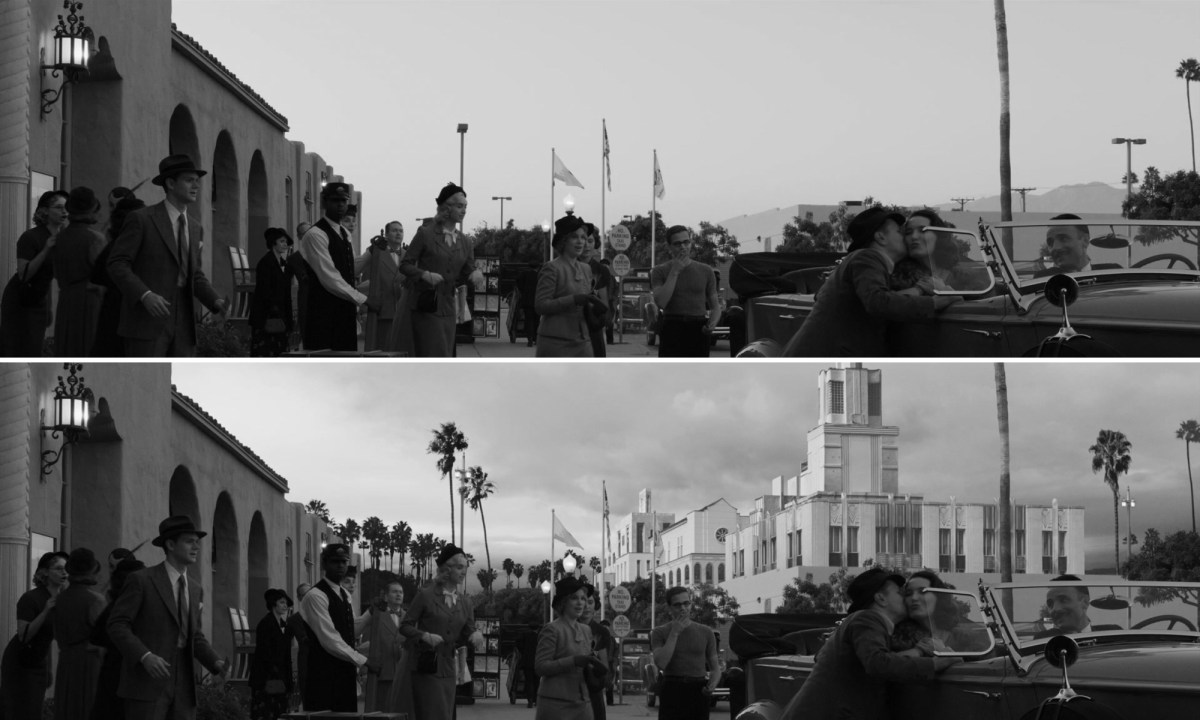
By implementing matte painting and rear projection, along with other tools and tricks, Fincher and his team minimized the budget necessary to assemble an authentic period piece, manipulating L.A. exteriors when necessary, or avoiding them altogether. Ultimately, what these tools offered Fincher was complete control of every image, and interestingly, the director himself served as the film’s overall VFX supervisor, though he chose to go uncredited.

At the same time, it took a village to bring his vision to life. Supporting him in his ambitions, alongside Zheng (Artemple Hollywood), were VFX supervisors Simon Carr (Territory Studio), James Pastorius (Savage VFX), and Pablo Helman (ILM). His fourth key collaborator in this arena was Peter Mavromates, who served as co-producer, post-production supervisor and VFX producer.

In conversation with Deadline, Zheng breaks down the shorthand he’s developed with Fincher over the years, and the approach he took to getting “David’s imagination” on each of his longtime passion project’s frames.

Read the full interview

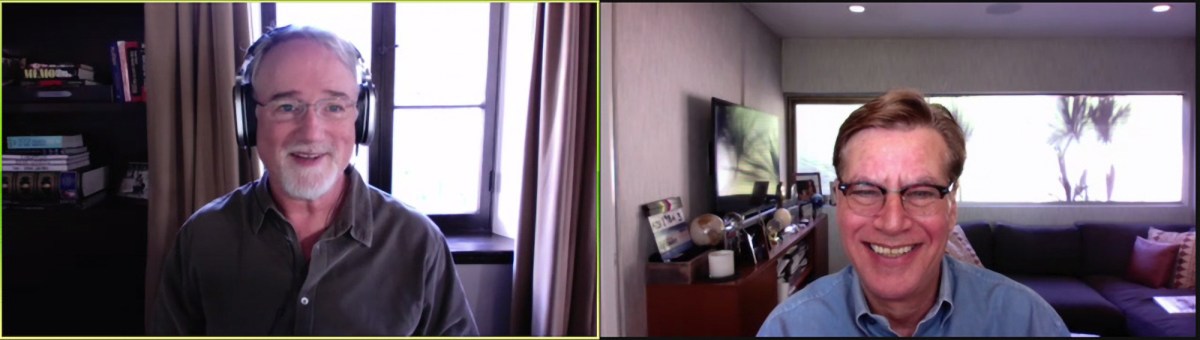
Director David Fincher discusses Mank with Aaron Sorkin

A DGA Virtual Q&A

February 6, 2021
The Director’s Cut. A DGA (Directors Guild of America) Podcast

A disillusioned screenwriter in old Hollywood gets a shot at redemption in Director David Fincher’s biographical comedy-drama, Mank.

Fincher’s film takes place as film 24-year-old wunderkind Orson Welles hires scathing social critic and alcoholic screenwriter Herman J. Mankiewicz to write the screenplay for his masterpiece, Citizen Kane.

On February 6, Fincher discussed the making of Mank in a DGA Virtual Q&A moderated by Director Aaron Sorkin (The Trial of the Chicago 7).

During their conversation, Fincher spoke about his love for “the altar of cinema,” the communal aspect that can come through film. “For me, what I love about cinema is going into a big dark room with 700 people and through their laughter and through their surprise and through their shock and through their reactions you realize, I’m not alone. I’m the same. I’m wired into this group in the same way just organically and I’m picking up on all these other cues. That is what makes the cinema, or a great grand theater, an almost cathedral-like experience.”

Fincher’s other directorial credits include the feature films Se7enThe GamePanic RoomZodiacGone Girl; episodes of the television series House of Cards and Mindhunter; and countless commercials and music videos. He has been nominated for the DGA Award for Outstanding Directorial Achievement in Theatrical Feature Film for The Curious Case of Benjamin ButtonThe Social Network and The Girl with the Dragon Tattoo. In 2013, he was nominated for the DGA Award for Dramatic Series for House of Cards, “Chapter 1” and has twice been nominated for the DGA Award for his Commercial work with Anonymous Content in 2003 and 2008, winning the Award in 2003 for Beauty for Sale (Xelibri Phones), Gamebreakers (Nikegridiron.Com) and Speed Chain (Nike).

Fincher has been a DGA member since 1991.

Listen to the podcast:

DGA.org
Apple Podcasts
Spotify
YouTube

How the ‘Mank’ VFX Team Meticulously Recreated ’30s LA in Black-and-White

Fincher used retro VFX techniques powered by digital tech (including matte paintings and LED screens for rear projection).

Bill Desowitz
March 2, 2021
IndieWire

One of the major craft achievements of “Mank” was how David Fincher’s visual effects team meticulously recreated ’30s-era LA in black-and-white. (They used the matte paintings of Artemple, Territory’s LED screens, and Savage’s sky replacement with Unreal’s game engine.) The work has been shortlisted for the VFX Oscar and garnered a VES nomination for supporting visual effects.

“Most of the effects were what we call our ‘body and fender’ work, where [David] shot something and it’s not quite right and it needed to be replaced,” said visual effects producer Peter Mavromates. “For example, during the Louis B. Mayer birthday party at San Simeon, he didn’t want to deal with real fire in the fireplace, so those are all added [in CG] afterwards. He’s all about efficiency on set.”

Also added were the cloudy skies during the shooting of an elaborate home movie with Marion Davies (Amanda Seyfried) tied to a stake. “Sky replacement of shots were for consistency using the Unreal game engine with 3D model placement,” Mavromates added.

Read the full profile

‘Mank’ Co-Producer Peter Mavromates On Accentuating a 1930s World Through VFX

Mavromates and director David Fincher oversaw a team of four VFX Supervisors to deliver the period film.

Clarence Moye
February 9, 2021
Awards Daily

When tackling a period-centered project like Mank, David Fincher and his assembly of below the line craftspersons create magic, fully immersing the viewer in a faithfully recreated 1930s-era California. While the project leveraged many real-world locations and built sets, changing times and the absence of an unlimited budget posed some challenges to create that immersive world Fincher and team demanded. To complete the illusion, the filmmakers looked to co-producer Peter Mavromates, who led a team of four visual effects (VFX) supervisors.

Now, Mank isn’t effects-heavy The Avengers, but that doesn’t mean VFX aren’t just as critical to the film’s storytelling and overall atmosphere.

“The assumption, at minimum, is that you’re going to at least need to retouch a background to get rid of modern anachronisms,” Mavromates explained. “As in this movie, there are situations where David [Fincher] will want to actually replace the background so that period buildings are back there.”

Read the full profile

Mank Co-Producer Peter Mavromates on the Film’s VFX and Post

Edward Douglas
February 8, 2021
Below the Line

There are many reasons why there’s a general wave of excitement whenever there’s a new David Fincher movie. That’s particularly been the case with Mank considering the six-year gap since Fincher’s last film Gone Girl, roughly half that time in which Fincher was making the series Mindhunter for Netflix.

Most of Fincher’s fans within and outside the industry see the filmmaker as a modern master of the visual medium, and Mank offers further proof of this with stunning shots recreating Hollywood in the ‘30s and ‘40s, fully realized background environments in which well-known icons from the era discuss the political climate of the times, both in the country and in Tinsel Town itself. At the center of it all is Gary Oldman’s Herman Mankiewicz, the illustrious screenwriter who would win a shared Oscar for co-writing Orson Welles’ Citizen Kane.

One person who has been along for the ride watching Fincher’s rise as a visionary filmmaker is Peter Mavromates, whose first film with Fincher was 1997’s The Game, but who first met the director on a Michael Jackson video and a commercial he directed. Mavromates has worked in post for over 35 years, as one of the first to champion the benefits of combining analog film with digital post, producing his first DI (Digital Intermediary) for Fincher’s 2002 movie, Panic Room, which was shot on analog. Five years later, he did the same for Zodiac, Fincher’s first digitally-shot film.

As Fincher’s Post-Production Supervisor, Mavromates’ duties continued to expand and evolve, his duties involving all the budgeting and hiring when it comes to the post process. “I like to describe it as once the image is captured, it becomes my problem,” he told Below the Line over a Zoom call a few weeks back.

Read the full profile