The Discarded Image (Julian Palmer)
Published on 14 Nov 2017
YouTube
In this video essay I breakdown how David Fincher uses popular music in films like Fight Club, The Social Network and the new Netflix series Mindhunter.
The Discarded Image (Julian Palmer)
Published on 14 Nov 2017
YouTube
In this video essay I breakdown how David Fincher uses popular music in films like Fight Club, The Social Network and the new Netflix series Mindhunter.
Matt Thrift
November 12, 2017
Little White Lies
The alchemist behind Fight Club and Zodiac discusses his newest true crime saga, the Netflix Original series MINDHUNTER.
Netflix has come a long way since the launch of its flagship in-house production, House of Cards back in 2013. The first two episodes of that landmark series saw one of American cinema’s most fastidious craftsmen make his first foray into television. Now David Fincher is back and doubling down, helming four episodes of 2017’s most anticipated binge-fest, an adaptation of the memoir by FBI agent John Douglas, the criminal profiler who served as inspiration for Jack Crawford in Thomas Harris’ bestseller, ‘The Silence of the Lambs’. Fincher gave us a call for an epic conversation about all things MINDHUNTER.
Netflix’s newest crime drama series is the culmination of a career-long obsession for the director.
Brogan Morris
October 22, 2017
Little White Lies

Headjar Productions Scanned More Than 30,000 Feet of Archival Footage for Channel 4 Documentary
By Bryant Frazer / November 9, 2017
Studio Daily
An iconic music video has gotten a rare 4K remaster. As part of a documentary project for U.K. broadcaster Channel 4, director David Fincher’s promo clip for the late George Michael’s “Freedom! ’90” featuring supermodels Naomi Campbell, Linda Evangelista, Tatjana Patitz, Christy Turlington and Cindy Crawford has been rescanned from the original camera negatives at 4K on a Blackmagic Design Cintel Scanner and graded in Blackmagic DaVinci Resolve Studio to match the look of the original, NTSC-resolution music video.
November 8, 2017
Black Magic Design
In addition to serving as co-executive producer for Mindhunter, Fincher directed four hours of the 10-episode season.
By: Kevin H. Martin
10/26/2017
Creative Planet Network / Digital Video Magazine
The first masterpiece from filmmaker David Fincher was his feature film Se7en, a procedural featuring one of the most memorable serial killers ever committed to celluloid. Ten years ago he returned this dark territory with Zodiac, an adaptation of the true-life case involving a still-unknown killer who struck repeatedly throughout the San Francisco Bay area. In the years since, Fincher helped launch House of Cards (an adaptation of the successful UK series) for Netflix. He comes back to the crime investigation genre with Mindhunter, a 10-part streaming series that launched on Netflix on Oct. 13.
[…]
In addition to serving as co-executive producer for Mindhunter, Fincher directed four hours of the 10-episode season, with Christopher Probst shooting the pilot installment. The other directors were Asif Kapadia, Tobias Lindholm and Andrew Douglas.
Cinematographer Erik Messerschmidt shot part of episode two, along with the remaining eight episodes. Messerschmidt had served as gaffer on Fincher’s most recent feature, Gone Girl. He pulled double duty on this fall’s Granite Mountain, gaffing and shooting 2nd unit—the latter a duty he performed for next year’s Sicario follow-up, Soldado, as well. “Fincher was very involved in the process, which is to be expected. He was there every day,” Messerschmidt says.

Patrick Harbron / Netflix
I recently spoke with Tyler Nelson, one of the four series editors, who was given the opportunity to move from the assistant chair to that of a primary editor on ‘Mindhunter.’
By: Oliver Peters
10/26/2017
Creative Planet Network / Digital Video Magazine
Christopher Hooton
Nov 6, 2017
Kernels (Independent)
How do films make you feel? The Independent gets personal about cinema and TV with actors, directors, cinematographers and other people from the continually evolving world of “content” in a new fortnightly podcast hosted by Culture Editor Christopher Hooton.
Netflix‘s new original series Mindhunter has enrapt a legion of viewers with its smart, reserved style. Chris sits down with episodes 3 and 4 director Asif Kapadia to look at how it came together, how Brad Pitt‘s DVD of Senna led to his signing, directing an actor as serial killer Ed Kemper, learning from David Fincher on set, and how a season of TV’s episodes are carved up for different directors.
by Hannah Gal
30/10/2017
KFTV
Erik Messerschmidt was director of photography on Netflix‘s Mindhunter – he talks about using a customised camera with David Fincher.
As a hard working gaffer, Erik Messerschmidt has reached the top of his profession, but his ambition has always been to work as a cinematographer.
His break came when David Fincher asked him to join Netflix’s new project. The director had previously worked with the cinematographer on the 2014 domestic thriller Gone Girl and signed on to Mindhunter, a story that traces the development of the FBI’s understanding of criminal science in the 1970s. Fincher directed four of the show’s ten episodes and was an executive producer on the full series.
By Paula Parisi on October 23, 2017
Max the Trax
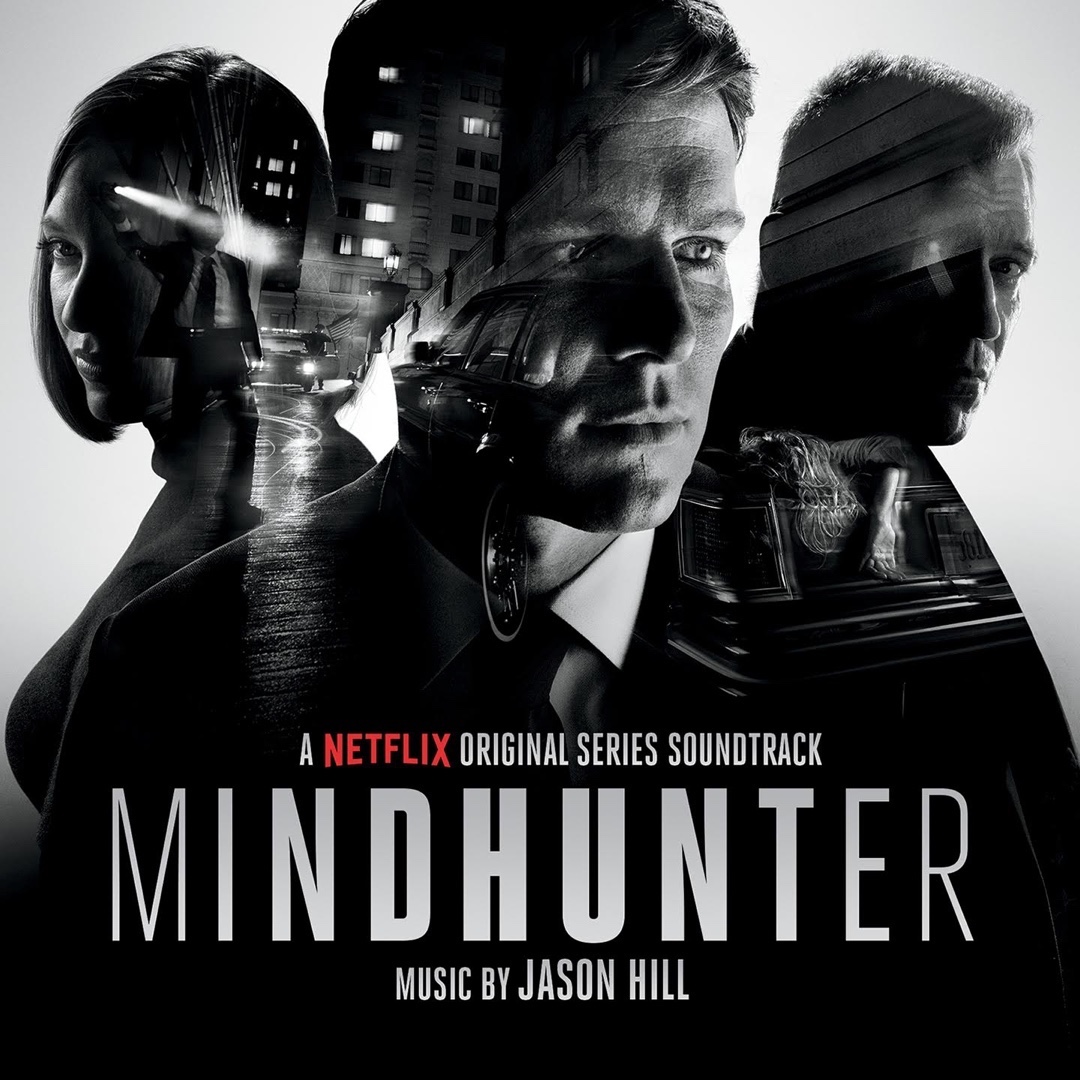
Director and producer David Fincher wanted a backing track that “didn’t sound like music” for his new Netflix series Mindhunter, which is exactly what he got in the 10-episode show’s original score by composer Jason Hill. Hill, a veteran of the early aughts indie rock scene with throwback style, invented a library of original sounds he processed into music. “I didn’t use any sound libraries,” said Hill, proprietor of the Department of Recording & Power. “I do use a computer, in terms of capture, but everything pretty much starts with a bunch of analog, weird stuff. I kind of get mad scientist brain when I press play.” Pitch perfect for a show about the genesis of the FBI’s elite Behavioral Sciences Unit, formed in 1978. An inspired touch — the sound of Hill running his fingers around water-filled wine glasses — has become something of an audio signature for the series, which also features a rigorously curated complement of 1970s tunes.
Fincher is known as a meticulous craftsman who not only chooses great material, but applies his exacting style to bring it to the screen in a way that is both visually and narratively compelling. While his talent as a musical tastemaker has certainly been acknowledged, it’s emphasized to a lesser extent against the dazzle of his other gifts. But Fincher’s record stands: best score Oscars for Trent Reznor and Atticus Ross for 2010’s The Social Network, and a best soundtrack Grammy for the duo’s 2012 The Girl with the Dragon Tatoo as well as a nom for their work on Gone Girl.
Fincher received his own Academy Award nominations for directing The Social Network and 2008’s The Curious Case of Benjamin Button (which also earned Oscar and Grammy nominations for composer Alexandre Desplat). And that’s before even getting to the part about how in the ’80s he helped invent the music video genre as a founder of Propaganda Films (including Don Henley’s cinematic “The End of the Innocence” and helming entries for Madonna and Nine Inch Nails (as well as Loverboy and Rick Springfield, among many others. He’s collected his own Grammys for directing the 1994 clip for The Rolling Stones‘ “Love is Strong” featuring the band and their friends as giants cavorting through Manhattan), and more recently, in 2014 for Justin Timberlake’s “Suit and Tie” (feat. Jay Z). Fincher spoke to MaxTheTrax editor in chief Paula Parisi about the music for Mindhunter, his music video roots and (small!) contribution to Trent Reznor’s career as a film composer.
Jason Hill (Instagram, Facebook):
“The Mindhunter Album is officially out today digitally! iTunes, Spotify, etc. Physical CD’S will be available on December 15, just in time for the Holidays! I am very proud of it and worked for almost 2 years on it. I set out to build a very unique soundscape, unlike any other. I think I was able to do that. I did not use any sound libraries as many composers do, everything was played by me and the sounds made from scratch. Special thanks to the incredible talents of Davide Rossi who plays violin on two tracks as well and Jonathon Stevens for helping me put this together. Hear so much more than what is on the show! I hope you like it!”
Spotify – Apple Music – iTunes – Amazon Music – YouTube

Tracks:
01. Main Titles (3:14)
02. Four Windows (3:28)
03. Weird Thing (2:21)
04. Wendy Suite (4:13)
05. Beyond the Pleasure Principle (3:46)
06. A Bird in the Fan (2:10)
07. Fantasies (4:11)
08. Welcome to Nowhere (3:35)
09. Tell the Parole Board (3:07)
10. Deviant Terminology (2:47)
11. An Unguarded Response (3:22)
12. From a Motel Phone (2:32)
13. Academics (2:26)
14. Rose Confession (7:42)
15. I Know You’re Not Just Here To Teach (1:47)
16. A Walk Through the Zoo / A Friendly Nuisance (4:38)
17. Ed Kemper’s Cage (4:05)
18. Crime of the Century (4:13)
19. The Man From the Alarm Company (2:49)
20. A New Hairdo for Beverly Jean (3:21)
Matt Mulcahey
October 26, 2017
Filmmaker
When mere mortals gear up for a job, they are restricted to selecting cameras currently in existence. Not David Fincher.
Fincher has long hated all the gak required to make a digital cinema camera functional: a wireless transmitter to get signal to video village, the add-ons to provide wireless iris and focus control, the assistant camera’s onboard monitor hanging off the side — all the things that turn a small, lightweight camera body into a labyrinth of cables and breakout boxes.
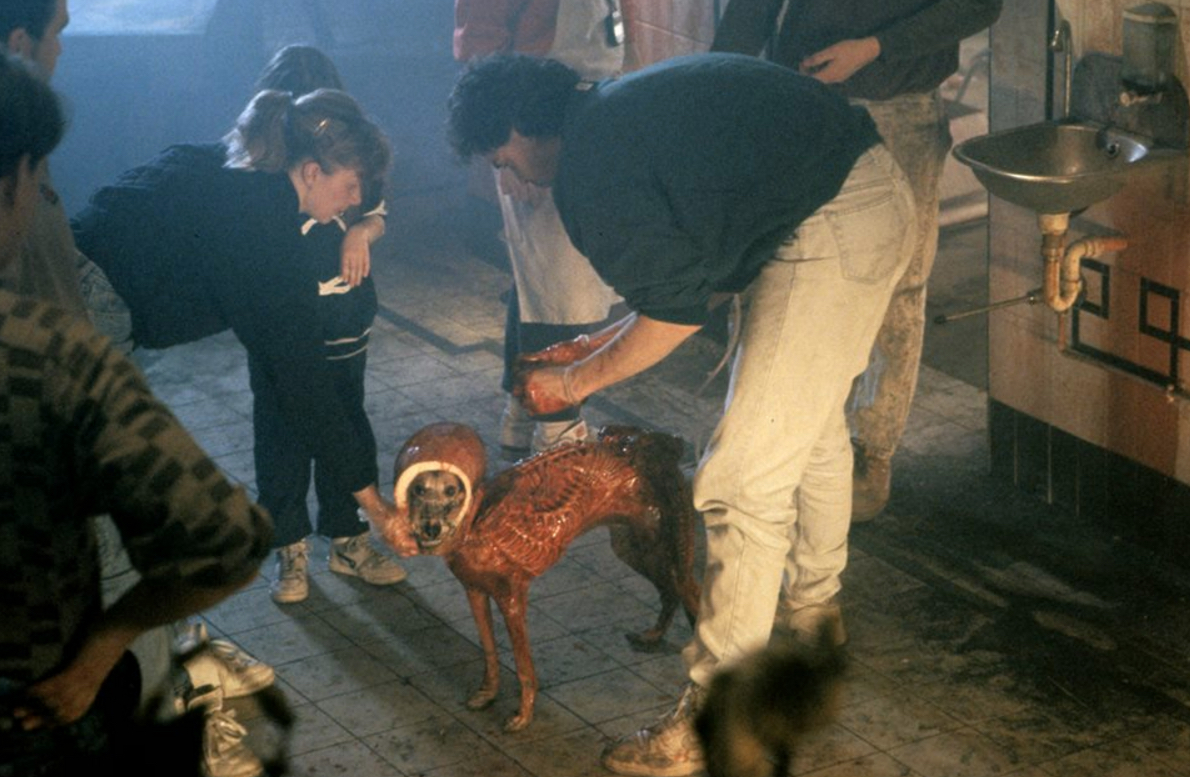
Red Digital Cinema responded by making Fincher his own set of custom Weapon Red Dragons for use on the new Netflix series Mindhunter—each with the features listed above built into an ergonomically friendly camera christened the Xenomorph. Put a lens on the front and a battery on the back and the Xenomorph is ready to rock and roll.
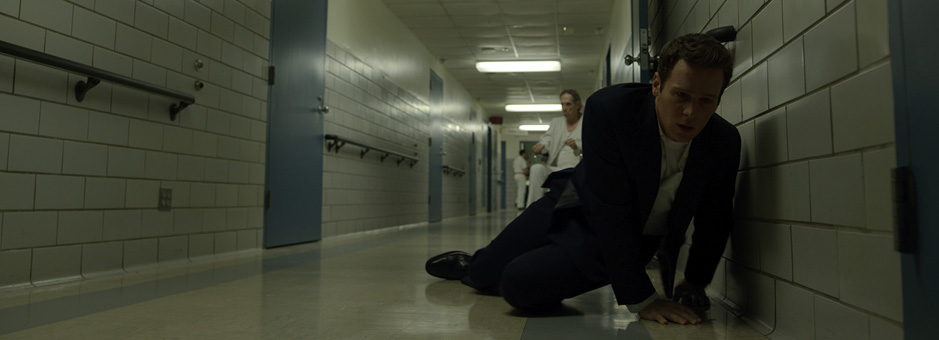
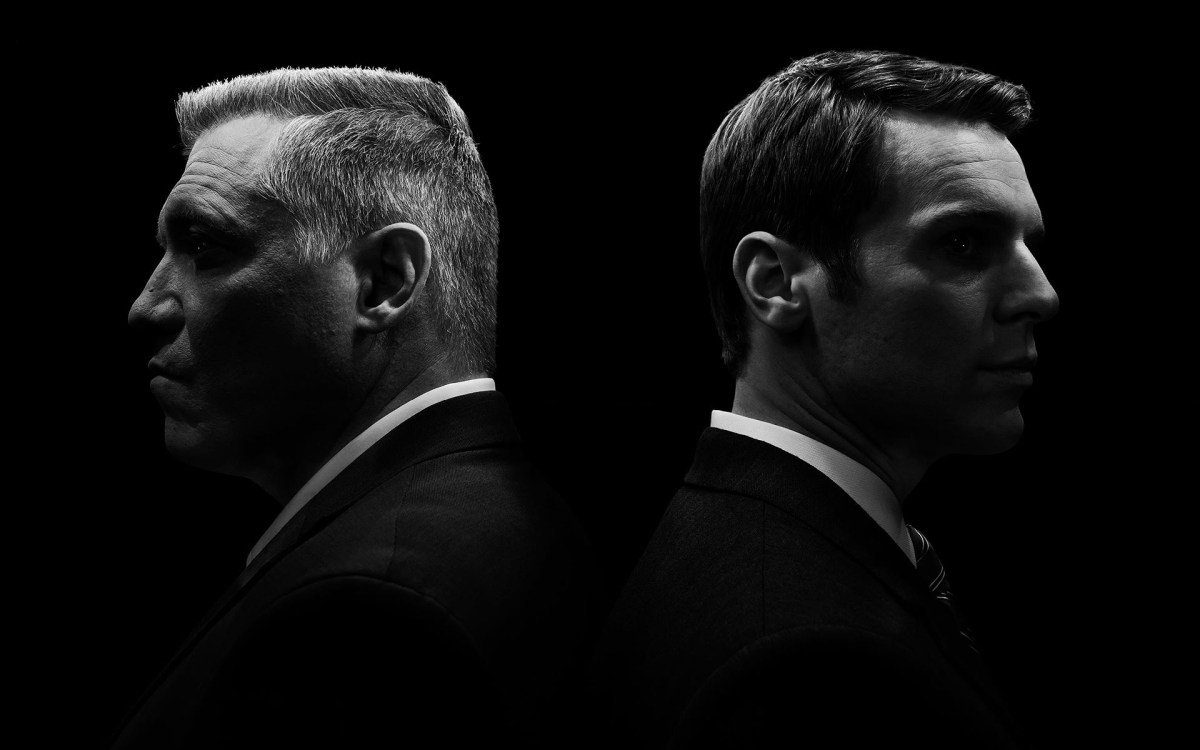
On Mindhunter, cinematographer Erik Messerschmidt reaped the benefits of that smaller camera footprint. Messerschmidt spoke to Filmmaker about his work on the new series, which follows the fictionalized story of the agents (Jonathan Groff’s Holden Ford and Holt McCallany’s Bill Tench) who started the FBI’s psychological profiling program in the 1970s by interviewing incarcerated serial killers.
![2017-09-22 Alison Leigh Evans (Instagram) - Mindhunter Camera Department Xmas Decorations [EDIT]](https://thefincheranalyst.com/wp-content/uploads/2017/10/2017-09-22-alison-leigh-evans-instagram-mindhunter-camera-department-xmas-decorations-edit.jpg)
Mindhunter Camera Department Xmas Decorations (Alison Leigh Evans, Instagram)
Working with David Fincher, the RED XENOMORPH, CW Sonderoptic Leica Summilux-C lenses and shooting for Netflix
By David Alexander Willis
October 23, 2017
ProVideo Coalition
Shot with a tailor-made RED camera, the RED XENOMORPH, auteur David Fincher chose cinematographer Erik Messerschmidt to helm camera for his latest, and possibly most ambitious project, the 10-episode Mindhunter series. Based on the novel Mind Hunter: Inside the FBI’s Elite Serial Crime Unit, Messerschmidt lensed actors Jonathan Groff and Holt McCallany during the extended production as they play FBI agents Holden Ford and Bill Tench. Focusing on the precocious criminal psychology work of the 1970s, the show centers on the duo as they attempt to understand the mind of a serial killer. Mindhunter is available to watch via Netflix now.
Thanks to Joe Frady