The Hero’s Journey is a monthly podcast which examines classic and contemporary books and films through the lens of The Hero’s Journey. Pioneered by renowned mythologist and teacher Joseph Campbell, and refined for the context of modern storytelling by Disney veteran Christopher Vogler, The Hero’s Journey is a series of motifs and archetypes that pervade myths, folklore, and stories across all cultures and eras. Your hosts, author Jeff Garvin and book blogger Dan Zarzana, will discuss a new book or film each month. And probably, there will be some drinking.
Lose your heads with Dan and Jeff as they open the box on David Fincher’s serial killer masterpiece, Se7en.
We’re not supposed to talk about Episode 30 of The Film ‘89 Podcast where we remove our shirts and shoes to celebrate the 20th anniversary of director David Fincher’s searing, controversial and hugely faithful adaptation of the acclaimed novel by author Chuck Palahniuk, Fight Club. This playfully subversive film defies categorisation and refuses to submit to genre convention. It’s Fincher at the absolute top of his game and is a film like no other. Joining us to dissect Fight Club is Jacob Rivera. Founder of JabHookBoxing.com, Jacob is also a frequent co-host of podcasts such as the Pound for Pound Boxing Report, Wrong Reel and many more. He’s also a writer here at Film ‘89 and makes his return to the podcast after his brilliant debut on our Special Christmas 2018 episode. Jacob is a huge Fincher fan so who better to help us discuss not only Fight Club, but also our Favourite David Fincher films.
And if this huge episode somehow leaves you hungry for even more Fight Club analysis then click on the link at the bottom of this page for Skye Wingfield’s in-depth written essay on the film.
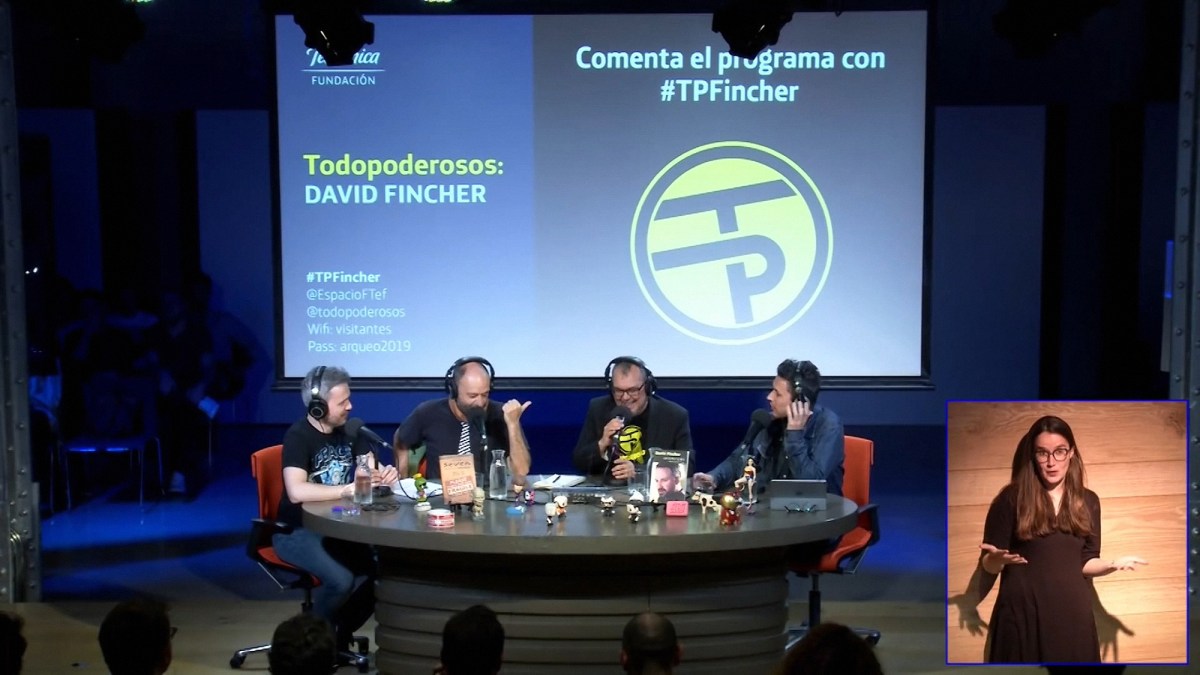
Hemos convertido nuestro auditorio en una fábrica de jabones, un juego peligroso, una caja sospechosa, una casa de cartas, una habitación del pánico…
O sea, Javier Cansado, Rodrigo Cortés, Juan Gómez-Jurado y Arturo González-Campos, los mindhunters de Todopoderosos, se han dedicado a hablar de David Fincher y sus pecados capitales.
Autor de libros cómo El Paciente, Cicatriz o su reciente Reina Roja, un autor traducido a más de 40 idiomas, y una de las mentes más intrigantes de la cultura española.
Un ilustre ignorante que demostrará que ambos adjetivos son falsos en su caso. Uno de los grandes cómicos de este país y un comunicador que, cada día, hay que descubrir. Se afeita regular, eso también lo tiene.
Rodrigo Cortés ha hecho una película dentro de una caja y dos fuera. Escribe libros, habla por la radio y huele genial. Una vez se quedó atrapado en un ascensor con Carlos Boyero.
Durante muchas noches ha gritado en La Parroquia de Onda Cero, escribe libros, hace guiones y es monologuista, la prueba viviente de que un feo también tiene lugar en este mundo.
The manic 1997 thriller “The Game” doesn’t appear on many “best San Francisco films” compilations. And that apparently includes director David Fincher’s list.
The filmmaker, who directed “Zodiac” and “The Game” in the city, told an Indiewire reporter in 2014 that he probably shouldn’t have made the latter movie.
“We didn’t figure out the third act,” Fincher told Indiewire. “And it was my fault, because I thought if you could just keep your foot on the throttle it would be liberating and funny.”
Perhaps Fincher, like many of us, needs to give the movie another chance. “The Game” isn’t quite a masterpiece, a label applied to just a handful of San Francisco films, including “Vertigo” and “The Conversation.” But it’s one of the most nakedly entertaining pieces of cinema that has been shot in San Francisco. And it has aged incredibly well. Time has vaulted the movie to must-see status.
"Love, Death and Robots" will be back! Jennifer Yuh Nelson has joined as supervising director for Volume 2 and will oversee all episodes pic.twitter.com/8OVStMbpeP
What is the meaning of Fight Club? Instead of giving you my theory, let’s learn straight from the source! Listen to Chuck Palahniuk (author), Jim Uhls (screenwriter), David Fincher (director), and more talk about how they created this film and book!
Fight Club is a 1999 film based on the 1996 novel by Chuck Palahniuk. It was directed by David Fincher and stars Brad Pitt, Edward Norton, and Helena Bonham Carter. Norton plays the unnamed narrator, who is discontent with his white-collar job. He forms a “fight club” with soap salesman Tyler Durden, and becomes embroiled in a relationship with him and a destitute woman, Marla Singer.
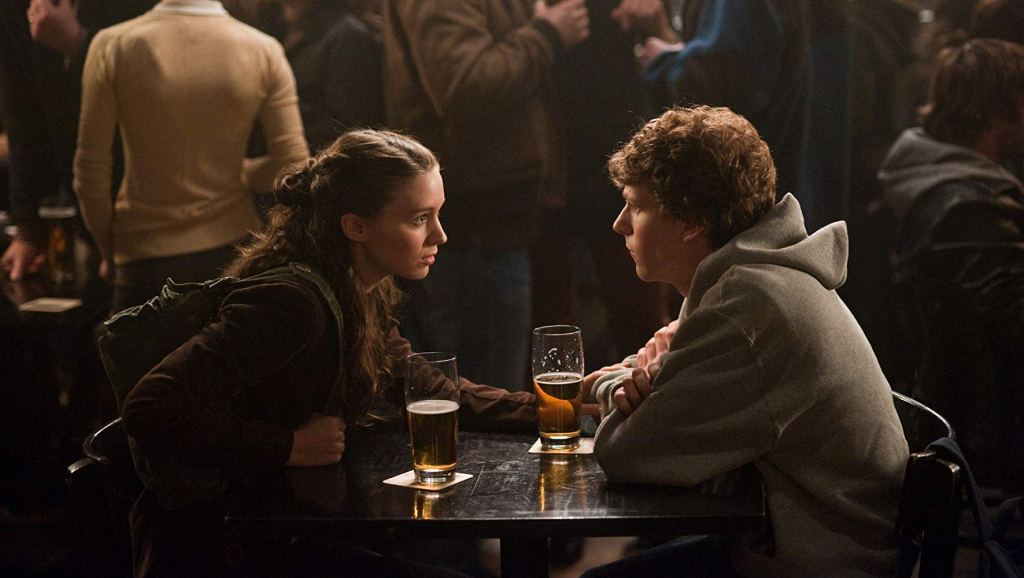
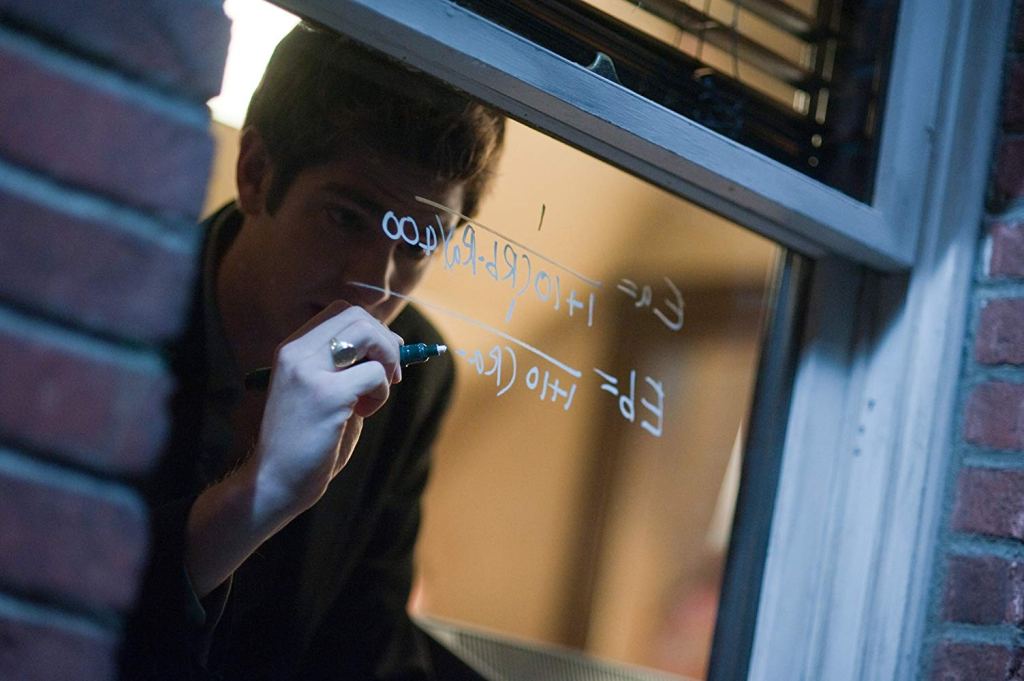
I’ve been Mark Zuckerberg—there are times in my life where I’ve acted that way. There are times in my life where I’ve been Eduardo Saverin—where I’ve gone and made a scene and regretted it and where I’ve been emotional and felt silly and stupid. And there are times when I’ve felt self-righteous and I’ve acted out in this other way… Look, what Mark does is no different than directing a movie—it’s what I do for a living every day. You grow something, and your job is to grow it well and to make sure it gets enhanced and to take care of it. That’s the subject of the movie. And if you have to hurt people’s feelings in order to protect that thing, that’s what you have to do. It’s a responsibility. You want to love every character in the movie. You want to be able to understand them. You want to be able to relate to them. But, as a director, the characters’ behaviors are inevitably related to facets of moments in your own life. You look at the work and say, Maybe I do know what that is. I’ve been the angry young man. I’ve been Elvis Costello. I know what that’s like. The anger is certainly something I felt that I could relate to—the notion of being twenty-one and having a fairly clear notion of what it is you want to do or what it is you want to say and having all these people go, well, we’d love to, we’d love you to try. Show us what it is that you want to do. It’s that whole condescending thing of having to ask adults for permission because the perception is that you’re too young to do it for yourself. And that’s why I understood Mark’s frustration. You have a vision of what this thing should be. And everyone wants to tell you, Oh, well, you’re young. You’ll see soon enough. —David Fincher
The 21st century computer-scribes who work behind the scenes behind the screens, creating culture and beauty with code, got an anti-hero to remember on the silver-screen in 2010 with David Fincher’s 8th feature film. From a once-in-a-generation, “holy shit” screenplay by Aaron Sorkin, The Social Network is a movie about a 19-year-old Harvard student creating Facebook while losing the relationships in his life. It is an examination of a social outsider who built one of the biggest “clubs” the world’s ever seen, and it’s about the new age zooming past the old. It’s about ignorance in high places, that awkward moment when powerful hired officials prove they have no concept of what simple features on Facebook are in a hearing on Facebook security. It’s about a new language of coding that’s sweeping and running the globe, and about treating coding with the respect it deserves. It’s about coders being taken as seriously as writers, musicians, filmmakers, film producers, painters, costume-designers, photographers, and all other artists and creators. It’s about attaining power even though you’re socially anxious or awkward, and about finding that inner drive that helps you accomplish your goals. It’s about what happens when you lose your humility in your thirst for greatness, and about the fragility of the line between “passionate” and “ass-hole.” The Social Network is simultaneously about a seismic shift in the zeitgeist and your best friend getting your company in trouble for feeding his fraternity chicken a piece of chicken. It’s about creating and solidifying one’s identity, and everything and anything else that goes with what Fincher once jokingly referred to as “the Citizen Kane of John Hughes movies.”
Jim Uhls is a screenwriter and producer. Jim’s sceenwriting credits include, Fight Club, the feature-film Jumper, the NBC television film Semper Fi, and the SyFy miniseries Spin.
0:02:39 – How did Jim get his first (credited) writing gig as Fight Club? 0:04:19 – Chuck Palahniuk 0:10:36 – The Meeting 0:14:03 – The Narrator 0:18:50 – Screenwriting Rules 0:31:14 – Jim’s Screenwriting Advice 0:38:58 – The Scent of Blood 0:50:13 – Jim, if he’ll ever direct 0:52:57 – David Fincher Directing Style 1:05:17 – My Fight Club house story
The Social Network is one of the best films of the 2010s. Aaron Sorkin, a screenwriter famous for his dialogue, teamed up with visual director David Fincher to create a modern film with themes as old as story itself. Watch and learn how they did it!
The Social Network is a 2010 American biographical drama film directed by David Fincher and written by Aaron Sorkin. Adapted from Ben Mezrich‘s 2009 book The Accidental Billionaires: The Founding of Facebook, a Tale of Sex, Money, Genius and Betrayal, the film portrays the founding of social networking website Facebook and the resulting lawsuits.
Talking about one of the most divisive films of the 1990s, as director David Fincher teamed with first-time feature cinematographer Jeff Cronenweth, ASC to craft a tale of modern disillusionment.
Director David Fincher teams with first-time feature cinematographer Jeff Cronenweth to craft a tale of modern disillusionment in Fight Club.
In his 1996 novel Fight Club, writer Chuck Palahniuk posed this question: What do you do when you realize the world is not destined to be your oyster, when you recognize the innocuous banalities of everyday life as nothing more than a severely loosened lid on a seething underworld cauldron of unchecked impulses and social atrocities?
Director David Fincher is no stranger to this theme. All of his previous films, Alien3 (see AC July ‘92), Seven (AC Oct. ‘95) and The Game (AC Sept. ‘97), have explored the dark side of the human psyche. With Fight Club, Fincher once again demonstrates his affinity for this bleak and foreboding realm, displaying a deft cinematic sensibility and a gift for taut visual execution.
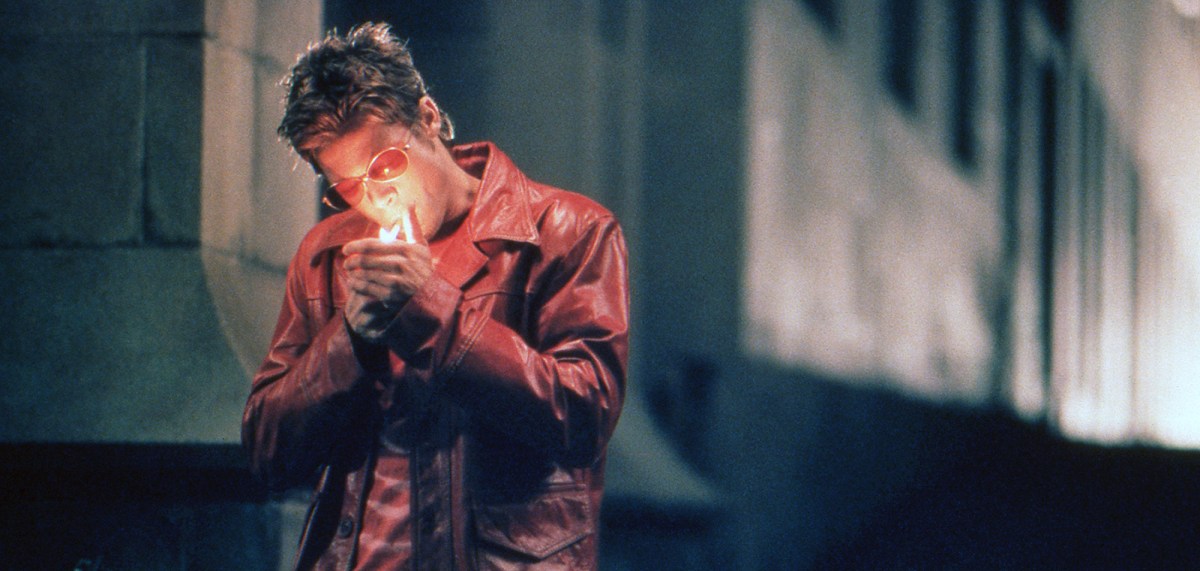
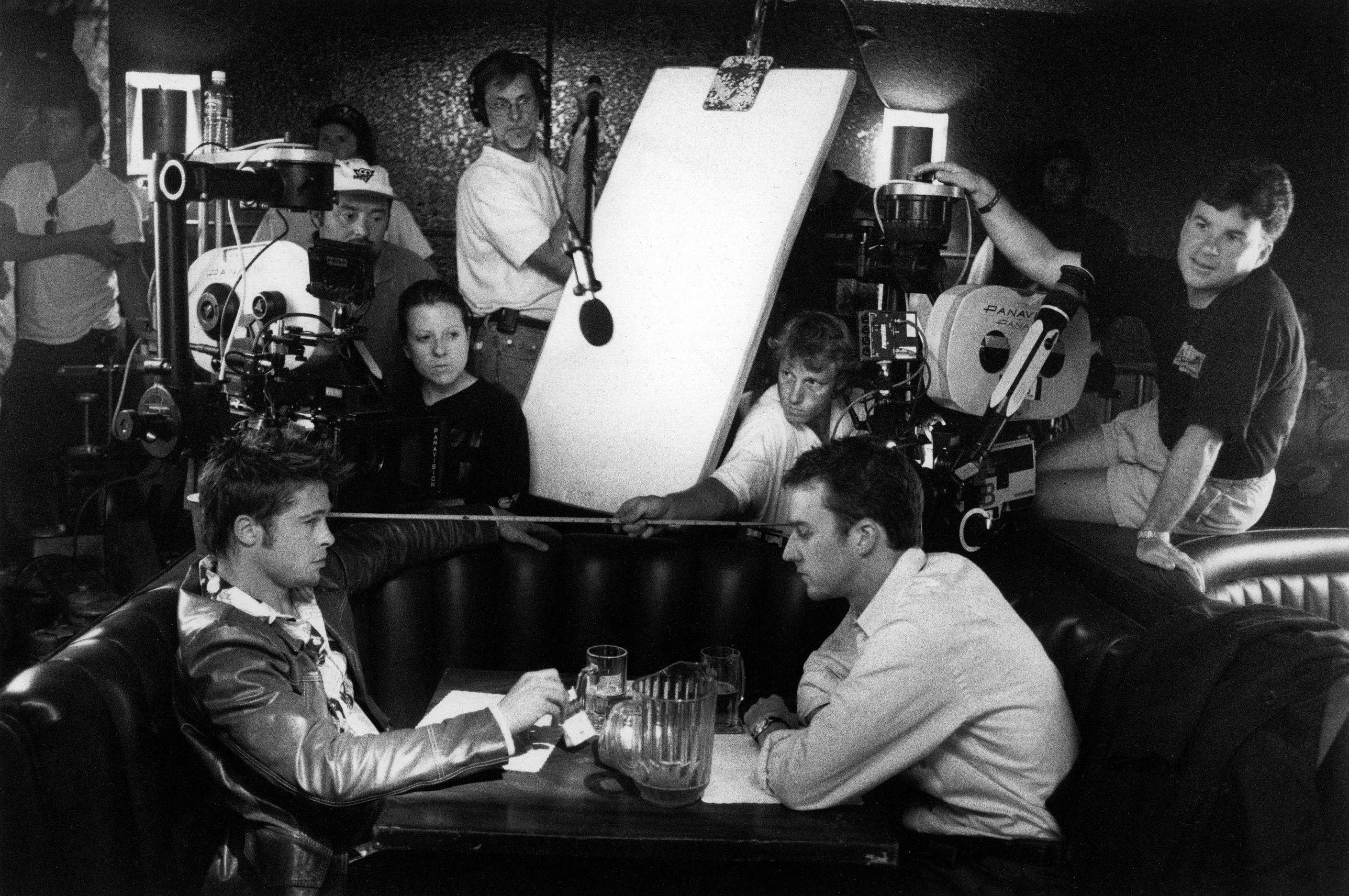
Fight Club opens as its disenfranchised — and nameless — narrator (Edward Norton) feigns illness and begins attending cancer-patient support group meetings in a vain attempt to find purpose within his lonely, mundane existence. Through a chance encounter on an airplane, he meets the enigmatic Tyler Durden (Brad Pitt), the organizer of Fight Club, an underground group of young men who take part in bare-knuckle brawls concocted to vent their pre-apocalyptic angst.
Fincher has worked with a score of prominent cinematographers on commercials, music videos and feature films. Interestingly, he began shooting Alien3 with the late Jordan Cronenweth, ASC — who left the production due to his battle with Parkinson’s disease, and was replaced by Alex Thomson, BSC. For Fight Club, Fincher enlisted Jordan’s son, Jeff Cronenweth [ASC], to realize his uniquely dystopian vision.
Cronenweth (wearing cap, just behind the camera on left) and his crew set up double coverage for a conversation scene between Tyler Durden (Brad Pitt) and the film’s nameless narrator (Edward Norton).




 The Fincher Analyst