Or so says the mysterious account that discreetly appeared on Instagram on October 15, the 25th Anniversary of Fight Club.
Now, New Regency and 20th Century Studios have officially announced that the subversive film, based on Chuck Palahniuk’s satirical novel, has been “meticulously remastered” in 4K under the supervision of David Fincher, “offering audiences the chance to experience the film with sharper detail than ever before.”
We will be able to experience the new remaster in 2025, in a theatrical re-release and 4K UHD HDR Streaming and Blu-ray releases.
Insight Editions, in partnership with New Regency, is releasing a companion art book (announced on THE FINCHER ANALYST last year), “a collector’s piece, that includes new interviews, unearthed visuals, original artwork, and rare behind-the-scenes material, offering fans the deepest look yet into the making of the film and its enduring legacy.”
“Fight Club is an enduring symbol of cinematic innovation, with its exploration of identity, masculinity, and consumerism continuing to resonate with audiences.”
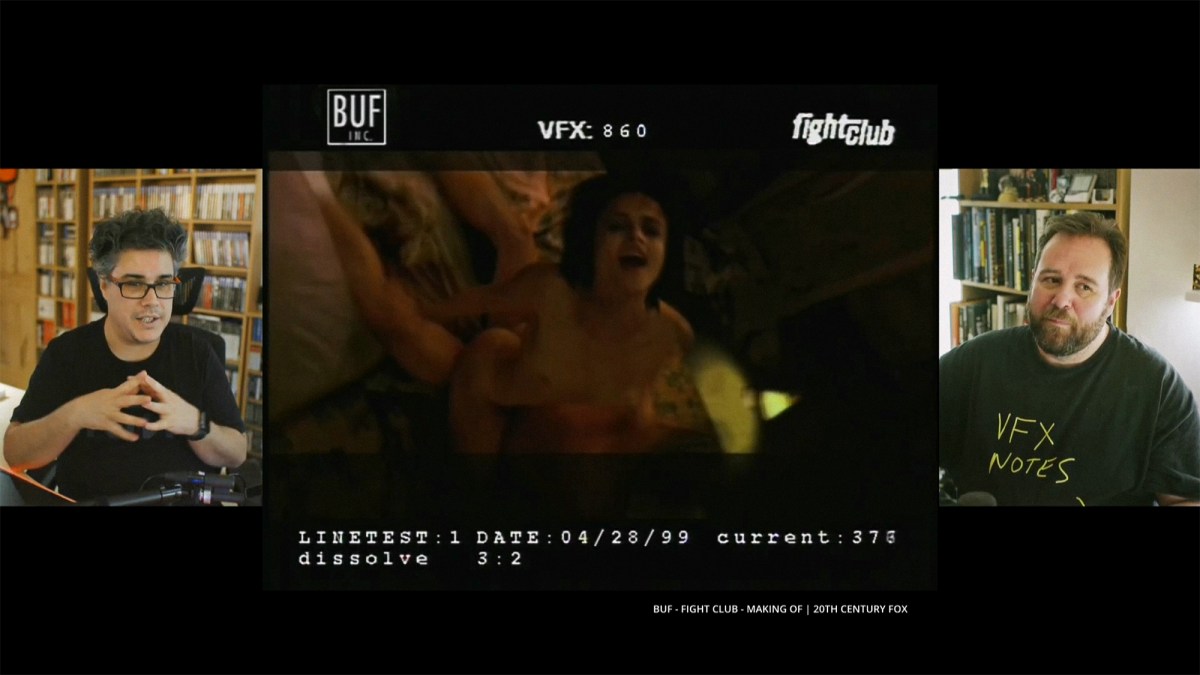
David Fincher’s glorious, mysterious, spectacular Fight Club has just turned 25! A new VFX Notes episode with Hugo Guerra and Ian Failes looks back at the film, and breaks down the incredible, invisible visual effects work.
We dive deep into the photogrammetry side of things from BUF, and look at the variety of work from Digital Domain, the penguin from Blue Sky (!), plus VFX from other vendors. It was an extraordinary achievement from visual effects designer Kevin Tod Haug to oversee this work.
Check out the video below which includes a whole range of behind the scenes and VFX breakdowns.
Chapters: 00:00:00: Intro 00:00:40: A word from our sponsors 00:01:50: The podcast begins 00:04:52: Our first viewing of FIGHT CLUB 00:11:56: The DVD is like film school 00:28:47: Jeff Cronenweth and the visual style 00:37:23: The manny takes of Fincher 00:41:27: Kevin Tod Haug’s amazing work 00:43:20: It would be nominated if it was today 00:45:24: Shaders and radiosity 00:48:03: Photogrammetry and BUF 00:53:07: Previz 00:57:08: The virtual camera moves like the kitchen scenes 01:00:45: BUF VFX and the sex shots 01:06:19: The age of CG tests 01:09:48: The plane crash 01:13:48: High rise collapse 01:21:49: Having fewer artists for a longer time 01:23:49: Peter Ramnsey’s animatics 01:24:23: The cave animal 01:27:08: One of the first behind the scenes featuring HDR spheres and grey balls 01:31:03: The Titanic breath leftovers 01:33:15: The gunshot 01:37:14: The Furni shot 01:39:44: The opening credits 01:45:43: Meat Loaf’s Fat Suit 01:50:00: Members and Patreon credits
Watch the “age-restricted” Fight Club VFX breakdown by BUF: YouTube BUF.com
By Roxana Hadadi, a Vulture TV critic who also covers film and pop culture October 16, 2024 Vulture
Holt McCallany can talk for a long time about filmmaker David Fincher, with whom he’s worked three times. On the beloved crime-thriller series Mindhunter, which was unexpectedly canceled by Netflix after its second season. On Alien 3, the prison-planet sequel that was Fincher’s directorial debut and so plagued with interference from 20th Century Fox that Fincher wouldn’t talk about the movie for years. And on Fight Club, the cult classic that has been misinterpreted in bad faith since it came out 25 years ago. McCallany can mimic Fincher’s tone and jokingly recites his advice from years on set together. And he can just as vividly recall a grudge he’s harbored since the movie’s release.
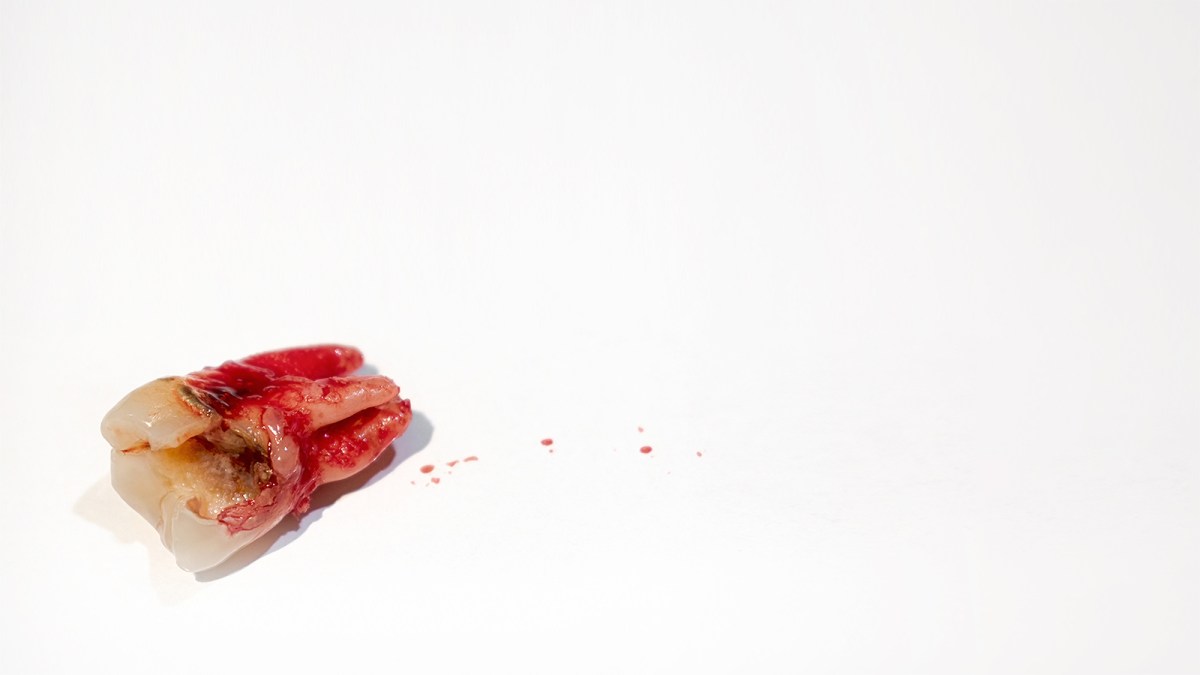
“I remember sitting in a dentist’s office, and the TV happened to be The Rosie O’Donnell Show. She’s talking about Fight Club and she says, ‘Whatever you do, don’t see Fight Club. It’s demented, it’s depraved. I don’t think I’ve ever hated a movie more.’ I’m thinking, Gee, Rosie. Do we go on TV and bad-mouth your show?Is this really necessary, this kind of abuse?” McCallany says. “It angered me. I won’t pretend otherwise, because we were very proud of the film, we had worked very hard on the film, and we were very loyal to David.”
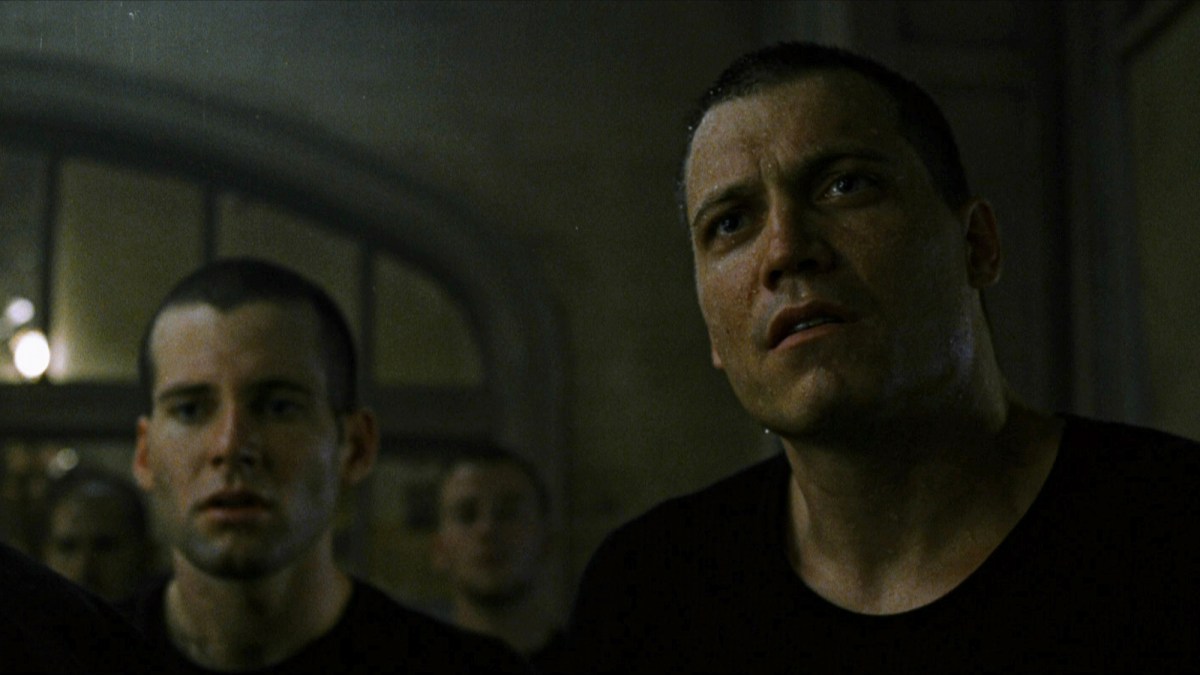
In Fincher’s adaptation of Chuck Palahniuk’s novel, McCallany plays The Mechanic, a devoted follower of anarchist philosopher Tyler Durden (Brad Pitt) whose unflinching glare and menacing physicality are always in service of Durden’s anti-consumerist ideas. McCallany exudes such certainty of self that once you notice the Mechanic cheering in the background of fight scenes, doing chores in The Narrator (Edward Norton) and Durden’s dilapidated mansion, or threatening to “take” a police commissioner’s testicles with a knife, you’ll keep looking for him, wondering what those wild eyes and set jaw are getting up to. The Mechanic tightened McCallany’s relationship with Fincher (who had previously wanted him for a small role in Se7en), and his melancholy-yet-adamant delivery of the film’s iconic mantra — “His name was Robert Paulson” — indicated how fully he could inhabit heavies with a heart.
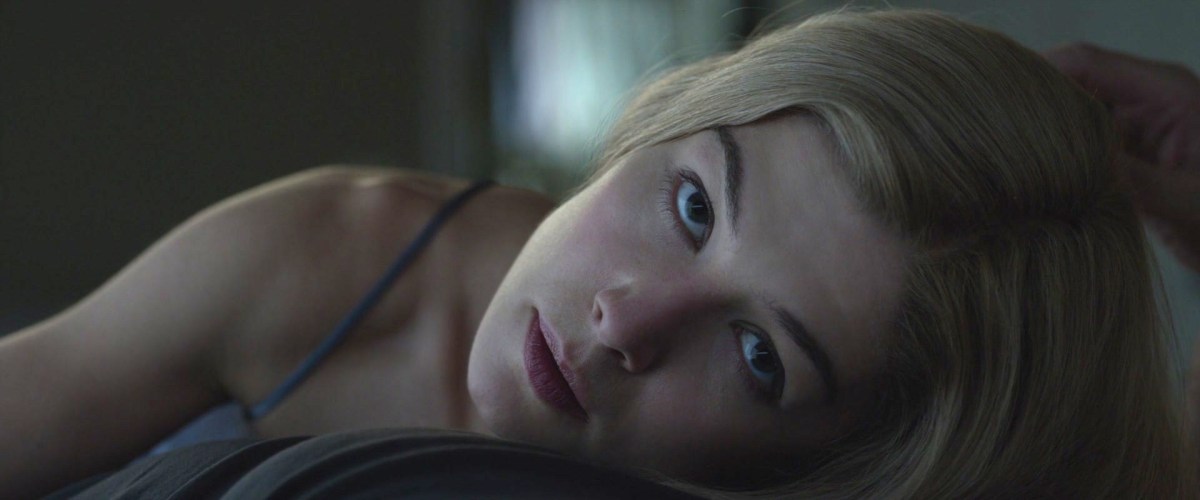
As Gone Girl rings in ten years of Amazing Amy’s disappearing act, Mia Lee Vicino probes the mystery-thriller’s deep impact, from annual Valentine’s Day rewatches to the catharsis of the Cool Girl monologue.
“Cool Girl is hot. Cool Girl is game. Cool Girl is fun.” With this incisive diatribe, Rosamund Pike as Amy Elliot Dunne articulates the previously inarticulable. The moment comes at the midpoint of Gone Girl, pulling the rug out from under first-time viewers, while devoted Amazing Amy acolytes mouth the sacred words along with her: “Cool Girl never gets angry at her man. She only smiles in a chagrined, loving manner and then presents her mouth for fucking.”
It’s been ten years since we were first visually exposed to the exquisite Cool Girl monologue; twelve since author Gillian Flynn initially published it across seven blistering pages of her bestselling source novel. David Fincher, Pike (who earned an Oscar nomination for her performance) and Ben Affleck as Amy’s “lazy, lying, shitting oblivious husband” Nick Dunne then brought this ice-pick sharp vision to life, crafting a simultaneous indictment and endorsement of marriage, of revenge, of feminine rage.
A filmmaker friend reached out to me with a question about one of our shared favorite movies of all time, so I did what I sometimes do – I went totally overboard to find a satisfying answer and then wrote a long-winded article about it.
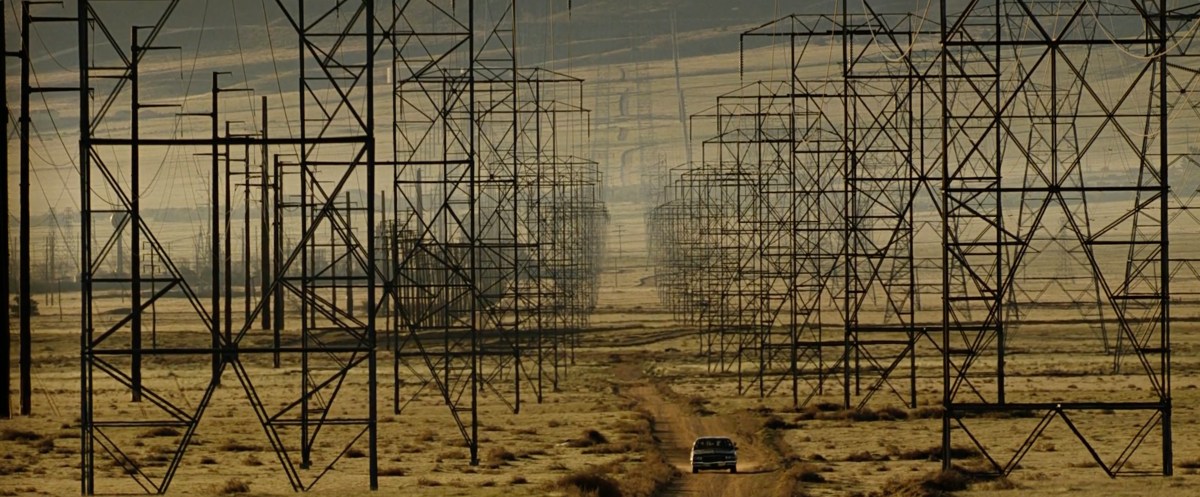
Near the end of David Fincher‘s 1995 masterpiece Seven, John Doe takes Somerset and Mills to the middle of nowhere to reveal his final surprise. They drive to a desolate area surrounded by high-tension power lines and towers. A combination of long lenses and wide lenses were used to alternate between images of long-lens compression of the space, and scattered wider lenses to illustrate the desolation of the environment.
Then comes this gorgeous shot. A simple, slow tilt down of the car racing down the road, filmed with a long lens. It’s breathtaking because it looks other-worldly, and some of that is due to the visual “compression” that happens to a scene filmed with a telephoto lens: objects that are far apart from each other “compress” in depth to look like they’re actually existing very close together in real-world space. Filmmakers make lens choices to give a scene a deliberate, artistic feel. It’s one of the many tools in a filmmaker’s toolbox.
Frame & Reference is a conversation between Cinematographers hosted by Kenny McMillan. Each episode dives into the respective DP’s current and past work, as well as what influences and inspires them. These discussions are an entertaining and informative look into the world of making films through the lens of the people who shoot them.
Igor Martinovic (Man on Wire, House of Cards: S02, The Night Of) and Vanja Černjul (Orange Is the New Black: S01, Marco Polo, Crazy Rich Asians), who grew up together in Croatia, talk about their experiences working with David Fincher in House of Cards: S02 (Igor), shooting a big production like House of the Dragon (Vanja), and making together the documentary Jim Henson: Idea Man directed by Ron Howard.
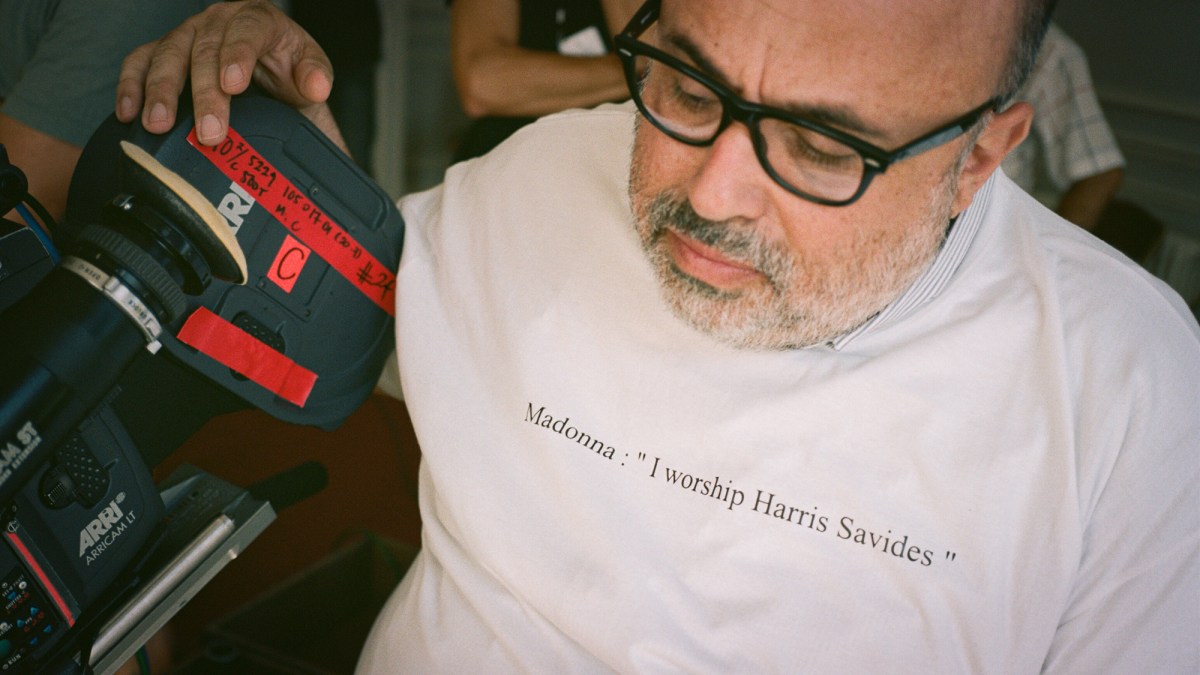
Sofia Coppola, Gus Van Sant, Noah Baumbach, Jonathan Glazer, David Fincher, and today’s best cinematographers reflect on the giant hole in the heart of cinema that was left when Harris Savides died in 2012.
When cinematographer Bradford Young was fresh out of Howard University, he would have done anything to get near the set of his idol Harris Savides. He eventually found a way to shoot behind-the-scenes footage for the French director Fabian Barron, who hired Savides to shoot an Armani fragrance commercial in Hawaii. When Young got to the forest set, with shafts of light streaming through the trees, he became confused when he flipped on his DV camera to capture the scene.
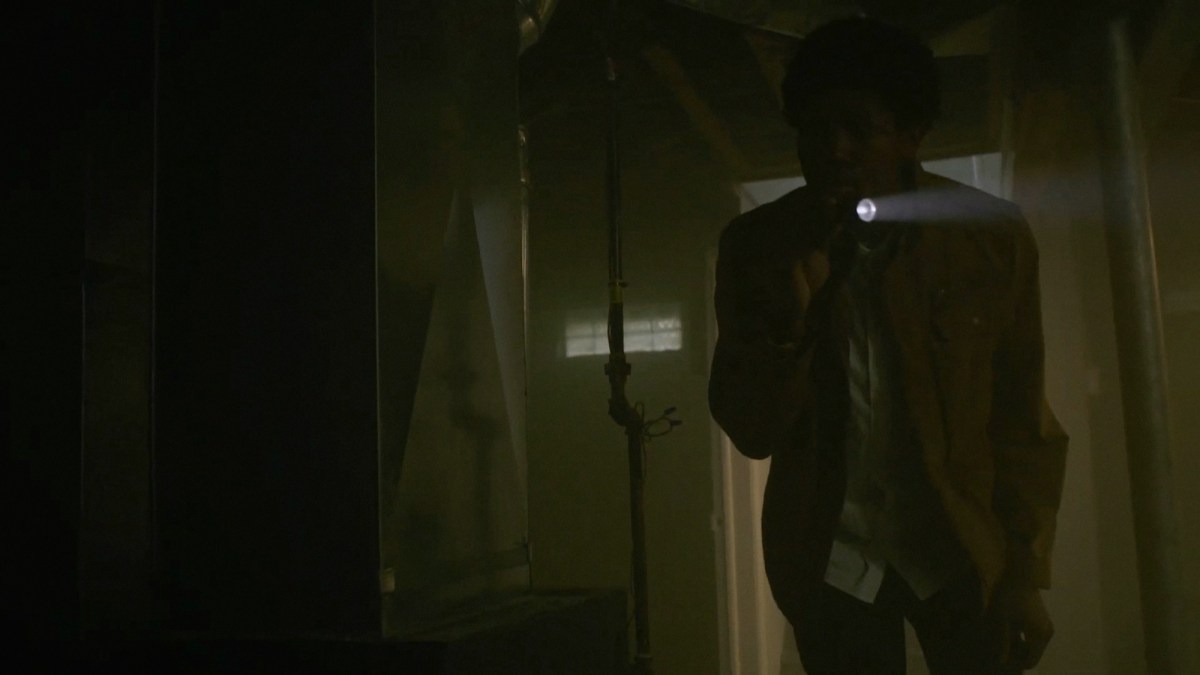
“The model came on set, and I was like, ‘How’s he going to light her face?,’” recalled Young, who couldn’t believe what happened next: Savides walked on to set with a flashlight in hand and shined it at the model. “He was completely secure with this little flashlight on this million-dollar set. With my eye on the day, I didn’t understand what was happening, ‘How’s he still getting exposure?’ And then I saw the commercial. It was that God particle thing that Harris had. This was complete technical mastery and a complete mystery to observe.”
David Fincher and Harris Savides, Zodiac (Merrick Morton, 2007)
There was a sense of magic surrounding what Savides was able to do. When discussing what his go-to cinematographer was using to light a scene, director David Fincher used to joke, “I don’t know, Harris’ got a jar of fireflies.”
“Beyond the technical process, there was always something else going on in the picture that I couldn’t account for, something that was only him,” writer/director Noah Baumbach told IndieWire. “Something that I guess we call genius.”
Garrett Sammons & Quinton Myricks July 31, 2024 Litepanels
In this episode of Inspired By, we step into the meticulously crafted universe of David Fincher. Host Garrett Sammons welcomes director Quinton Myricks to lift the veil on Fincher’s signature chilling style.
Join us live as we uncover how he utilizes reverse key lighting, reflections, and harsh light to craft his hauntingly beautiful worlds.
03:15: Introducing Quinton Myricks 07:30: Scene breakdown 1 16:30: Scene breakdown 2 22:48: Scene breakdown 3
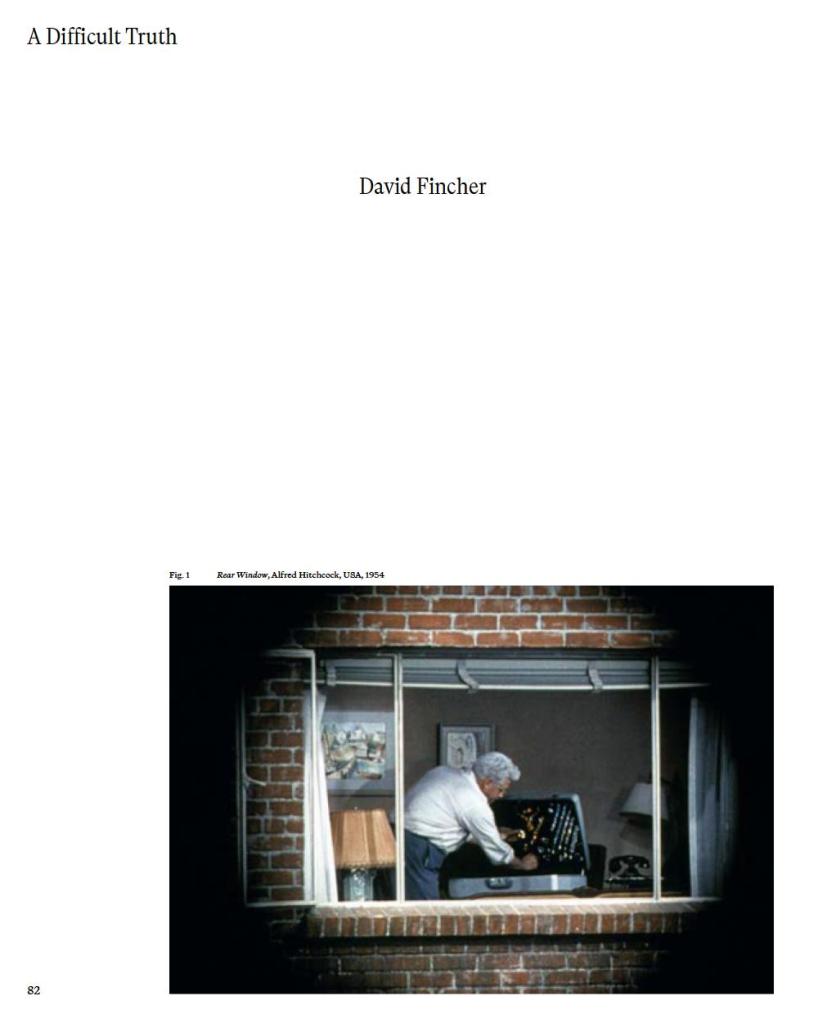
In tandem with his first-ever retrospective at the Albertina, a new book pairs the prolific photographer’s work with writings from directors David Fincher and Matthieu Orléan, and novelist Emily St. John Mandel, among others.
“I’ve always said that I think every artist has one central story to tell,” photographer Gregory Crewdson says on a call from Great Barrington, Massachusetts, where he lives and works. “And they circle around that story, over and over again, over a lifetime, reinventing aspects of it and challenging others and trying to push things forward. But at the core of it, it’s like the central preoccupations remain fixed.”
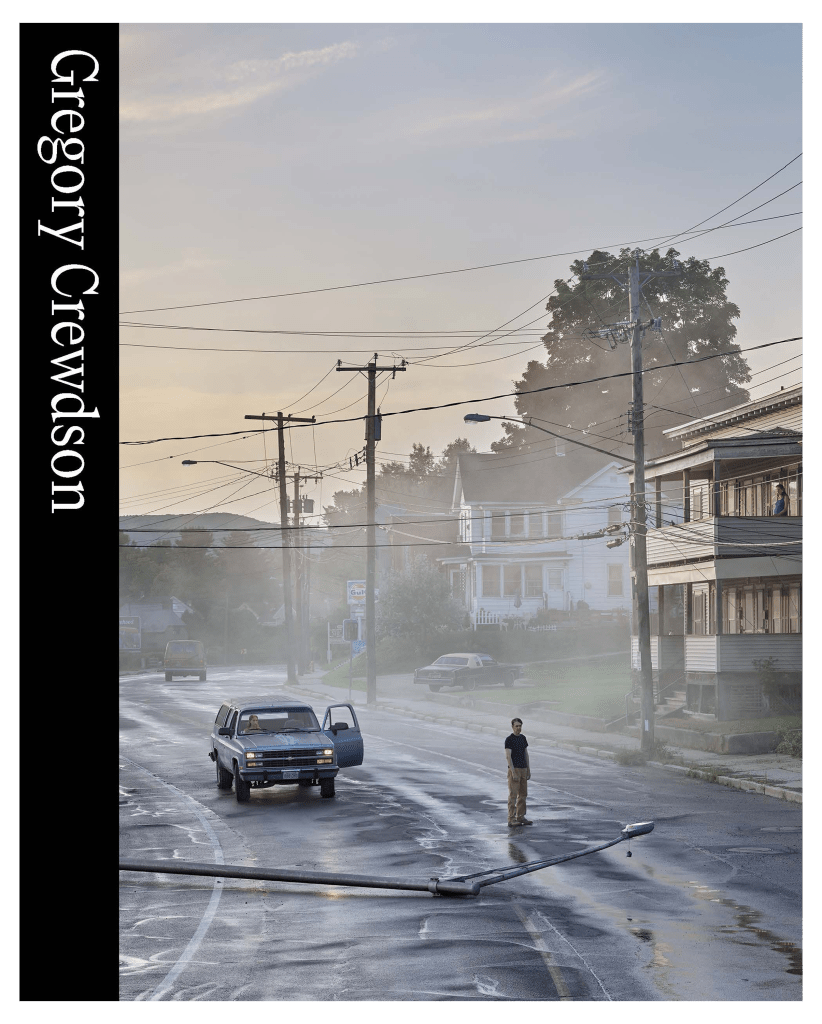
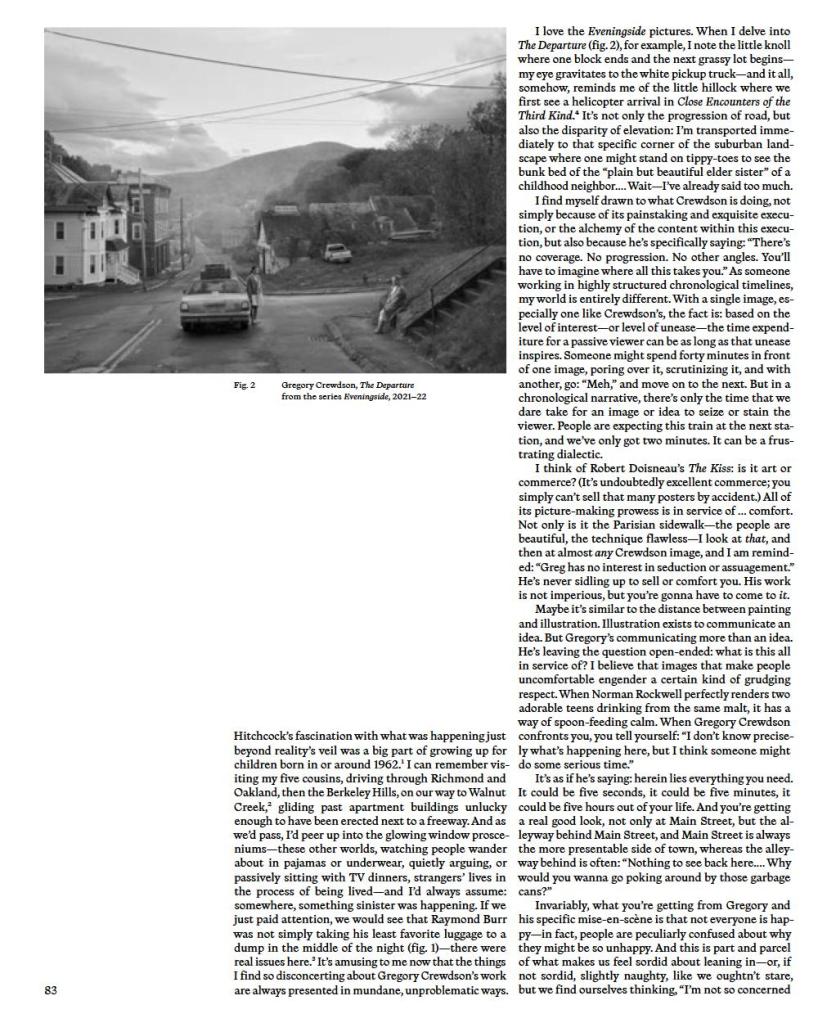
The concept is particularly timely for the photographer, who for the past three-and-a-half decades has been constructing gripping images that call to mind film stills, as his first-ever retrospective opened in May at the Albertina in Vienna. Later this month, the eponymous exhibition takes new form with the release of Gregory Crewdson, its 280-page catalogue edited by the Albertina’s chief curator of photography Walter Moser and published by Prestel. The book features more than 300 photographs and production stills that examine the complexities of American suburbia, be it through someone wandering a parking lot, shirtless and unmoored, or a twosome’s forlorn gazes into a television as its glow illuminates a basement, paired with writings from directors David Fincher and Matthieu Orléan, and novelist Emily St. John Mandel, among others.
Gregory Crewdson – Walter Moser, Editor (Prestel, 2024)
For Crewdson, the process of revisiting nearly 40 years of work was “complicated,” but led him to draw parallels between his earliest endeavors and present-day work. “It’s interesting in that on some basic level everything’s changed and then on another level, nothing’s changed really,” he says. “When I look back at pictures I made when I was in graduate school, [those are] the first pictures in the show, they’re not that dissimilar in terms of the basic concerns—on a much more modest scale, of course.”
In advance of the catalogue’s release, Crewdson spoke with Vanity Fair about the possibility of making the switch from photography to directing feature-length films, and the story he’s been telling all these years.
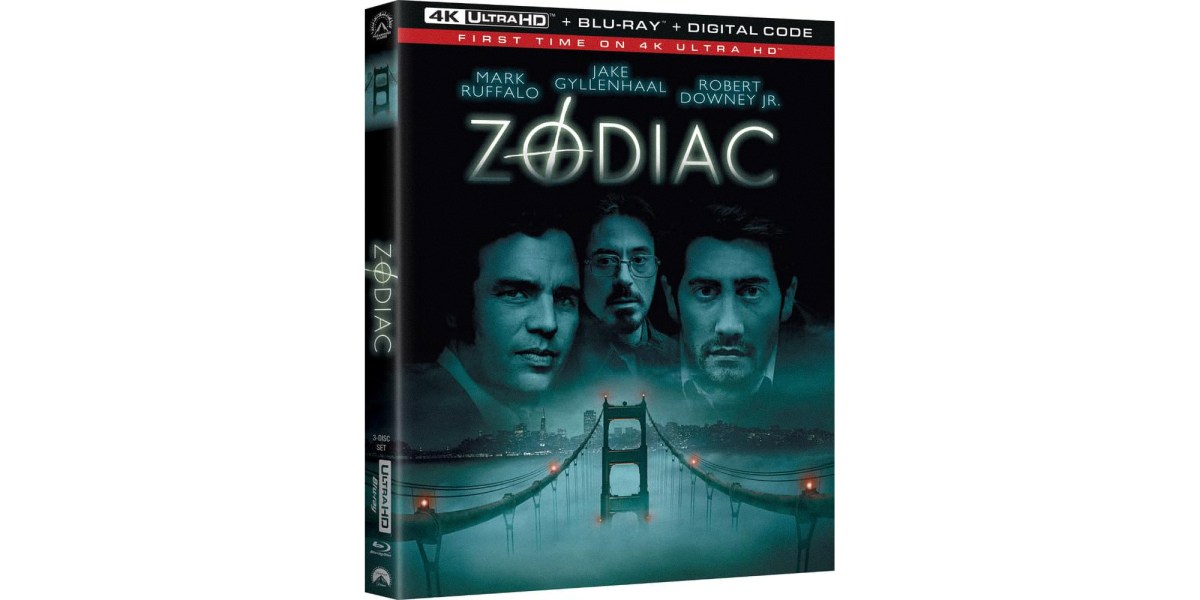
Paramount is releasing the 4K UHD Blu-ray + Blu-Ray + Digital Copy of David Fincher‘s Zodiac (2007) on October 29.
Based on the true story of the notorious serial killer and the intense manhunt he inspired, Zodiac is a superbly crafted thriller from the director of Se7en, Fight Club, and The Social Network. Featuring an outstanding ensemble cast led by Jake Gyllenhaal, Robert Downey Jr., Mark Ruffalo, Chloë Sevigny, Anthony Edwards, and Brian Cox, Zodiac is a searing and singularly haunting examination of twin obsessions: one man’s desire to kill and another’s quest for the truth.


 The Fincher Analyst