Avec « Mank », David Fincher sur les traces de « Citizen Kane » et de son père

C’est l’événement cinématographique de cet hiver. Avec « Mank », en ligne sur Netflix vendredi 4 décembre, David Fincher signe le portrait de Herman J. Mankiewicz, scénariste de « Citizen Kane ».

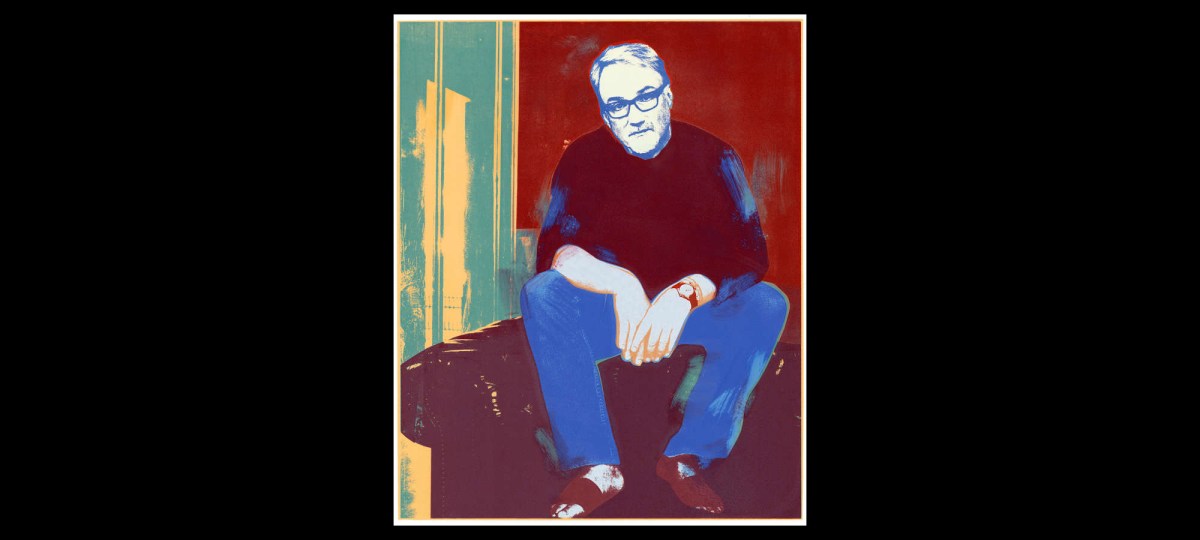
Le cinéaste David Fincher (Kate Gibb à partir d’une photo de Frank Ockenfels)

Samuel Blumenfeld
4 décembre 2020
Le magazine du Monde

Quand, au début des années 1990, son père a posé un scénario sur la table, David Fincher s’est contenté de regarder le titre inscrit sur la couverture. Mank. Il n’avait pas besoin d’en savoir plus. En un instant, il avait compris le sujet du récit que son père, Jack Fincher, journaliste, avait écrit. Une référence au diminutif par lequel ses pairs, à la cantine de la MGM – le studio hollywoodien le plus prestigieux des années 1930 et 1940 (Autant en emporte le ventLe Magicien d’Oz…) –, désignaient l’un des plus brillants scénaristes de sa génération, Herman J. Mankiewicz.

Ce dernier, frère du célèbre réalisateur Joseph L. Mankiewicz, oscarisé pour Chaînes conjugales (1949) et Eve (1950), était un touche-à-tout de génie. Un scénariste capable de proposer d’instinct que les séquences au Kansas du Magicien d’Oz soient tournées en noir et blanc et celle à Oz en couleurs, assurément l’utilisation la plus judicieuse d’un effet spécial à l’écran. Herman J. Mankiewicz était aussi l’auteur du scénario qui donnerait, en 1941, naissance à ce qui est communément désigné comme le plus grand film de l’histoire du cinéma : Citizen Kane.

A 7 ans, David Fincher avait entendu son père parler du chef-d’œuvre d’Orson Welles. S’il n’avait pas compris grand-chose, l’enfant avait saisi l’admiration portée au film, quasiment une dévotion. Alors, en ce début des années 1990, à presque 30 ans, le réalisateur de clips vidéo et de films publicitaires le plus talentueux de la planète pouvait légitimement prétendre devenir le destinataire de ce scénario. Mais ses états de service n’apparaissaient pas assez convaincants aux yeux de son père.

Ce journaliste, qui venait de prendre sa retraite – il dirigeait le bureau à San Francisco de l’hebdomadaire Life –, avait écrit ce scénario et discuté du projet avec son fils mais sans jamais rien mettre en branle pour le voir adapté à l’écran. Il s’était contenté de rêver ce film, imaginant le voir réalisé par un cinéaste de sa génération, un aventurier comme John Huston, par exemple. Le réalisateur du Trésor de la Sierra Madre (1948) et d’African Queen (1951) avait été boxeur, chasseur d’éléphants et collectionnait l’art précolombien. « Moi, en comparaison, soupire Fincher, j’avais fait quoi ? Réalisé des vidéos avec Madonna et des publicités pour Pepsi et Nike ? Ce n’est pas l’image du réalisateur qu’il se faisait. »
Article réservé aux abonnés

How Mank director David Fincher found his perfect Orson Welles

Maureen Lee Lenker
December 05, 2020
Entertainment Weekly

Few figures from Hollywood’s Golden Age loom as large as Orson Welles.

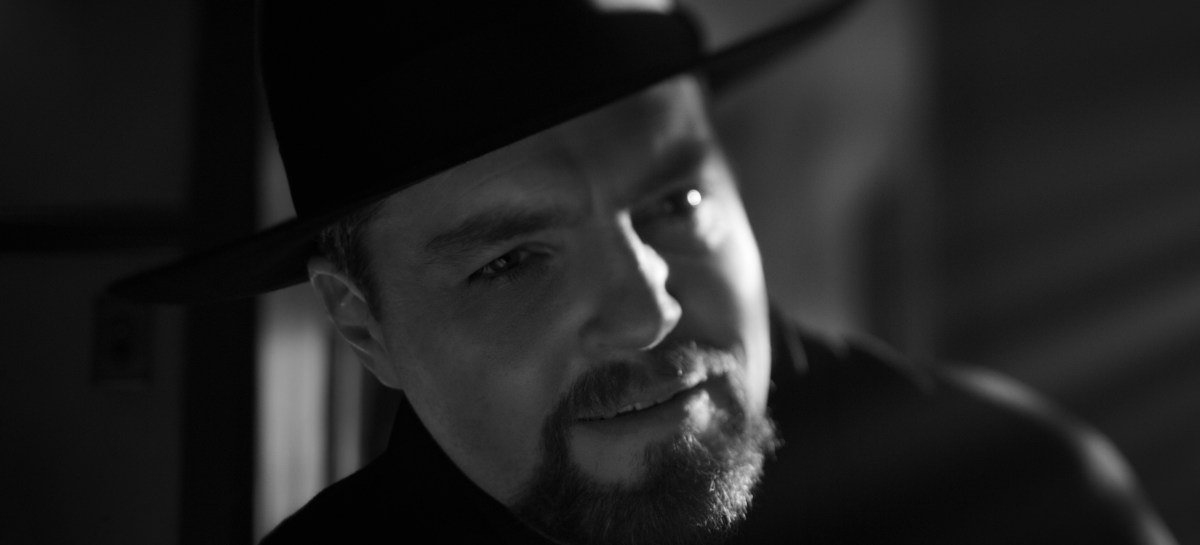
The mercurial wunderkind first made a name for himself with his voice, in his Mercury Theater‘s Shakespeare productions and his iconic radio adaptation of The War of the Worlds. Then he took Hollywood by storm as a creative force, acting, directing, and producing his own work, including his most famous film, Citizen Kane, which is central to David Fincher‘s new movie Mank.

As Welles aged, he became larger than life, both in his increasing girth and his tempestuous approach to filmmaking, a realm in which he was often at odds with studio brass and even himself (see: the long-unfinished The Other Side of the Wind).

How then do you find the right person to portray such a towering figure? It’s been done before several times, by the likes of Vincent D’Onofrio, Angus MacFadyen, and even Jack Black.

Read the full profile

Tom Burke on Orson Welles

Antonia Quirke
December 3, 2020
The Film Programme (BBC)

Actor Tom Burke reveals how he perfected the voice of Orson Welles for his new film, Mank, and Rob Savage explains how he made lockdown horror movie Host.

Listen to the podcast

How Steven Soderbergh’s Only Complaint About ‘Mank’ Changed the Editing of a Key Scene

Soderbergh’s critique of the costume party set piece proved valuable to Fincher and editor Kirk Baxter.

Bill Desowitz
December 4, 2020
IndieWire

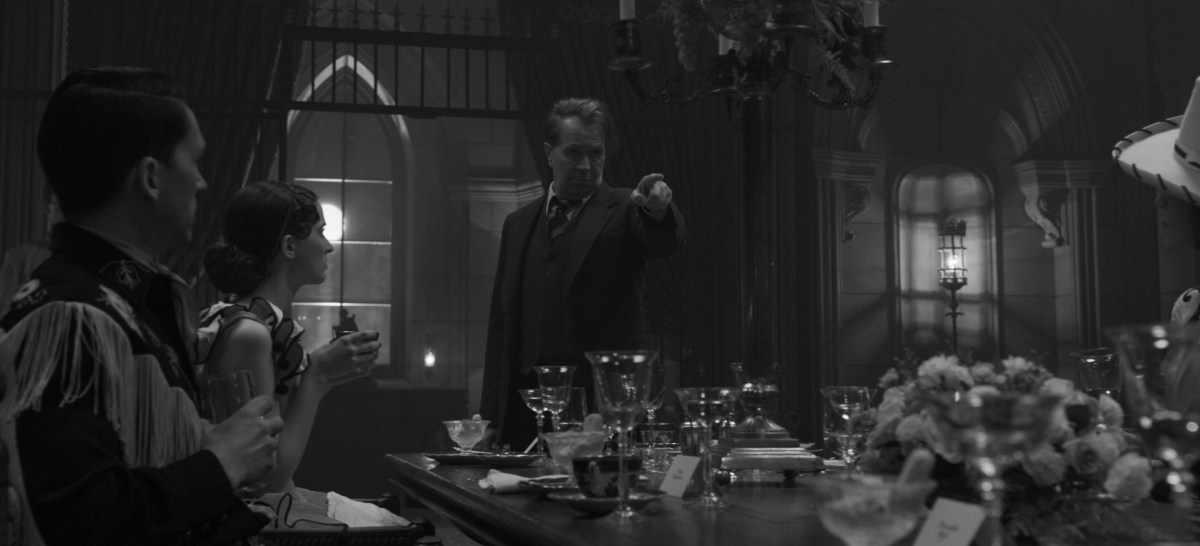
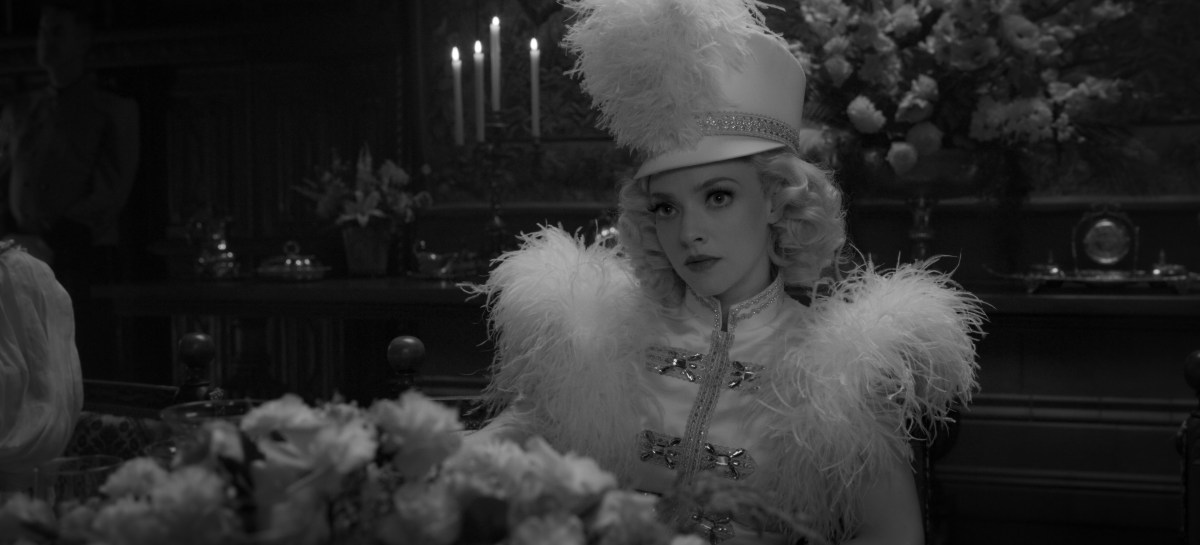
David Fincher pal Steven Soderbergh often consults on early cuts of his movies (including the friendly product placement of Soderbergh’s imported Singani 63 brandy in “Gone Girl”)  —  and “Mank” was no different. Turns out Soderbergh’s only complaint about the “Citizen Kane” biopic was the execution of the costume party set piece, where drunken screenwriter Herman J.  Mankiewicz (Gary Oldman) goes on a long tirade against Machiavellian publisher William Randolph Hearst (Charles Dance) in front of his Hollywood friends at San Simeon.

“Soderbergh came during an early assembly and he just didn’t get why Hearst was putting up with Mank’s shit,” said editor Kirk Baxter (two-time Oscar winner for “The Girl with the Dragon Tattoo” and “The Social Network”). “And David and I talked about that. I very much make a movie with David, for David, and I’m not exposed to too many people during the process. But I found that the criticism helped. It didn’t provide the answer, it just provided the question.”

Read the full profile

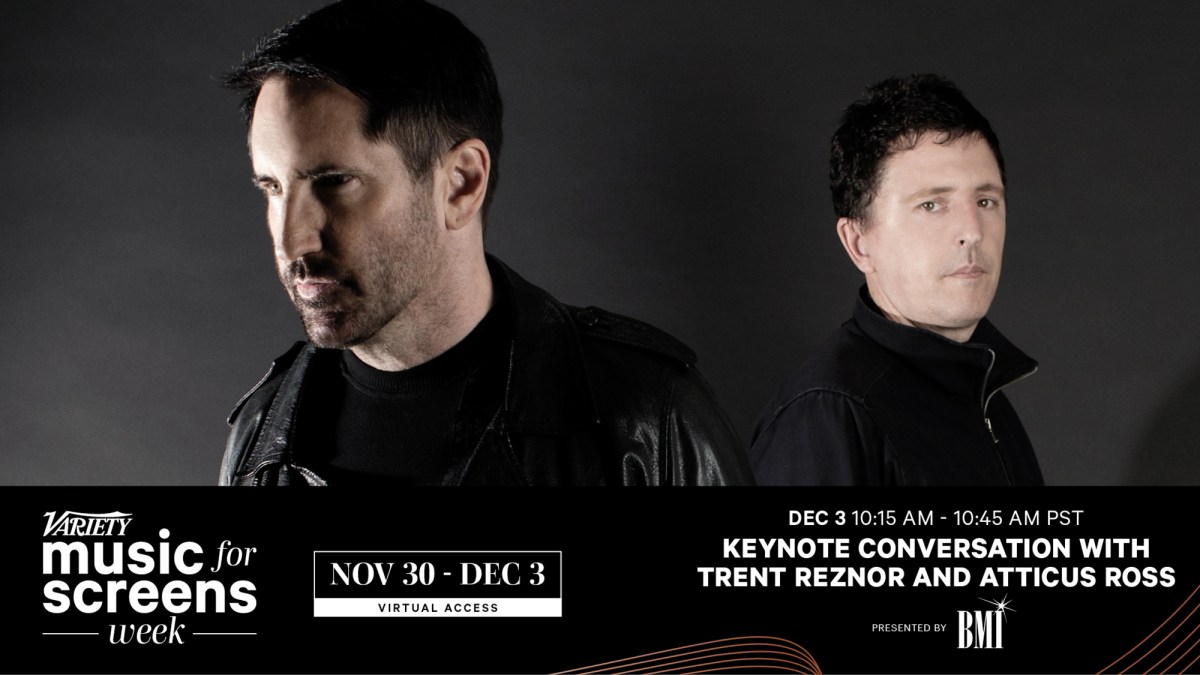
Variety’s Music for Screens Week: Keynote Conversation with Trent Reznor and Atticus Ross

Shirley Halperin, Executive Editor of Music at Variety
December 3, 2020
Variety

Scoring Films Allows Writers to Explore a Range of Styles

Members of Nine Inch Nails produce more than just rock content. During the keynote conversation with Trent Reznor and Atticus Ross, moderator Shirley Halperin dug into their scoring success on a range of film projects, from “The Social Network” to “Watchmen,” “Soul” and “Mank.”

Writing music for the screen has given the artists their fair share of challenges, the most recent being composing big band and orchestral scores. But without the opportunity to score films, the band members said they’d miss out on exploring the various realms of music.

“We feel really proud to be involved, and proud of the journey that we were put on,” Reznor said. “That’s one of the things that’s great about working on films. In our life in Nine Inch Nails, we kind of don’t know what to expect — we have a pretty good idea of what road we’re going to go down or what the future might hold. With film, it’s like you’re on a finite, intense journey that might lead you down paths that in our other lives we wouldn’t get to go on.”

Watch the Keynote Conversation with Trent Reznor and Atticus Ross:

Watch the full video

David Fincher: Hollywood’s Most Disturbing Director

With films including Se7en, Zodiac and Fight Club, David Fincher has explored the darkest edges of humanity. Yet there’s more to his unique vision, writes Gregory Wakeman, as the director’s film Mank is released.

Gregory Wakeman
December 3, 2020
BBC Culture

David Fincher fans have had plenty to celebrate over the past few months. September marked the 25th anniversary of Se7en, Fincher’s deeply disturbing psychological thriller that established the then 33-year-old as one of the most iconoclastic young directors in Hollywood. Then, just a couple of weeks later, The Social Network, Fincher and screenwriter Aaron Sorkin’s searing exploration of Mark Zuckerberg and the origins of Facebook, turned 10. Most exciting of all for Fincher aficionados, though, is the fact that, more than six years after the release of his last feature film Gone Girl, Mank will finally arrive on Netflix on 4 December.

Fincher has waited around 20 years to find the perfect home for the film, which was originally written by his father Jack in the late 1990s. But while most major Hollywood studios were put off by the idea of a black and white biopic of Citizen Kane screenwriter Herman J Mankiewicz, Netflix gave Fincher carte blanche to fulfil his vision.

The early reviews for Mank have been extremely positive, and Fincher has immediately become one of the main contenders for the best director Oscar. Covid-19’s disruption of the 2020 cinematic calendar means that Fincher’s competition isn’t quite as strong as it could have been. But it’s to the Academy Awards’ great shame that this titan of modern filmmaking has somehow only received best director nominations for The Curious Case of Benjamin Button and The Social Network. Despite this oversight, Fincher’s place in the cinematic pantheon has long been secure. No other modern filmmaker has examined alienation, depression, obsession, and the dark side of intelligence like he has, while keeping a stylish, visceral, and, most importantly of all, entertaining approach. 

But what is it that sets Fincher’s work apart from that of his peers?

David Fincher’s Theory of Moviemaking

“If you think that you can direct a movie and not in some way show your hand as to who you are, you’re nuts,” the Mank filmmaker told The Atlantic.

David Sims
December 4, 2020
The Atlantic

David Fincher’s new film, Mank,begins with a title card announcing the arrival of one of cinema’s first real auteurs. “In 1940, at the tender age of 24, Orson Welles was lured to Hollywood by a struggling RKO Pictures with a contract befitting his formidable storytelling talents,” it reads. “He was given absolute creative autonomy, would suffer no oversight, and could make any movie, about any subject, with any collaborator he wished.” Then the score’s ominous piano notes kick in, as if Hollywood is greeting this proclamation of artistic control with dread.

Mank, however, isn’t about the famed director who went on to make Citizen Kane. It’s about a man who spent a short but pivotal time in Welles’s orbit: Herman J. Mankiewicz, the co-writer of Citizen Kane. A lowly scriptwriter might seem like a curious subject for Fincher, one of cinema’s best-known filmmakers, whose reputation for exacting attention to detail and on-set rigor is unmatched. And there’s a sweet sort of irony to the fact that this modern-day auteur’s first film about moviemaking spotlights a Hollywood gadfly who had to fight to be recognized for his contribution to a masterpiece. But in some ways, Fincher has been waiting almost 30 years to make Mank, which feels steeped in his observations of, and grievances with, the movie industry.

The genesis of Citizen Kane has long been a matter of furious debate among cinephiles, a proving ground for arguments about directorial auteurism versus greater collaboration. But that thread is of secondary importance to Mank, which debuts on Netflix today. “I was never interested in the idea of who wrote [Citizen Kane],” Fincher told me. “What interested me was, here’s a character who, like a billiard ball or pinball, sort of bounced around in this town that he, by all accounts, seemed to loathe, doing a job that he seemed to feel was beneath him. And then for one brief, shining moment, he stood his ground because—and I feel that this is entirely due to Welles—he was given an opportunity to do his best work.”

Read the full profile

“Building the Character a Closet”: Costume Designer Trish Summerville on the 1930s Hollywood Style of David Fincher’s Mank

Tomris Laffly
December 4, 2020
Filmmaker

A repeat David Fincher collaborator after The Girl with the Dragon Tattoo (2011) and Gone Girl (2014), multi-award winning costume designer Trish Summerville has been signing her name onto numerous challenging film and TV projects throughout her storied, genre-spanning career, including the likes of The Hunger Games: Catching Fire and Red Sparrow. But Mank—Fincher’s meticulous creation of the Golden Age of Hollywood through the story of Herman J. Mankiewicz’s writing of Citizen Kane—and working in black-and-white presented a new challenge for the artisan, who had only done small projects in monochrome previously. “We were lucky; we were able to do a lot of camera tests prior to shooting,” explains Summerville. During the prep, her process included placing period-specific garments in various settings and taking black-and-white photographs of them on her phone, just to see how the colors would translate. “I was figuring out what’s going to be the closest to the lighting and the [shooting] style,” she recalls. “And then [focusing on] the details you see: what colors read well in black and white, what completely disappears, goes flat or absorbs too much light. I was looking for things that fit different scenes and have reflective qualities.”

Summerville went wide and varied for her detailed research of the era, reaching for magazines and looking at real-life photographs and cinematic references as much as possible. She kept a close eye towards representing every walk of Hollywood life, in order to project a complete and credible vision of the time. “As a costume designer, I don’t want to just have a fashion show,” Summerville says. “I’m into character development. I really enjoy working with actors, helping them get to that character, letting them have a new adventure in a new journey.”

Summerville recently spoke with Filmmaker, breaking down the intricate details of her work on Mank.

Read the full interview

‘Mank’ Production Team on Creating a Feast for the Eyes and Ears for the Netflix Period Film

Jazz Tangcay
December 4, 2020
Variety

In David Fincher’s “Mank,” bowing Dec. 4 on Netflix, a key sequence takes place at Hearst Castle, when Gary Oldman’s Herman J. Mankiewicz shows up drunk and unannounced at a lavish dinner party thrown by newspaper tycoon William Randolph Hearst, played by Charles Dance.

Filming is normally not allowed at the actual estate, with Lady Gaga’s “G.U.Y.” video the rare exception. So production designer Donald Graham Burt and Fincher spent months tracking down locations around Los Angeles that could stand in for the grand mansion. Interiors and exteriors were shot at a Pasadena estate, the Huntington Gardens, in Malibu and on soundstages, all carefully decorated to give the feel of San Simeon if not the exact details.

It was up to sound mixer Ren Klyce to capture the extravagance that Fincher sought when filming those scenes. Klyce reverse-engineered the mix — distorting sounds, lowering the dynamic range and limiting the high frequency to take audiences back to 1930s Hollywood and the “Citizen Kane” era.

Burt and Klyce break down how they re-created the estate and captured the aura of wealth.

Mank: Final Trailer

Netflix

Starring Academy Award Winner Gary OldmanAmanda SeyfriedLily CollinsArliss HowardTom PelphreySam TroughtonFerdinand KingsleyTuppence MiddletonTom Burke, and Charles Dance.

Directed by David Fincher.

𝙸𝚗 𝚜𝚎𝚕𝚎𝚌𝚝 𝚝𝚑𝚎𝚊𝚝𝚎𝚛𝚜 𝙽𝚘𝚟𝚎𝚖𝚋𝚎𝚛 𝚊𝚗𝚍 𝚘𝚗 Netflix 𝙳𝚎𝚌𝚎𝚖𝚋𝚎𝚛 𝟺

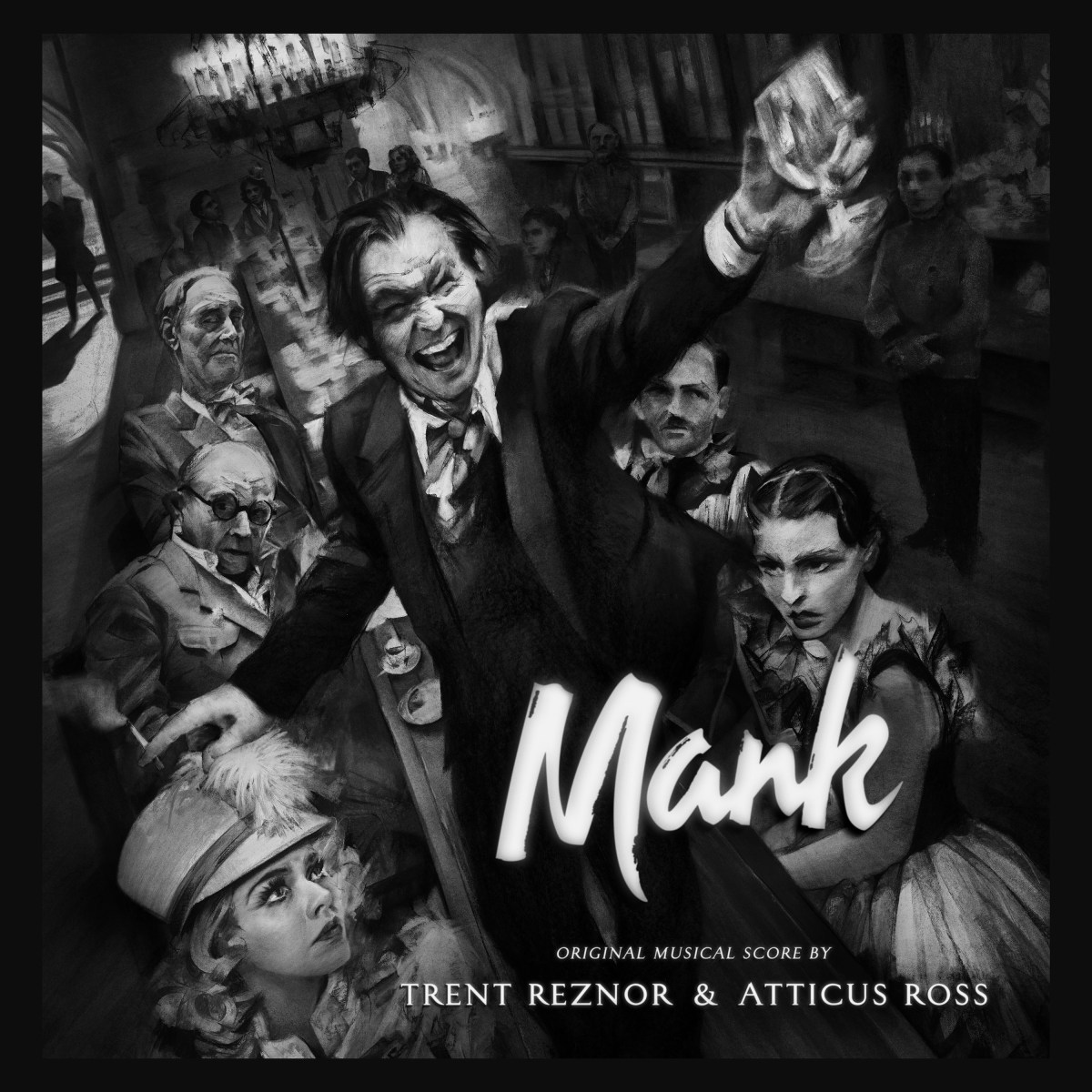
Mank: Original Musical Score by Trent Reznor & Atticus Ross

nin.com
December 4, 2020

Trent and Atticus’ score for David Fincher’s new film Mank is out now! You can find it in all the expected places:

Apple Music
Spotify
Amazon Music
TIDAL
deezer
napster

The score contains 52 tracks and is over 90 minutes of music from the film.

However… if you’d like the DEFINITIVE Mank musical experience, we’re offering the complete score along with an ADDITIONAL TWO HOURS of unreleased music and demos from the Mank sessions available exclusively at:

Bandcamp

These are additional and alternate compositions that didn’t get used in the film along with a selection of Trent and Atticus demos pre-orchestration. Obviously these are available in the format of your choice, including lossless.

Vinyl fans: we will be offering the score on vinyl early next year. The vinyl score will NOT contain the extra two hours of material.

Netflix’s ‘Mank’ to Submit Original Song From Composers Trent Reznor and Atticus Ross

Clayton Davis
December 4, 2020
Variety