The brief was to recreate a section of 1930s Wilshire Boulevard to play on an LED rear projection behind Mank and his wife Sara. Authenticity was key, we wanted to ensure this recreation blended into the background seamlessly and convincingly. The final sequence feels very much as David described in our initial brief: “We’re making a 1930s style film with rear projection, but with the very latest digital technology we’ve been able to improve upon it and transport the audience back to Hollywood’s golden era.”
Simon Carr, VFX Supervisor at Territory Studio:
“It was a great privilege to work on such a visually stunning movie for an eminent director, and to be able to dive into recreating the period details of 1930’s Wilshire Boulevard. To see the sequence come together in-camera as a perfect blend of old style and new technique is the essence of how VFX should be used.”
How will filmmaking adapt in the post-Covid era? A glimpse into the future is afforded by Mank, the forthcoming Netflix feature project directed by David Fincher and spearheaded by producer Ceán Chaffin. More than a love letter to a catalog title, Mank is a glimpse of the complex interplay of human creativity and the filmmaking process as practiced in Hollywood’s golden era.
Fincher is known for working in the vanguard of filmmaking technology. Examples include a very early digital intermediate on Panic Room – the first ever in a facility designed for the purpose – and Zodiac, one of the first major features to be shot almost entirely digitally. The remote collaboration envisioned by futurists at the dawn of the internet era was already common practice for his team long before the pandemic.
“Fortunately, we have not missed a beat,” says Chaffin. “We are working now exactly how we mostly could have been working the past ten years, which is working from home during post.”
But the virus and its requirement to remain physically apart may constitute a final push for the industry at large. All the attributes of true remote connectivity – reduced travel time and its attendant benefits in terms of stress, pollution and time savings, enhanced with rapid feedback, superior organization and a centralized database – will still be applicable when health concerns subside.
A canvas of the top pros on David Fincher’s team indicates that while the pandemic naturally raises stress levels, the need to work separately has been essentially a non-factor in terms of their ability to collaborate efficiently and keep the production on track.
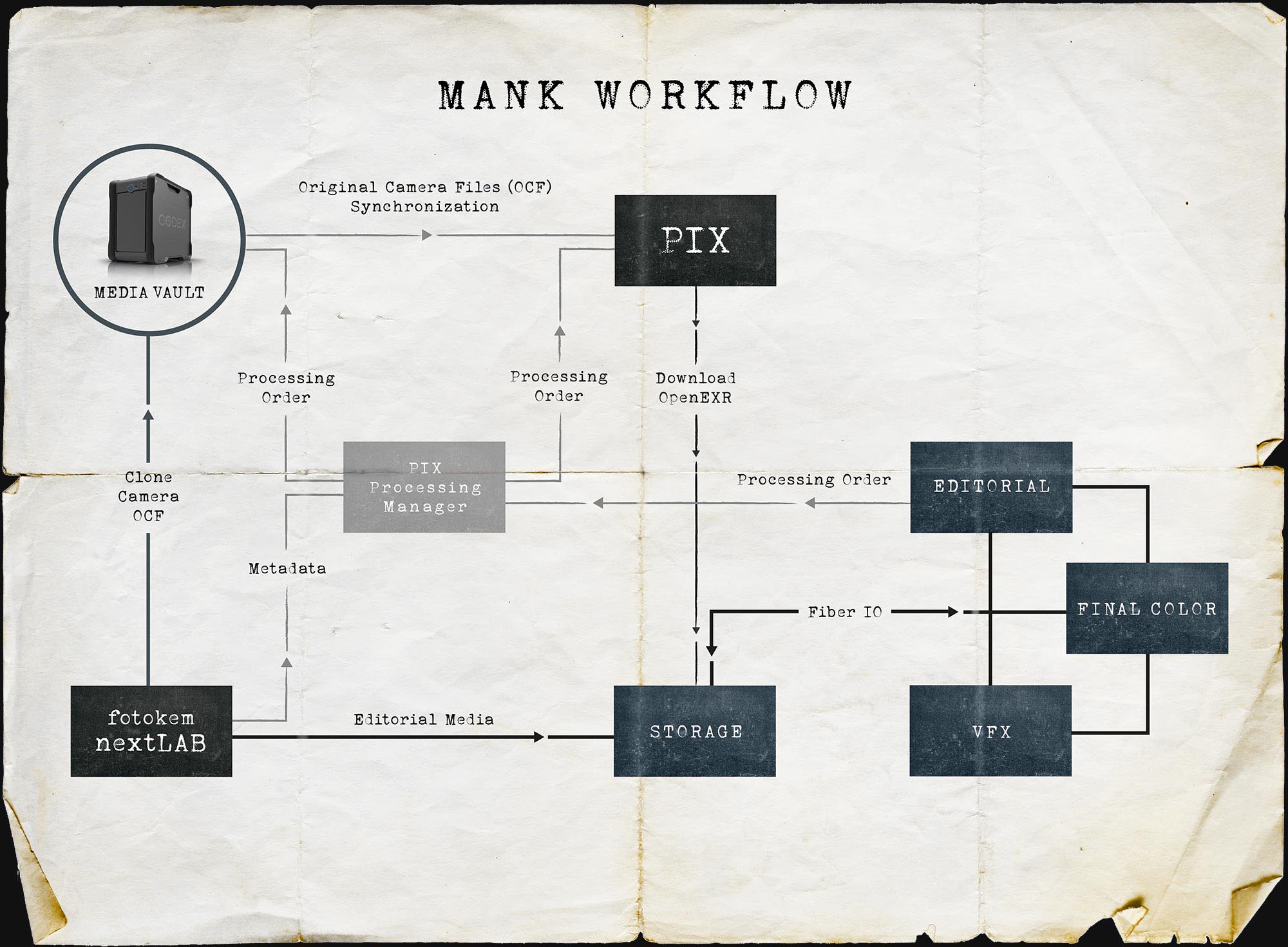
Fincher came to the project with a mandate that the production work with the PIX production hub. Chaffin, who has made nine films with Fincher, says that the system is an essential tool for collaboration and input.
“This is how we have worked for a long time.” says Chaffin. “David feels the team is making the film with him, sharing in the problem-solving. Even when we were in the same building, David was often responding exclusively through PIX. His preferences and concerns are there for everyone to refer to. You don’t have to go find that one email, or remember a comment someone made on their way out the door.
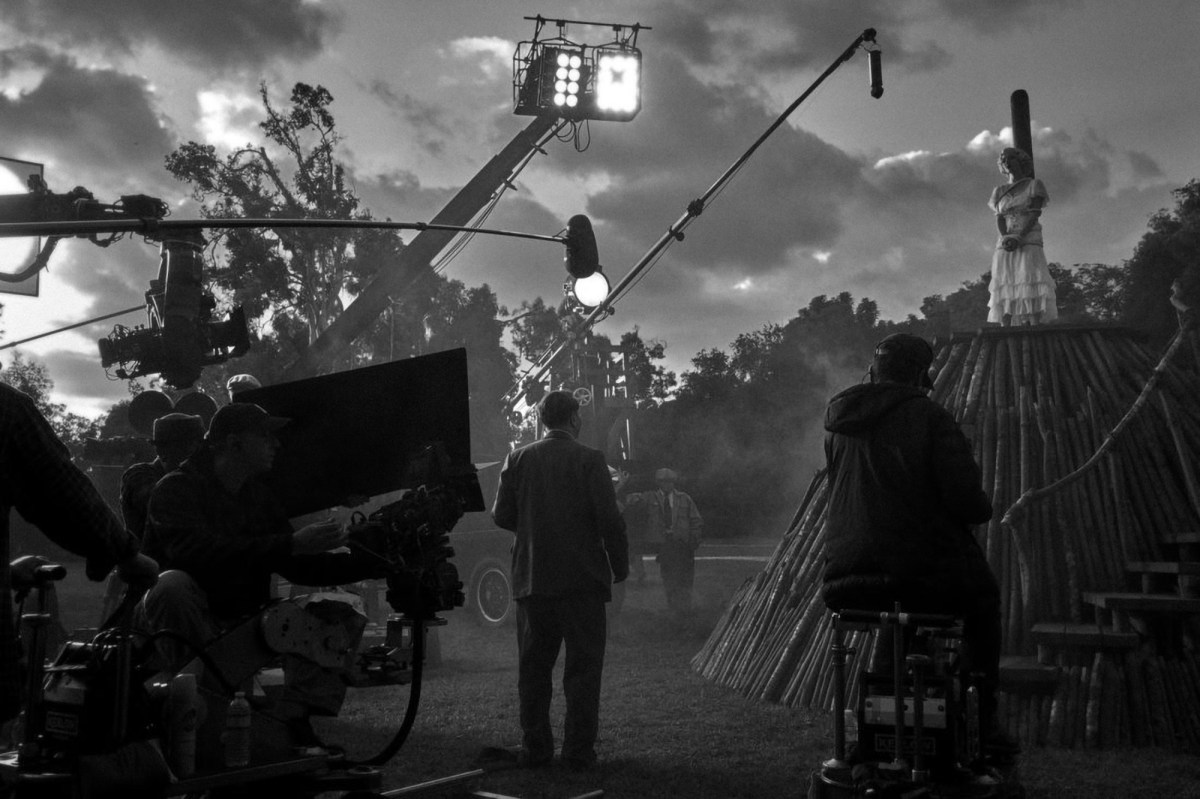
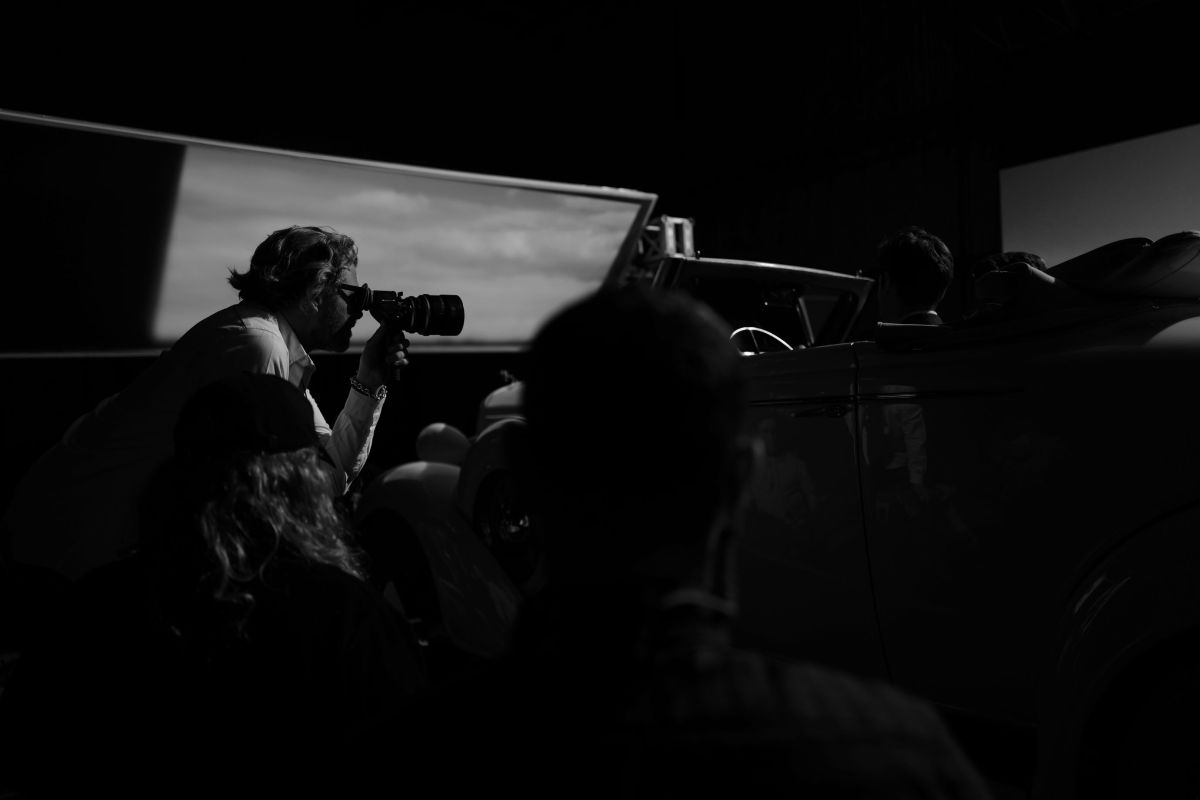
Shooting your first movie as a cinematographer is always a somewhat daunting prospect, but imagine your first movie is a 1930s-Hollywood set story about the writing of one of the greatest films ever made, boasting a cast of some of the best actors working today. Oh, and it’s in black-and-white. And the director? David Fincher.
That’s exactly what happened to Erik Messerschmidt, who got the call from Fincher that the director behind Zodiac, The Social Network, and Fight Club wanted him to be the cinematographer on his next film, Mank. The results? Absolutely stunning. Messerschmidt’s demeanor about the ordeal? Cool as a cucumber.
Messerschmidt first worked with Fincher as a gaffer on his 2014 film Gone Girl (an underrated entry in Fincher’s filmography, IMO) and then worked intimately with the filmmaker on the first two seasons of his Netflix series Mindhunter. Messerschmidt shot nearly every episode of Mindhunter, and in doing so developed a short-hand with Fincher. Which may be one of the reasons the director hired Messerschmidt to tackle one of his most visually ambitious films yet.
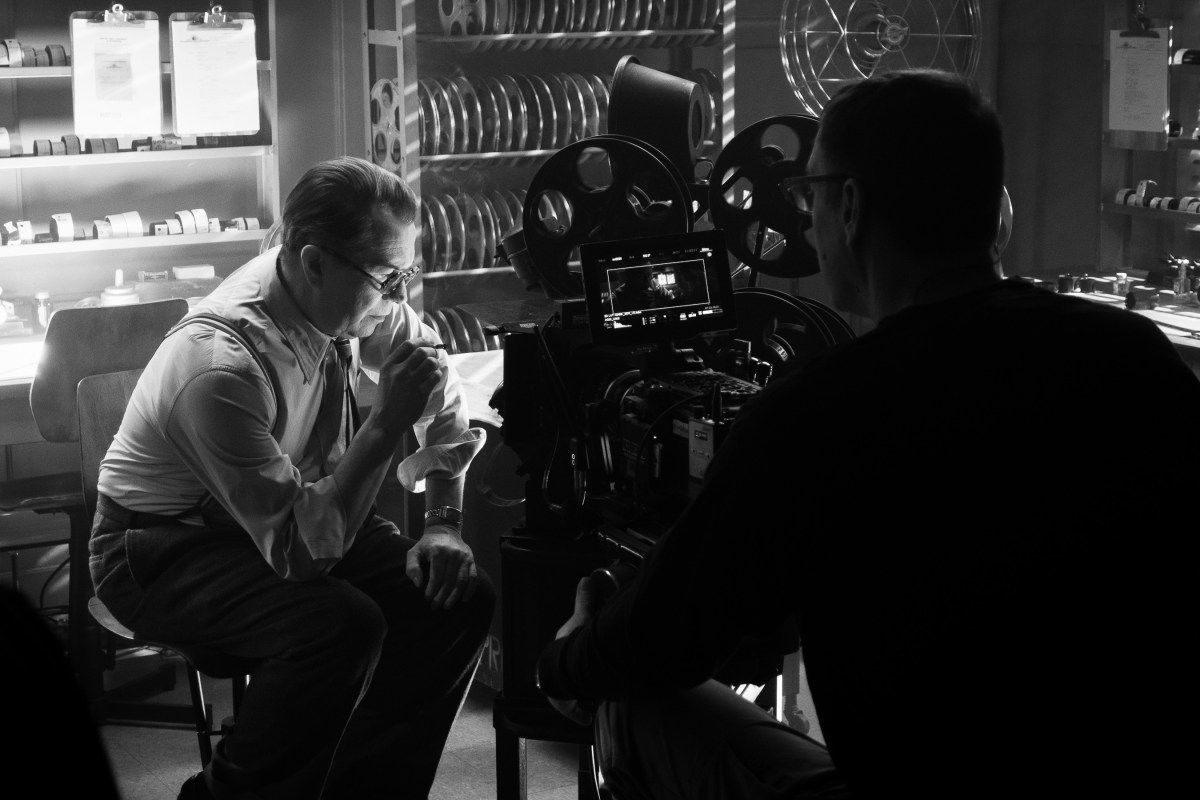
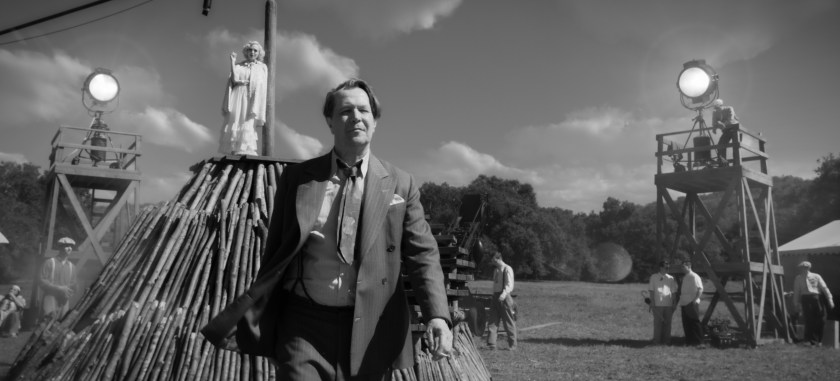
Mank takes place in Hollywood throughout the 1930s as it follows screenwriter Herman J. Mankiewicz (Gary Oldman) and the process by which he wrote the first draft for what would become Citizen Kane. The film alternates between Mank’s writing process and his trials and tribulations in Hollywood that would inspire some of the characters and situations in Citizen Kane, including a kinship with actress Marion Davies (Amanda Seyfried) and an association with publishing magnate William Randolph Hearst (Charles Dance).
Mank is alternately jubilant and melancholic as it essentially tells the story of a talented, fun-loving writer with a knack for zingers who is somewhat changed by what he sees throughout the 1930s, and shoots his shot when Orson Welles comes a-calling.
The film is presented entirely in black-and-white with visual allusions to Citizen Kane’s groundbreaking cinematography, and when I recently got the chance to speak with Messerschmidt at length about his work on the film, he pulled back the curtain on the process through which he and Fincher brought this story to life in living monochrome.
During our 45-minute conversation, the cinematographer explained why he and Fincher never considered shooting on film, and discussed the lengthy testing process by which they ultimately found the winning formula to achieve a look that fits right in with the films made in the 30s and 40s. He also broke down the process of filming specific sequences, including Mank and Marion’s nighttime walk (shot day-for-night) and the two epic party scenes.
Jennifer Chung, Assistant Editor Ben Insler, First Assistant Editor Peter Mavromates, Post Producer
In this panel, you’ll hear Team Fincher discuss their TV and feature film workflows and see how they used the new Productions feature in Premiere Pro along with After Effects in a completely remote scenario during the pandemic.
They’ll also discuss their career paths and give advice on how to succeed as a professional editor.
There was never any doubt that David Fincher was going to shoot “Mank” in black-and-white. His biopic about alcoholic and acerbic screenwriter Herman J. Mankiewicz (Gary Oldman) struggling to churn out a first draft of “Citizen Kane” cried out for monochromatic treatment. And yet Fincher and cinematographer Erik Messerschmidt (“Mindhunter”) were not about to indulge in a “Kane”-like re-enactment, or be confined to shooting on film, or composing in the period accurate aspect ratio of 1.37:1. Not with Fincher’s digital prowess and penchant for the 2.39: 1 widescreen format.
So Fincher and Messerschmidt struck a balance between retro and modern, taking advantage of the director’s efficient digital workflow to approximate the look of a movie made around the time of “Kane” in 1940 yet “Photographed in Hi-Dynamic Range” (as the title card proclaims).
“Filmmaking has always been a medium where we selectively employ the techniques that are available on the day,” Messerschmidt said. But shooting in black-and-white was a lot to unpack for the cinematographer, who had only done a few music videos and commercials outside of still photography and film school projects.
Technically, “Mank” is the story of how the script for what’s often considered the greatest movie ever made, “Citizen Kane,” may have been written. But there’s a lot more to David Fincher’s deep-focused, black-and-white, flashback-filled Netflix movie, which starts streaming on the service Friday, Dec. 4.
Built on a screenplay written by the director’s father, the late Bay Area journalist Jack Fincher, “Mank” is a speculative swirl of 1930s Hollywood and California history. The new film has already rekindled the controversy over whether veteran screenwriter Herman Mankiewicz (played by Gary Oldman) or 25-year-old, first-time director/star Orson Welles (Tom Burke) was the primary author of “Citizen Kane.”
The main show, however, revolves around alcoholic Mankiewicz’s memories. Some of those involve his friendship with the actress Marion Davies (Amanda Seyfried) and, at more of a remove, her powerful lover, newspaper baron William Randolph Hearst (Charles Dance). The model for Welles’ fictional Charles Foster Kane, Hearst — whose company owned the San Francisco Examiner at the time and now runs The Chronicle — famously exerted his considerable clout to have “Citizen Kane” squelched before it was released in 1941.
Speaking to The Chronicle by phone from Los Angeles, the Marin County-raised Fincher responded nimbly when informed he was talking to a Hearst publication.
When costume designer Trish Summerville first started working on David Fincher’s new Netflix film Mank, “even people in my crew and friends were like, ‘This would probably make things so much easier.” That’s because the film is shot in black and white. In fact, though, the opposite was true. “It actually made it a bit more difficult,” says Summerville. “When you shoot in color, you have all these different shades and tones you can work with and you can do stuff that’s tone on tone.”
What she found out — while researching the period and visiting costume rental houses, where she took photos of garments in black and white — is that not only are many options are no-go but that other problems present themselves.
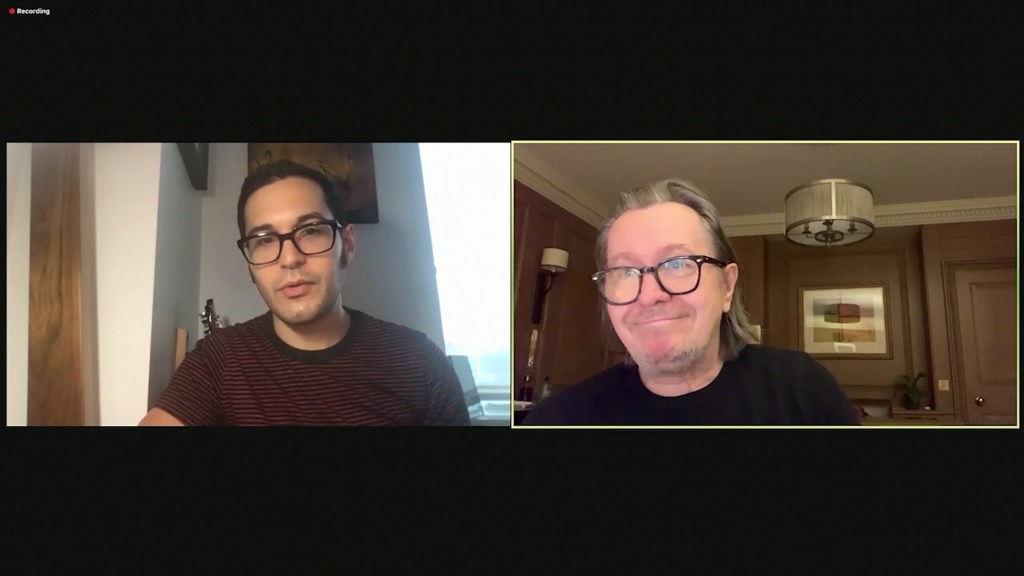
It’s so exciting to sit down with Erik Messerschmidt, ASC – an Emmy-nominated cinematographer whose credits include the popular Netflix series MINDHUNTER, HBO’s RAISED BY WOLVES and David Fincher‘s latest Netflix film MANK!
In today’s conversation, me and Erik discuss his beginnings in the film industry working as a gaffer (learning from the best cinematographers in the business); a deep dive into his cinematography for the two Emmy-nominated seasons of MINDHUNTER; Erik’s creative relationship with David Fincher, and the thought process behind the infamous “multiple takes” Fincher is so known for; how classic Hollywood noirs of the ‘30s and 40s influenced the visual style for MANK—all of this, and much more.
Check out Erik’s new film MANK (now on Netflix), which many speculate will land him his first Oscar nomination for Cinematography in just a few months.








 The Fincher Analyst