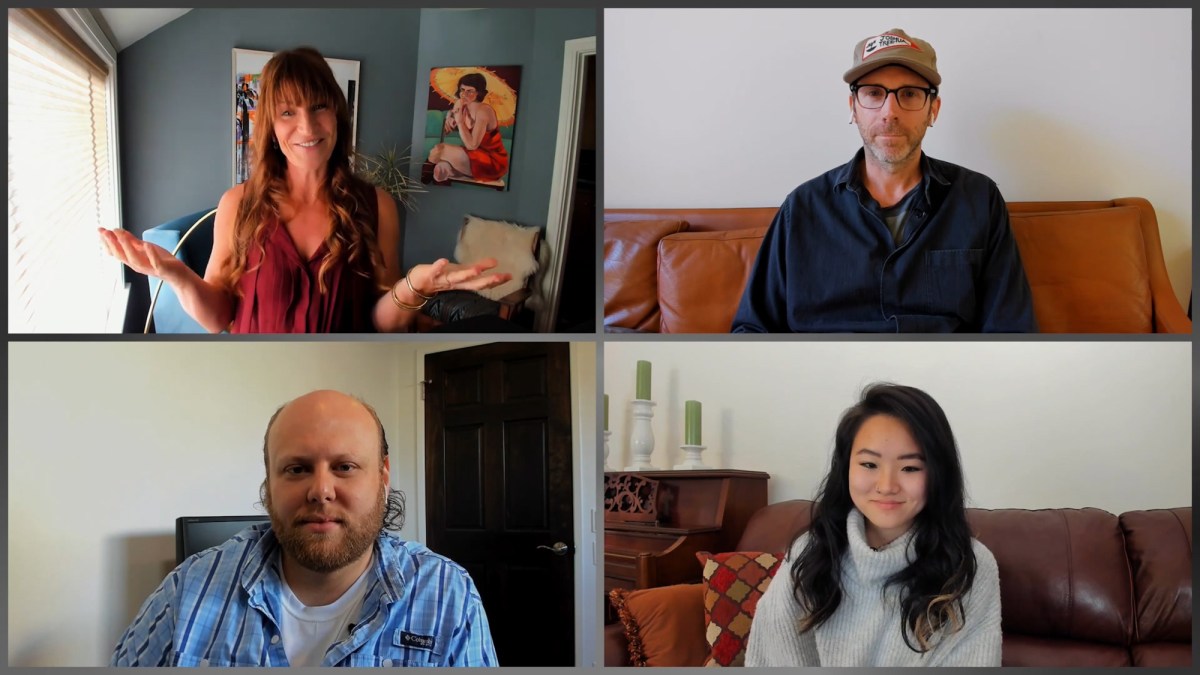
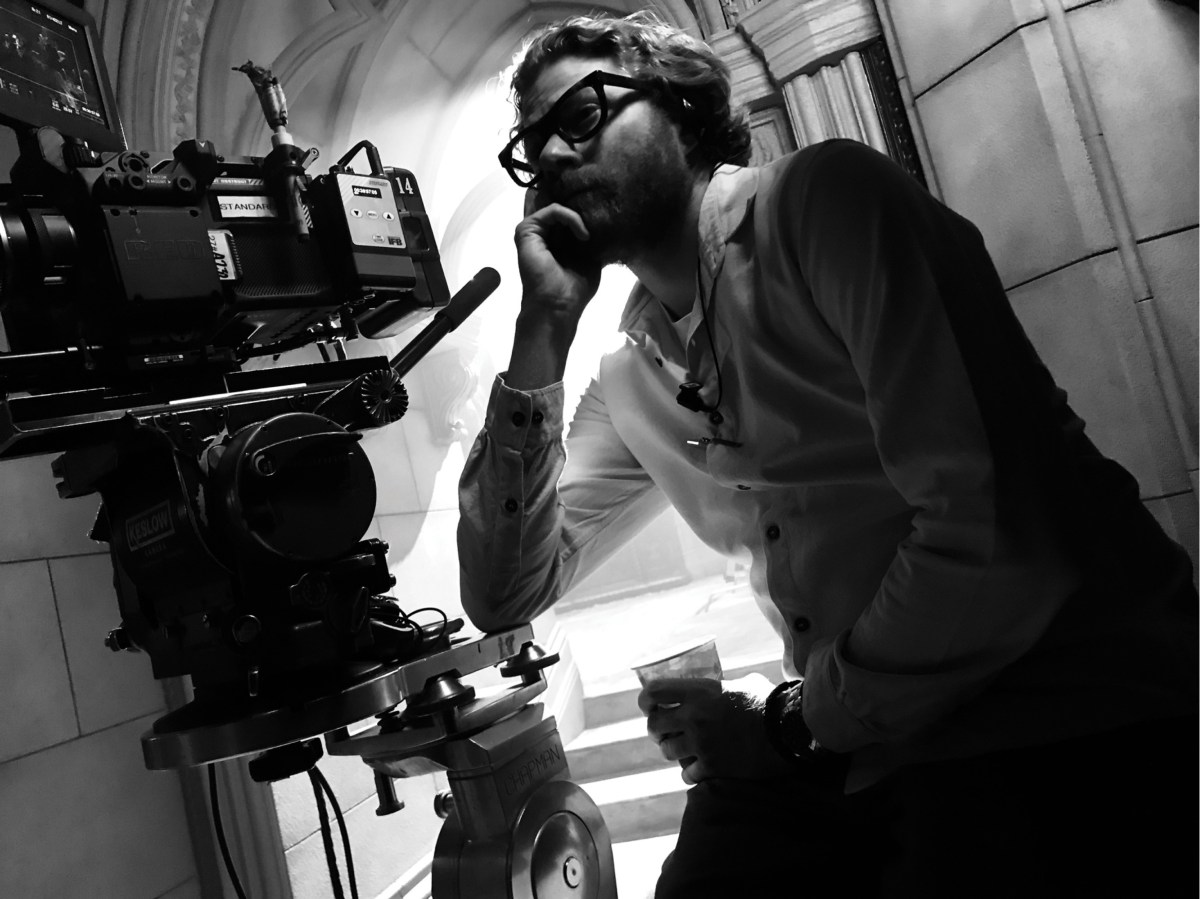
Join Adobe for an exciting discussion with the editorial team from Netflix’s Mank featuring special guests Kirk Baxter, ACE, first assistant editor Ben Insler, and assistant editor Jennifer Chung. The team goes behind-the-scenes of the critically-acclaimed, Oscar nominated film to share their creative editing process and collaborative workflows for in-house VFX. Learn how they crafted a modern-day homage to one of the most celebrated films of all time, and overcame the challenges of a remote workflow using Premiere Pro Productions and After Effects.
Kirk Baxter, ACE, has been recognized with Academy Awards for his work on The Social Network and The Girl with the Dragon Tattoo, an Academy Award nomination for The Curious Case of Benjamin Button and multiple nominations from the American Cinema Editors. The Australian native is a long-time collaborator of David Fincher, including five of the director’s films and two of his series, Mindhunter and House of Cards.
Ben Insler currently works as a feature film assistant editor in Los Angeles, most recently on David Fincher’s Mank. He has previously assisted on television series, documentaries, and commercials, as well as edited for television, independent features and numerous shorts.
Jennifer Chung is an assistant editor working in Los Angeles. Originally from the midwest, she graduated with a BFA in Cinema Art + Science from Columbia College Chicago. She works in scripted tv and film, most recently on the “Blindspotting” series and David Fincher’s “Mank”. Along with assisting, she has also edited numerous shorts, music videos and promotional content.
Adobe® Video & Motion tools provide comprehensive video editing, motion design, VFX, sound, & animation for beginners to professionals. All tools are available through Creative Cloud membership.
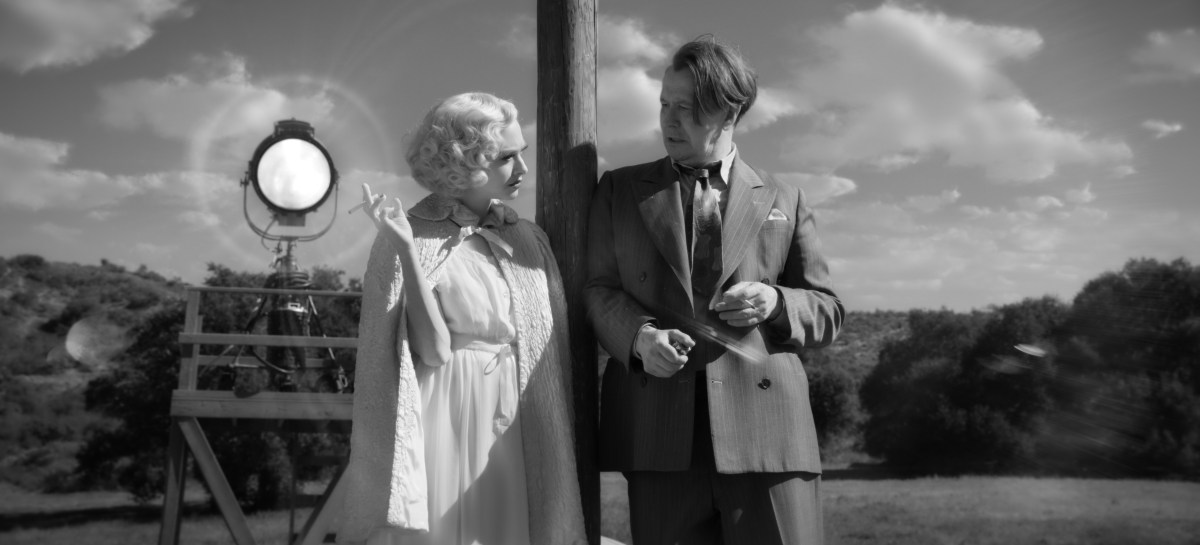
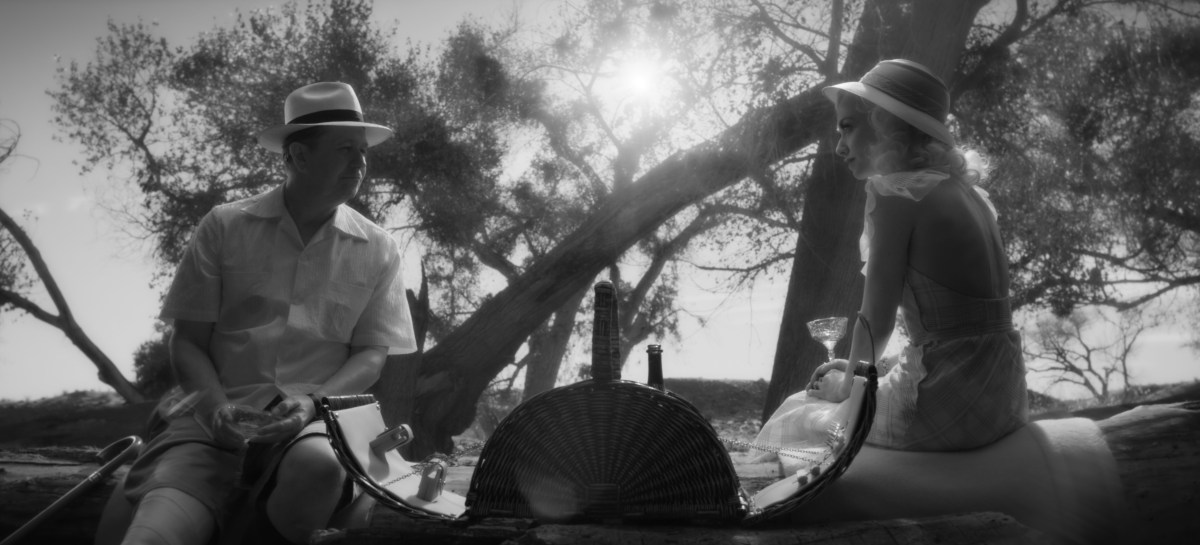
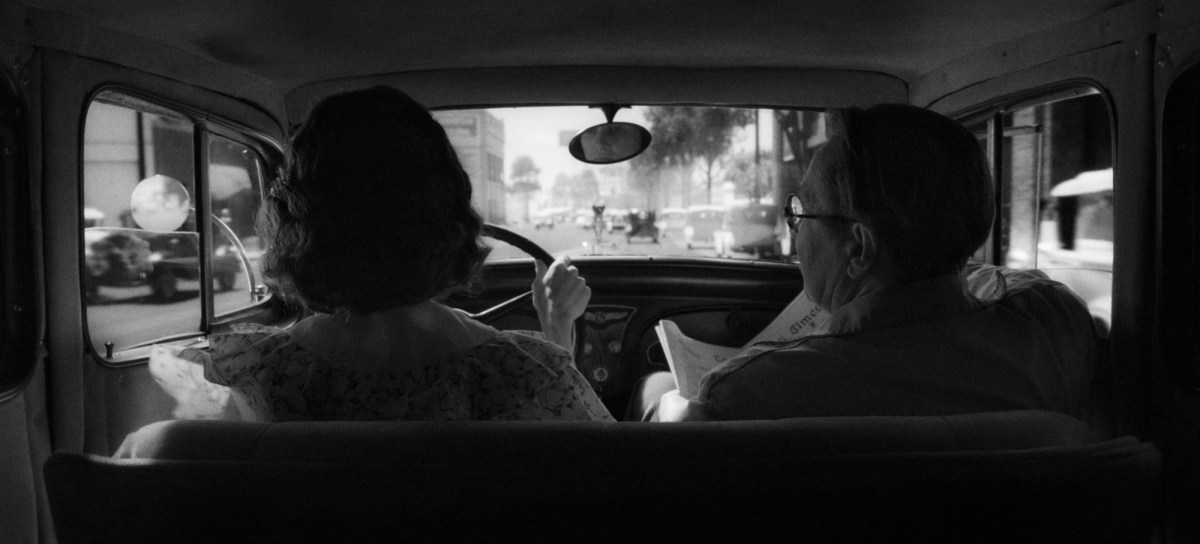
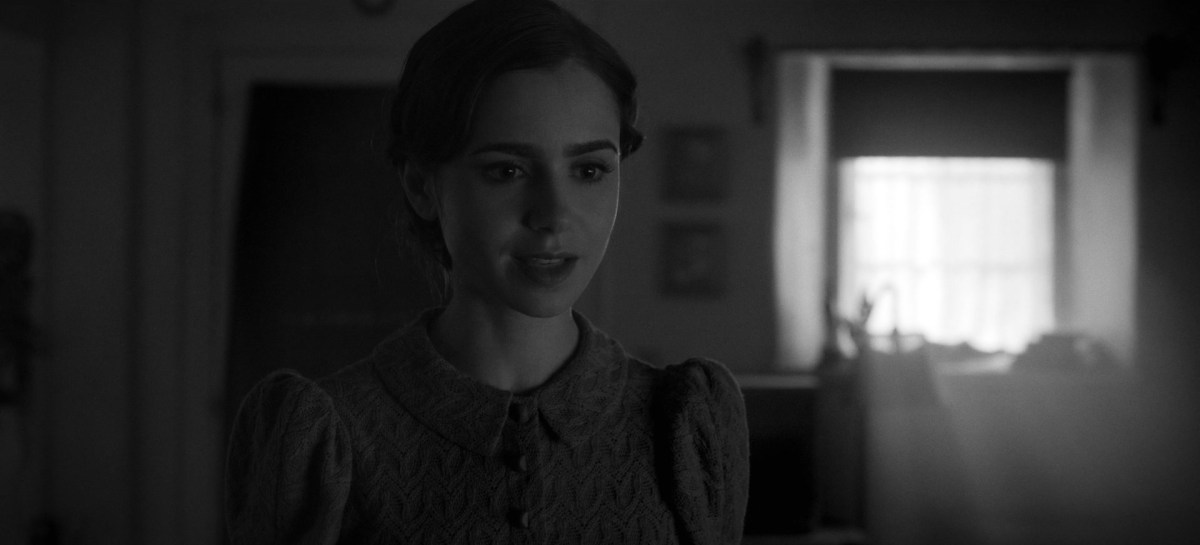
Like her fellow Oscar-nominated colleagues, costume designer Trish Summerville had the rare opportunity of working in black-and-white on David Fincher’s “Mank,” which meticulously recaptured the Golden Age of Hollywood in the ’30s. But their work was made easier by the monochromatic settings on their iPhones, allowing them to instantly translate the proper color tones. This way, the look of Summerville’s wardrobes would be in sync with the sets and decor. It was all part of strategic plan to create an authentic-looking monochromatic world.
“I had conversations with [production designer] Don Burt about what his color palettes would be so we wouldn’t have the rooms be so colorful,” Summerville said. “We wanted to have the tones blend. For us in costumes, it was more burgundies, purples, navies, blacks. And you could pump up from there to gowns with muted lilacs or dusty roses, which came in as nice light grays. We also had shell whites or cream whites and stayed away from deep black. It was also being mindful of prints and patterns that could be too bold or too busy. And how to use details that wouldn’t have too much contrast or disappear entirely. For instance, you couldn’t have navy buttons on a navy suit or it would look black.”
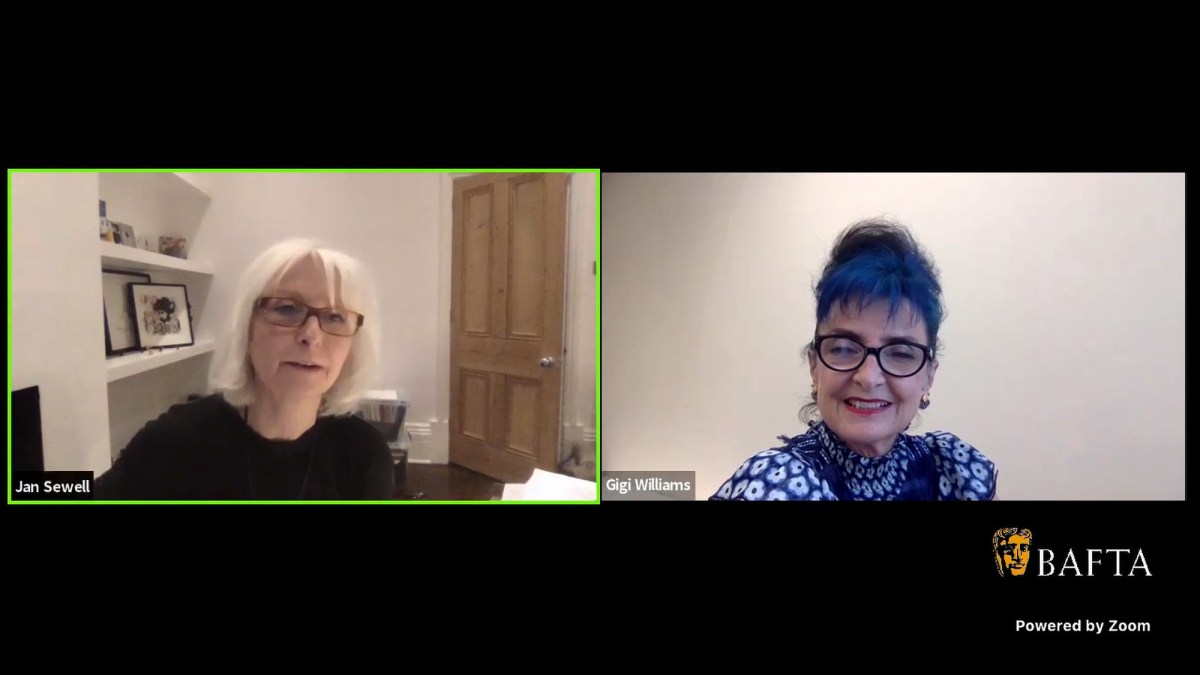
David Fincher‘s Mank is the most Oscar-nominated film of the year, amassing ten, thanks to the beauty and brilliance of its black-and-white execution. One of those nominations belongs to makeup department head Gigi Williams, a veteran who picks her work based on her belief in the director. In Fincher, she was collaborating with one of the most precise filmmakers in the business, and in Mank, working off a script from his father Jack Fincher, Williams had caught the director on what was likely his most personal project to date.
“If your makeup is too loud, you take away from the performance and you don’t belong in this artist’s picture, because Mank is a piece of art that everyone has dabbled in,” Williams says. “Everyone has put their piece into it, and everyone flows together so that nobody stands out. My whole career, I don’t like makeup that’s too big, that makes a statement, if you see my makeup, I’ve failed. I want to see the actor, I want to see the essence of the actor. I love the process of acting. I’m there to facilitate that.”
When the twist-filled cosmic horror mind-bender The Empty Manwas unceremoniously dumped in theaters last October, its writer and director David Prior wasn’t even sent a link to the final version of the film by the studio. More than four years before, he’d pitched the movie to 20th Century Fox, a perhaps unconventional home for such a strange project, and, after the company was acquired by Disney in 2019, Prior’s debut feature slipped through the corporate cracks. In the middle of a global pandemic, The Empty Man was released with one misleading trailer, which marketed the two-hour-plus saga as another urban legend-inspired teen thriller, and minimal promotional fanfare. Unsurprisingly, it bombed, grossing just over $4 million worldwide. Prior transmitted and almost no one received.
Adapted from a Boom! Studios comic by the writer Cullen Bunn and artist Vanesa R. Del Rey, The Empty Man was initially sold to Fox in 2016 as a stylish horror mystery infused with thematic ambiguity, existential dread, and a dash of Lovecraftian terror. James Badge Dale plays ex-detective James Lasombra, a grief-stricken widower whose friend Nora (Marin Ireland) enlists him to help find her daughter Amanda (Sasha Frolova) after she disappears. Amanda and her teenage friends may or may not have summoned the Empty Man, a mystical entity with an odd connection to a cult-like organization called the Pontifex Institute, led by a charismatic leader played by Stephen Root of Office Space and Barry. (I’ve been describing it to friends as The Girl with the Dragon Tattoo meets The Ring.) In his early conversations with executives, Prior compared it to Mulholland Drive rather than something in The Conjuring universe or the Blumhouse arsenal. In the writing stage, executives even encouraged him to expand the film’s lengthy opening, a snowbound tale of hikers in Bhutan’s Ura Valley who stumble upon a sinister cave.
The Empty Man‘s journey to the big screen quickly unraveled. In some ways, the story has all the hallmarks of classic Hollywood fiasco: a shoot plagued by bad weather, disastrous test screenings, fights over runtime, studio meddling, a breakdown in communication, and an ambitious first-time director threading potentially alienating material into familiar genre fare. (Not many horror movies have a prominent shot of a high school named after a famous French philosopher.) In other ways, it’s a uniquely modern tale of mounting corporate neglect, expiring tax rebates, confusing IP mismanagement, and slow-building social media advocacy.
Are audiences hungry for movies like The Empty Man? The movie’s box office performance would suggest a definitive no, but, since becoming available as a digital rental in 2021, the film has taken on a second life online, where podcast hosts and viewers on platforms like Twitter and Letterboxd have sung its praises, turning it into the rare 21st century studio project that earns the over-used descriptor of “cult movie.”
Prior, who began his career working on a DVD of the 1999 horror movie Ravenous and later directed special features for David Fincher films like Zodiac and The Social Network, has a keen awareness of how his movie plays into certain narratives. Over a Google Hangout, he spoke with the combination of weary cynicism and wounded pride that often accompanies someone who has been through an ordeal. “It’s amazing how trenchant Barton Fink is about the way the Hollywood system really works,” he noted early in the conversation.
As the Coen Brothers screenwriter protagonist knows, the “life of the mind” can be painful. While unpacking the jargon-heavy mythology of his debut and the turmoil-packed narrative of its production, Prior repeatedly emphasized how grateful he was that the movie has found an audience and often laughed at the absurdity of its fate. Who can be blamed for what happened to The Empty Man? As one of the movie’s grizzled detectives remarks in the film, “We can’t indict the cosmos.”
A couple of years ago, David Fincher’s go-to director of photography, Erik Messerschmidt, described the muted palette of the TV series “Mindhunter” as a product, in part, of the pair’s shared “aversion for magenta.” Color palette proved to be a nonissue during the making of “Mank,” since the movie depicts “Citizen Kane” writer and Hollywood bad boy Herman J. Mankiewicz (Gary Oldman) and his coterie in period-correct black and white. Speaking from Georgia, where he’s prepping the Korean War movie “Devotion,” Messerschmidt half-joked, “The great luxury of black and white is that any nausea [over color] that we might otherwise be dealing with, we didn’t have to worry about for ‘Mank.’”
Previous to filming “Mank,” Messerschmidt, who met Fincher seven years ago while working as a gaffer on “Gone Girl,” had barely shot anything in black and white. “I’d dabbled in still photography as a hobby and shot a couple of very simple music videos, but no features,” he says. “When David called me to do ‘Mank,’ black and white was a foregone conclusion.”
Mank visual effects supervisor Simon Carr walks you through his team’s subtle work in David Fincher‘s award-winning film and the use of time-tested techniques like rear projection to bring Hollywood’s Golden Age to life on screen.
Two-time Oscar®-winning film editor Kirk Baxter takes you through his decision-making process for an early sequence from David Fincher‘s Hollywood Golden Age drama, which features the interplay of a number of central characters and relationships.
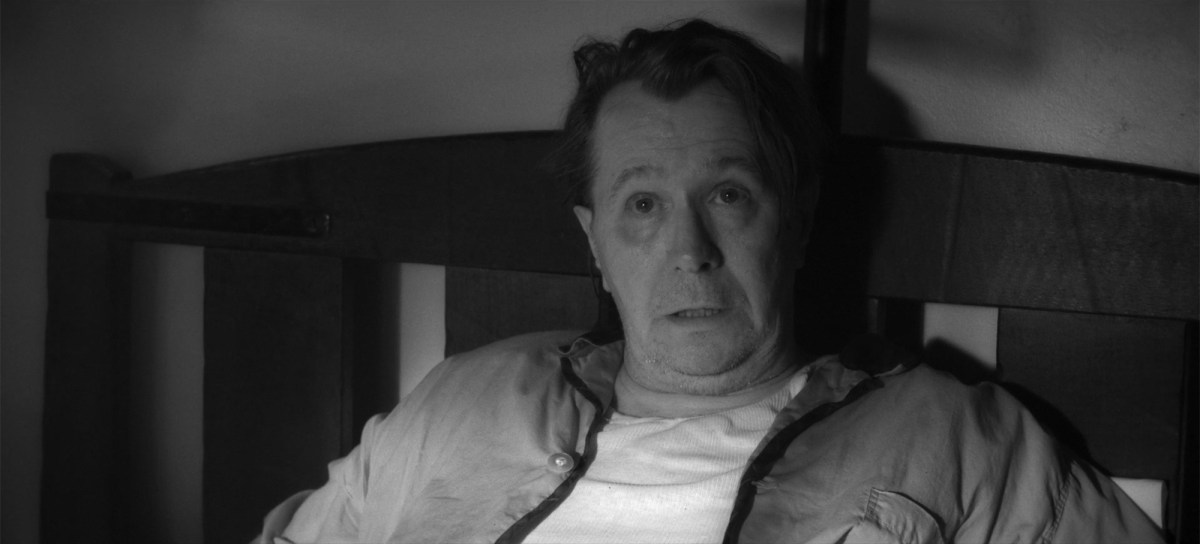
Mank makeup department head Gigi Williams explains her work on David Fincher‘s black-and-white dip into Hollywood lore, particularly the way she captured the eponymous screenwriter during an exhausted, overworked state.
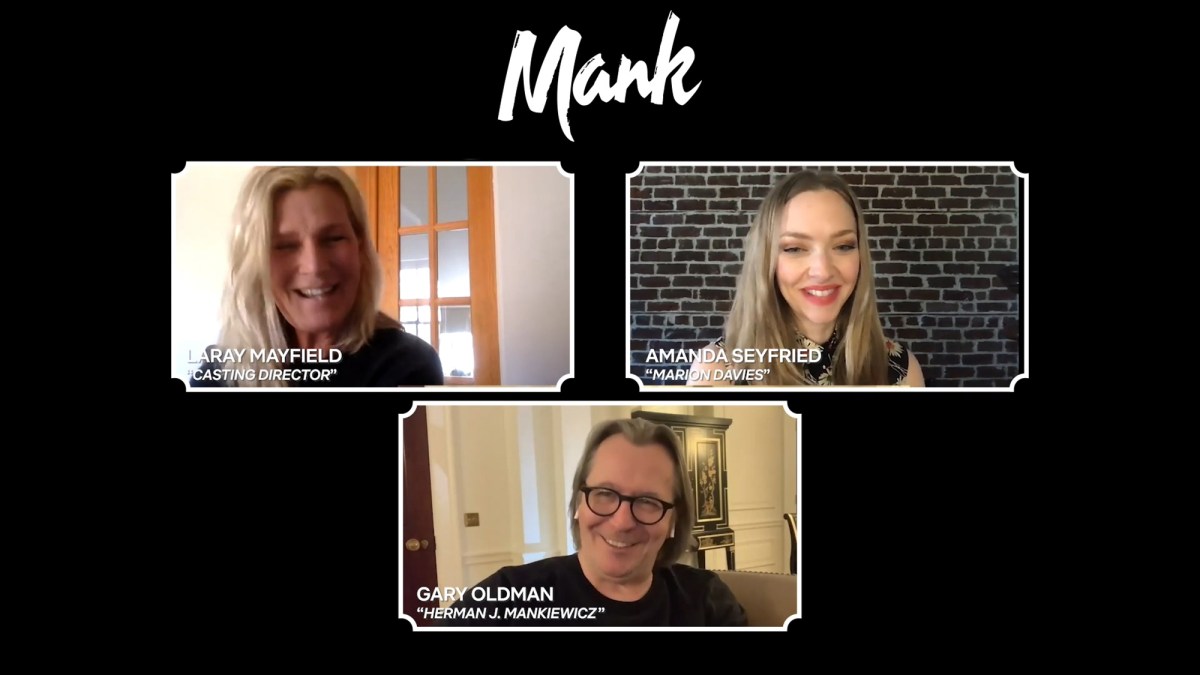
Mank actors Gary Oldman and Amanda Seyfried sit down with casting director Laray Mayfield to discuss their work in David Fincher‘s acclaimed film. Oldman discusses tapping the vulnerability of the eponymous screenwriter and using his actual physicality for the portrayal, while Seyfried speaks to Marion Davies‘s legacy and how it shaded Seyfried’s depiction of her.