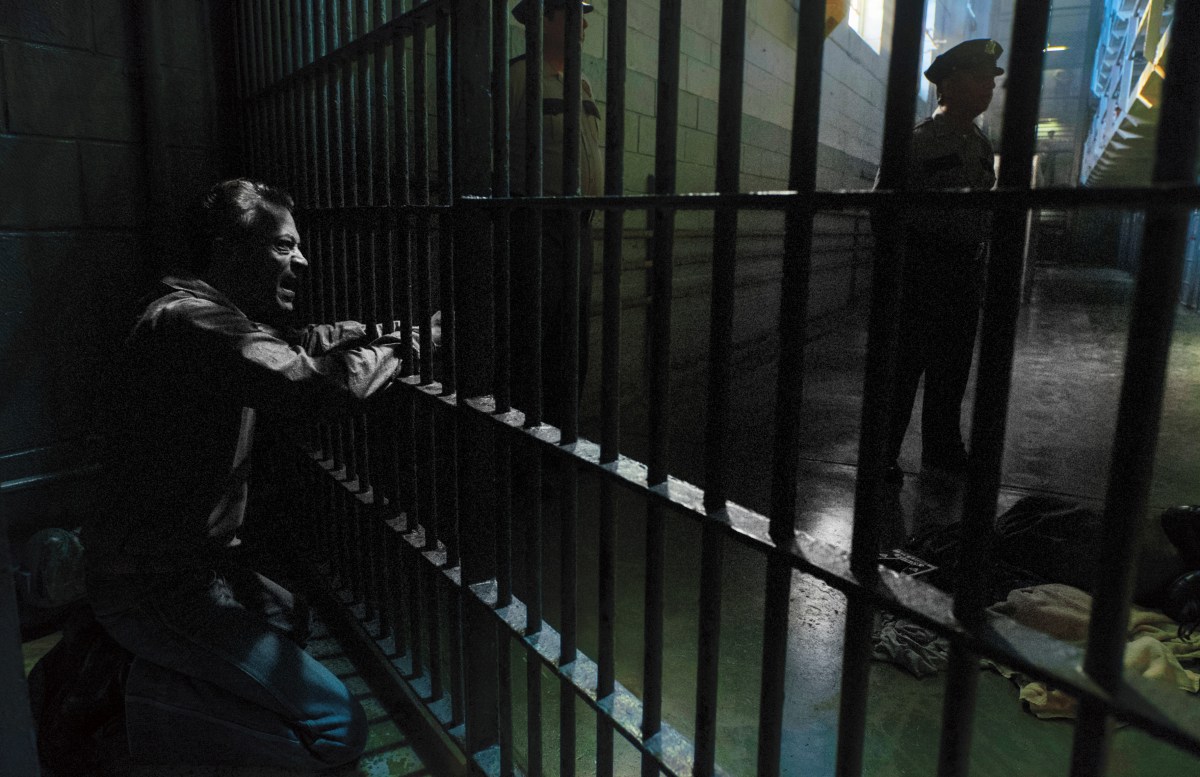
Bad Lands

2018-04 ICG Magazine - Mindhunter 05 (Patrick Harbron)

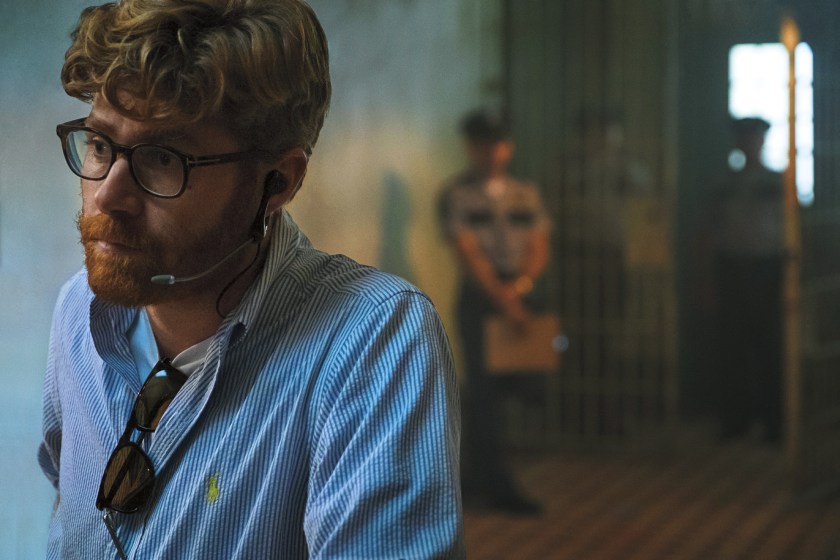
Erik Messerschmidt and Chris Probst, ASC, also have made “smart” use of LED technology, as detailed in our cover story on Mindhunter (page 36). David Fincher, who first started using LED’s for process work on Zodiac, 11 years ago, not only customized a high-resolution RED camera for the show (dubbed the “Xenomorph”), but also devised one of the most ingenious LED-driven plate projection/interactive lighting processes for driving shots TV has ever seen. Messerschmidt’s description of Fincher’s commitment to innovation mirrors those Sundancers bending technology in the service of new ways to tell a story: “For David, the frame is sacred; what we choose to include is intrinsic to what the audience thinks is important. They are one and the same.”

David Geffner, Executive Editor
ICG Magazine

Visualizing the daring and often scary world of David Fincher requires new technologies and processes rarely attempted in series television.

Matt Hurwitz
Photos by Patrick Harbron & Merrick Morton, SMPSP
April 2018
ICG Magazine

In the season 1 finale of Netflix’s MINDHUNTER, a disturbed FBI agent, Holden Ford (Jonathan Groff), bursts wildly from a hospital room, as a handheld camera gives chase. The move begins as shaken as ford is, but, as it lands with the agent, who collapses in the hallway, it’s as if the camera has floated to a butter-smooth stop inches from the floor, the maneuver executed like it was on a perfectly balanced Jib arm, crane, or even Steadicam. But it’s none of those. What can viewers assume from this?

David Fincher has returned to television.

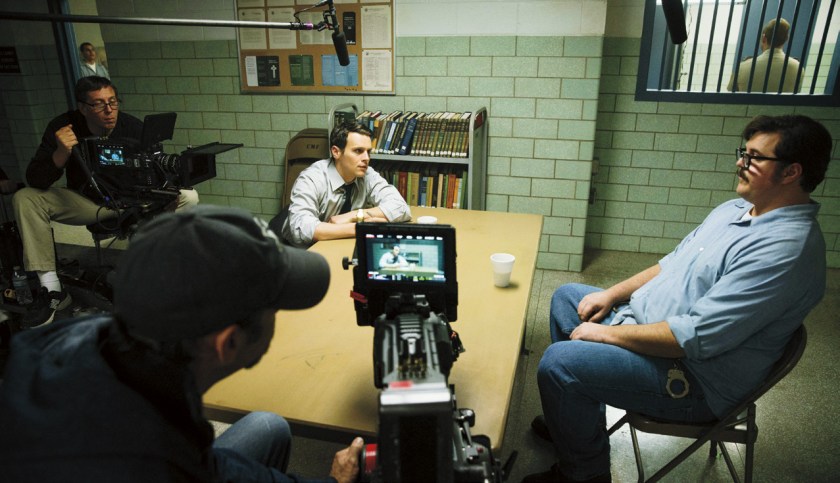
FOR THIS SERIES ABOUT A PAIR OF AGENTS WORKING IN THE FBI’S ELITE BEHAVIORAL SCIENCES UNIT in 1979, and attempting to understand the mind of a serial killer, Fincher used a number of leading-edge technologies – interactive LED lighting, custom built high-resolution cameras, and, as in the shot with Agent Ford, image stabilization/smoothing in postproduction – to keep the viewer visually embedded. Fincher’s aim with MINDHUNTER, which has no graphic violence, is for viewers to “access their own attics. There’s far scarier stuff up there than anything we can fabricate,” the filmmaker insists. “I wanted people to register what’s going on in [characters’] eyes and where the gear changes are taking place. At what point do I [as the viewer] feel like, ‘OK, I’ve got an insight,’ and at what point do they feel like: ‘oh, I’m being sold something. It’s all about the nuance in how the balance of power is changing.”

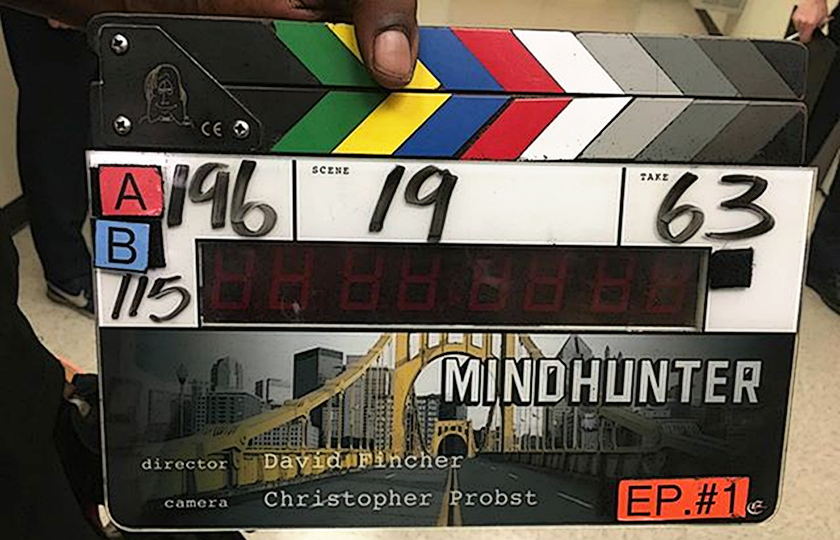
Fincher’s longtime postproduction supervisor, Peter Mavromates, says he creates an “experience of omniscience,” similar to Kubrick’s A Clockwork Orange, “where you’re in a straitjacket with your eyelids pinned open, and David’s forcing you to watch these horrible things.” In fact, the show’s unique visual process began more than a year before production started in Pittsburgh (on area locations and on stages at 31st Street Studios, a former steel mill), with the development of a unique RED camera system.

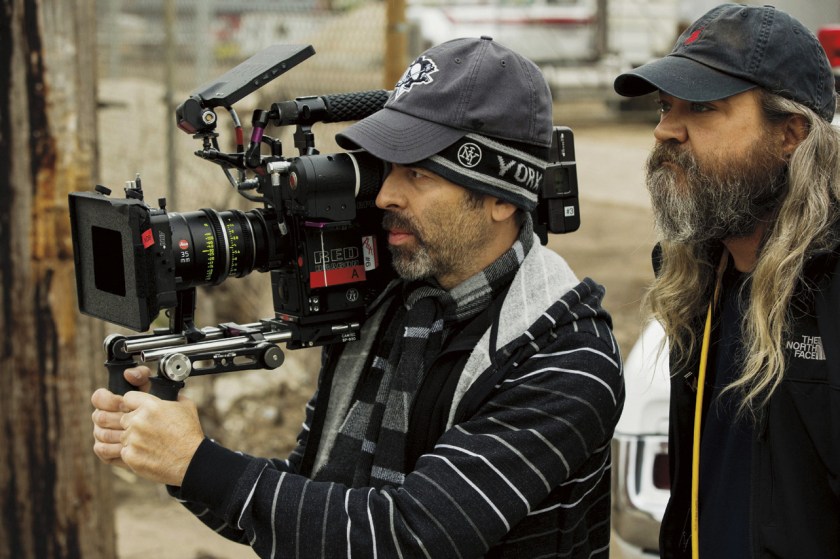
Christopher Probst, ASC – who shot MINDHUNTER’S pilot and second episode – was asked for his input on a RED prototype system, which had been designed by Jarred Land and RED’s Chief Designer Matt Tremblay according to Fincher’s specific needs. “David wanted to take all of the different exterior add-ons that create a jungle of wires, and put them inside the camera body,” Probst explains.

Fincher puts it even more directly: “It just seems insane that we’ve been bequeathed a [camera] layout [dating back to] D.W. Griffith and Charlie Chaplin that looks like some bizarre Medusa. [The camera] should be something that people want to approach, touch, and pick up.”

In fact, the custom system built for Season 1 [Land created a 2.0 version being used in Season 2] had an RTMotion MK3.1 lens-control system, Paralinx Arrow-X wireless video, and Zaxcom wireless audio (with timecode) integrated into the RED body, with the only visible cable being to control the lens. Slating was all but eliminated, with clip-number metadata being shared wirelessly between the camera and the script supervisor, who used Filemaker software to associate takes and clips. An audio scratch track from the mixer was recorded onto the REDCODE RAW R3D files and received wirelessly.

The base camera was one of RED’s DSMC2 systems, the then-new WEAPON DRAGON, with its 6K sensor. The shell design, accommodating the added gear inside, with its angular shape and heat venting fins on top, had a “Xenomorph” appearance (à la Alien), and was dubbed as such by Land and Fincher. “When the camera arrived in Pittsburgh, they had actually engraved “Xenomorph” on the side,” Probst says.

Read the full profile:

Website version of the profile
2018-04 ICG Magazine - Mindhunter 14 (Patrick Harbron)

2018-04 ICG Magazine - Mindhunter 13 (Merrick Morton)

Cinematographers & Cameras: Insights Into “The Crown,” “Strong Island,” “Mindhunter,” Spots

Robert Goldrich
March 26, 2018
Shoot

One DP just won his first career ASC Award—on the strength of his work on The Crown (Netflix).

Another made key contributions to the heartfelt Strong Island (Netflix), which was nominated for this year’s Best Documentary Feature Oscar.

And a third DP has spent a recent stretch focusing on spots after getting a career break from David Fincher on the TV series Mindhunter (Netflix).

Here are insights from DPs Adriano Goldman, ASC, ABC, Alan Jacobsen and Erik Messerschmidt.

[…]

Erik Messerschmidt

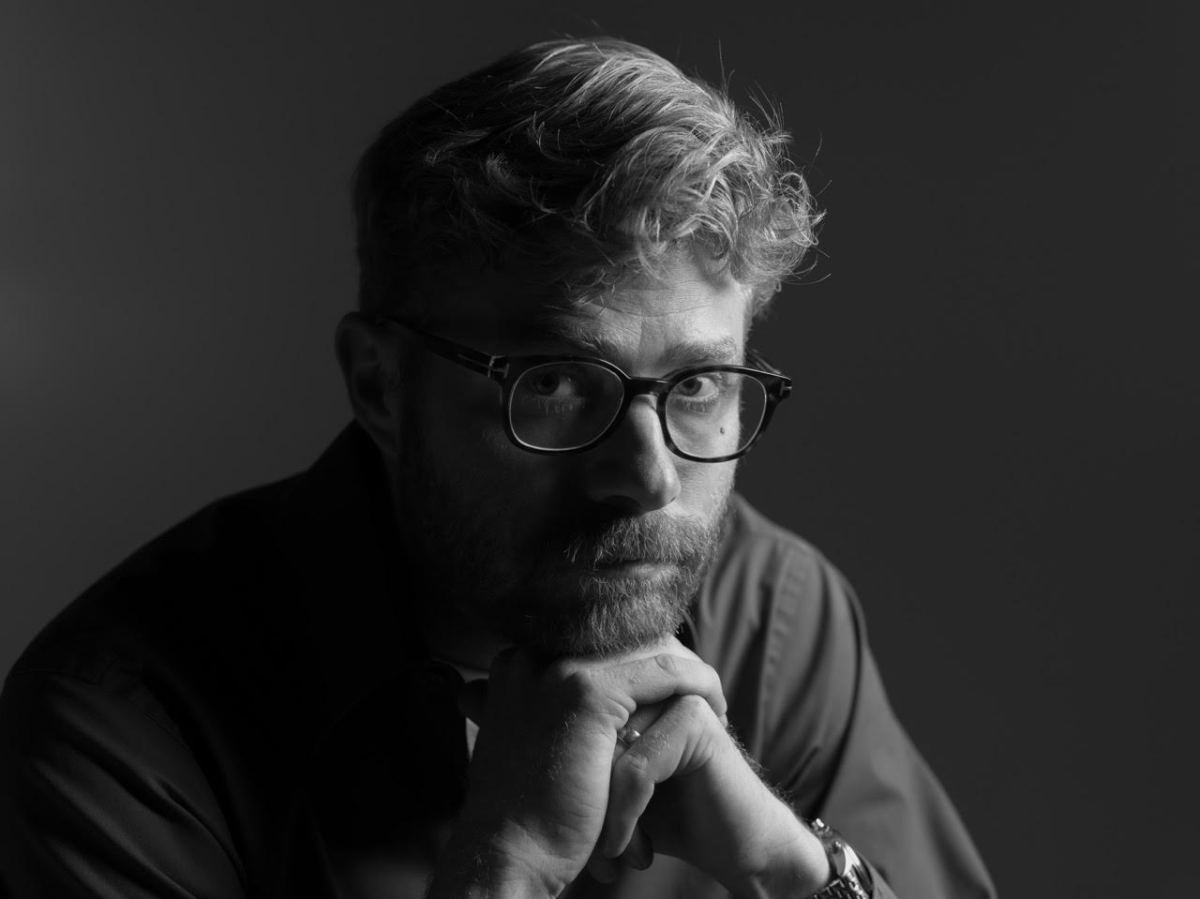
Cinematographer Erik Messerschmidt has spent the past year focused on commercials but his career progression is the reverse of what is typical. Instead of spots serving as a springboard to TV series and theatrical features, it was Messerschmidt’s work on the TV series Mindhunter (Netflix) which established him as a DP, leading to spotmaking opportunities.

Messerschmidt’s commercial lensing exploits have included Taco Bell’s “Web of Fries” cinema, web and TV fare directed by Joseph Kosinski of RESET, Buick and other automotive ads from director Kevin Berlandi, and a pharmaceutical spot directed by Mark Pellington of Washington Square Films. Messerschmidt also shot for Pellington the Demi Lovato music video “Tell Me You Love Me.”

Messerschmidt had been a gaffer who worked extensively on commercials that were lensed by such notables as Claudio Miranda, ASC, Tami Reiker, ASC and Jeff Cronenweth, ASC.

On the feature front, Messerschmidt served as a gaffer on the David Fincher-directed, Cronenweth-shot Gone Girl, a project which proved pivotal. “David knew I had a still photography background and I ended up doing promotional still work with him on Gone Girl,” related Messerschmidt. “David took me under this wing and moved me up to shoot his series Mindhunter.” (The alluded to still photography chops date back to when Messerschmidt worked for still shooter Gregory Crewdson.)

Read the full profile

Fincher addresses the complaints about him doing too many takes

“So everybody bitches and moans about how many takes… People I’ve never even met complain about how many takes I shoot.”

10 Most Unfiltered Commentary Tracks

Dustin & Adam Koski
January 9, 2018
ListVerse

Interview with Jason Hill

Daniel Schweiger
January 4, 2018
Film Music Magazine

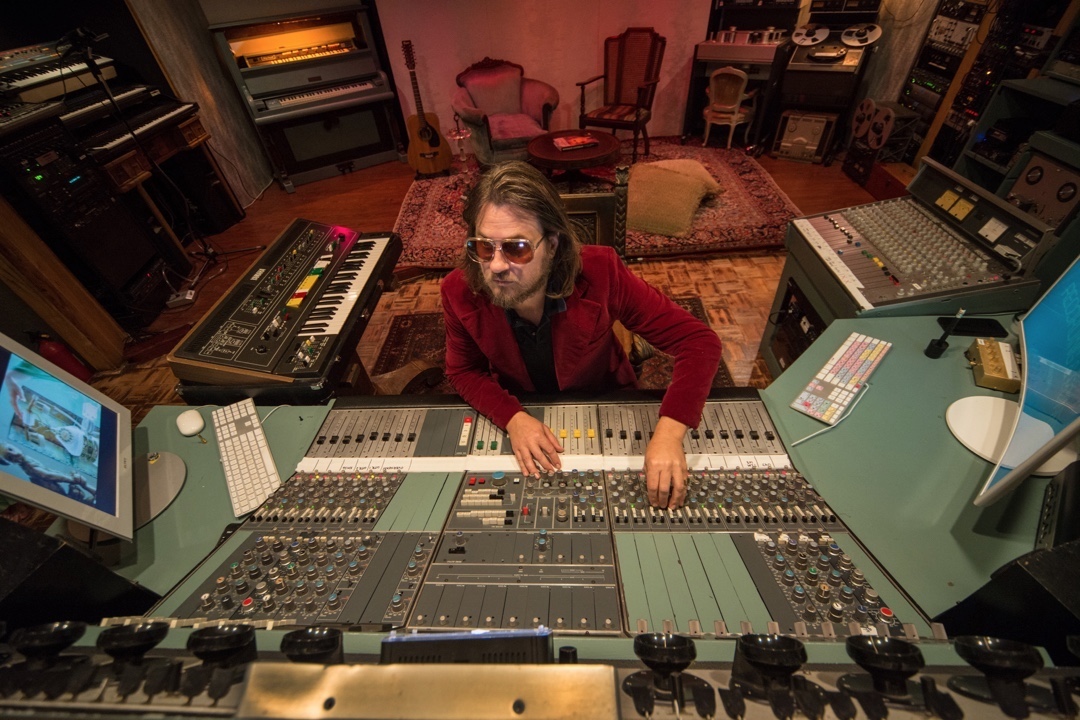
Just about the last thing anyone wants to do is enter the mind of pure evil, let alone hear it meticulously, and deliciously describe its murderous exploits. That a view inside of its horrifying headspace has resulted in such eerily intoxicating music is a testament to the powerfully emerging voice of Jason Hill in “Mindhunter.” Created by serial killer media enabler par excellence David Fincher, this acclaimed Netflix series’ twist is that we barely see any violence at all. Rather, the acts and its reasoning are told to FBI profilers Holden Ford (Jonathan Groff) and Bill Tench (Holt McCallany), who traverse the country to find out what makes madmen tick. That the birth of the agency’s serial killer profiling unit is no work of fiction makes their subjects’ descriptions all the more terrifying, if no less fascinating in the awfulness that’s drawn entertainment to these predators again and again. That Jason Hill hears the recording sessions, and their effect upon the agents, with such dark poetry is all the more unsettling.

If the interview subjects of “Mindhunter” have seemed to emerge from the shadows, seemingly out of nowhere, the same might be said (if not murderously) about how Hill’s innovative talent has burst upon the binge-watching scene. With only one scoring credit for a dirt biking madman behind him, Hill’s production work for the likes of David Bowie, The New York Dolls and The Killers along with his band Louis XIV have led him into Fincher’s company – a band of musical profilers whose work has ranged from the raging orchestra of Howard Shore’s “Se7en” to the subtle, conspiratorial piano of David Shire’s “Zodiac” and the piercing electronics of Trent Reznor and Atticus Ross’ “Gone Girl.”

Hill’s realization of a twisted psyche is just as uncommon and original, eschewing the kind of dissonance that scores most associate with serial killers, Hill’s soundtrack for this hit, ten-part series is poetic, even beautiful in its crystalline use of sound and samples, music that suggests a voyage to an alternate, shimmering universe far more than it does a basement torture dungeon. Its ethereal, even poignant stuff, yet with a tonality that tells us something is unholy in its deceptively surreal bliss. Even as brilliantly crazy as Brian Reitzell’s music was for the equally astounding “Hannibal,” there’s never been quite a serial killer show, or soundtrack like “Mindhunter.” In no small part, we can thank an essentially newfound composer who’s brave enough to hear shocking words that might drive others’ insane, and turn the description of the deeds into things of hypnotic, unearthly beauty that dares us to turn away. And like the subject of the increasingly unnerved agents, Hill is the killer who keeps the tape machine running, now describing in detail to us how he draws listeners ever deeper into “Mindhunter’s” entrancing madness.

Read the full interview

The Music of Jason Hill for David Fincher

Jason Hill (SoundCloud)

2014. “She” cover for the Gone Girl Teaser Trailer

Produced, arranged and mixed by Jason Hill. Featuring Richard Butler on vocals.

2015. Music for Videosyncrasy

6 tracks. Written, Performed, Produced and Mixed by Jason Hill.

2017. Mindhunter (Netflix)

Gone Girl: One Long Frightening Climax

Posted by Tyler Heberle | Sep 1, 2017
Audiences Everywhere

People’s willingness to rebrand themselves as monsters without remorse is an alarming, puzzling trend of modern society. It may be hard to find an explanation outside of human selfishness and narcissism, traits director David Fincher has made a career out of depicting and deconstructing. He’s conjured timelessly horrific hellscapes where serial killers blend right in with films like Se7en and Zodiac, and hit a more socially applicable nerve tearing down self-righteous white male privilege in 1999’s Fight Club. But his most haunting and refined work ties directly into the anxieties of this decade—that of social media and all the opportunities it provides to forge new identities. With The Social Network, Fincher showed a social outcast turn into a trailblazing tech celebrity while losing friends and being fueled by spite toward his ex-girlfriend. His under-appreciated follow-up The Girl with the Dragon Tattoo saw a more selfless social outcast seeking personal love and acceptance for the first time, only to have her hopes crushed and resume a life of indifference.

Gone Girl, the 2014 adaptation of a bestselling paperback thriller, feels like the inevitably demented amalgamation of questions Fincher proposed in Network and Tattoo. Are there new consequences to controversial or intimate information being immediately shared to the public? Can one convincingly build a new persona strictly from their online or media perceptions? In the third installment of what could reasonably be called Fincher’s “tech trilogy,” the answer to both is a resounding yes—one stained by blood and deceit.

Read the full article

Gone Girl Offers Insight and Hope for Fincher’s Future

Posted by David Hart | Aug 29, 2017
Audiences Everywhere

When one of the great directors of a generation announces their next project, the film world listens. It is rare, however, for said announcement to be puzzling. Martin Scorsese is creating his treatise on faith in Silence? Of course he is. Kathryn Bigelow is making the true story of the Detroit riots? Sure, why not? Paul Thomas Anderson’s next untitled film starring Daniel Day Lewis is about a dressmaker for the Royal Family? Sounds award worthy. I could go on, but I’m sure you get the point. And then there’s David Fincher.

As most know, Fincher certainly got off to a rough start as a director. After cutting his teeth on music videos, he was tapped to direct Alien 3. The tales of his struggles on that particular film are legendary at this point, and he has basically disowned the movie and refuses to speak about it. After a three-year hiatus, he returned with Se7en. This success helped launch his career to the next level. He is now seen as one of the best directors available, easily on par with the others previously mentioned. But unlike most top directors, Fincher does not seem to always reach for the brass ring. Instead, he seems to vacillate between premier projects, like The Social Network or The Girl With The Dragon Tattoo, to more eccentric choices, such as The Curious Case of Benjamin Button or Gone Girl.

Gone Girl may be Fincher’s oddest choice to date. The film, based on the best selling novel by Gillian Flynn, is nowhere near an awards contender or at least not at first glance. Any number of pseudo-negative descriptions have been used to chronicle the details of the book; trashy, over-the-top, a beach read, the list goes on and on. Given the stunning sales of Gone Girl, a film adaptation was inevitable. But to be directed by the creator of two films that arguably were the best of their respective years, in Zodiac and The Social Network? Very unlikely.

Read the full article

The 20 Best Crime Films of the 21st Century, From ‘Memento’ to ‘Zodiac’

By 
Aug 11, 2017
IndieWire

No genre illustrates the evolution of cinema better than the crime film. As recently as the ’90s, Hollywood regularly released stories of cops-and-robber showdowns and mystery-thrillers based on best-selling novels — but as the middle class continues to disappear from Hollywood films, smart crime stories moved to television (see: “The Sopranos,” “The Wire,” “Breaking Bad,” “The Night Of,” et. al.).

Outside the studios, there is a longstanding tradition – from the B-movies to the Coen brothers – of new directors showcasing their filmmaking chops with dark, stylish, and intense crime sagas. A surge of new filmmakers in the ’90s brought fresh interpretations to the genre, from the pastiche of “Reservoir Dogs” to the unnerving realism in “Boyz n the Hood.”

These days, many of the best contemporary directors — including Martin Scorsese, David Fincher, Mann, the Coens, Park Chan-wook and Spike Lee – still love the genre, which has created some of their best work. This list surveys many of those recent highlights.

Read the full article

mgid-uma-image-vh1

‘Gone Girl’ and the Inverted American Dream

Sheryl Oh
July 5, 2017
Film School Rejects

“What’s the point of being together if you’re not the happiest?”

TO CELEBRATE AMERICA, WE’RE TAKING THIS ENTIRE WEEK TO LOOK AT HOW CINEMA HAS EXPLORED THE AMERICAN DREAM. FOR MORE, CLICK HERE.

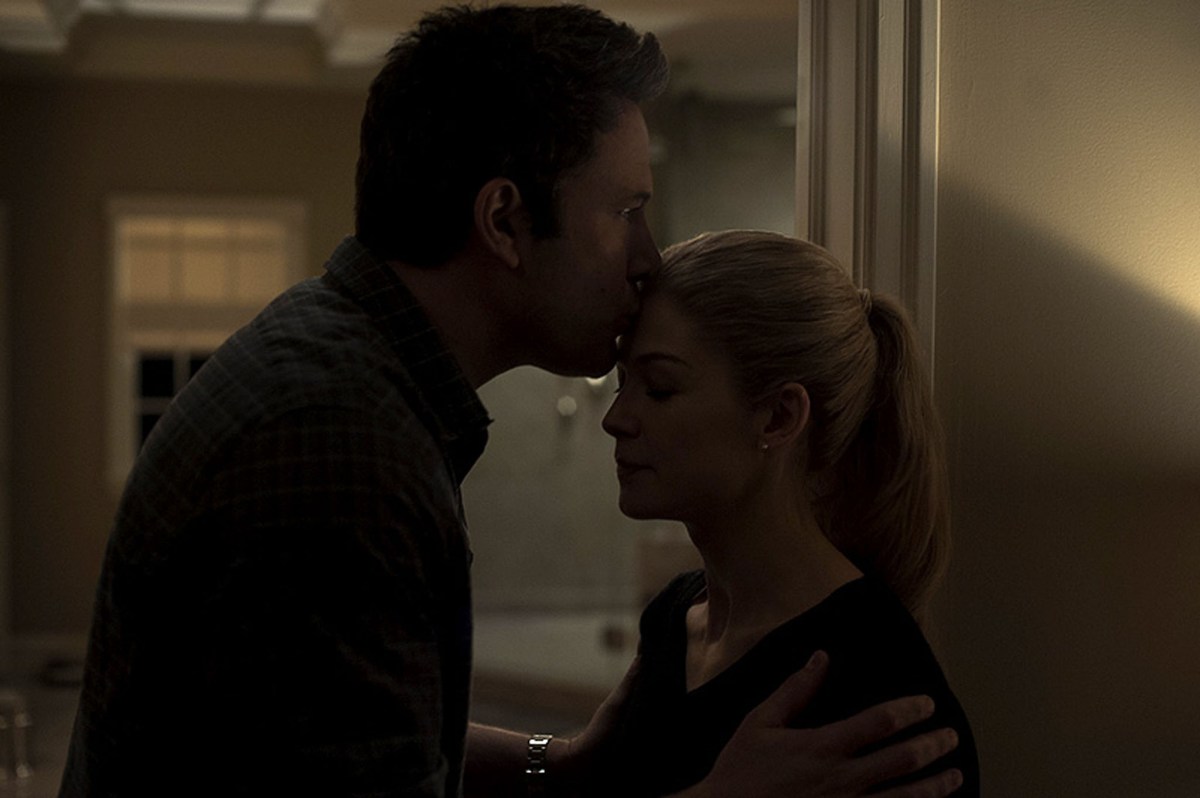
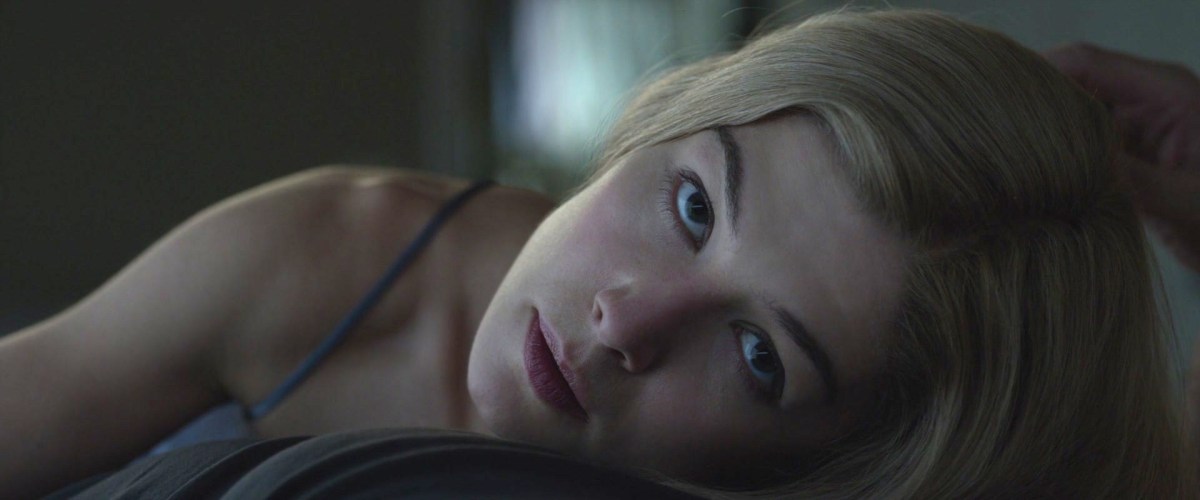
Gone Girl is a fascinating case study of the American Dream, and most of that stems from Amy Elliott Dunne (played by Rosamund Pike). I don’t quite know how to describe her or even label her – is she an antihero or is she an outright villain? I suppose that depends on whose side you’re on – Amy’s or her husband, Nick’s (Ben Affleck). And even then, the pendulum of opinion can swing constantly.

Read the full article

Cross-Examining David Fincher’s Interrogations

Sheryl Oh
August 8, 2017
Film School Rejects

Allegiances are never simple in a Fincher film.

David Fincher makes some seriously memorable films. That’s like saying water is wet, but his movies are impeccably crafted without seeming ostentatious or painfully clinical. Arguably, the best part about his films is the talking. You won’t find a film of his where character dynamics aren’t laid bare in the form of a lengthy conversation. Literally putting words on screen has been a landmark of his since the beginning of his film career.

Notably, many of Fincher’s movies crescendo to significant arguments and interrogations, and it is never just run-of-the-mill grilling. He has the ability to make talking – for want of a better term – interesting. Part of what makes his interrogations so enveloping and immersive is the insistent, intimate focus on the subjects at hand. Characters are thrust into settings but also command them in cinematically satisfying ways:

Fincher gives us just enough of any given setting, and the details are always overshadowed by the manner in which the characters move and interact within them. (Jones, 44)

Fincher has a new Netflix series coming out in a couple of months; one which will undoubtedly feature some of his signature wordy conversations. While awaiting the release of Mindhunter, we examine what it takes for him to put together the perfect interrogation scene.

Read the full article