It’s long been debated whether Shakespeare actually authored all of his acclaimed writings or if, instead, Christopher Marlowe was responsible for a significant amount of his body of work. And in the early 70s, a similar thesis developed: that co-screenwriter Herman Mankiewicz was in fact the primary writer on Orson Welles’ Citizen Kane. Though it’s solidly refuted by Kane scholars, the myth continues to flourish.
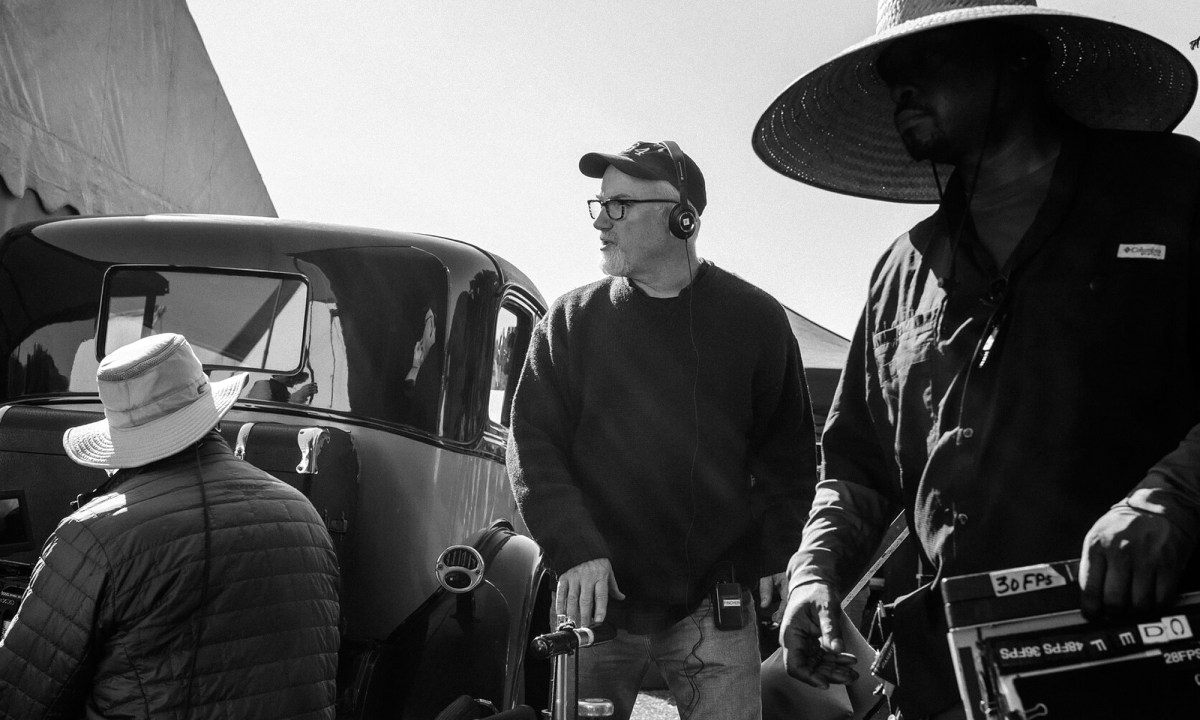
And now, Director David Fincher arrives with Mank: a screenplay by his late father about Herman Mankiewicz and his development of the screenplay for Citizen Kane. After a six-year feature film hiatus, Fincher tapped Erik Messerschmidt, ASC to DP, after working with Erik on Gone Girl as a gaffer and cinematographer for both seasons of Mindhunter.
Mank’s visual aesthetic is subtle, but not to be overlooked. Upon its release, the film’s cinematic elements were overwhelmingly acknowledged by critics and audiences alike. It’s an approach owing much to Erik, who saw the value in referencing the artistic quality of Citizen Kane while also developing a fresh lens through which the classic story could be seen.
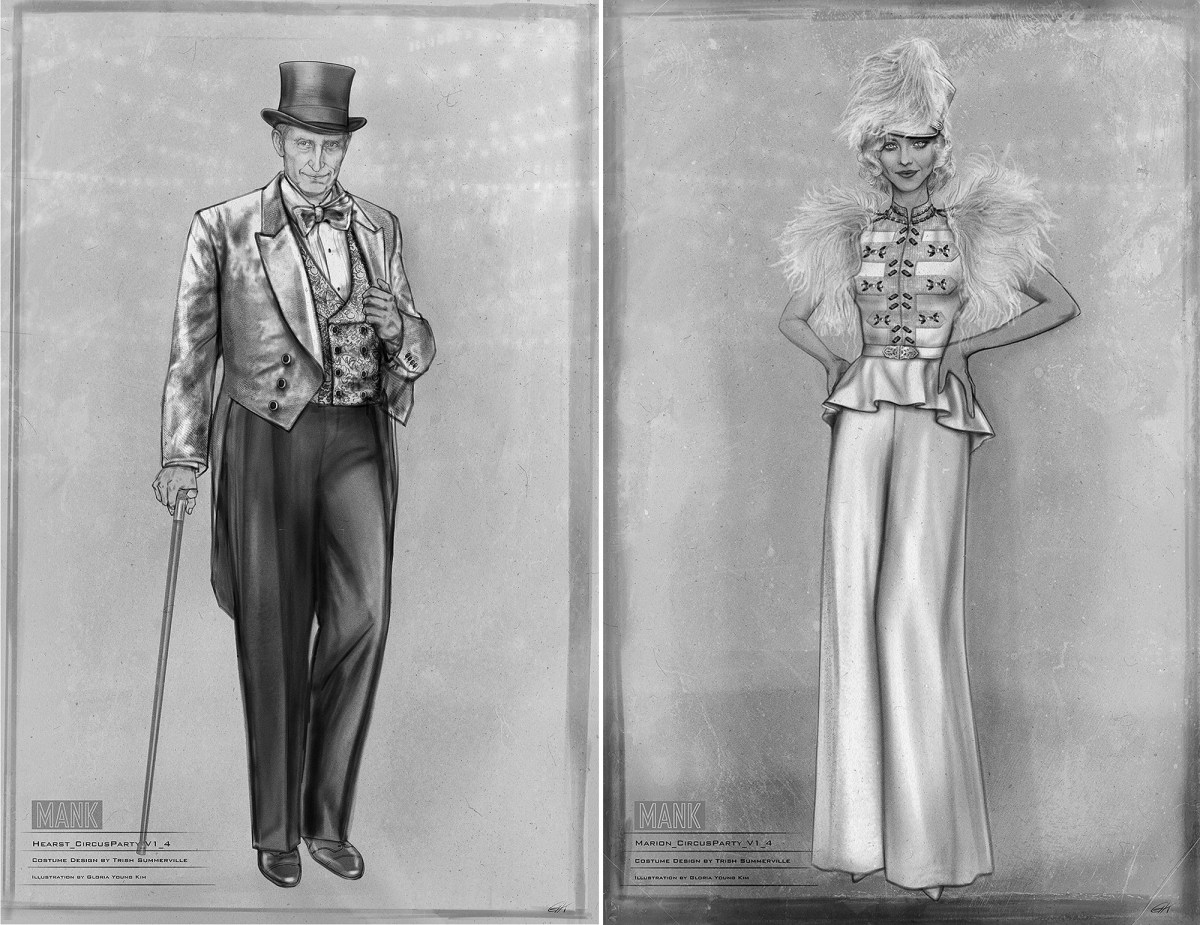
Mank costume designer Trish Summerville walks you through her efforts on the period piece, from working with color and texture for black and white photography to preparing a vast ensemble for the “circus party” scene at Hearst Castle.
Mank director David Fincher, actors Gary Oldman and Amanda Seyfried, the cinematographer Erik Messerschmidt, production designer Donald Graham Burt and sound designer Red Kyle walk you through a boisterous San Simeon house party sequence and the recreation of William Randolph Hearst’s famed zoo.
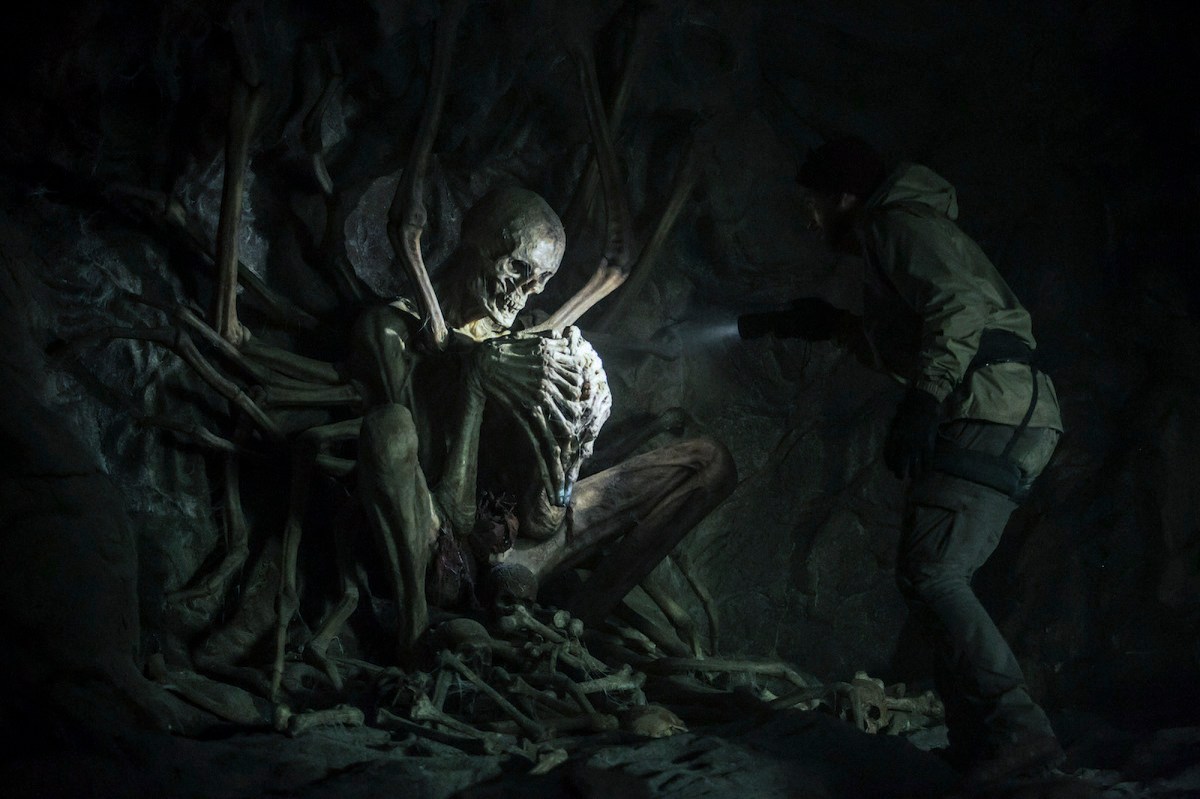
Last October, a horror movie came and went. It wasn’t the first time a Hollywood studio dumped a horror movie in the middle of Halloween; given the ongoing pandemic, few films with a theatrical release could have moved the needle in 2020. But in the case of David Prior’s The Empty Man, this release was just the tip of the iceberg, the near-final act in a first-time filmmaker’s multi-year struggle to bring his vision to the screen.
In this conversation, Prior explains how he went from being David Fincher’s protégé to the director of 2020’s most ambitious — and most abandoned — horror film. We also explore how a perfect storm of production problems and studio politics nearly killed the film, and how a passionate audience has already started to turn The Empty Man into a future cult classic.
From DVDs to David Fincher
History doesn’t repeat itself, but it often rhymes. If The Empty Man survives its troubled production and halfhearted theatrical release to become a household name for genre fans, then perhaps this story will serve as a fitting beginning to Prior’s career as a feature filmmaker. For years, Prior worked as a production documentarian for filmmakers such as David Fincher and Peter Weir, but one of his big breaks came with Antonia Bird’s Ravenous, itself a studio disaster that took years to find a passionate audience.
In the years before Ravenous’s theatrical release, Prior had built relationships in 20th Century Fox’s home video department thanks to his contributions to the isolated score track on the Alien DVD release. So when Prior stumbled across Ravenous in theaters — despite a trailer that he describes as a “piss-poor representation of the movie” — he saw an opportunity to build on those connections and bring some much-deserved love to Bird’s film.
His gamble worked. According to Prior, the special-edition release of Ravenous sold three times its initial projections, forcing 20th Century Fox to rush extra copies of the film into production. With his credentials established, Prior was given his pick of future home video releases, and his decision resulted in one of the most influential relationships of Prior’s professional career. “I said, ‘I don’t know what Fight Club is, but I really want to meet David Fincher, so I’ll do that one. And that led to a relationship with Fincher that goes on to this day.”
Over the next decade, Prior became a powerhouse in behind-the-scenes documentaries, shooting features for such films as Master and Commander, Zodiac, and The Social Network. It proved to be a successful and stable career, just not the one that Prior had in mind when he went to Hollywood. “I remember at the time thinking, ‘This is gonna be something where if I’m not careful, ten, fifteen years of my life is going to go by doing this instead of what I’d rather be doing,’” the director says. So Prior took another gamble, this time using some of his own money to produce the short film that would eventually land him his role with The Empty Man.
“In 40 short minutes, David Prior shows why he is one of the most promising directors I’ve ever seen. People always ask me what to do for a ‘calling card’ in Hollywood. Well do something like this, and try to do it half as well.”
On Mank, VFX supervisor Wei Zheng paired state-of-the-art technology with old-school filmmaking techniques, to help David Fincher craft a singular portrait of Hollywood’s Golden Age. Marking Zheng’s sixth collaboration with the director, the Netflix drama follows alcoholic screenwriter Herman J. Mankiewicz (Gary Oldman), as he finishes the script for Citizen Kane.
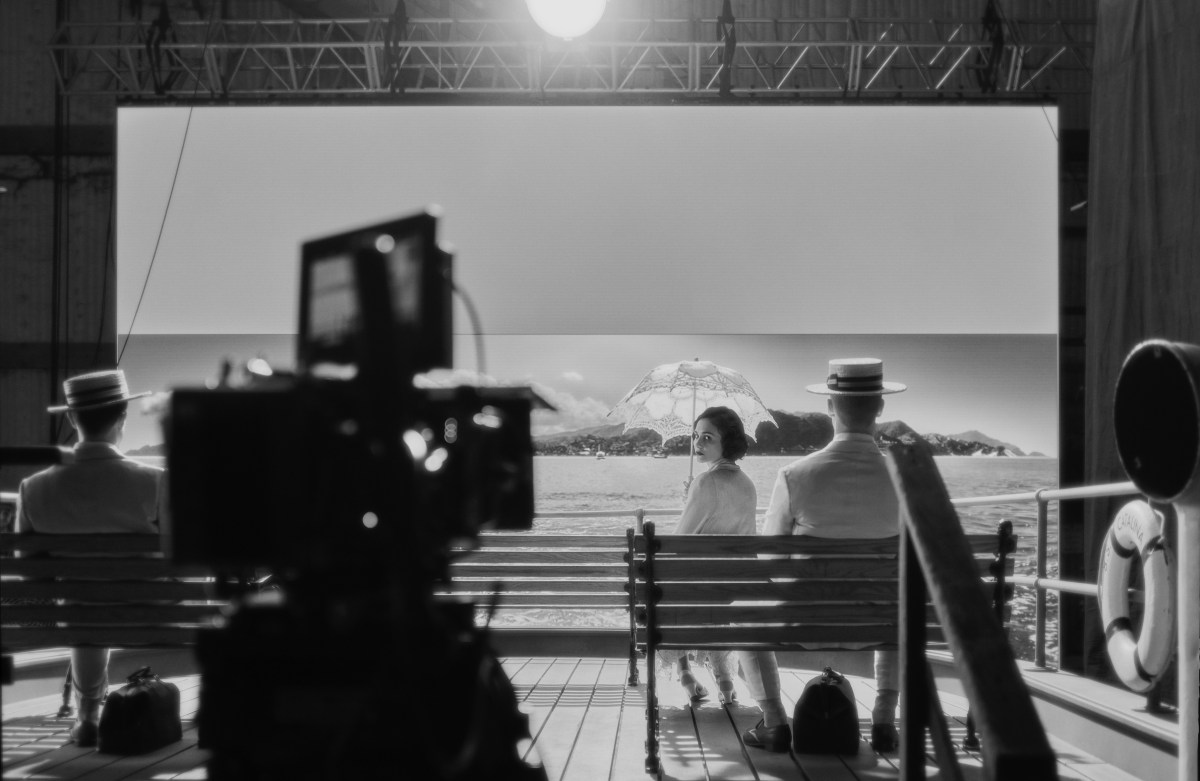
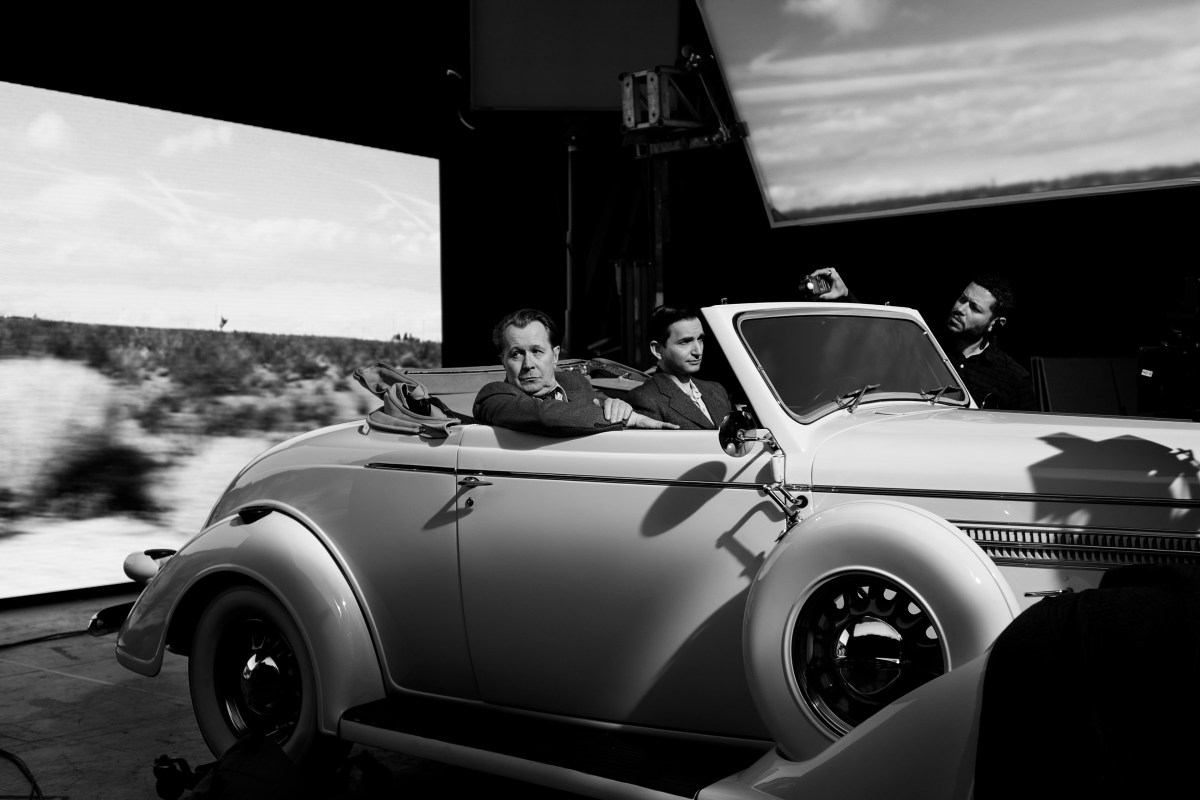
By implementing matte painting and rear projection, along with other tools and tricks, Fincher and his team minimized the budget necessary to assemble an authentic period piece, manipulating L.A. exteriors when necessary, or avoiding them altogether. Ultimately, what these tools offered Fincher was complete control of every image, and interestingly, the director himself served as the film’s overall VFX supervisor, though he chose to go uncredited.
At the same time, it took a village to bring his vision to life. Supporting him in his ambitions, alongside Zheng (Artemple Hollywood), were VFX supervisors Simon Carr (Territory Studio), James Pastorius (Savage VFX), and Pablo Helman (ILM). His fourth key collaborator in this arena was Peter Mavromates, who served as co-producer, post-production supervisor and VFX producer.
In conversation with Deadline, Zheng breaks down the shorthand he’s developed with Fincher over the years, and the approach he took to getting “David’s imagination” on each of his longtime passion project’s frames.
Erik Messerschmidt calls David Fincher’s process “precise.” And it is the greatest compliment. That precision is what Fincher is renowned for, his detail. He prefers the wider shots as he relays his character’s environments, but it’s what’s within the frame; that detail that gets the greatest performances out of actors, and gives audiences a full understanding of what is happening.
“Mank,” a love letter to Hollywood’s golden age, is no different. Messerschmidt has collaborated with Fincher before on “Mindhunter,” and is no stranger to the Fincher process, but this was their first feature together.
Messerschmidt reflects on how Fincher works and how they collaborated on the black-and -white drama.
A disillusioned screenwriter in old Hollywood gets a shot at redemption in Director David Fincher’s biographical comedy-drama, Mank.
Fincher’s film takes place as film 24-year-old wunderkind Orson Welles hires scathing social critic and alcoholic screenwriter Herman J. Mankiewicz to write the screenplay for his masterpiece, Citizen Kane.
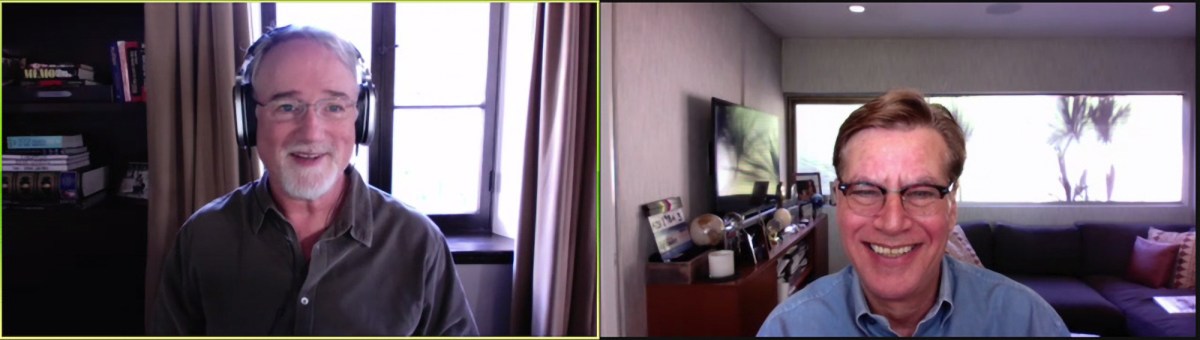
On February 6, Fincher discussed the making of Mank in a DGA Virtual Q&A moderated by Director Aaron Sorkin (The Trial of the Chicago 7).
During their conversation, Fincher spoke about his love for “the altar of cinema,” the communal aspect that can come through film. “For me, what I love about cinema is going into a big dark room with 700 people and through their laughter and through their surprise and through their shock and through their reactions you realize, I’m not alone. I’m the same. I’m wired into this group in the same way just organically and I’m picking up on all these other cues. That is what makes the cinema, or a great grand theater, an almost cathedral-like experience.”
Fincher’s other directorial credits include the feature films Se7en, The Game, Panic Room, Zodiac, Gone Girl; episodes of the television series House of Cards and Mindhunter; and countless commercials and music videos. He has been nominated for the DGA Award for Outstanding Directorial Achievement in Theatrical Feature Film for The Curious Case of Benjamin Button, The Social Network and The Girl with the Dragon Tattoo. In 2013, he was nominated for the DGA Award for Dramatic Series for House of Cards, “Chapter 1” and has twice been nominated for the DGA Award for his Commercial work with Anonymous Content in 2003 and 2008, winning the Award in 2003 for Beauty for Sale (Xelibri Phones), Gamebreakers (Nikegridiron.Com) and Speed Chain (Nike).
Costume designer Trish Summerville, who has previously worked with David Fincher on “The Girl with the Dragon Tattoo” and “Gone Girl,” says she was very excited when she learned the director wanted to do a full project in black-and-white. The only time she had ever tackled crafting costumes was in flashback sequences, not a full-length feature. And who better to do it with than Fincher?
In “Mank,” Fincher takes audiences back to the golden age of Hollywood as screenwriter Herman J. Mankiewicz (Gary Oldman) sets out to write “Citizen Kane.”
Summerville says her approach was “learning what his [Fincher’s] perception of black-and-white was. We had information to move forward with, but it was really him zoning in on exactly what that was going to look like and exactly how he was going to light it.”
The cast and crew of Mank, including costume designer Trish Summerville and actors Gary Oldman, Amanda Seyfried, Tom Pelphrey and Charles Dance, speak to the focus and concentration that a David Fincher set demands. The acclaimed filmmaker himself, meanwhile, takes you through the process of crafting his examination of Hollywood’s Golden Age.
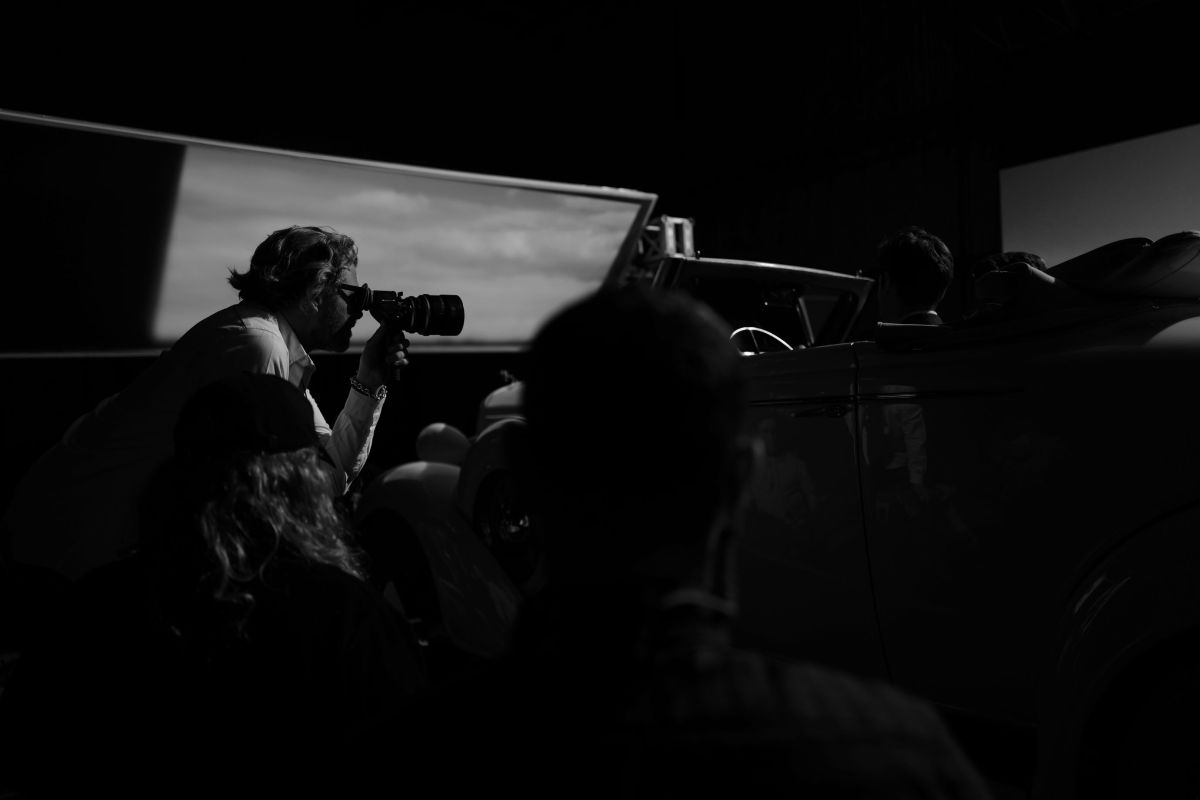
One of the major craft achievements of “Mank” was how David Fincher’s visual effects team meticulously recreated ’30s-era LA in black-and-white. (They used the matte paintings of Artemple, Territory’s LED screens, and Savage’s sky replacement with Unreal’s game engine.) The work has been shortlisted for the VFX Oscar and garnered a VES nomination for supporting visual effects.
“Most of the effects were what we call our ‘body and fender’ work, where [David] shot something and it’s not quite right and it needed to be replaced,” said visual effects producer Peter Mavromates. “For example, during the Louis B. Mayer birthday party at San Simeon, he didn’t want to deal with real fire in the fireplace, so those are all added [in CG] afterwards. He’s all about efficiency on set.”
Also added were the cloudy skies during the shooting of an elaborate home movie with Marion Davies (Amanda Seyfried) tied to a stake. “Sky replacement of shots were for consistency using the Unreal game engine with 3D model placement,” Mavromates added.