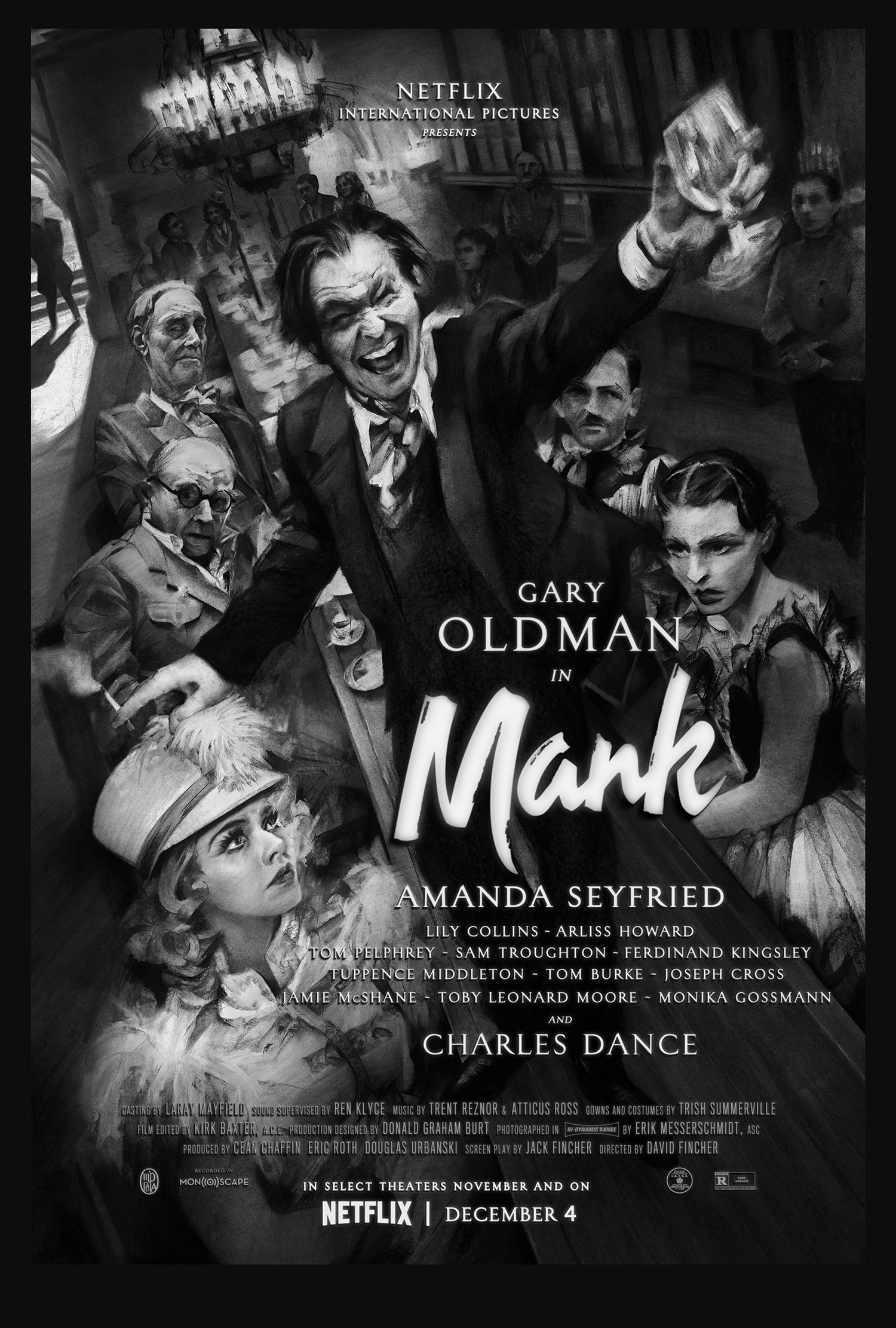
Amanda Seyfried Lily Collins – Arliss Howard Tom Pelphrey – Sam Troughton – Ferdinand Kingsley Tuppence Middleton – Tom Burke – Joseph Cross Jamie McShane – Toby Leonard Moore – Monika Gossmann and Charles Dance
Casting by Laray Mayfield Sound Supervised by Ren Klyce Music by Trent Reznor & Atticus Ross Gowns and Costumes by Trish Summerville Film Edited by Kirk Baxter, A.C.E. Production Designed by Donald Graham Burt Photographed in Hi-Dynamic Range by Erik Messerschmidt, ASC Produced by Ceán Chaffin, Eric Roth, Douglas Urbanski Screen Play by Jack Fincher Directed by David Fincher
MPPDA – Recorded in Mon((o))scape – I.A.T.S.E. – Rated R. Some Language
“A place to unload all my cinematic truths.” —Newton Thomas Sigel, ASC
How do you cultivate a career in Hollywood? What does it take to make iconic work? There’s an art to everything in life and the Art of the Shot explores the answers to those questions and more through deep-dives into the minds of master filmmakers. Join host Derek Stettler, young filmmaker and writer for the ASC and SOC magazines since 2016, as he learns from the artists behind today’s most strikingly-shot projects. Enjoy compelling conversations on the craft, insights from successful careers, tips, techniques + more!
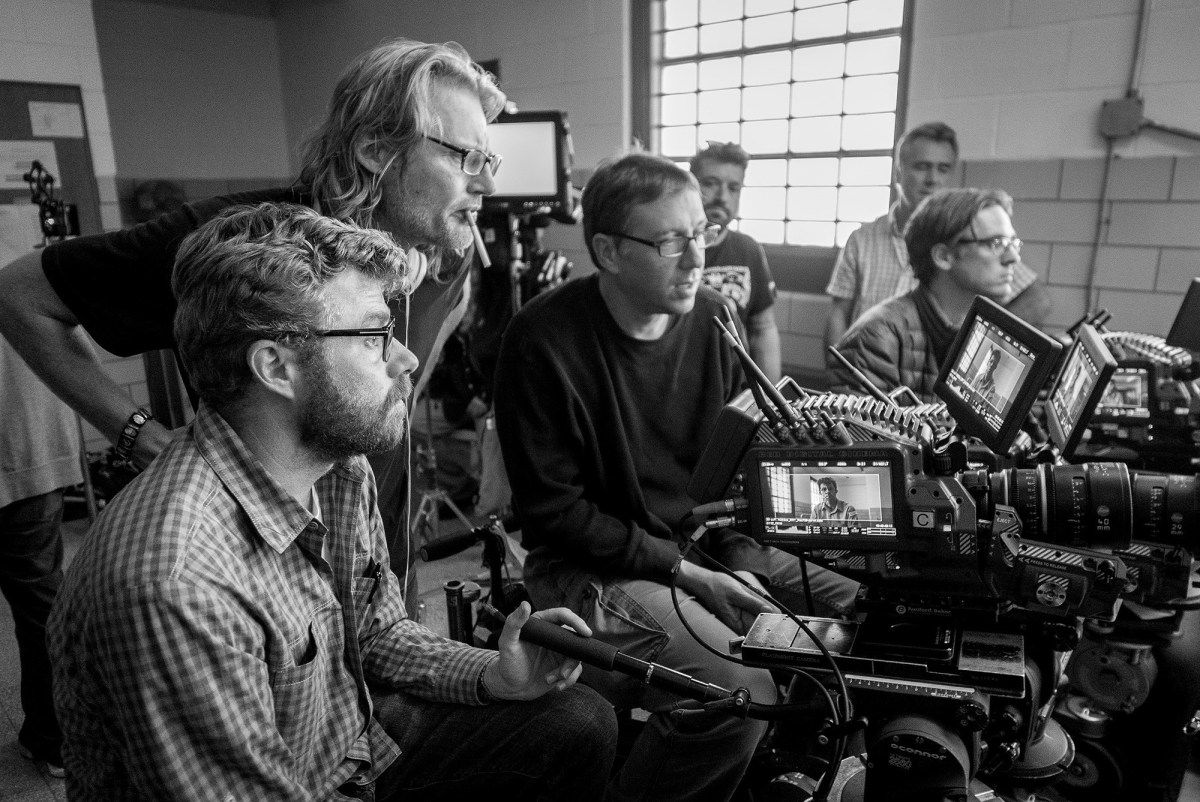
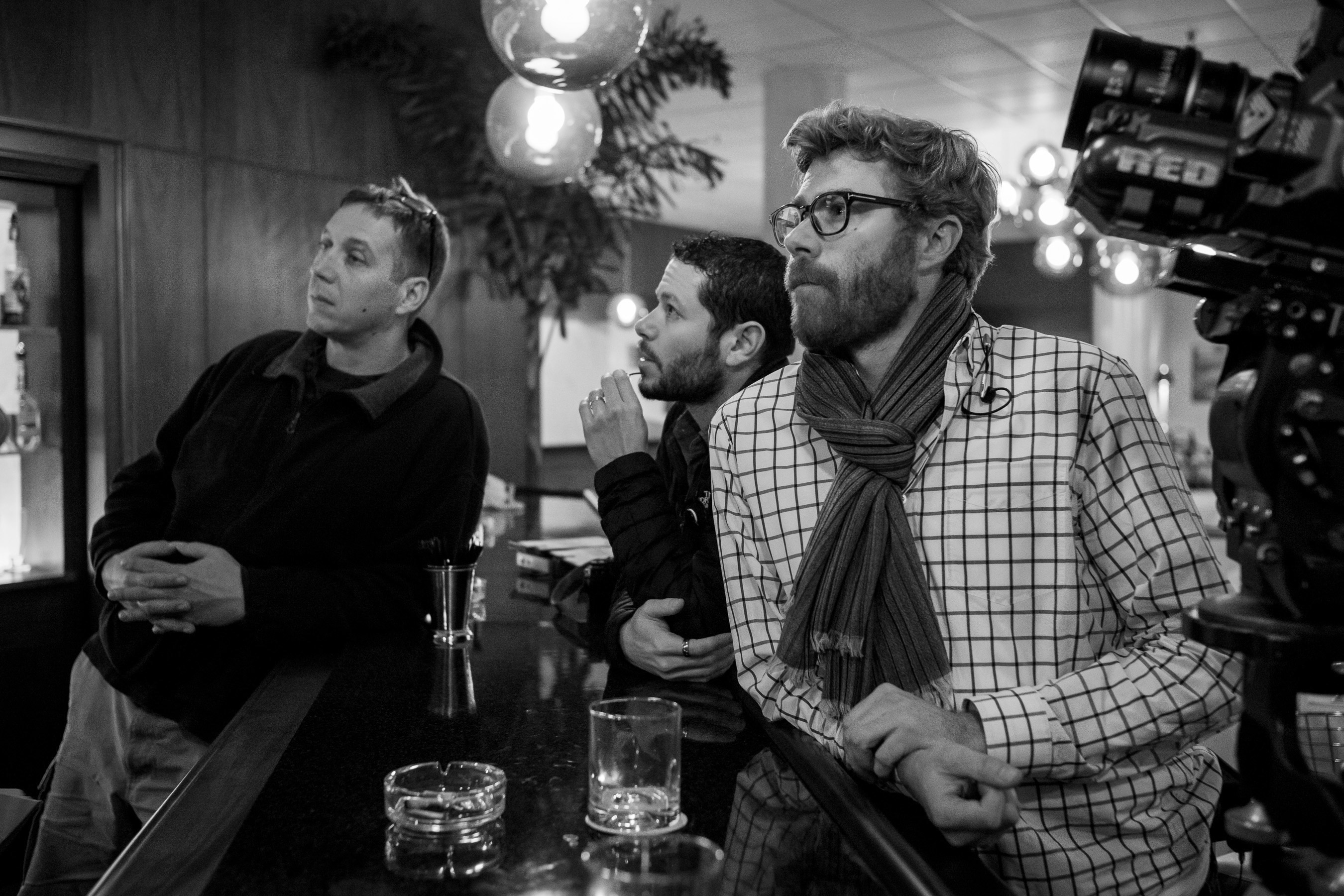
In this episode, you’ll hear from both the cinematographer and the “A” camera operator of Mindhunter, who worked together throughout Season 1 and 2 to shoot every single episode. Please enjoy this exclusive interview with Erik Messerschmidt, ASC and Brian Osmond, SOC!
Brian Osmond, Gaffer Danny Gonzalez, and Erik Messerschmidt (Nikolai Loveikis)
In this episode, you’ll learn:
– Erik’s career path (00:04:06) – Erik’s favorite part of the job (00:06:42) – What DP’s should know to best work with their gaffers, from Erik’s experience working as a gaffer before becoming a DP (00:07:02) – Unique skills Erik gained from his experience as a gaffer (00:07:56) – How Brian got his career started (00:11:19) – Brian’s favorite part of his job (00:12:19) – What other directors can learn from how David Fincher treats his crew (00:18:39) – The thought process & techniques behind Mindhunter‘s precise camera movement (00:22:50) – The strategic use of handheld camera operating (00:34:27) – The collaborative nature of the Mindhunter set (00:37:34) – The importance of having a dedicated camera operator on set, especially on a David Fincher set (00:41:19) – Erik’s role as “quality control supervisor” (00:44:21) – Why a monitor on a David Fincher set is covered in smudges (00:46:57) – Why there’s no such thing as a B camera “bonus shot” on Mindhunter & how shots are planned out for multiple cameras (00:48:23) – What Erik thinks is the hardest shot to do well (00:52:04) – How Erik lights & shoots with 2 cameras simultaneously (00:53:41) – Erik’s approach to lighting Mindhunter & techniques used (00:56:55) – Erik’s preference for real fluorescent lighting (01:03:30) – Mindhunter‘s production design and how much of the locations were built (01:05:01) – Favorite set of Season 2 (01:06:26) – How getting scripts in advance helps them work better (01:10:44) – The innovative car process shooting on Mindhunter & how it works (01:12:38) – How virtual production helps realize every filmmaker’s dream, stopping time, & how Erik used that to shoot a 9-minute dialog scene at dawn (01:18:02) – How the car process shooting on Mindhunter evolved from Season 1 (01:22:37) – How the custom RED digital cinema camera, dubbed the Xenomorph, evolved from Season 1 (01:27:22) – Why Brian prefers a fluid head over a geared head to achieve those smooth, precise shots David Fincher loves (01:37:34) – How to shoot a scene & why “Fix it in prep!” should be every filmmaker’s mantra (01:42:08) – All about the lenses used on Mindhunter & how Erik art directed the artifacts & nuances of every optical aberration (01:48:10) – Tips from Brian on getting really precise shots with a fluid head, what operating technique Erik has learned from Brian, & how being self-critical is a key to his success (01:56:42) – What Erik & Brian feel is the most rewarding part of working on Mindhunter (02:02:47)
If you haven’t yet, please be sure to subscribe to be notified of future episodes, and share this podcast with others to help grow the show and spread the knowledge!
The Art of the Shot podcast is brought to you by Evidence Cameras, an outstanding rental house in Echo Park specializing in high-end digital cinema camera packages, lenses, support, and accessories.
I have a very precise memory of watching The Game for the first time, of sitting on the couch in the family room of my childhood home, inserting the VHS tape, and being totally taken in. At the time I was overcome by the specificity of the details in the film and the illusion of control that they gave me, making me feel smarter than the movie before ever so delightfully pulling the rug out from under me.
Every time I’ve revisited the film since, it has opened up more, or perhaps more accurately, closed in on itself, collapsed in form to reveal a world, our world today, which, as it turns out, is just a plaything for the rich. What stands out to me now isn’t the detail-laden plot—about a man named Nicholas Van Orton (Michael Douglas) and a strange experiential game gifted to him by his brother, created by a company called Consumer Recreation Services—but things like Daniel Schorr, as himself, talking about rising unemployment and a legislative effort to get small businesses to provide health insurance to their workers. Or Van Orton’s utter disgust as he momentarily holds a bag of someone else’s takeout Chinese. While the surface-level pleasures of the film revolve around wondering who in the film is an actual person and who is an actor working for CRS, the foundations of it lie in exposing society’s deep inequality.
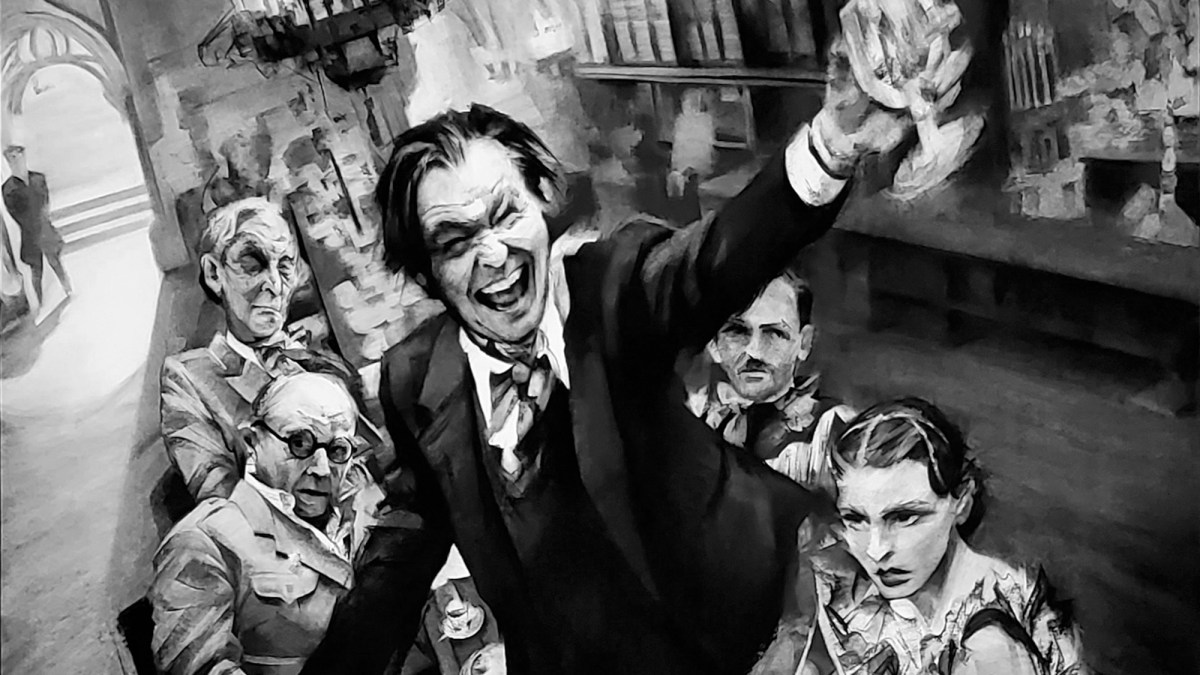
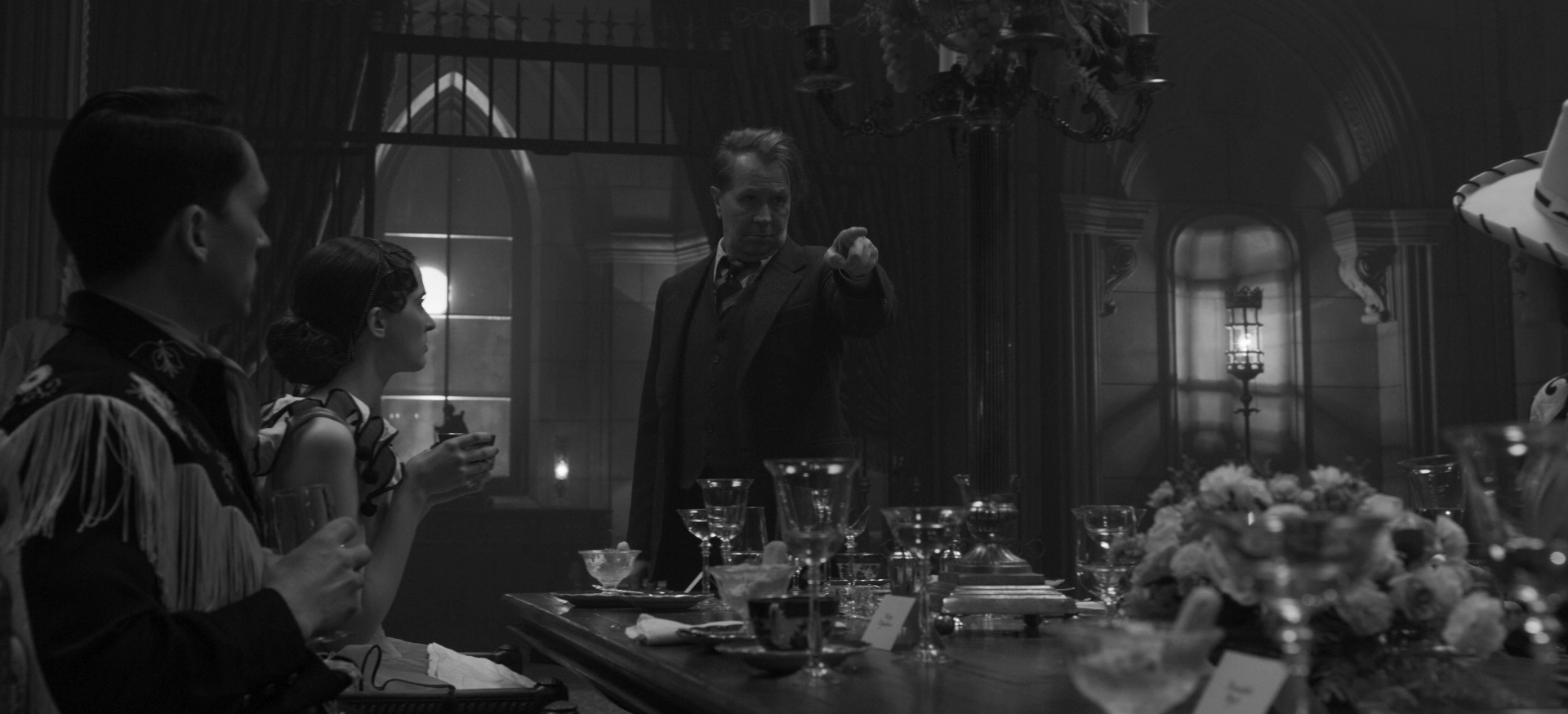
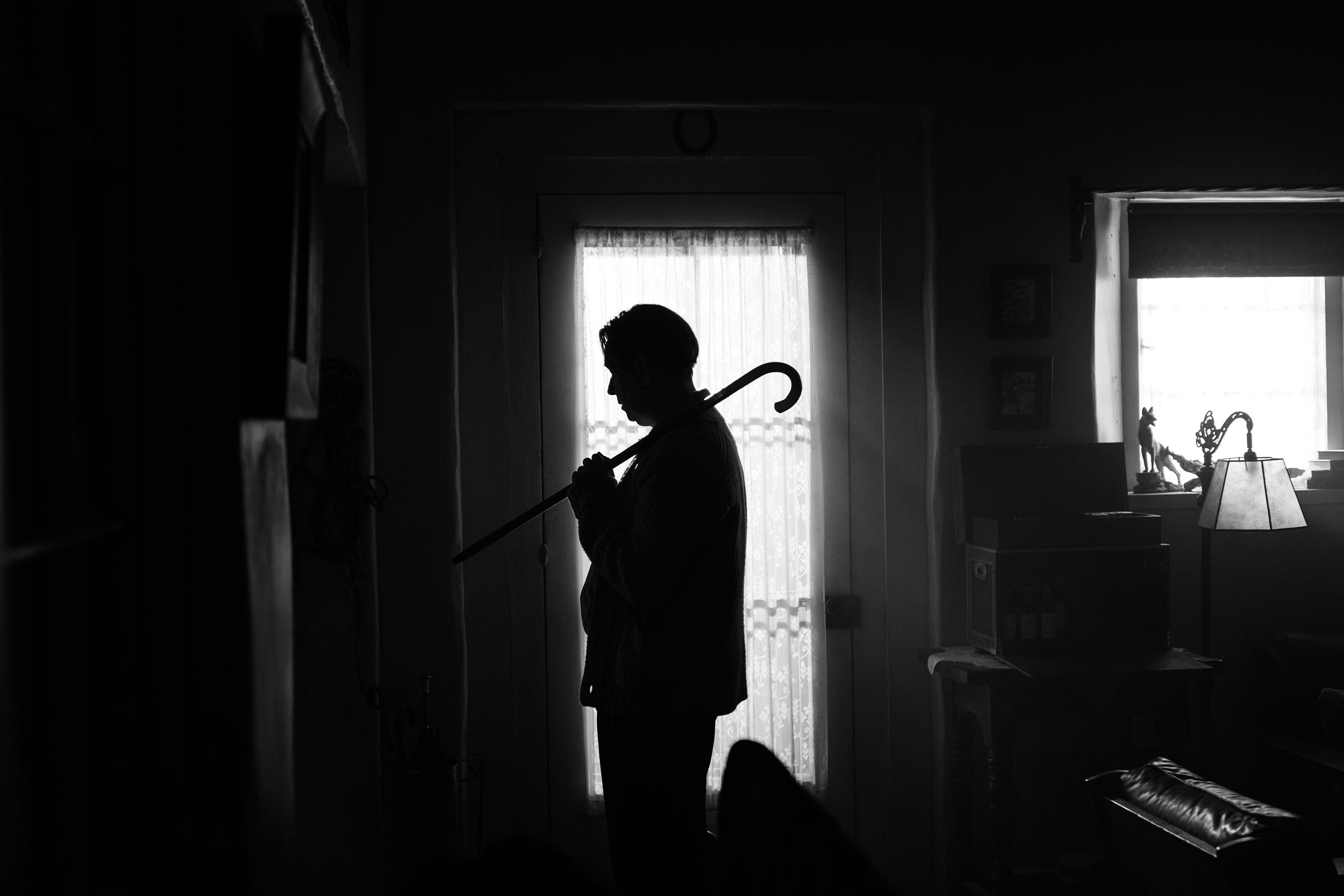
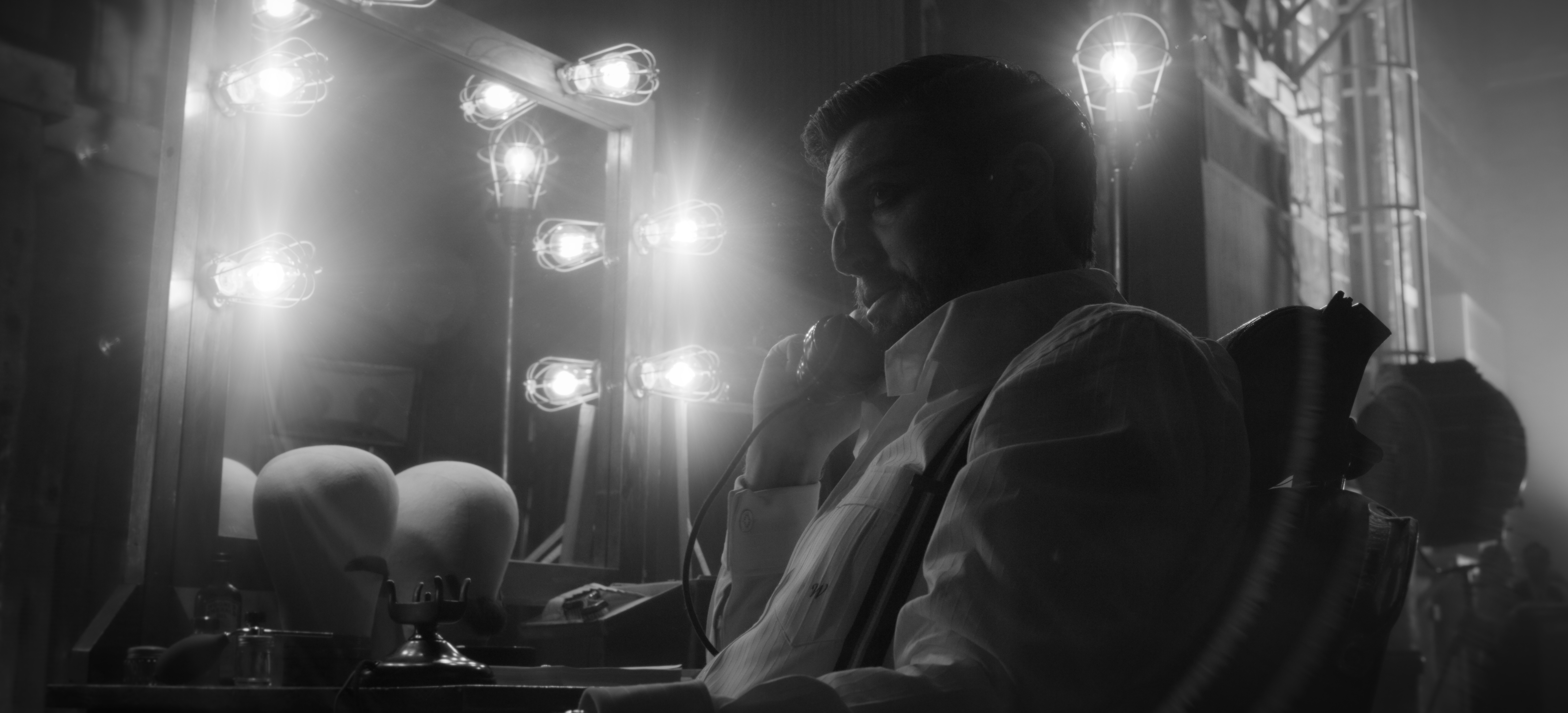
Herman ‘Mank’ Mankiewicz (Gary Oldman) drunkenly harangues the dinner guests at Hearst Castle
Directed by: David Fincher Produced by: Ceán Chaffin, Eric Roth, and Douglas Urbanski Written by: Jack Fincher Score by: Trent Reznor & Atticus Ross Costumes by: Trish Summerville Edited by: Kirk Baxter, ACE Production Design by: Donald Graham Burt Photography by: Erik Messerschmidt, ASC Co-Produced by: Peter Mavromates & William Doyle
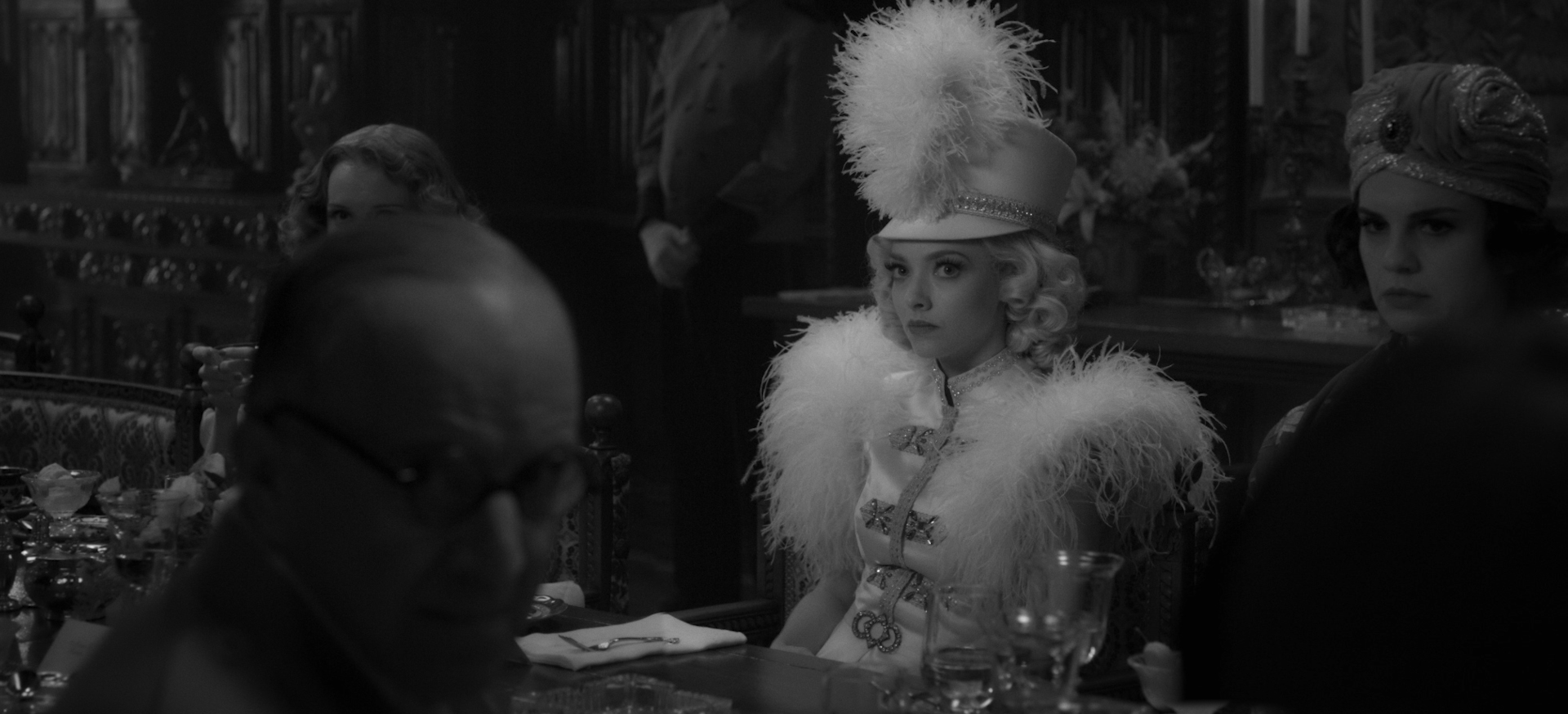
Marion Davies (Amanda Seyfried) sits in growing horror as her dinner party is disturbed by Mank
Cast: Gary Oldman as Herman J. Mankiewicz Amanda Seyfried as Marion Davies Lily Collins as Rita Alexander Arliss Howard as Louis B. Mayer Tom Pelphrey as Joe Mankiewicz Sam Troughton as John Houseman Ferdinand Kingsley as Irving Thalberg Tuppence Middleton as Sara Mankiewicz Tom Burke as Orson Welles Joseph Cross as Charles Lederer Jamie McShane as Shelly Metcalf Toby Leonard Moore as David O. Selznick Monika Gossmann as Fraulein Freda and Charles Dance as William Randolph Hearst
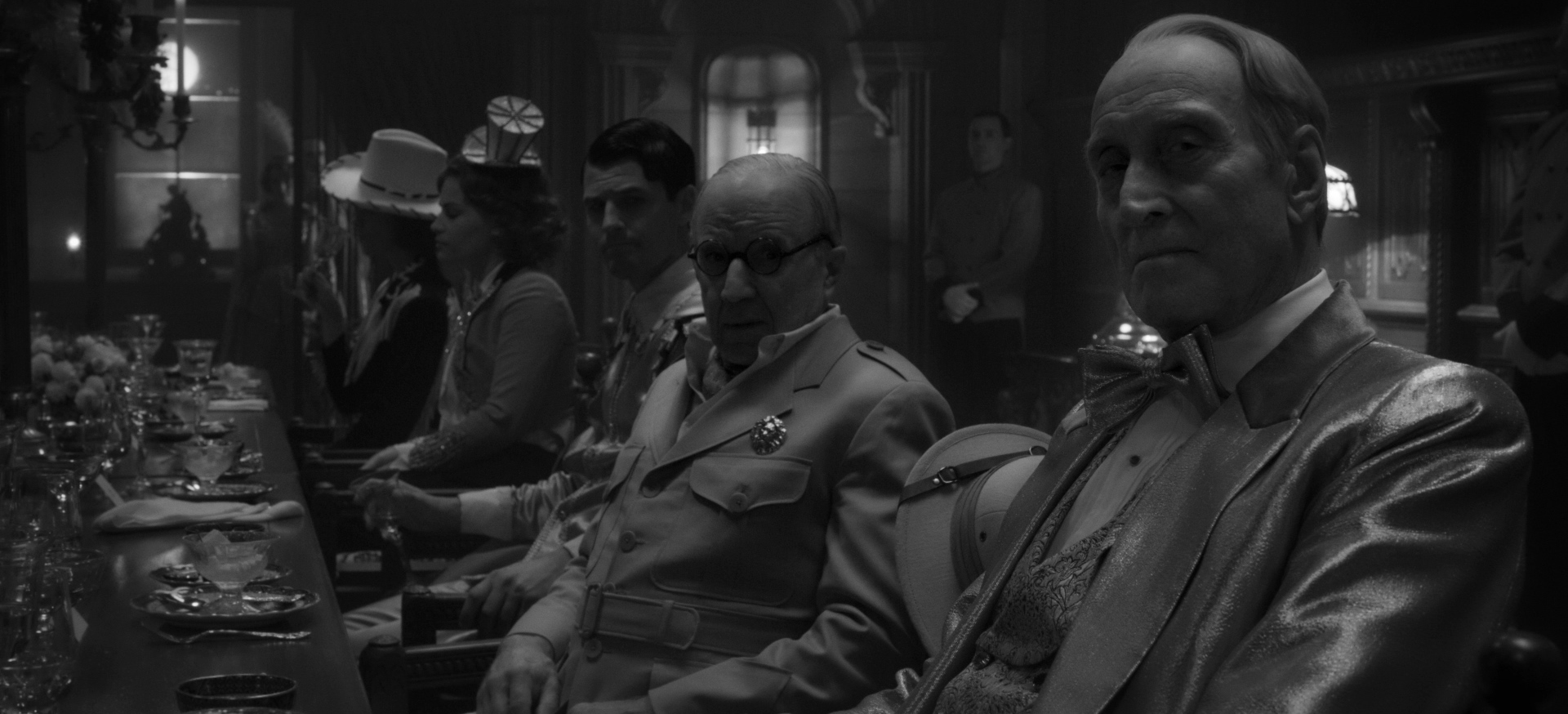
William Randolph Hearst (Charles Dance) beside MGM’s Louis B. Mayer (Arliss Howard)
Gary Oldman as Herman Mankiewicz (Gisele Schmidt/NETFLIX)
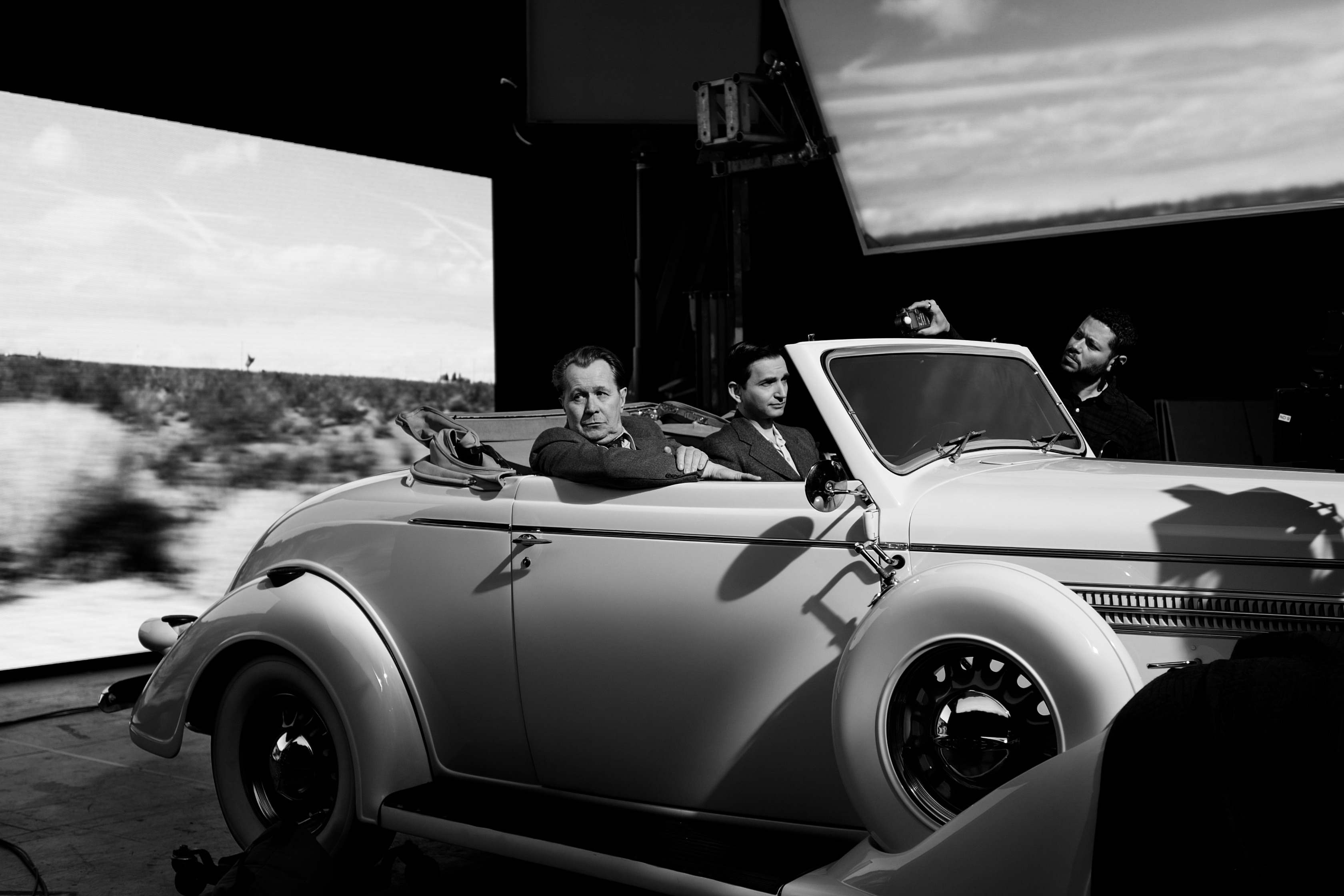
Gary Oldman (as Herman Mankiewicz), Sean Persaud (as Mank’s colleague Tommy), and Gaffer Danny Gonzalez, before a LED backdrop of the desert (Gisele Schmidt/NETFLIX)
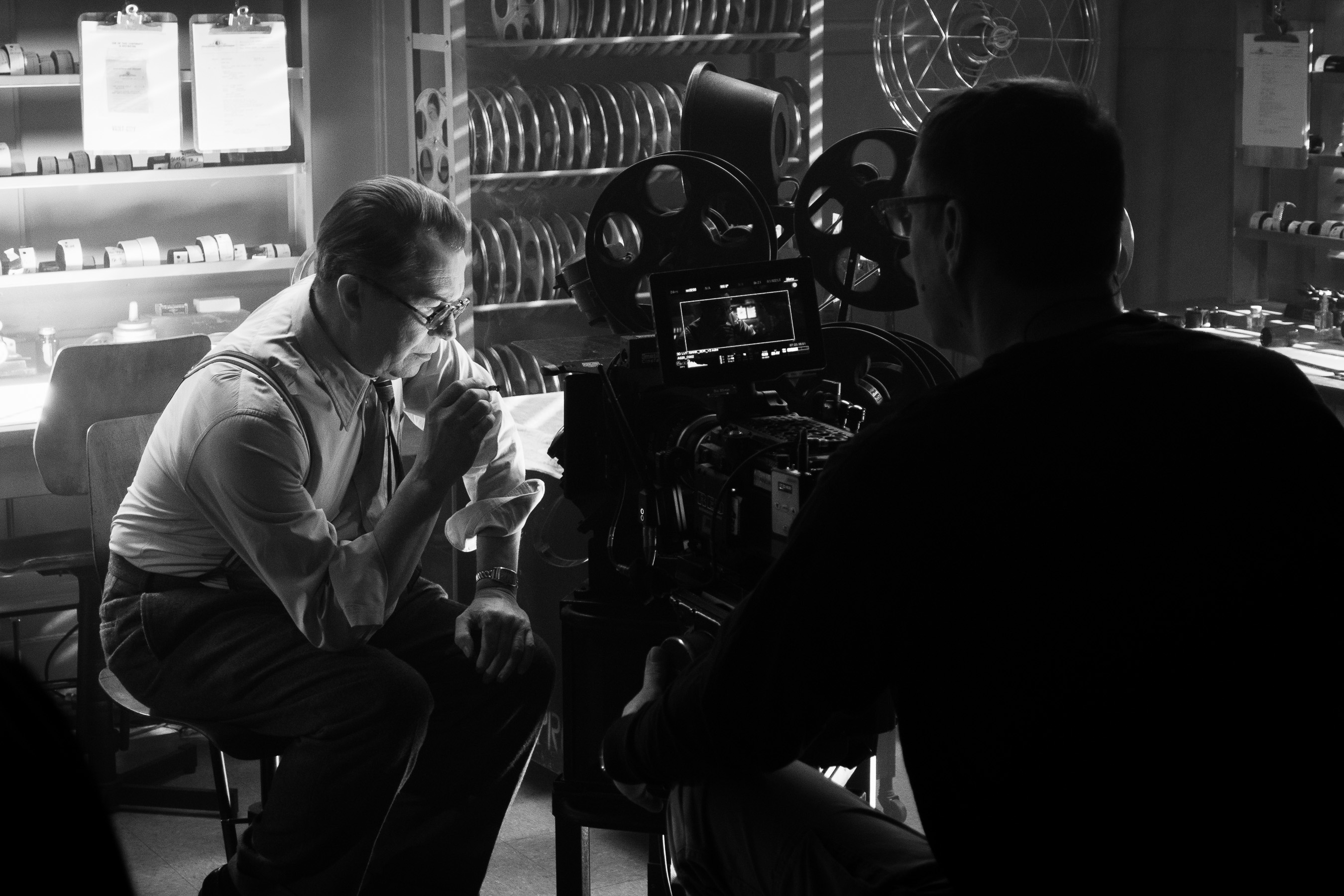
Gary Oldman (as Herman Mankiewicz) shot with the RED Monstro 8K Monochrome by Camera Operator Brian Osmond (Nikolai Loveikis/NETFLIX)
Even before theatrical failures dimmed his dreams of escape, Herman had decided he could bring New York to Hollywood by importing some of his friends. If Ben Hecht couldn’t write him a good script, Herman told Schulberg, then Schulberg could tear up Herman’s two-year contract and fire them both. His boss could hardly refuse a bet like that, so Herman wired, “Will you accept three hundred per week to work for Paramount Pictures. All expenses paid. The three hundred is peanuts. Millions are to be grabbed out here and your only competition is idiots. Don’t let this get around.”
Hecht, who later claimed that Herman’s telegram arrived just in time to avert a financial disaster so severe that he had taken to his bed with Gibbon’s Decline and Fall of the Roman Empire, hurried west to enroll in what he called the Herman Mankiewicz School of Screenwriting.
Director: Kimb Luisi & Dan Young Production Company: Sawhorse Productions DP: Skyler Bocciolatt Production Design: Sage Griffin Storyboards: Andrew Paul
1930s Hollywood is reevaluated through the eyes of scathing wit and alcoholic screenwriter Herman J. Mankiewicz as he races to finish Citizen Kane.
Starring: Gary Oldman, Amanda Seyfried, Charles Dance
Cast: Lily Collins, Arliss Howard, Tom Pelphrey, Sam Troughton, Ferdinand Kingsley, Tuppence Middleton, Tom Burke, Joseph Cross, Jamie McShane, Toby Leonard Moore, Monika Gossmann
2h 11m
Click to enjoy the images in glorious 5K, full quality, and full screen view:
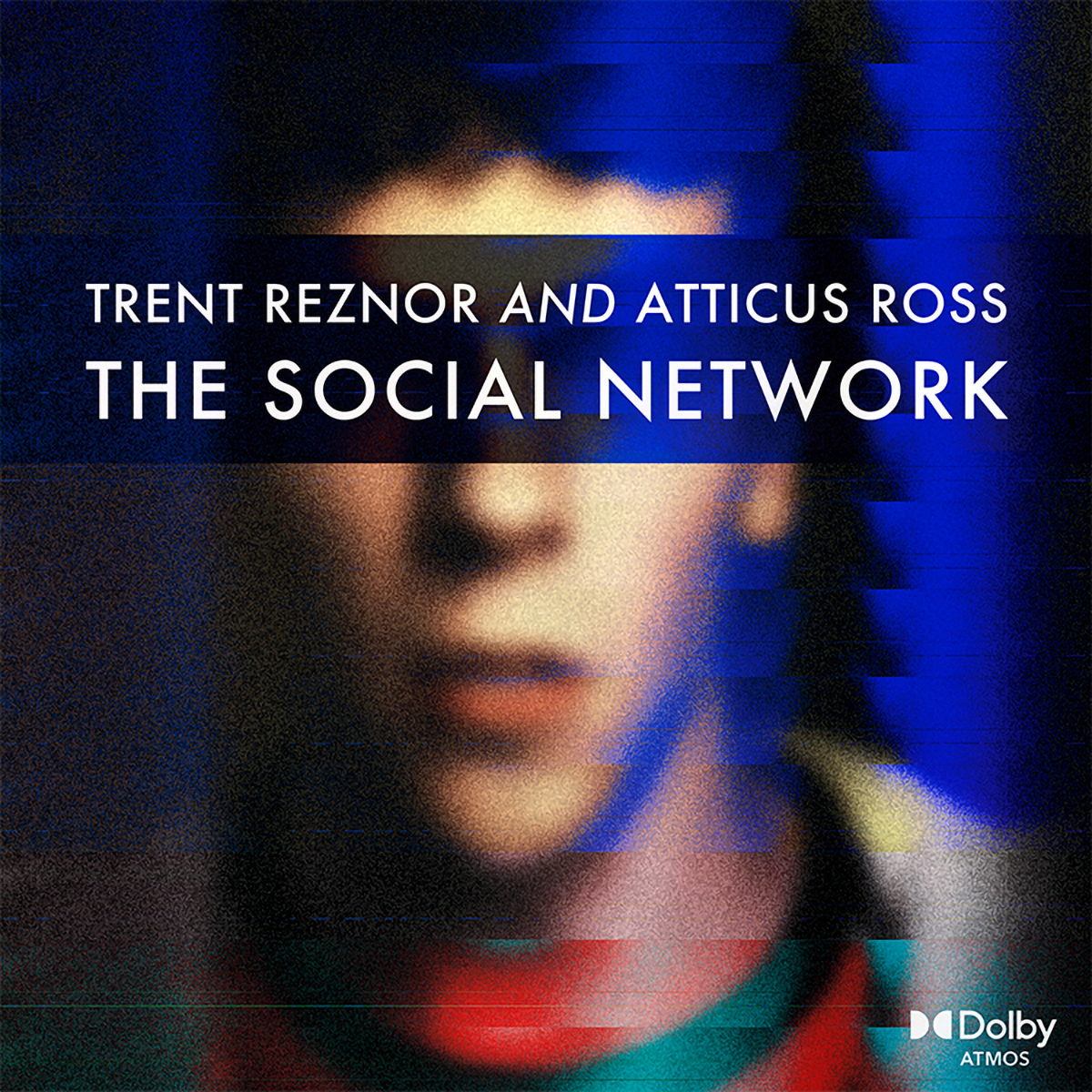
This week marks 10 years since the release of the Academy Award-winning score for The Social Network. In celebration of the anniversary, Trent and Atticus have created a newly remixed version of the soundtrack in Dolby Atmos 3D Audio, providing an immersive listening experience. The new Atmos mix is currently able to stream right now on Amazon Music HD.
Look for this to become more widely available on other supporting services.
From Trent:
When we finished the score, we were in a phase where we intrigued by the possibilities of mixing in surround. At the time, 5.1 was the format of choice. Our intention was to spend three days after finishing the stereo mix and adapt it to 5.1… Thirty days later we finished! We found the material was very suited to the space and we went a little crazy
Jump to the present where atmos has become a viable format and we thought it would be cool to “adapt” the approach of the original 5.1 mix into the expansive canvas atmos provides. Our results are live on Amazon Music right now – check it out.
We were going to offer the option to purchase a download, but we couldn’t get it together to provide the most viable format (stay tuned). We are considering making some ultra HD Blu-Ray discs for your highest-quality Atmos listening pleasure.




 The Fincher Analyst