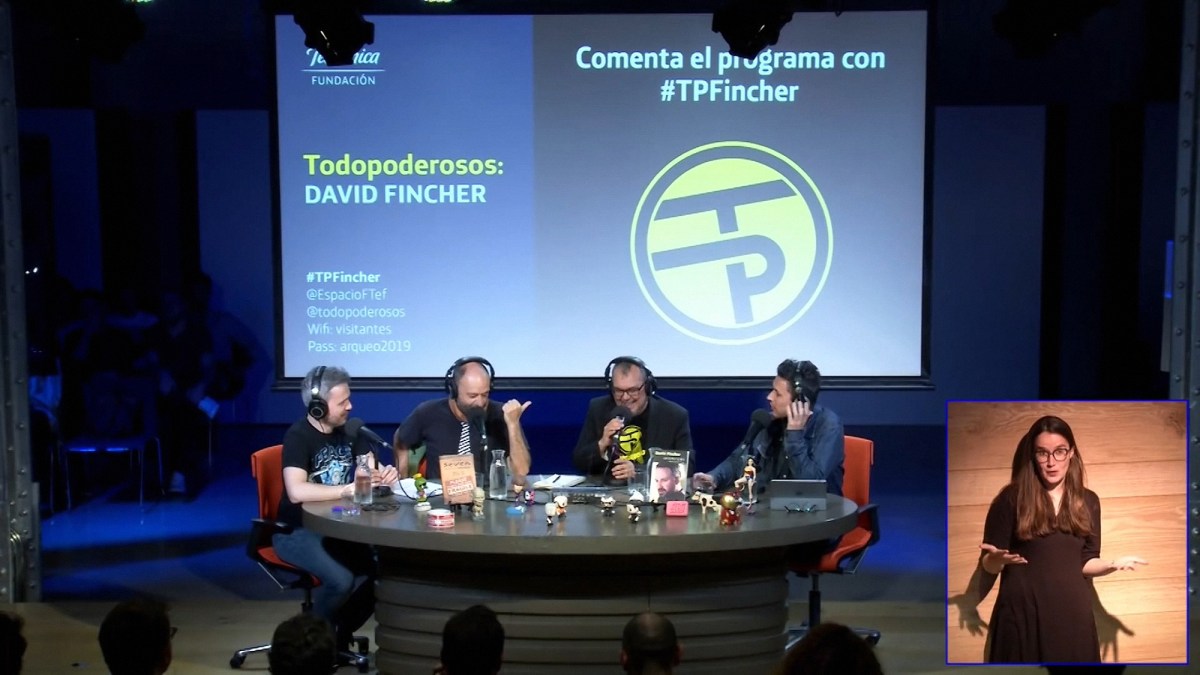
Hemos convertido nuestro auditorio en una fábrica de jabones, un juego peligroso, una caja sospechosa, una casa de cartas, una habitación del pánico…
O sea, Javier Cansado, Rodrigo Cortés, Juan Gómez-Jurado y Arturo González-Campos, los mindhunters de Todopoderosos, se han dedicado a hablar de David Fincher y sus pecados capitales.
Autor de libros cómo El Paciente, Cicatriz o su reciente Reina Roja, un autor traducido a más de 40 idiomas, y una de las mentes más intrigantes de la cultura española.
Un ilustre ignorante que demostrará que ambos adjetivos son falsos en su caso. Uno de los grandes cómicos de este país y un comunicador que, cada día, hay que descubrir. Se afeita regular, eso también lo tiene.
Rodrigo Cortés ha hecho una película dentro de una caja y dos fuera. Escribe libros, habla por la radio y huele genial. Una vez se quedó atrapado en un ascensor con Carlos Boyero.
Durante muchas noches ha gritado en La Parroquia de Onda Cero, escribe libros, hace guiones y es monologuista, la prueba viviente de que un feo también tiene lugar en este mundo.
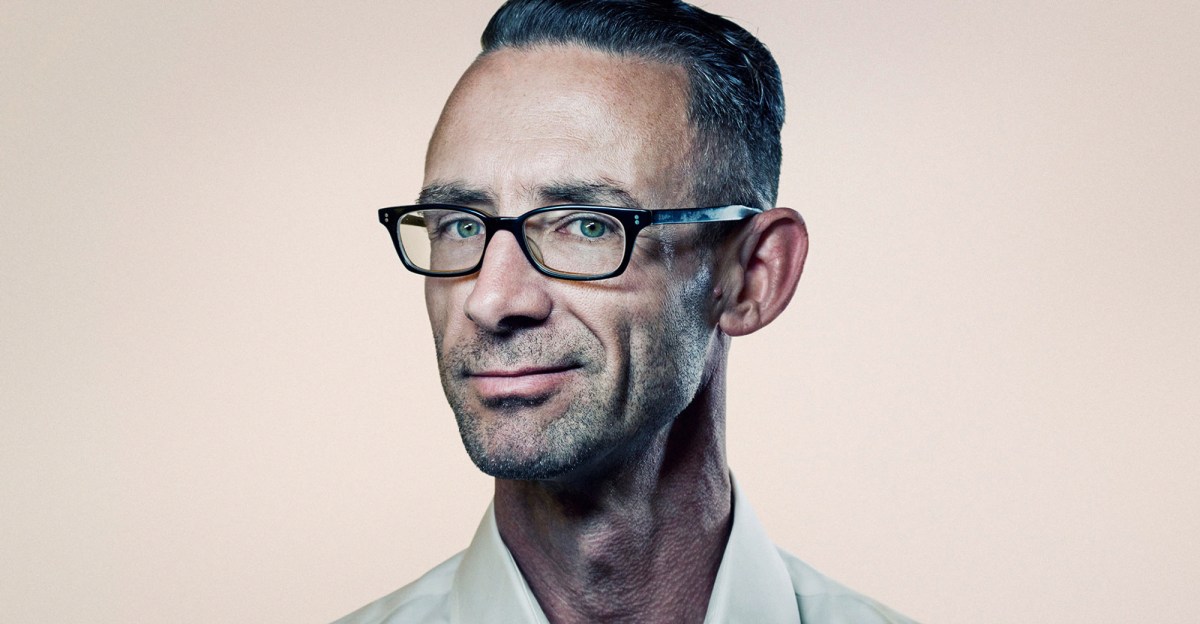
What is the meaning of Fight Club? Instead of giving you my theory, let’s learn straight from the source! Listen to Chuck Palahniuk (author), Jim Uhls (screenwriter), David Fincher (director), and more talk about how they created this film and book!
Fight Club is a 1999 film based on the 1996 novel by Chuck Palahniuk. It was directed by David Fincher and stars Brad Pitt, Edward Norton, and Helena Bonham Carter. Norton plays the unnamed narrator, who is discontent with his white-collar job. He forms a “fight club” with soap salesman Tyler Durden, and becomes embroiled in a relationship with him and a destitute woman, Marla Singer.
I’ve been Mark Zuckerberg—there are times in my life where I’ve acted that way. There are times in my life where I’ve been Eduardo Saverin—where I’ve gone and made a scene and regretted it and where I’ve been emotional and felt silly and stupid. And there are times when I’ve felt self-righteous and I’ve acted out in this other way… Look, what Mark does is no different than directing a movie—it’s what I do for a living every day. You grow something, and your job is to grow it well and to make sure it gets enhanced and to take care of it. That’s the subject of the movie. And if you have to hurt people’s feelings in order to protect that thing, that’s what you have to do. It’s a responsibility. You want to love every character in the movie. You want to be able to understand them. You want to be able to relate to them. But, as a director, the characters’ behaviors are inevitably related to facets of moments in your own life. You look at the work and say, Maybe I do know what that is. I’ve been the angry young man. I’ve been Elvis Costello. I know what that’s like. The anger is certainly something I felt that I could relate to—the notion of being twenty-one and having a fairly clear notion of what it is you want to do or what it is you want to say and having all these people go, well, we’d love to, we’d love you to try. Show us what it is that you want to do. It’s that whole condescending thing of having to ask adults for permission because the perception is that you’re too young to do it for yourself. And that’s why I understood Mark’s frustration. You have a vision of what this thing should be. And everyone wants to tell you, Oh, well, you’re young. You’ll see soon enough. —David Fincher
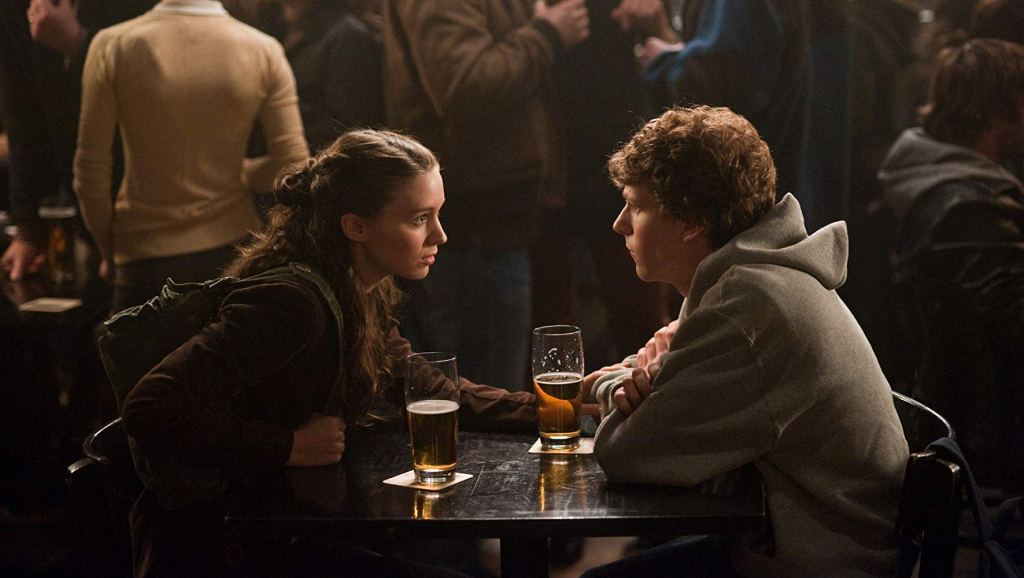
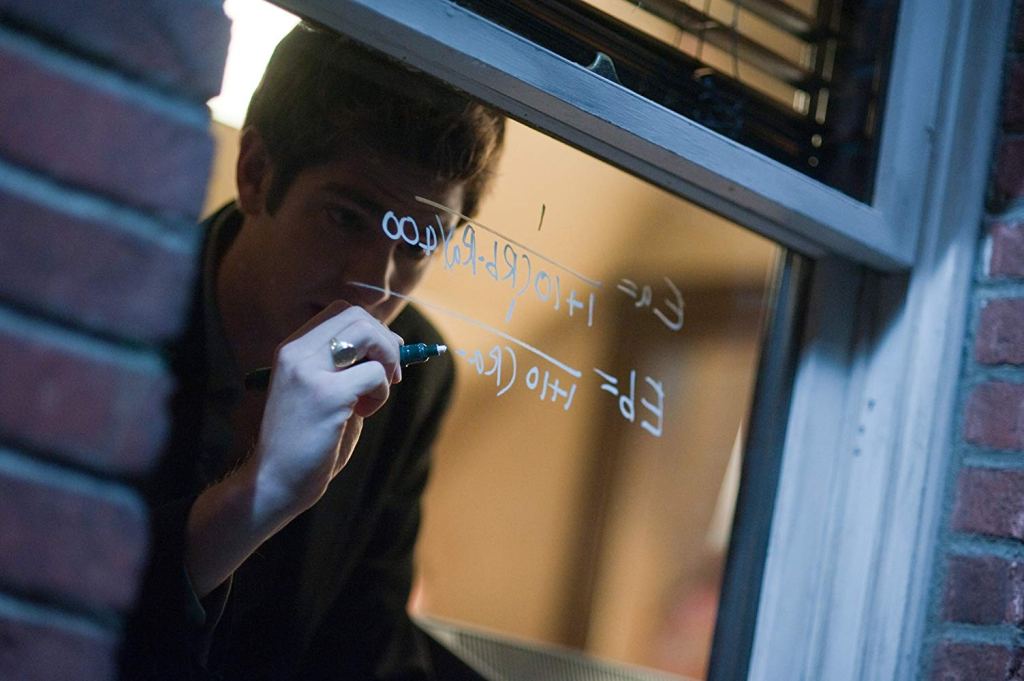
The 21st century computer-scribes who work behind the scenes behind the screens, creating culture and beauty with code, got an anti-hero to remember on the silver-screen in 2010 with David Fincher’s 8th feature film. From a once-in-a-generation, “holy shit” screenplay by Aaron Sorkin, The Social Network is a movie about a 19-year-old Harvard student creating Facebook while losing the relationships in his life. It is an examination of a social outsider who built one of the biggest “clubs” the world’s ever seen, and it’s about the new age zooming past the old. It’s about ignorance in high places, that awkward moment when powerful hired officials prove they have no concept of what simple features on Facebook are in a hearing on Facebook security. It’s about a new language of coding that’s sweeping and running the globe, and about treating coding with the respect it deserves. It’s about coders being taken as seriously as writers, musicians, filmmakers, film producers, painters, costume-designers, photographers, and all other artists and creators. It’s about attaining power even though you’re socially anxious or awkward, and about finding that inner drive that helps you accomplish your goals. It’s about what happens when you lose your humility in your thirst for greatness, and about the fragility of the line between “passionate” and “ass-hole.” The Social Network is simultaneously about a seismic shift in the zeitgeist and your best friend getting your company in trouble for feeding his fraternity chicken a piece of chicken. It’s about creating and solidifying one’s identity, and everything and anything else that goes with what Fincher once jokingly referred to as “the Citizen Kane of John Hughes movies.”
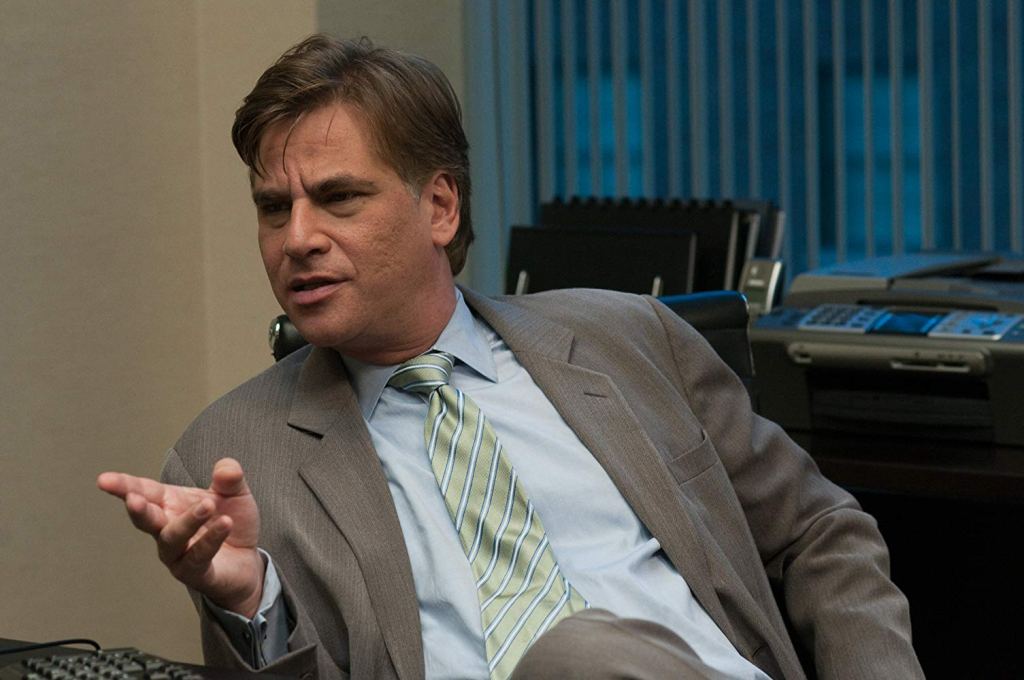
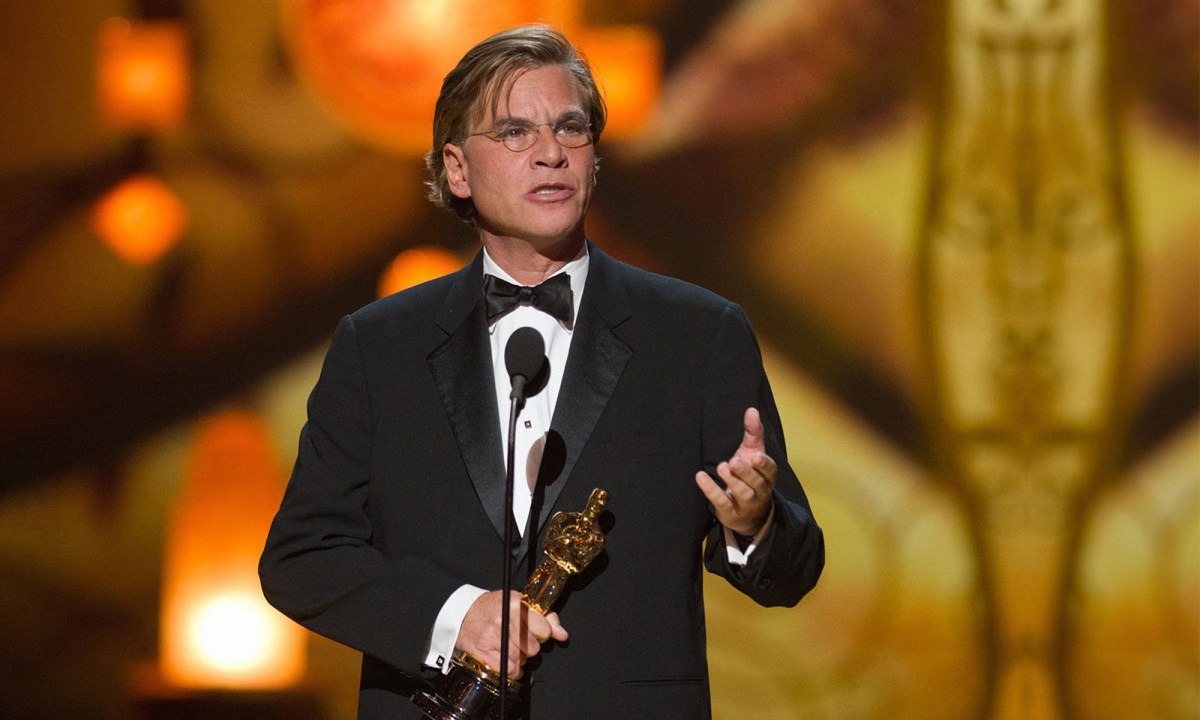
The Social Network is one of the best films of the 2010s. Aaron Sorkin, a screenwriter famous for his dialogue, teamed up with visual director David Fincher to create a modern film with themes as old as story itself. Watch and learn how they did it!
The Social Network is a 2010 American biographical drama film directed by David Fincher and written by Aaron Sorkin. Adapted from Ben Mezrich‘s 2009 book The Accidental Billionaires: The Founding of Facebook, a Tale of Sex, Money, Genius and Betrayal, the film portrays the founding of social networking website Facebook and the resulting lawsuits.
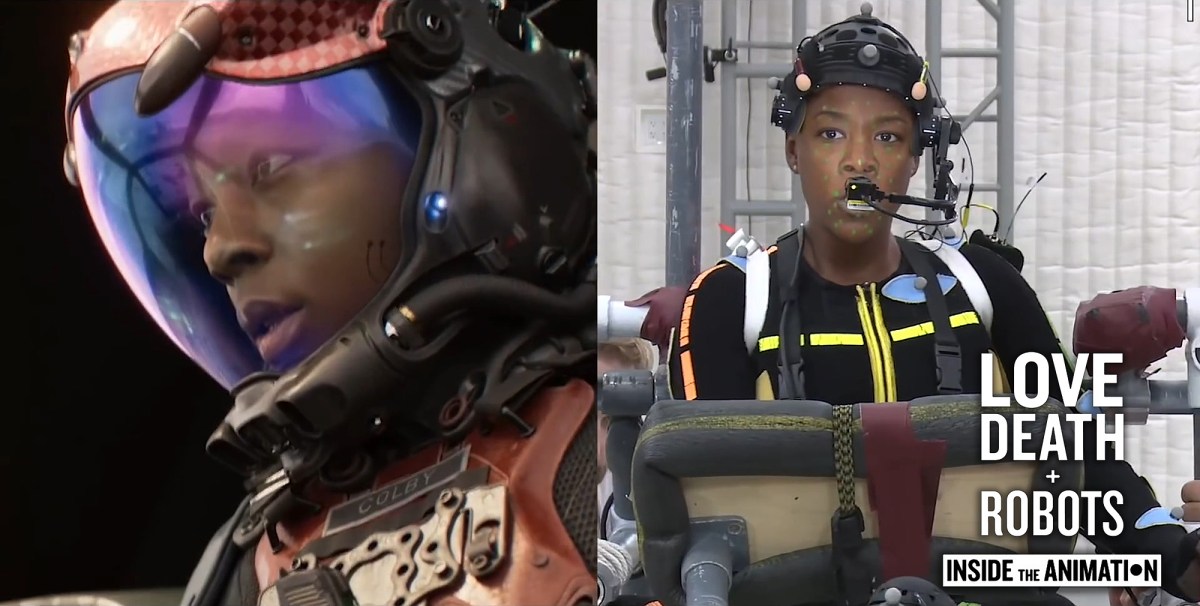
With Love, Death + Robots now streaming on Netflix, a few days ago at SXSW I got to sit down with Tim Miller to talk about the NSFW anthology of animated stories he made with David Fincher. If you haven’t seen the trailers, the very cool series features 18 shorts that run between 5-15 minutes in length, are aimed at adults, were done by different teams of filmmakers from around the world, and showcase a variety of styles from traditional 2D to photo-real CGI. In addition, all of the stories are wildly different. You’ve got cyborg bounty hunters, alien spiders, sentient dairy products, werewolf soldiers, robots gone wild, and blood-thirsty demons from hell — to just name a few.
I caught six of the shorts before doing the interview and absolutely loved what I saw. If you’re into cool stories and incredible animation, you absolutely want to check the series out. Love, Death + Robots is now streaming on Netflix.
During the interview, Tim Miller talked about how the series was made, how they’ve been working on it since before Deadpool was released in theaters, how he became friends with David Fincher and why they did this project, and what it was like collaborating with Netflix. Plus, if he has a suggested order for people to watch the series, if he’s ready to tell more stories in some of these worlds, the possibility of a second season, how the budgets were dictated by length and animation style, and so much more.
8hours [Eight – Hours] is a site dedicated to bringing film analysis to the masses through video essays, an exciting new format, sprung from the internet.
Video essays are a platform for filmmakers and film buffs to present researched but personalized film critiques, analysis, discussions and lessons to the world. They are a way of democratizing film criticism and the filmmaking process, a direct line to engaging with movie lovers like you.
We believe
that you don’t need to go to film school to be a filmmaker and that breaking down
the choices made by filmmakers can serve as a key to learning the craft of
filmmaking.
There is a lot of contente here, but we can’t take credit for all of it. We’ve spent the better part of a year scouring the dusty corners of the Internet for the best video essays. We then archived each video to the 8hours library according to categories including film title, director, genre and a range of screenwriting and filmmaking techniques.
We know there are tons of talented people out there making videos, but it can be hard, if not impossible, to find them all. As new movies, technology and analysis emerge, our goal with 8hours is to continue to grow while making sure great videos are just a click away.
That’s where you come in:
If you know of an essay or creator you don’t see on our site, please Submit a Video.
If you have an idea for a video essay you’d like to see made, use our Pitch Box.






 The Fincher Analyst