A conversation with Costume Designer Trish Summerville, Makeup Department Head Gigi Williams, Assistant Makeup Department Head Michelle Audrina Kim, Hair Stylist Department Head Kimberley Spiteri, and Assistant Head Hair Stylist Colleen LaBaff. Moderated by Jessica Radloff.
Glenn Kiser, Director of the Dolby Institute February 9, 2021 The Dolby Institute
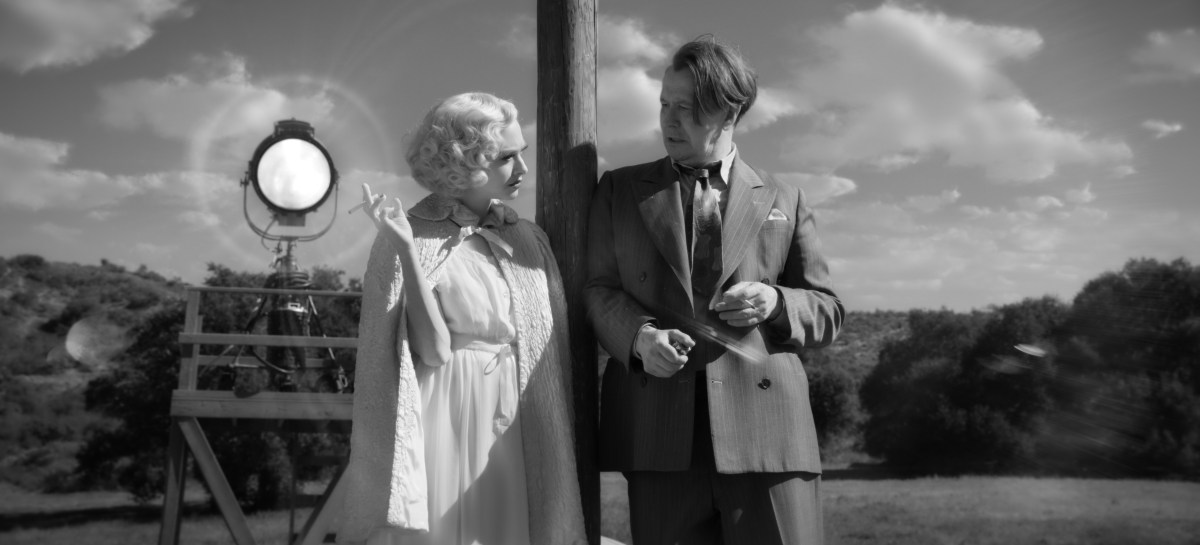
“Mank” has been a personal passion project for David Fincher for several decades now. His own father wrote the script, about the famously self-destructive writer of “Citizen Kane,” and Fincher was determined to make the film feel as authentic as possible. Almost like it was an undiscovered artifact from Hollywood’s “Golden Age,” insisting for years to film it in black & white, 1:33, and in mono. He once again joined forces with his longtime collaborator, sound designer Ren Klyce, to do exactly that. But building this time capsule turned out to be a surprisingly challenging process.
“It’s beyond production value. Sound is a portal into a stranger’s mind that is incredibly influential. And if we don’t avail ourselves of this access, um… then we’re stupid and we should die (laughs).” – David Fincher, director of “Mank”
Listen to the Sound + Image Lab: The Dolby Institute Podcast:
Director David Fincher tasked the sound crew with reviving the feel of the Golden Age of Hollywood in the track. They came up with a process of combining old and new technologies to create a “patina” for playback.
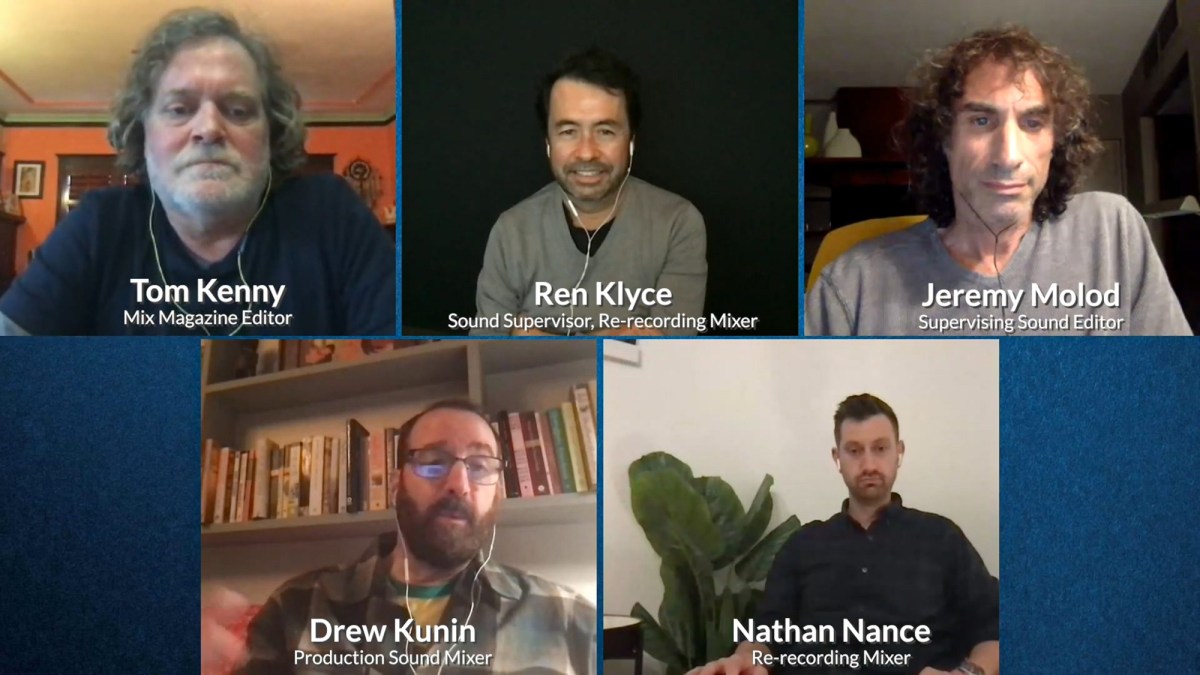
Ren Klyce, Sound Designer Drew Kunin, Production Sound Mixer Jeremy Molod, Supervising Sound Editor Nathan Nance, Re-Recording Mixer
A conversation with Sound Designer Ren Klyce, Production Sound Mixer Drew Kunin, Supervising Sound Editor Jeremy Molod, Re-Recording Mixer Nathan Nance on behalf of MANK. Moderated by Glenn Kiser.
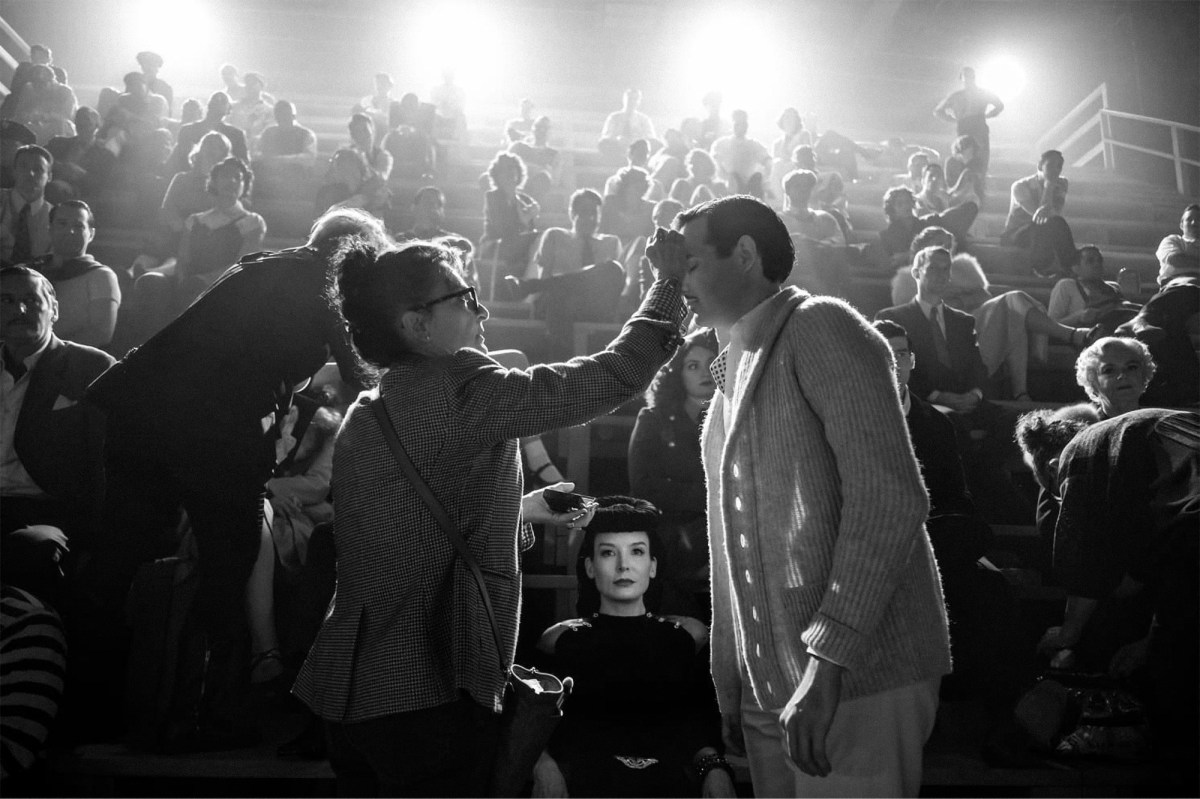
“He just doesn’t like red,” reveals “Mank” makeup department head Gigi Williams about her director David Fincher. It is a curious sticking point for a black-and-white film and Williams admits in her exclusive interview with Gold Derby that she is unsure of the origins. She continues, “It’s like a bull with red, so even on this, I had to find reds that weren’t going to be too distracting for him while we’re on the set, even though he’s watching most of it through a monitor, which is black and white.” Williams notes that purple-leaning reds are especially egregious, whereas “he can handle” orange-leaning varieties. She laughs, “He just hates red. I mean, you go on the set and you go, ‘Oh, there’s a red thermos over there on the set. He’s not going to like that’ and you have to move it.”
During the COVID-19 pandemic, very few cinephiles have seen the inside of a theater, let alone a grand old one like the Castro Theater in San Francisco or the Paramount in Austin, Texas. Yet those who have recently watched Mank, David Fincher’s biopic about Citizen Kane screenwriter Herman J. Mankiewicz, might’ve noticed—or, more specifically, heard—something that felt old, something that sounded like it was coming from a 1930s theater, even if they were streaming the movie on Netflix. It’s eerie—and completely intentional.
With Mank, Fincher wanted a movie that not only looked but also sounded like the films produced in Hollywood during Mankiewicz’s era in the 1930s and ’40s. To do that, he shot the film in black and white (of course), and also enlisted the help of sound designer Ren Klyce, who came up with a method to create an aural “patina” that made all the dialog, all the ambient noises, and the score sound as though they were created using the methods of Golden Age pictures. “We came up with the technique by analyzing the sound spectrum of old-fashioned movies,” Klyce says, “and of course Citizen Kane was one that we modeled, and we kind of realized that that film sounded the way it did because of the limitations of the technology.”
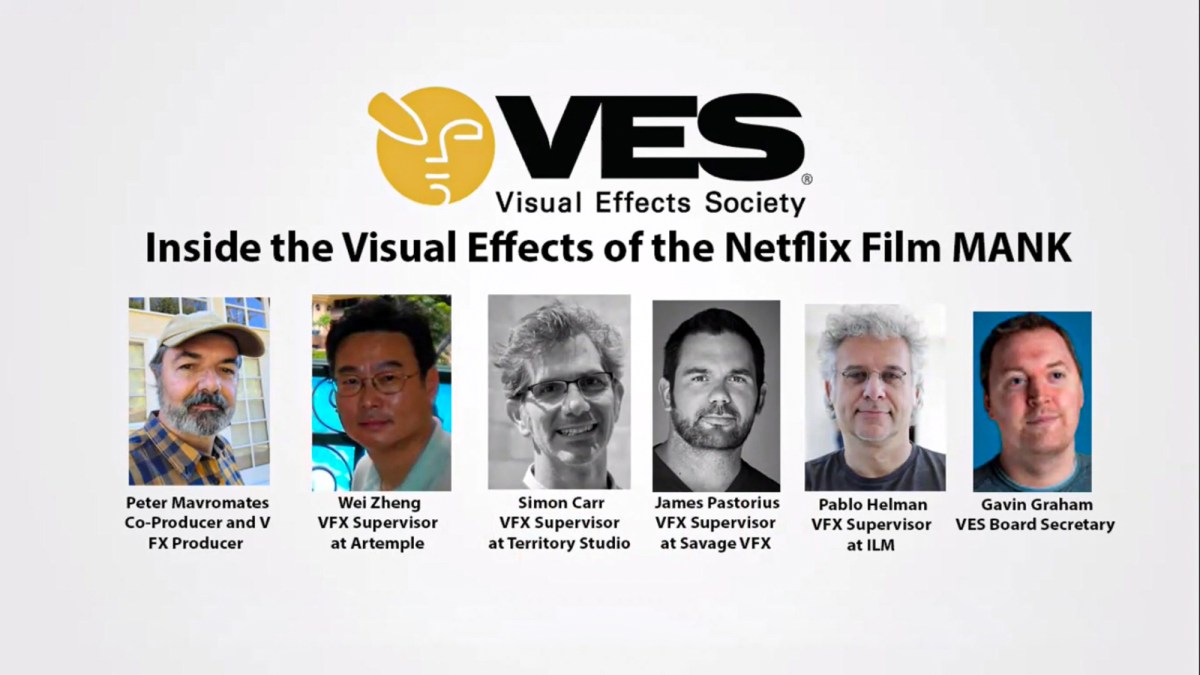
Panelists include Co-Producer and VFX Producer Peter Mavromates, VES Award nominated Visual Effects Supervisor at ArtempleWei Zheng, Visual Effects Supervisor at Territory StudioSimon Carr and HPA Award nominated Visual Effects Supervisor at Savage VFXJames Pastorius and VES Award-winning Visual Effects Supervisor at ILMPablo Helman, moderated by VES Board Secretary Gavin Graham.
When it comes to iconic lines, no one does it quite like Fincher. We picked some of the most quotable lines from Mank, starring Gary Oldman, Charles Dance, Amanda Seyfried, and Lily Collins.
“Mank” set decorator Jan Pascale is no stranger to black-and-white films: She received an Oscar nomination for George Clooney‘s “Good Night, and Good Luck” (2005). But those two monochrome films couldn’t be more different.
“When I first met with [‘Mank’ production designer Donald Graham Burt] about it, I said, ‘I’ve done black and white. I can do this.’ And Don said, ‘No, no, no, this is different.’ The way the images were captured was quite different,’” Pascale tells Gold Derby at our Meet the BTL Experts: Film Production Design panel. “On ‘Good Night, and Good Luck,’ we shot on film … and we had a really limited budget on that one — $7 million the whole movie — so I couldn’t paint anything or really paint anything, so everything was shot as is. But it sort of worked.”
“Mank,” however, was shot in black and white on a RED digital camera, completely changing the way images and details came off onscreen. But Pascale got some very modern assistance to help her do color-testing. “David [Fincher] and Don had done some testing with the camera that we were going to be using. And they discovered if we used our iPhones with the noir filter and photographed everything, that’s how it would appear in our movie,” she shares.