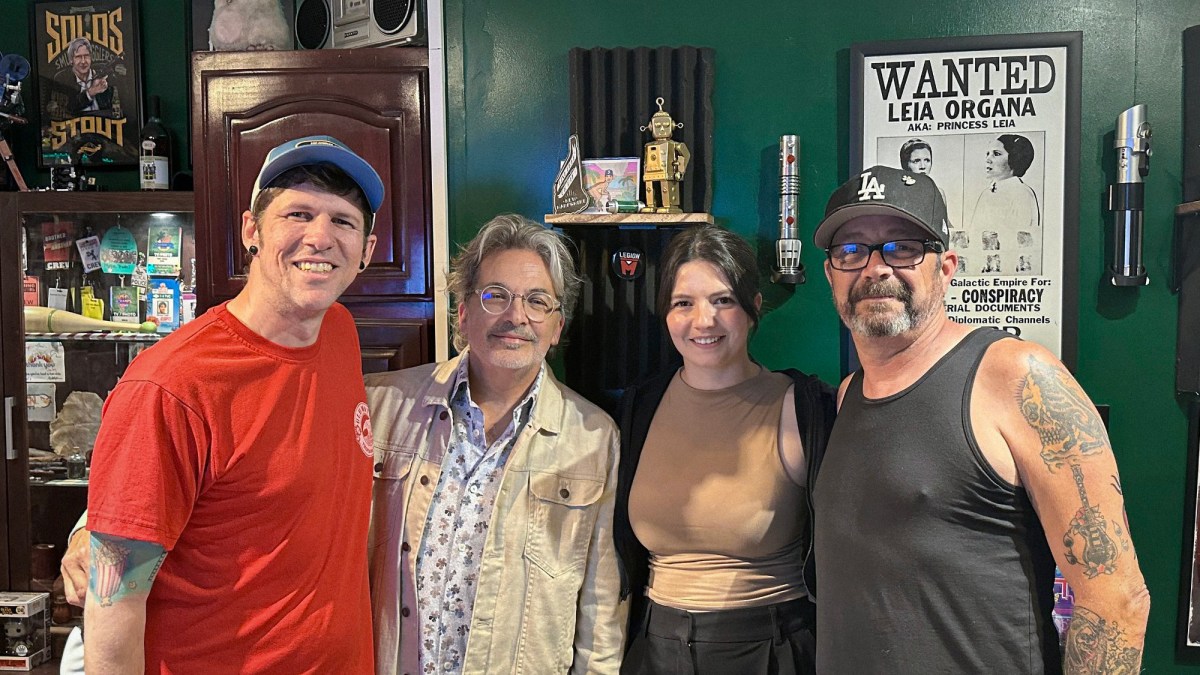
On this episode of Prop Talk, we sit down with PMG member and Local 44Property MasterJames Eddy and his daughter, Local 44 member Assistant Property Master Kelsi Eddy, to discuss their relationship and experiences working for Directors like David Fincher in Mindhunter and The Killer.
Hosts: Chris Call, PMG Founding Member & Local 44 Property Master with Michael Trudel, PMG Secretary & Local 44 Property Master.
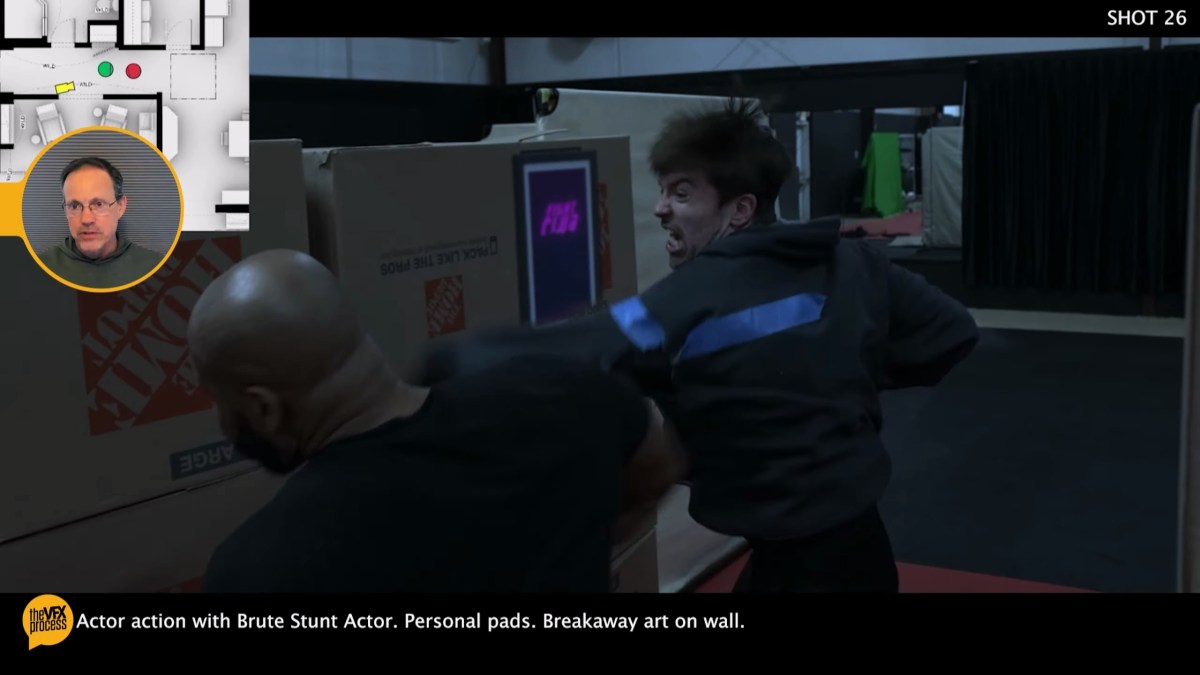
Hollywood Stunt Coordinator & VFX Artist Dave Macomber discusses pre-visualizing the fight sequence for David Fincher’s The Killer and his new Unreal Engineproject.
Dave Macomber is an award-winning stunt/fight coordinator and second-unit director in the film industry. With a passion for Visual Effects (VFX), Dave seamlessly incorporates VFX elements into his stunt visualizations, providing a comprehensive template for directors and the rest of the crew.
Having worked on iconic blockbusters like Transformers, HBO‘s Watchmen, and numerous Marvel Cinematic Universe films, Dave’s expertise shines through. Just a glance at his IMDB page showcases his impressive portfolio.
In his latest project for David Fincher‘s The Killer, Dave coordinated a gripping 6-minute fight sequence shot mostly in darkness. Join him as he shares insights into working with David Fincher, revealing that Fincher is an extremely collaborative director, and how his background as a VFX artist dictates his approach to photographing sequences in his movies.
‘Killer vs Brute’ exemplifies Dave’s mastery in delivering high-impact action sequences. Even though the scene turned out to be a success, Dave states that it was “the most intimidating thing I’ve ever done in my career.”
Venturing into Unreal Engine filmmaking during his spare time, Dave’s creativity knows no bounds. Last year, he unveiled The Ronin, his first Unreal Engine short film, showcasing a fight scene performed entirely by himself, using Rokoko Motion Capture technology. Now, with The Widow: Assassins Highway, Dave enlists a team of Marvel stunt performers to help him capture the stunts and elevate the action.
This episode offers a captivating glimpse into the VFX pipeline, the Hollywood stunt process, and Unreal Engine filmmaking.
Listen to the extended version of the conversation as a podcast:
Having been in development since 2007, David Fincher’s adaptation of the French comic series The Killer arrives as a slick, stylish, and darkly funny film about a professional assassin desperately trying to project an image of cold, exacting competence, all the while struggling to keep his head above water in the aftermath of a job gone wrong.
With its solo protagonist who goes for long stretches of the film without saying aloud a single word, The Killer often resembles a silent film as much as anything else. Camera Operator had the opportunity to talk with A camera operator Brian Osmond, SOC, about working with Michael Fassbender in this unique role, the camera as “straight man” for the film’s sly comedy, and the professional relationship he’s developed with director David Fincher over the past seven years.
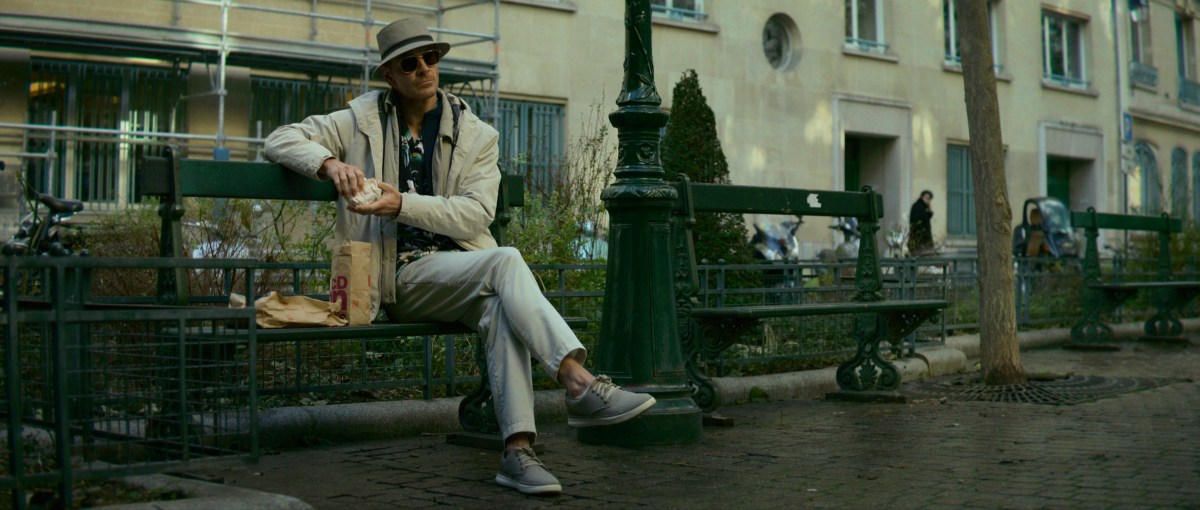
With no name and no background to go on, we meet “The Killer” in Paris, France, in the midst of his preparations to assassinate a similarly unnamed target. After days of meticulous planning, the moment finally comes with the target in sight, ready to take the shot, and he misses! Our mysterious assassin is left trying to pick up the pieces of this botched assassination all the while the situation continues to spiral out of control. The Killer is directed by David Fincher from a screenplay by Andrew Kevin Walker and stars Michael Fassbender, Arliss Howard, Charles Parnell, Kerry O’Malley, Sala Baker, Sophie Charlotte, and Tilda Swinton.
Camera Operator: Let’s talk about the first 20 minutes of the movie. That’s the part that really stuck in my head after the movie. That long, slow burn setup to what’s kind of the movie’s main punch line: him missing the shot after all that meticulous buildup and preparation. Can you talk a little bit about what went into shooting that sequence?
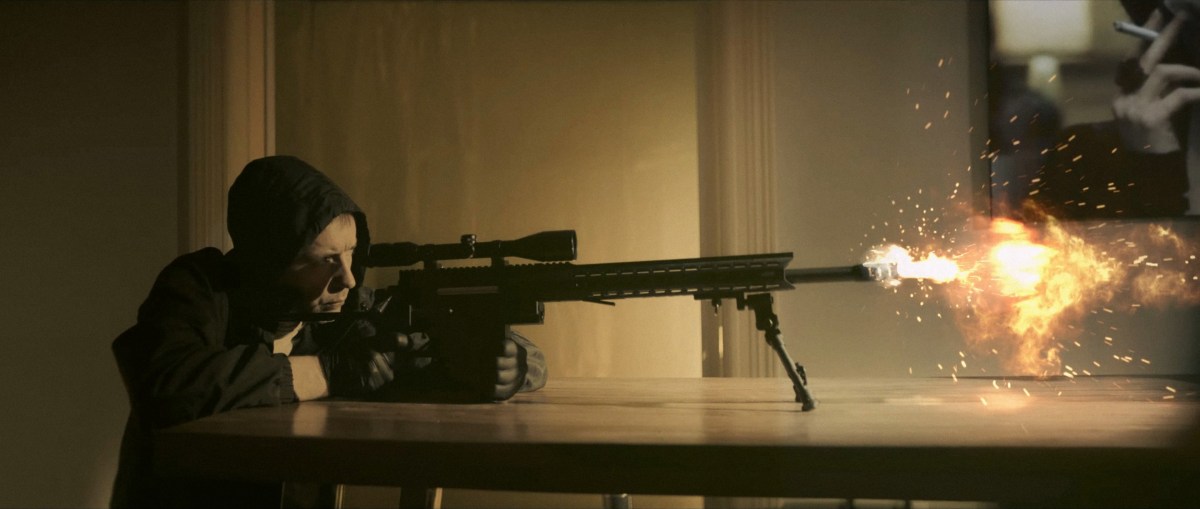
Brian Osmond: Yeah, it is a slow burn, isn’t it? It’s a bit painstaking, but ultimately I really like the sequence. His meticulous nature is obviously on display, and when it finally comes to the moment to pay it all off, he misses! And that sets up the rest of the movie. Shooting it was a lot of work, as you can imagine. The entire sequence, structurally, was made from three pieces: there was the Paris work, there was the stage work with Michael, and there was the stage work for everything across the street, and those are seamlessly combined with compositing and editing.
Producer and long-time David Fincher collaborator Peter Mavromates extend their partnership in The Killer where an assassin seeks revenge after a botched assignment. The Netflix feature consists of 900 digitally-augmented shots that range from shortening the tail of a dog to CG airplanes, tasked to a vendor list that includes Ollin VFX, Artemple-Hollywood, Savage VFX, and Wylie Co. as well as an in-house team. “Visual Effects Compositor Christopher Doulgeris and I will go into the color bay with [Colorist] Eric Weidt and talk about some issue that we had,” Mavromates explains. “Even sometimes if it’s an outside vendor, we’ll focus to help problem-solve. It’s this wonderful and fluid atmosphere, and it works for David Fincher because he’s always got ideas flowing. He doesn’t want to be on a clock at a facility where you’ve got from 2 p.m. to 5 p.m. and then it’s overtime. There’s none of that. David will walk the halls and stop in on people to check on stuff.”
In chapter one of The Killer (2023), Michael Fassbender sits in a Paris WeWork office, rented as the base of operations for his nameless hitman’s latest job. While waiting for the target, pigeons fly past, their wings loudly breaking his forced concentration. The odds they entered the frame at a serendipitous moment are low, and there’s no reason to pay for a bird wrangler given the advanced state of CG. Once you see them, they’re impossible to unsee as they follow Fassbender’s character from city to city, segment to segment. It’s clear that they must be a digitally created motif, a fresh reminder of David Fincher’s unwillingness to let the real world preclude his very precise vision.
Initial responses to The Killer included many variants on “minor Fincher,” which raises an obvious question: what’s the perceptible gap between a major and minor David Fincher film? Surely it’s not a question of craft; second for second, Fincher’s films have to be in the top 0.5% of technically-worked-over products. Control, famously, is his thing, to the extent that even The Killer’s seemingly handheld shots were, in fact, static shots made shaky to a exact degree in post. “Minor,” then, refers to the ostensible worthiness of the material: why all this effort to so little end, i.e., the umpteenth variant on “hitman cleans up after a job gone wrong”? When you’ve begun your directing career coming up with compelling images for lower-tier Rick Springfieldsingles everything after is, presumably, a breeze to elevate. Still, that doesn’t answer the “why bother” question.
Bobby Miller January 11, 2024 Creative Industry Insight
In this episode, we welcome VFX Editor Casey Curtiss who joins us to talk about his work on The Killer. Casey walks us through what the role of a VFX editor entails and how those skills were used on The Killer.
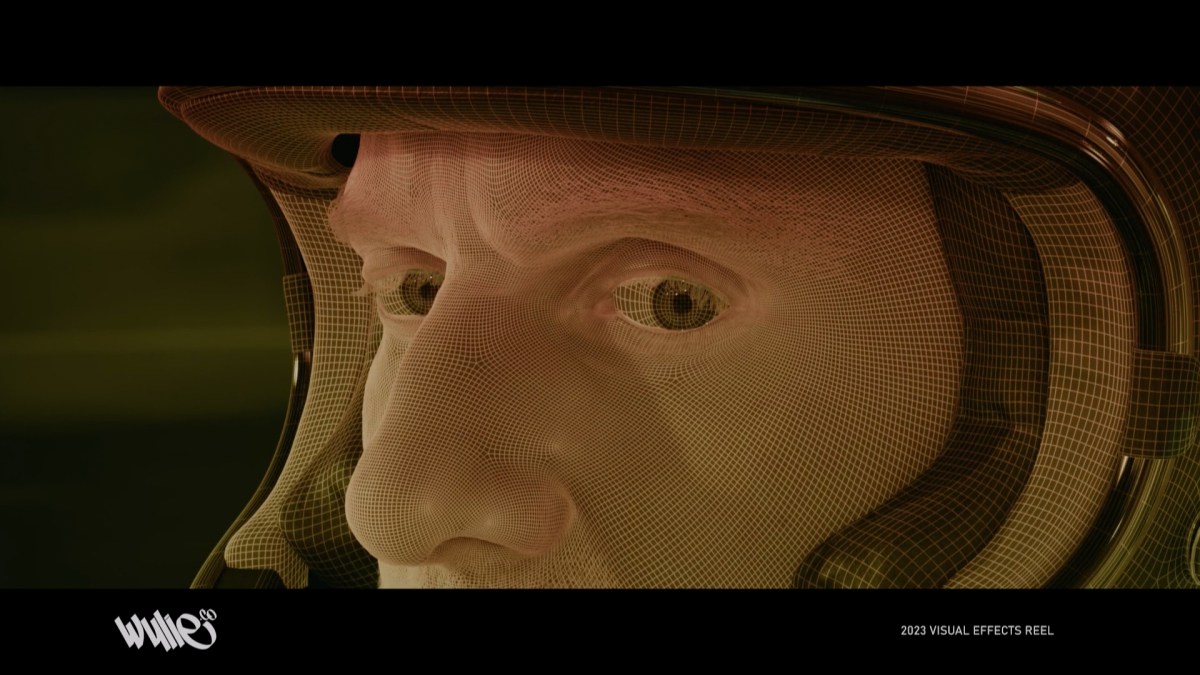
The Killer digi-double visual effects sequence & breakdown. This is our first of many breakdown reels we're going to post on X for our VFX work on The Killer. pic.twitter.com/nZuWX9Tafr
The Killer digi-double visual effects sequence & breakdown. This is our first of many breakdown reels we’re going to post on X for our VFX work on The Killer.
For this particular sequence in The Killer, Eric Barba, Peter Mavromates and David Fincher approached us with an extremely difficult task, to create close-up, photoreal digi-double shots of Michael Fassbender riding a scooter.
The quality of the work had to seamlessly cut back to back between live-action shots of The Killer on set. Extra complexity was added because the original plan to shoot these shots on a virtual stage didn’t live up to what Fincher had envisioned.
Because of this, there were no HDRI’s or usable array footage and sparse reference photos. The lighting and lookdev had to be dialed in by eye. We began with the Killer asset, adding fine facial detail and cloth simulations.
We then used photogrammetry to assist with cascading streetlight timing and travel speed. The final result was high res meticulously crafted nearly full CG shots cut into the live-action sequence with the ultimate goal of nobody noticing.
Advancements in software, hardware and artist skill enabled us to create The Killer digi-double with a team of 7 artists using Lenovo workstations, AMD processors, NVidia GPUs, Nuke, Maya, Houdini & Redshift software. And months of time 🙂 pic.twitter.com/Iwcj4jIHqT
Advancements in software, hardware, and artist skill enabled us to create The Killer digi-double with a team of 7 artists using Lenovo workstations, AMD processors, NVidia GPUs, Nuke, Maya, Houdini & Redshift software. And months of time!
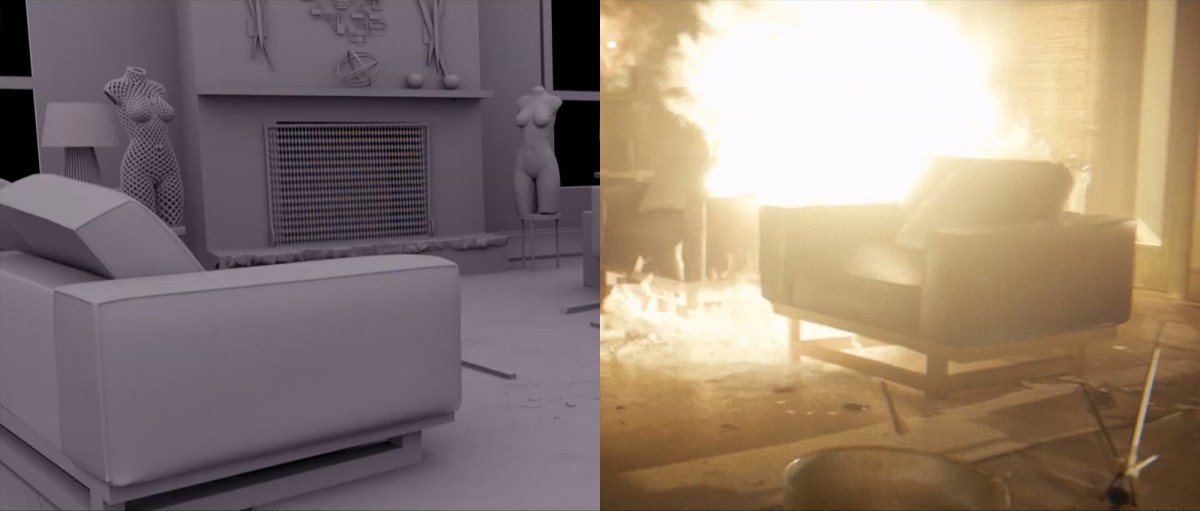
All of our work in David Fincher's The Killer involved digi-doubles. Here are 3 breakdowns of digi-double gore that we provided for the film. Full CG shots, cut between live action shots. They include particle fx, fluid dynamics, various hair, cloth and bone simulations and good… pic.twitter.com/j5E2uNsZ1s
All of our work in David Fincher’s The Killer involved digi-doubles. Here are 3 breakdowns of digi-double gore that we provided for the film. Full CG shots, cut between live-action shots. They include particle fx, fluid dynamics, various hair, cloth, and bone simulations, and good old-fashioned animation by hand.
Visual Effects By: Wylie Co. Culver City, California
Visual Effects Supervisor: Jake Maymudes Visual Effects Executive Producer: Kris Drenzek Digital Effects Supervisor: Josh Hatton Visual Effects Animation Supervisor: TJ Burke Lighting & FX Artist: Liam Jurkowich Animation Lead: Sashdy Arvelo Animators: Li Li, Taylor Cooke Compositor: Nick Kaye Lookdev Artists: Bora Jurisic, Richard Bridge 3D Tracking Artists: Tommy Ibanez, Nallely Gomez Pipeline TD: Roberto Cadena Vega Coordinator: Sofia Beroud
The Killer begins with an assassin (Michael Fassbender) in a half-completed WeWork office awaiting the arrival of his latest target. As he waits, he details his vocational mantras for the audience in voiceover: stick to the plan. Don’t improvise. Never yield an advantage. Forbid empathy. Fassbender proceeds to miss his shot and spends the rest of the film breaking each and every one of those tenets in the chaotic aftermath.
Many of the pieces written about the film have pointed out perceived similarities between the film’s methodical, detail-oriented titular character and the perfectionist reputation of its director, David Fincher. However, what makes Fincher’s approach to filmmaking so fascinating is the way it combines the fluid with the obsessively regimented. For The Killer, the illusion of handheld camerawork, anamorphic lens characteristics and glass filters were all created in post, where they could be minutely modulated. Conversely, Fincher often prefers to design coverage on the day after blocking rehearsals and is open to the spontaneous comedic possibilities of the cheese grater.
On Fincher’s Mindhunter, Mankand now The Killer, cinematographer Erik Messerschmidt has been the director’s partner in that duality. The Oscar-winning DP graced this column for a fifth time to discuss his latest work.