Shot in black and white and often in deep focus, David Fincher’s Mank evokes 1930s classic cinema with rigorous attention to digital detail. Made for Netflix, this biographical drama stars Gary Oldman as Citizen Kane screenwriter Herman J. Mankiewicz as he races to finish the Kane screenplay for Orson Welles.
Famously, Fincher was among the first A-list directors to embrace digital filmmaking. Since the groundbreaking production The Curious Case of Benjamin Button (2008), he hasn’t deviated from using RED cameras and Mank was no exception. Fincher had always envisioned the screenwriter’s story being told in black and white.
“It would be a crime not to make this movie in black and white,” says Erik Messerschmidt, ASC, who recently earned an Emmy® nomination for shooting Fincher’s Netflix series Mindhunter. “Digital was just right for this project for all manner of reasons.”
Cinematographers Erik Messerschmidt, Matthew Libatique, Marcell Rév discuss respective films, collaborating with directors David Fincher, Ryan Murphy, Sam Levinson
Mank (Netflix) marks cinematographer Erik Messerschmidt’s first narrative feature. It continues a series of firsts for the DP in collaboration with director David Fincher.
Messerschmidt, who earned ASC membership distinction last year, got a major break back in the day while serving as a gaffer for cinematographer Jeff Cronenweth, ASC, most notably on the Fincher-directed Gone Girl. During the course of that movie, Fincher had Messerschmidt do some promotional still work for Gone Girl and the two struck up a rapport. This eventually led to Messerschmidt becoming the DP on Fincher’s Mindhunter, the thriller series centered on an FBI agent’s quest to track down serial killers in the late 1970s.
Last July, Messerschmidt garnered his first career Emmy nomination for his lensing of Mindhunter. He’s shot the lion’s share of Mindhunter episodes, representing his first major TV gig as his DP endeavors prior to that were primarily in commercials and other short-form fare.
Fincher then further expanded Messerschmidt’s reach–this time into the feature realm with Mank which centers on screenwriter Herman J. Mankiewicz (portrayed by Gary Oldman) as he races to finish the script for director Orson Welles’ Citizen Kane on a tight timetable, secluded in a bungalow in a desert town miles removed from Los Angeles as he recuperates from a car accident in 1940. Attending to him are his secretary Rita (Lily Collins) and his German nurse (Monika Grossmann).
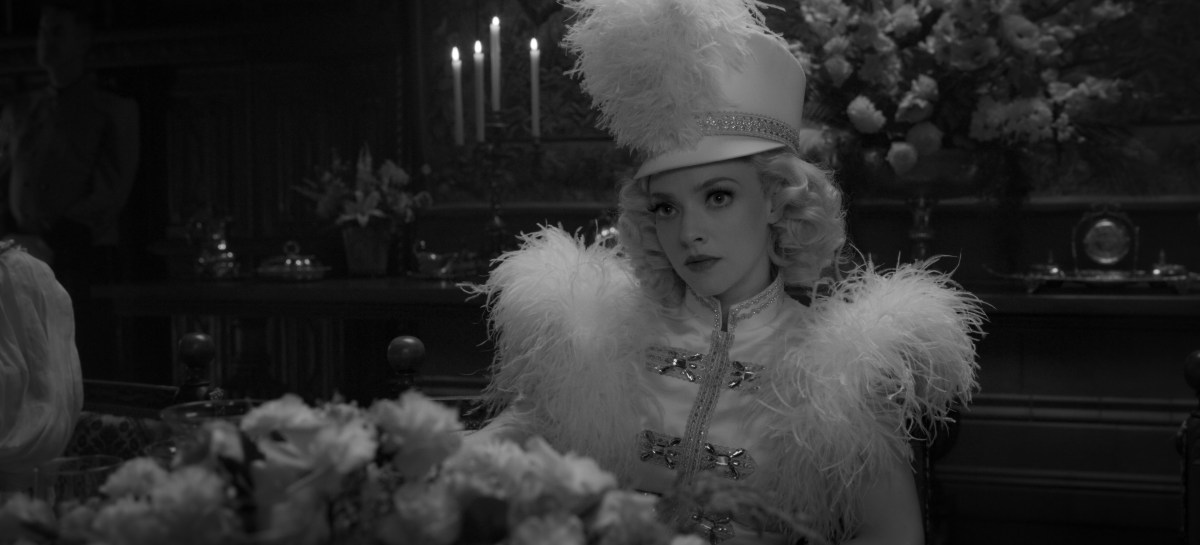
In the process, through Mankiewicz’s worldview–marked by his abiding social conscience and wit, at times caustic–we are introduced to not only Hollywood but life in the 1930s, ranging from the struggle of the rank and file during the Great Depression to the grandeur of Hearst Castle and high society. We also become privy to Mankiewicz’s own inner struggles with alcoholism, as well as a professional battle with Welles (played by Tom Burke) over screen credit for what became the classic Citizen Kane. The Mank cast also includes Charles Dance (as William Randolph Hearst), Amanda Seyfried (as Marion Davies, Hearst’s wife), Tuppence Middleton (as Sara Mankiewicz, Herman’s wife), Arliss Howard (as Louis B. Mayer), Sam Troughton (as John Houseman), Tom Pelphrey (as Joe Mankiewicz, Herman’s brother), Toby Leonard Moore (as David O. Selznick) and Ferdinand Kinsley (as Irving Thalberg).
Mank is an American biographical drama film about screenwriter Herman J. Mankiewicz and his battles with director Orson Welles over screenplay credit for Citizen Kane (1941). The film is directed by David Fincher, based on a script written by his father Jack Fincher, with Gary Oldman in the title role.
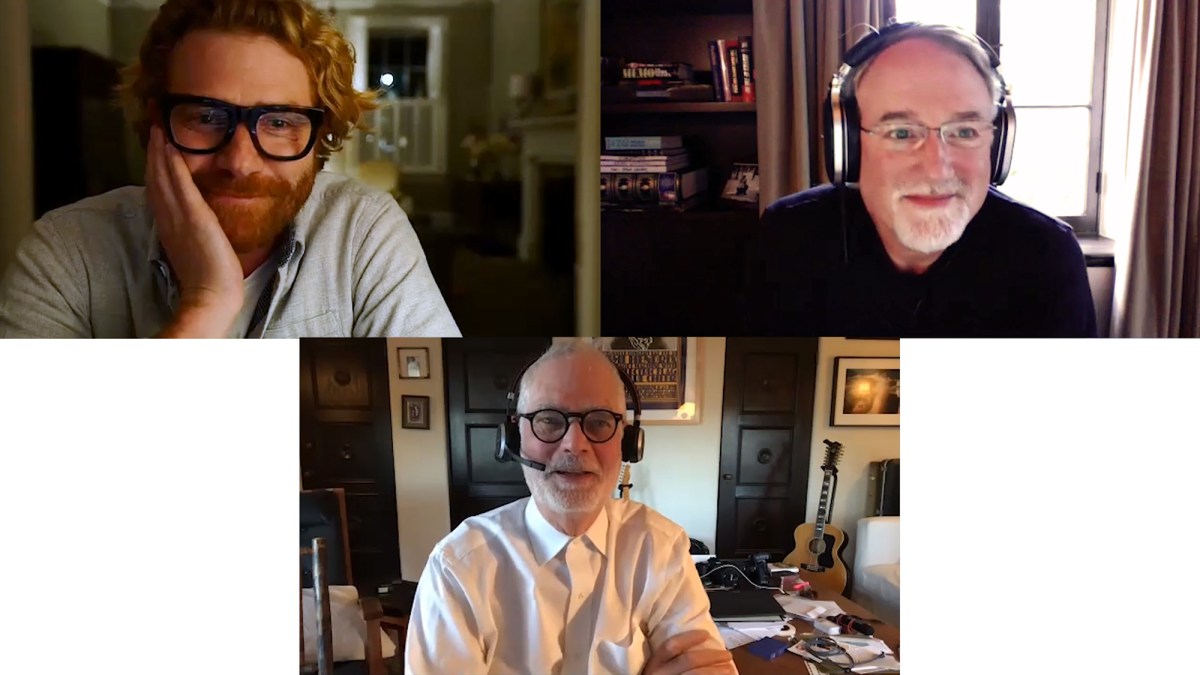
In this 85-minute episode, interviewer Caleb Deschanel, ASC talks to cinematographer Erik Messerschmidt, ASC and director David Fincher about their stylish black-and-white period drama.
Written by Fincher’s father, Jack,Mankdepicts the turbulent life and career of self-destructive Hollywood screenwriter Herman J. Mankiewicz (played by Gary Oldman) — focusing on his writing of the script for the iconic 1941 drama Citizen Kane. He and director Orson Welles shared an Academy Award for Best Original Screenplay.
While the filmmakers sought a period look and feel contemporary to their story — in part inspired by Gregg Toland, ASC’s Oscar-nominated camerawork in Citizen Kane and The Grapes of Wrath — they embraced every modern tool to accomplish their creative goal, shooting with Red Ranger monochrome Helium cameras and Leitz Summilux-C lenses while employing virtual production techniques to facilitate recreating a vintage Los Angeles and other locations.
Mank frames the origin story of Citizen Kane from the perspective of screenwriter Herman J. Mankiewicz as he’s hit a low point in life. Alcoholic, world-weary and hobbled by a broken leg sustained in a car crash, Mankiewicz is trundled off to a dusty desert cottage in Victorville, Calif., accompanied by a nurse and a typist tasked with keeping their cantankerous patient off the bottle so he can complete a screenplay for Orson Welles — a script that will serve as the foundation of Kane.
Pressed by Welles to finish the project, the bedridden “Mank” (as he’s known to his friends and colleagues) struggles to find creative inspiration, eventually drawing upon his memories of businessman, newspaper tycoon and politician William Randolph Hearst. Flashbacks transport us back to Mank’s headier days as a handsomely paid Hollywood scripter. After amusing Hearst with his barbed wit on a movie location, Mankiewicz is invited to mingle with members of the mogul’s inner circle and renews a friendship with Hearst’s mistress, actress and comedian Marion Davies. Mank’s Hollywood career is thriving, and his social standing is on the rise, but his proximity to power allows him to observe its corrosive influence firsthand — souring his worldview, but ultimately informing the plot of Citizen Kane and the sardonically unflattering portrait of its Hearst-like protagonist, Charles Foster Kane.
The script for Mank was initially fashioned by director David Fincher’s father, Jack, a journalist and screenwriter, who empathized with Mankiewicz’s plight and leaned into the controversial assertions of film critic Pauline Kael, whose 1971 essay in The New Yorker, “Raising Kane,” maintained that Mankiewicz was almost entirely responsible for the Citizen Kane screenplay, with little input from Welles. (That thesis has since been partially debunked by Welles supporters, including director and former film critic Peter Bogdanovich.)
Following his father’s death in 2003, Fincher retooled the Mank script with the help of screenwriter Eric Roth, making it less antagonistic toward Welles. “I never felt that the film should be a posthumous arbitration — that’s never been of interest to me,” Fincher told AC during a 90-minute Zoom interview that included Mank cinematographer Erik Messerschmidt, ASC. “What was interesting to me was that it’s [essentially] Rosencrantz and Guildenstern Are Dead — here’s a guy in the wings, and it’s his experience of this situation. What I found fascinating about Mankiewicz was [that] 30 percent of his output as a professional screenwriter in Hollywood was uncredited. And for one brief, shining moment — on a movie he did when he was old enough to sign a contract and understand the terms expressly — he said, ‘No, no, no — I don’t want this one to get away.’”
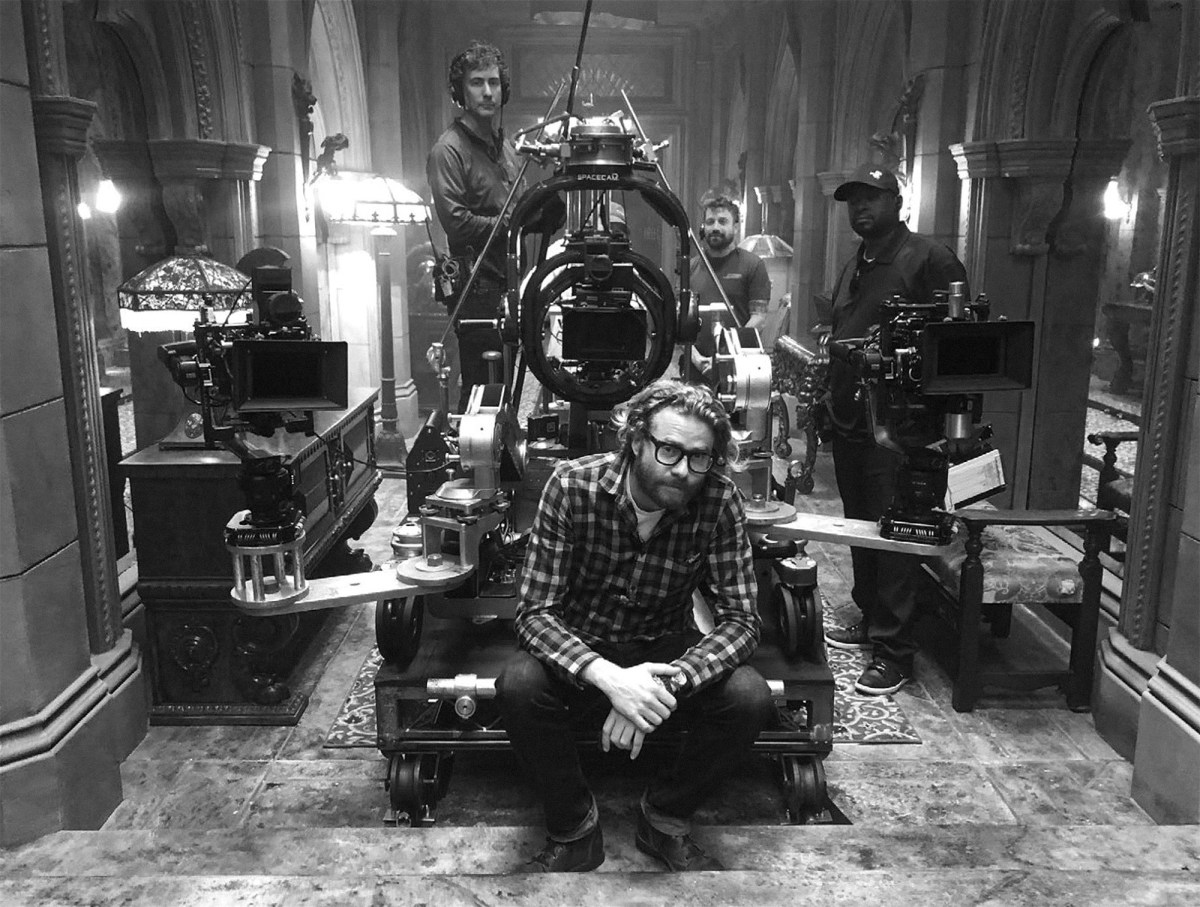
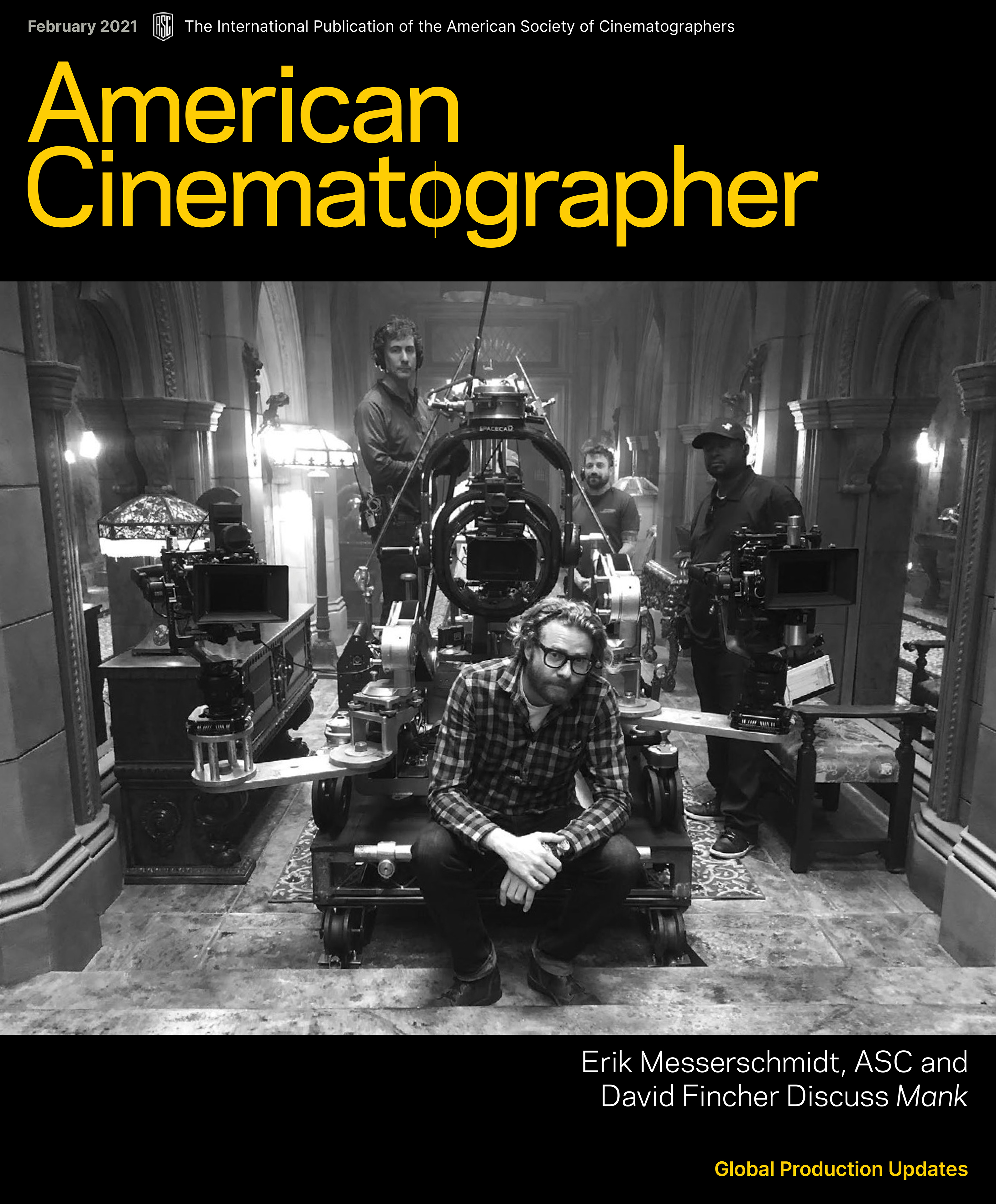
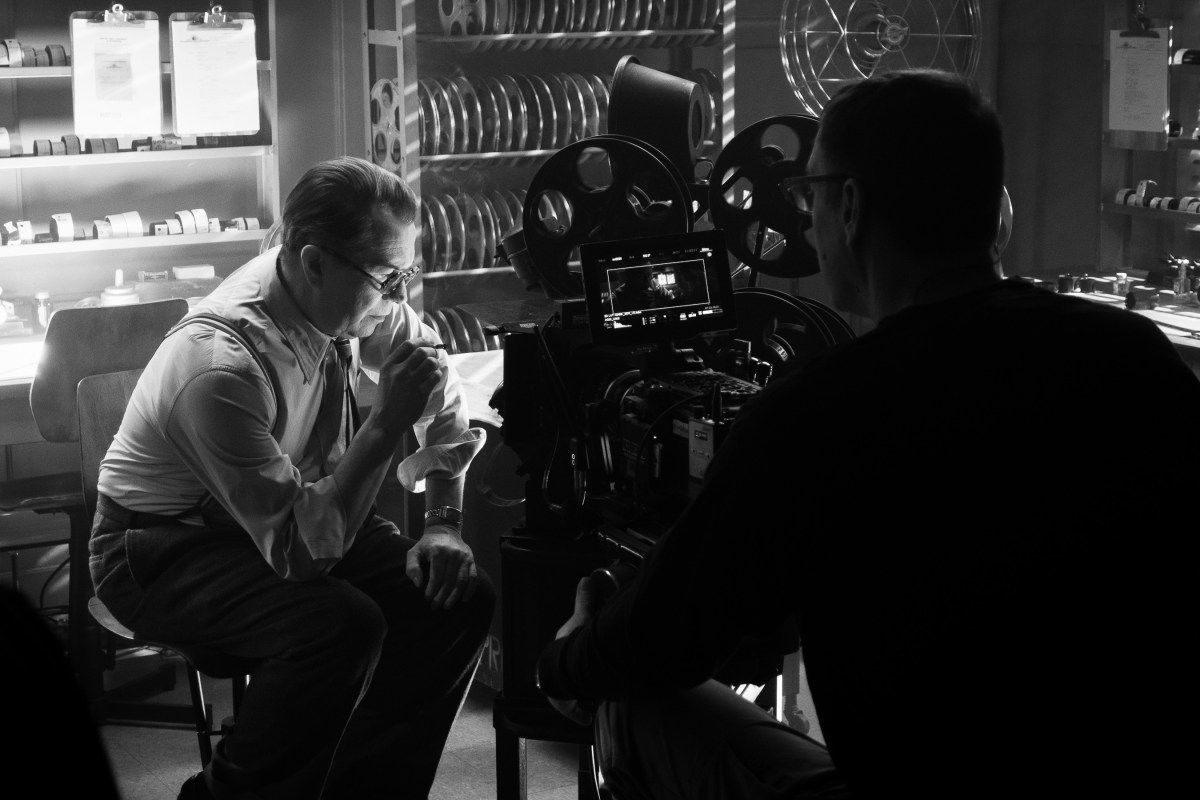
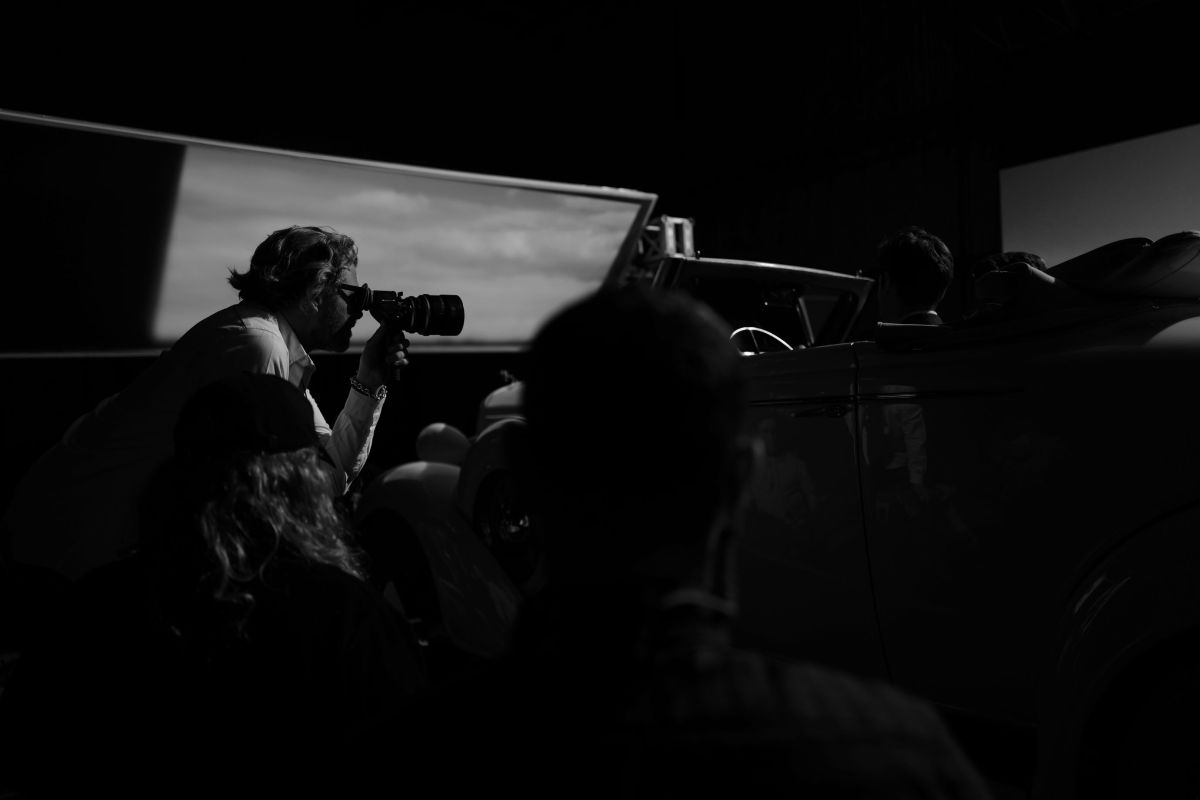
Erik Messerschmidt, ASC (foreground) on the set with (background, from left) boom operator Michael Primmer, B-dolly grip Mike Mull and A-camera 2nd assistant Gary Bevans. (Photo by key makeup artist Gigi Williams, courtesy of Netflix.)
Earning your stripes as a cinematographer can be hard enough. But the prospect of shooting your first movie with a Golden Globe, Primetime Emmy and BAFTA Award-winning director, about one of the greatest films of all time, starring some of the best actors working today, and capturing it all in HDR B&W, would seem perfectly daunting.
“Yes, it was quite intimidating, but it was also unbelievably exciting,” admits DP Erik Messerschmidt ASC, as he recalls the invitation from David Fincher to capture the filmmaker’s next movie – the biographical drama Mank.
Mank takes place in Hollywood during the 1930s and early 1940s. It follows screenwriter Herman J Mankiewicz, played by Gary Oldman, and the process he undertook for Orson Welles to develop the screenplay for what would become Citizen Kane (1941, dir. Orson Welles, DP Gregg Toland ASC). Nominated in nine categories at the 1942 Academy Awards, Citizen Kane won the Oscar for Best Original Screenplay, shared by Welles and Mankiewicz.
The film, based on a screenplay by the director’s late father Jack Fincher, alternates between time periods, echoing the non-linear narrative of Citizen Kane, and revealing the trials and tribulations in Hollywood that inspired some of the characters and situations seen in the movie. These include Mankiewicz’s friendship with starlet Marion Davies, played by Amanda Seyfried, his association with newspaper tycoon William Randolph Hearst, played by Charles Dance, and his turbulent professional relationship with Welles, played by Tom Burke.
Shot entirely at 8K in High Dynamic Range monochrome, Mank also features allusions to Toland’s innovative cinematography, as well as classic day-for-night production techniques, and tips its hat to classic moments in the original film.
Mank had a limited theatrical release in November 2020, before streaming on Netflix in December. It received overwhelmingly positive reviews, with particular praise given to the direction, cinematography, production design, soundtrack and the performances, and is expected to feature strongly during the 2021 award season.
Fincher’s directorial credits include Se7en (1995, DP Dariusz Khondji AFC ASC), Fight Club (1999, DP Jeff Cronenweth ASC), Zodiac (2007,DP Harris Savides ASC) and The Social Network (2010, DP Jeff Cronenweth ASC). Messerschmidt,who came into cinematography from being agaffer, had previously lit Gone Girl (2014, DP JeffCronenweth) for Fincher, after which he immediatelymade the leap into cinematography as the leadDP on the first two season of Netflix’s Mindhunter,directed mainly by Fincher.
“I first met David on Gone Girl and got along great with him during the shoot,” says Messerschmidt. “I ended up lighting some promotional stills for that film which David shot himself. It was our first opportunity to work together creatively one-on-one. It went really well, and we stayed in touch. Both he and Cean Chaffin, his producer, knew that I had ambitions to become a DP. So, when Mindhunter came along, they offered me the opportunity to shoot it. We have been working together ever since, and I was thrilled to be asked to shoot Mank.”
There was never any doubt that David Fincher’s brilliant Mank would be shot in black & white. The film follows a Hollywood screenwriter, Herman J Mankiewicz aka Mank (played by Gary Oldman), as he wrestles with the screenplay for Orson Welles’ Citizen Kane. It’s a sumptuous ode to the Golden Age of cinema – one that transports audiences to a place where they can understand and appreciate the homage – and yet, it is littered with modern filmmaking techniques that aren’t fooling anyone about its release date.
Fincher and cinematographer Erik Messerschmidt agreed that they didn’t want to be confined to shooting on film or within the aspect ratio of 1.37:1 that would have been accurate for the period – not with Fincher’s digital prowess and proclivity for a widescreen format. And, just in case there was any confusion about the technological resourcefulness of this film, Messerschmidt is even credited as being responsible for ‘Photography in Hi-Dynamic Range’ in the title sequence.
“Filmmaking has always been a medium where we selectively employ the techniques that are available on the day,” says Messerschmidt. Nonetheless, shooting in black & white demands huge amounts of creative courage and the cinematographer was conscious about being too seduced by the opportunity.
He explains: “Before I had even read the script, I sent Fincher some images referencing the film noir genre of that era. I soon realised that, thematically, Mank is not a noir film. There are certainly elements that call for hard lighting effects, such as the flashback sequences in the writers’ room or with Shelly Metcalf [a fictional test shot director friend of Herman’s] moments before his suicide, but I tried to ground much of it in realism. I didn’t want to draw audiences away from the storyline by being too dramatic, so I chose to light through windows and illuminate interiors with practicals.”
In the annals of Hollywood, Herman Mankiewicz will forever be remembered as the screenwriter of Orson Welles’s towering classic Citizen Kane, but his impact on the history of cinema doesn’t stop there. Mankiewicz also served as an early, uncredited writer on The Wizard of Oz. His contribution? Suggesting that once Dorothy Gale travels over the rainbow, the film transitions from black and white to glorious Technicolor. “He walked away from that [project] saying, ‘This is all I can come up with,’” laughs director David Fincher. “It might be the greatest special effect in the history of the movies.”
For Mank, Fincher’s backstage drama about the screenwriter’s life and his work on Kane, the director and his creative team journeyed from a world of color to one rendered entirely in black and white, shooting eye-catching sets and costumes with the RED 8K Helium Monochrome camera. That created an interesting artistic puzzle for Fincher and his collaborators to solve. From cinematography and production design to costumes and hair and makeup, each department needed to determine the best way to manipulate color to achieve the proper register of lights and darks onscreen.
“We had to train our senses to see through a lens of black and white,” explains Oscar-winning production designer Donald Graham Burt (The Curious Case of Benjamin Button). “It mandated a palette based on tone and contrast.”
Fortunately, they proved more than up to the challenge.
Now presenting MANK, for the first time in Glorious Color!
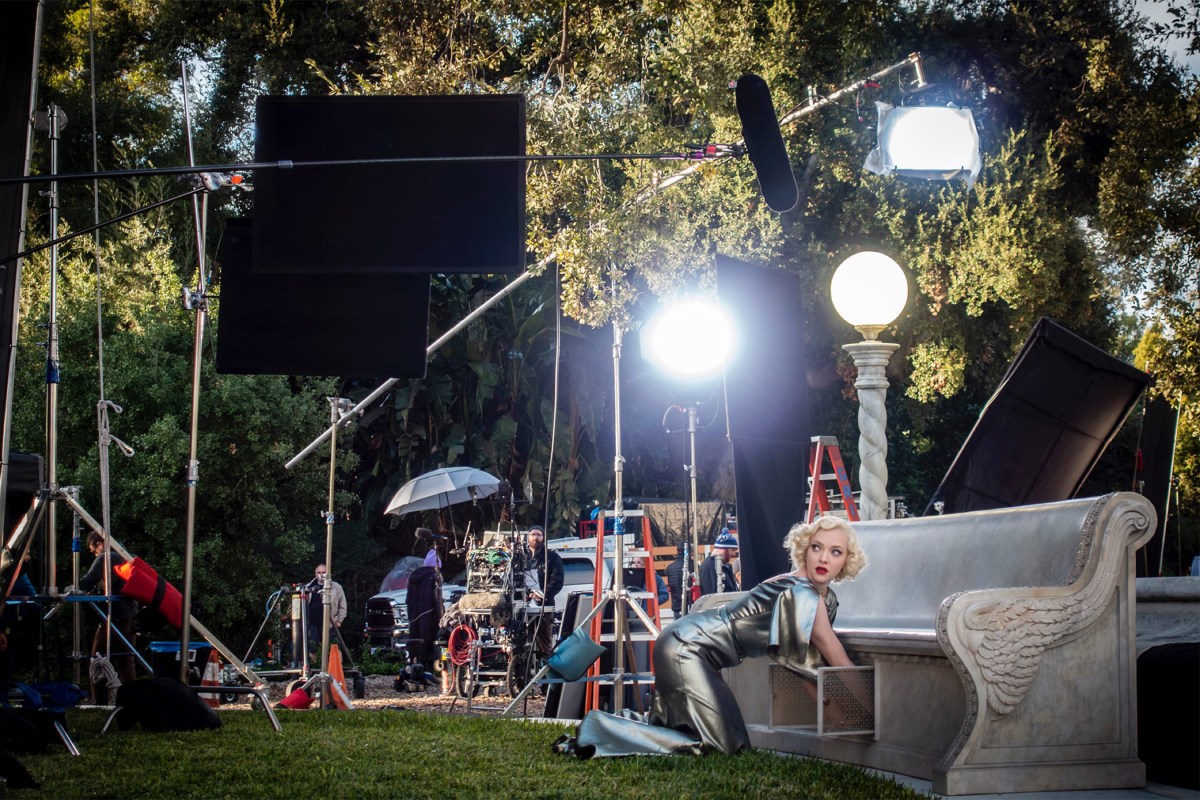
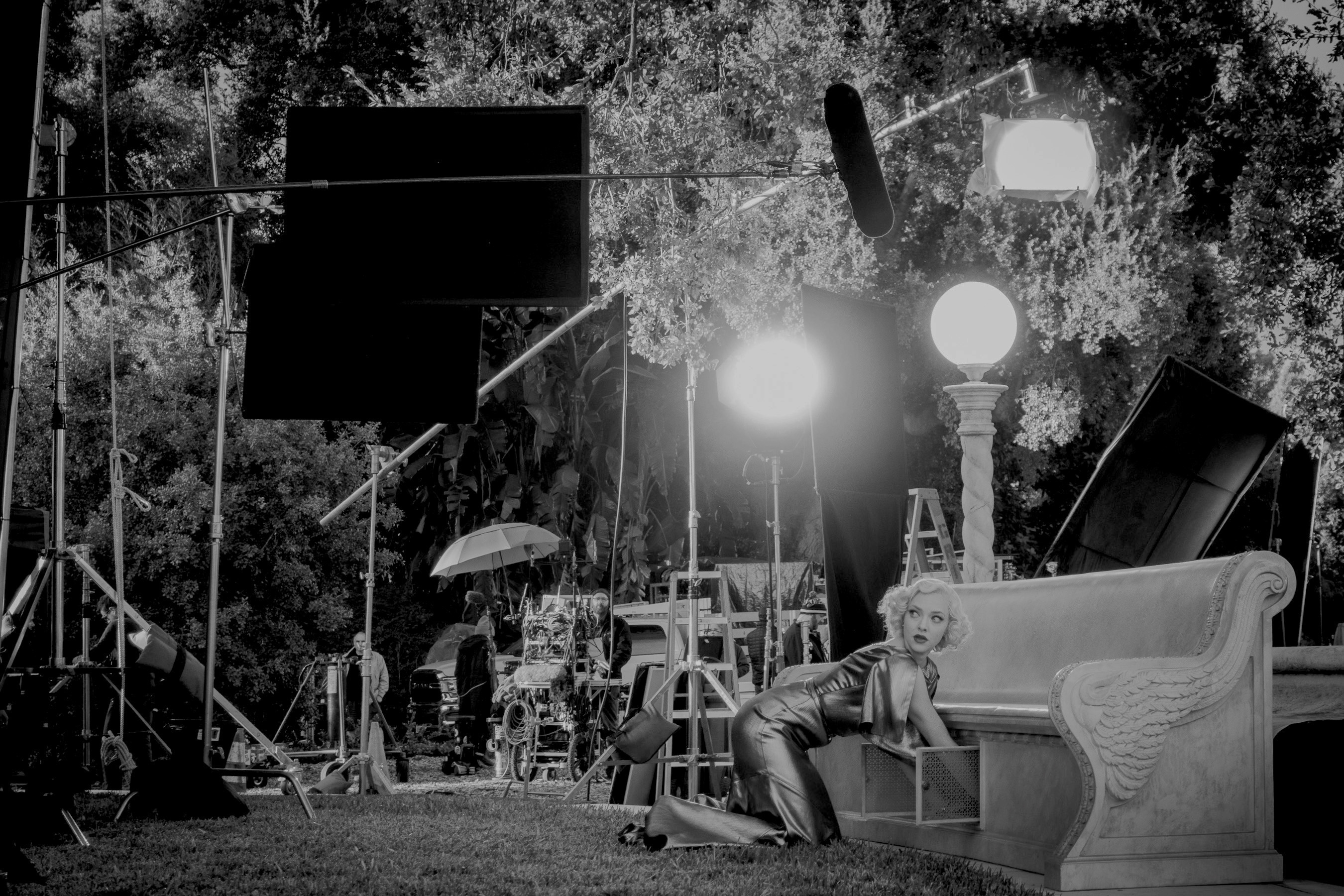
Making a film in black & white means every choice must be meticulously examined in color first. In these behind-the-scenes color shots, you can see how Fincher’s department heads created striking moments for the screen. pic.twitter.com/oNqtbzUkXo
Today, let’s dive into the filmmaking mind of director David Fincher, and his 2020 film Mank.
David Fincher loves CGI and VFX, and that is on full display just as much in Mank (2020) as it is in all his past films. Only this time, for Mank, David Fincher had to use those tools, along with an old school cinematography and directing style, and smart editing, not only to create a convincing 1930’s Hollywood world, reminiscent of movies like Orson Welles‘ Citizen Kane, but also a convincing golden age Hollywood movie. Let’s see how David Fincher faked Mank.
Video written & edited by Danny Boyd (Instagram). Support me on Patreon.
In 1941, a 25-year-old Orson Welles made one of cinema’s most auspicious debuts by directing, co-writing, starring in and producing Citizen Kane. With Mank—David Fincher’s look at the evolution of Kane’s screenplay—cinematographer Erik Messerschmidt makes an impressive feature bow of his own.
After working his way up through the ranks of grip and electric and earning DP credits on the shows Legion, Mindhunter and Fargo, Messerschmidt’s very first fiction feature has landed him in the midst of Oscar conversation. With Mank now streaming on Netflix, Messerschmidt spoke with Filmmaker about deep focus, high ISOs and painting in lens flares; and how even when working with David Fincher you “start compromising when you get out of bed in the morning.”




 The Fincher Analyst