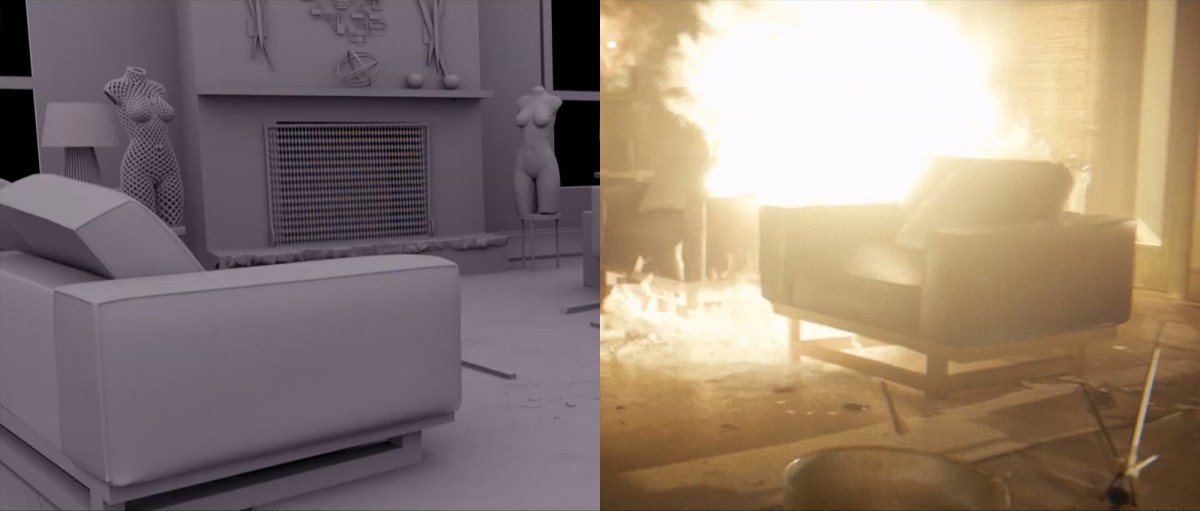
Producer and long-time David Fincher collaborator Peter Mavromates extend their partnership in The Killer where an assassin seeks revenge after a botched assignment. The Netflix feature consists of 900 digitally-augmented shots that range from shortening the tail of a dog to CG airplanes, tasked to a vendor list that includes Ollin VFX, Artemple-Hollywood, Savage VFX, and Wylie Co. as well as an in-house team. “Visual Effects Compositor Christopher Doulgeris and I will go into the color bay with [Colorist] Eric Weidt and talk about some issue that we had,” Mavromates explains. “Even sometimes if it’s an outside vendor, we’ll focus to help problem-solve. It’s this wonderful and fluid atmosphere, and it works for David Fincher because he’s always got ideas flowing. He doesn’t want to be on a clock at a facility where you’ve got from 2 p.m. to 5 p.m. and then it’s overtime. There’s none of that. David will walk the halls and stop in on people to check on stuff.”
Wei Zheng (VFX Supervisor) began his career in visual effects in 1998 at ILM. He then worked at Digital Domain and joined Artemple Hollywood in 2012. He has worked on various shows including Minority Report, Zodiac, Mindhunter, and Mank. Today he talks to us about his new collaboration with David Fincher.
Yabin Morales (VFX Supervisor) has been with Ollin VFX for over 15 years and has worked on projects such as The Curious Case of Benjamin Button, Jumanji: Welcome to the Jungle, The Boys, and Outer Range.
With over twenty years of experience in visual effects, James Pastorius (VFX Supervisor) has worked on many films such as Gone Girl, Jumanji: The Next Level, Uncharted, and Ferrari. In 2007, he founded his own studio, Savage VFX.
Mexico City-based Ollin VFX specializes in creating computer-generated imagery for television and film. Run by co-founder/president Alejandro Diego, the company works with clients worldwide to provide concept design, previz and postviz, 2D compositing, 3D/CG effects and animation.
Work is spread out between Ollin’s headquarters in Mexico City and artists in Argentina, Brazil, Colombia, India and Hollywood. Their visual effects work can be seen in films like Jumanji, Godzilla, Deadpool and The Curious Case of Benjamin Button.
When COVID-19 necessitated a lockdown that required their artists work from home, they were faced with how to meet fast-approaching deadlines for two major projects: an Amazon-original zombie TV series called Operation 8888 and David Fincher’s Mank, a movie about screenwriter Herman J. Mankiewicz’s development of the 1941 classic Citizen Kane.
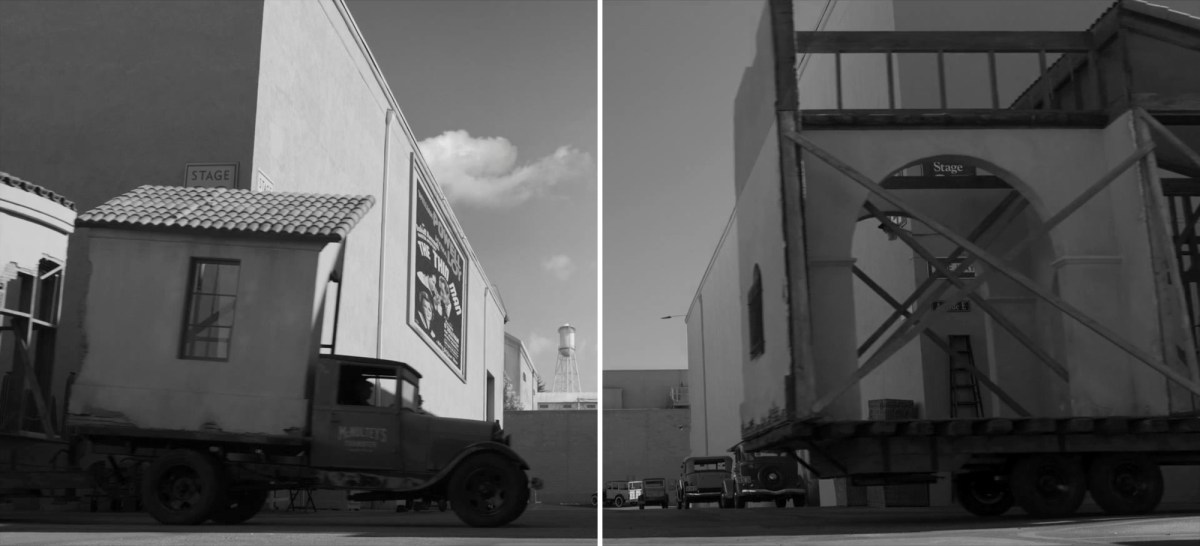
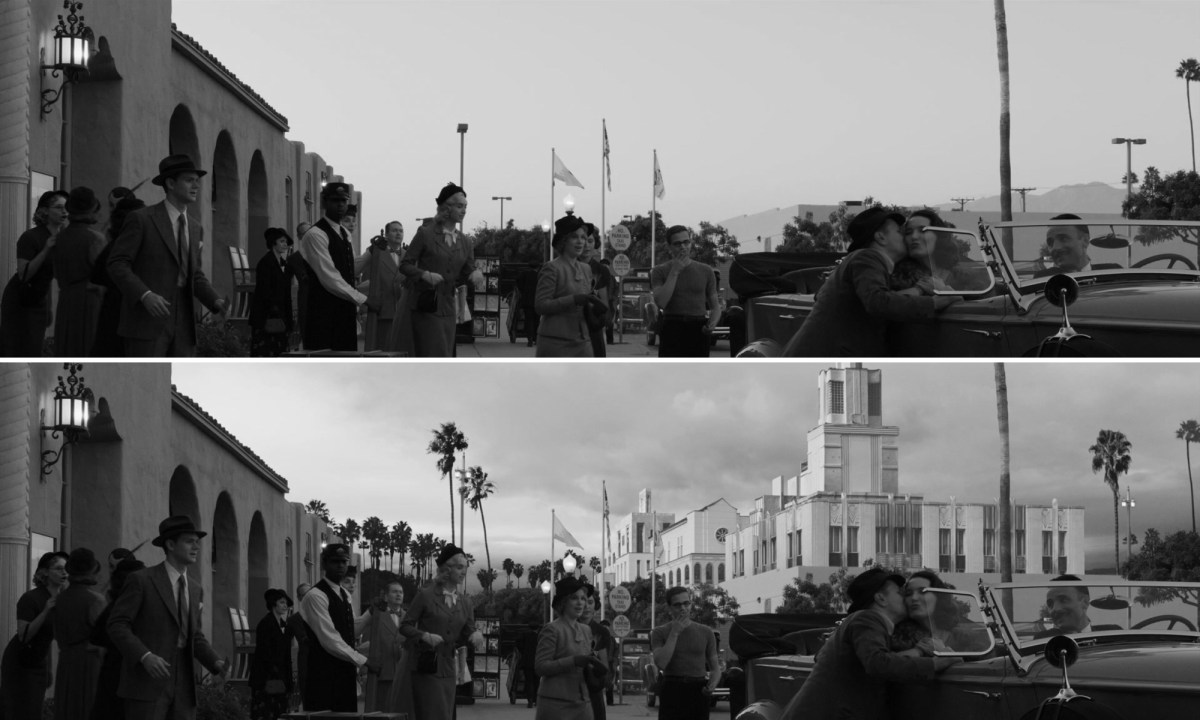
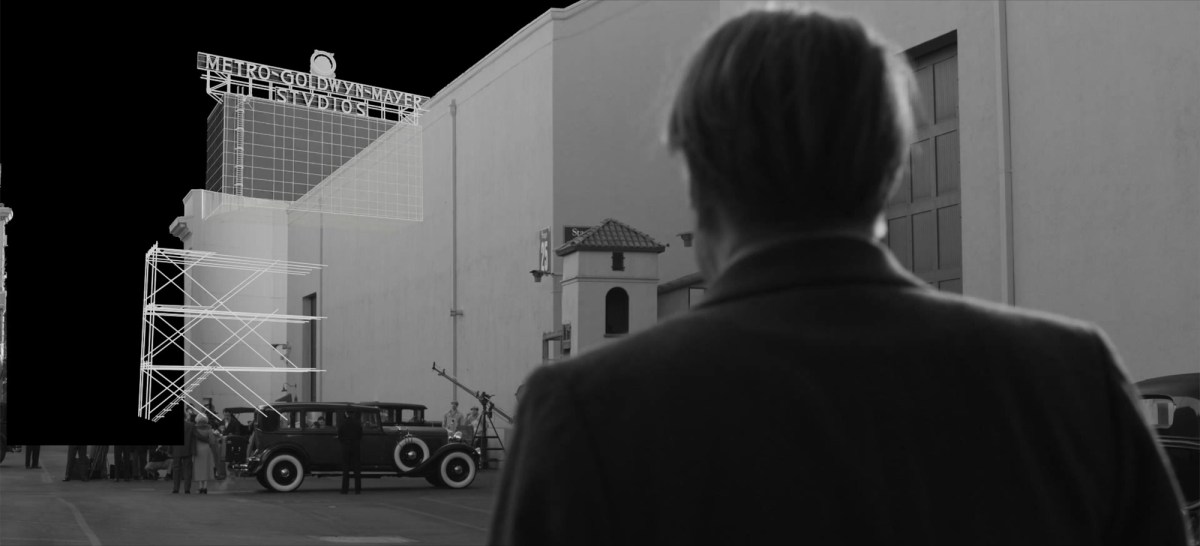
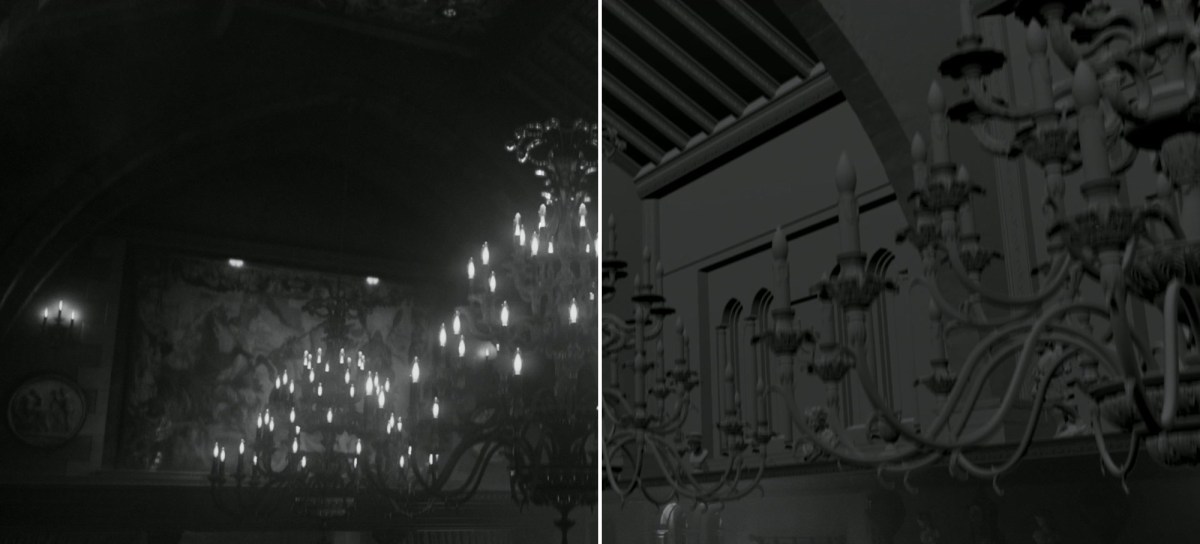
Mank was shot black and white in 6K resolution — much higher quality than the usual 2K or 4K — which made the creation of visual effects creatively challenging due to the variations in shades of gray.
“Immediately, all of our artists started working from home and connecting via VPN to their workstation at the office,” explains Diego. When the lockdown happened in March, the studio needed to figure out a reliable and fast way for everyone to easily access and work on files ranging in size from a few MB to several GB from multiple remote locations.
Ollin had just started using DEI’s ExpeDat, accelerated file transport software, a few months before COVID-19 hit. When the shutdown happened, Diego accepted an offer from DEI to increase capacity to their existing ExpeDat license, from four to eight and at no additional cost, to help accommodate their increased demand for ingest and other file transfer activities. Having this kind of workflow setup helped Ollin as they created and delivered VFX for Mank. We reached out to Diego to find out more about his studio’s workflow.
Mank is nominated for 10 Academy awards in this year’s 93rd Oscars in categories such as Best Picture, Lead Actor, and Best Director. It is also nominated for the VES award for Outstanding Supporting Visual Effects in a Photoreal Feature. The film follows screenwriter Herman J. Mankiewicz’s tumultuous development of Orson Welles’ iconic masterpiece Citizen Kane (1941).
There were several VFX supervisors nominated, Simon Carr (Territory Studio), Wei Zheng (Artemple), James Pastorius (Savage VFX), along with Peter Mavromates. In many respects, director David Fincher could have also been nominated for VFX. The director is himself an expert in visual effects and was a very active contributor to the film’s effect work. Peter Mavromates is a long-time collaborator with David Fincher and was officially the Co-producer, Post Supervisor and VFX Producer on the film. Additionally, Pablo Helman at ILM was key in creating the CG animals at the San Simeon zoo.
The film had its roots going back over 20 years. “We had a false start about 20 years ago, around 1999. The script had been written at that time but it never happened for a number of reasons,” Mavromates comments. “Probably a contributing factor was that it was black and white and if you weren’t Woody Allen in the 90s, you couldn’t shoot black and white. Even Mel Brooks had to change producers for Young Frankenstein because the studio wouldn’t let him shoot black and white and he had to find another studio.”
The movie finished filming about 2 weeks before the W.H.O. declared the COVID pandemic in Feb 2020. This meant nearly all the VFX was done using remote protocols at each of the VFX vendors.
There are many reasons why there’s a general wave of excitement whenever there’s a new David Fincher movie. That’s particularly been the case with Mank considering the six-year gap since Fincher’s last film Gone Girl, roughly half that time in which Fincher was making the series Mindhunter for Netflix.
Most of Fincher’s fans within and outside the industry see the filmmaker as a modern master of the visual medium, and Mank offers further proof of this with stunning shots recreating Hollywood in the ‘30s and ‘40s, fully realized background environments in which well-known icons from the era discuss the political climate of the times, both in the country and in Tinsel Town itself. At the center of it all is Gary Oldman’s Herman Mankiewicz, the illustrious screenwriter who would win a shared Oscar for co-writing Orson Welles’ Citizen Kane.
One person who has been along for the ride watching Fincher’s rise as a visionary filmmaker is Peter Mavromates, whose first film with Fincher was 1997’s The Game, but who first met the director on a Michael Jackson video and a commercial he directed. Mavromates has worked in post for over 35 years, as one of the first to champion the benefits of combining analog film with digital post, producing his first DI (Digital Intermediary) for Fincher’s 2002 movie, Panic Room, which was shot on analog. Five years later, he did the same for Zodiac, Fincher’s first digitally-shot film.
As Fincher’s Post-Production Supervisor, Mavromates’ duties continued to expand and evolve, his duties involving all the budgeting and hiring when it comes to the post process. “I like to describe it as once the image is captured, it becomes my problem,” he told Below the Line over a Zoom call a few weeks back.
A consistent entry on the greatest of all-time films is Citizen Kane, which is famous for innovative filmmaking, having been inspired by the life of American media mogul William Randolph Hearst and serving as the Hollywood debut of wunderkind Orson Welles. Just as legendary is the behind-the-scenes turmoil, in particularly Hearst attempting to derail the project and the careers of those involved. There were also accusations that Welles did not deserve a screenwriting credit as the true author was Herman J. Mankiewicz.
The script controversy captured the attention of journalist Jack Fincher who wrote an initial draft 30 years ago that was furthered developed by his son, David Fincher, best known for directing Seven, Fight Club, Zodiac and The Social Network. The Netflix production of Mank stars Gary Oldman, Amanda Seyfried, Lily Collins, Arliss Howard, Tuppence Middleton and Charles Dance.
Over the course of his career, Mank co-producer and VFX Producer Peter Mavromates (Mindhunter) has frequently collaborated with Fincher as a post-production supervisor. “There is a high level of consistency in our post team, so we get to have that conversation about how we can do it better the next time.”
Visual effects and DI are done in-house. “When we’re doing tests during pre-production,” Mavromates says, “a lot of the time they are shot in the parking lot and we bring the files right into the DI in the building. How awesome is that kind of feedback for Erik Messerschmidt [Raised by Wolves], our DP, and David Fincher to be able to play with something, see it, test it, bend it, and then go back out and try an alternative version right away? That’s valuable. That’s also the advantage to having in-house visual effects, which is having the ability not to be on the clock. I can call David upstairs where our visual effects are and say, ‘I want you to look at these three shots.’ I can give feedback to the artist right there, and maybe the artist can immediately do his note and get him to sign off. I think of David as the visual effects supervisor and I am the supervisor on some of the more technical stuff, like retouches.”
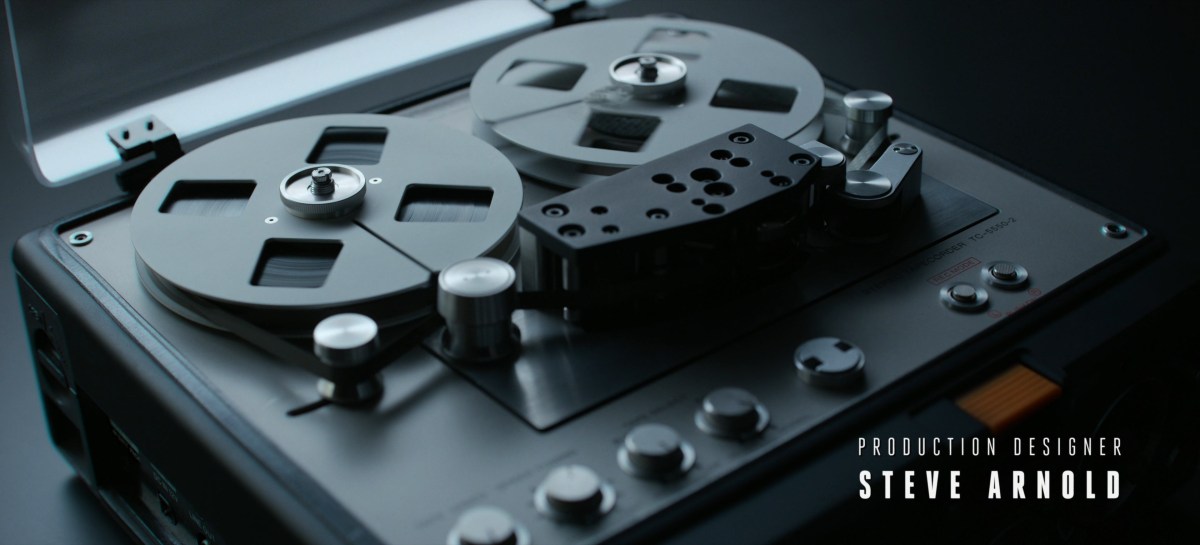
A ‘joyously nerdy’ video in which I attempt to assemble all the components to recreate the reel-to-reel title sequence from the Netflix Show Mindhunter.
Special thanks to Jason Moore (on Patreon) for the tip regarding The Professionals episode.
The music used in my recreation of the title sequence is ‘Spirit Of the Dead‘ – by Aakash Ghandi and is from the youtube audio library (Download link).
NOTE: The TDK tape leader was created specifically for the sequence with CGI to hide the original Sony one:
Comment by Kenneth Palkow (Kenney’s Custom Props) in Techmoan’s video 2020
Very nicely done, Techmoan. It’s amazing to see how many people fell in love with that recorder.
Working for David Fincher and having the opportunity to work with some very talented individuals was amazing. About 40% of the prop was recreated. We had acquired a couple machines. There was also one we found in a museum but did not get that one. In the end, I had 2 machines to work with. Some logos you noticed were not present anymore and that’s because that was a part I machined… like the head roller cover. The original had some deep gouged marks.
Since the recorder needed to look new from that time period, it was best to make a new one. I machined that part aluminum. There were other parts I needed recreate and machine. As you know, these machines are rare and it was just easy to tear the recorder down to every nut and bolt and give it a complete restoration. The hardest part was the housing and lettering. Some of it I had to recreate while other parts was just a refinish. In the end, I decided to match the original finish using ceramic based gun coatings. It was a durable finish and the color match ended up being perfect. So, the entire housing and misc parts, like the head/roller cover I totally refinished with this coating.
The next challenge was the reels themselves. David wanted a .005″ chamfer specifically on all edges of the reels. This was mainly because he was going to do plenty close ups and the details and the details had to be spot on. Again, I created a CAD model based on metal reels of that time period and machined them out of aluminum. I had to make custom fixtures to machine these parts because they are so thin. The center hubs a created a CAD model and 3D printed. I then wet polished the hubs down to 2000 grit. The hubs in the sequence were placed upside down. I did not intend or ask for my company initials to be visible…. that just happened by chance or intentional by the prop master or even possibly David was happy enough with my work that he did this for me. Either way, I was really excited to see that in the sequence.
I think The Fincher Analyst is correct about the tape having a cg overlay done. There were many other details I recreated as well…. like the rubber seal between the clear cover and housing. That part I did a cad model, printed a master, pulled a mold, and cast the recreated seals in rubber. The clear cover is also custom made. I did modify the locking knob on the cover to a magnetic one so the actor would just have to pull up vs trying to fidget with trying to get it to release… or worrying about it locking up and not release fluidly for the camera. Remember, the seen had to be very fluid.
Anyway, I hope this gives you some insight as to how much effort David wanted put into that opening sequence. Another friend of mine, Max Burman did the corpse stills you see.
Comment by Kenneth Palkow (Kenney’s Custom Props) in Adam Savage’s Tested video May 16, 2023
Hey brother, thank you for the shout out.
Yes, yes, and yes…. David Fincher 100% was extremely meticulous about detail on this reel to reel. His specifications was .005 of an inch chamfer on the reels edges alone. We had two machines at our disposal and I took one to create a superhero prop for that opening sequence alone.
Since a good portion of the recorder had damages, such as deep scratches, gouges, etc etc, I had to re-create those parts by CNC machining. The seal for the top cover I 3-D print it and even the top cover is not original. I had to make a new one from scratch. The top cover where the pick ups are that says Sony, I did not remove the logo, because that part as well I had to remake from scratch. Again, CNC machining. There were areas of machining that I was holding half a thou tolerance. Lol, I know, crazy. But, I was instructed that this would be an extreme close-up scene. The rest of the machine I tore down, refinished the side panels the back panel to take out all of the scratches gouges and then did a refinish using KG gun coatings. There was some Cerakote as well in there.
The reels were probably the most pain in the butt. Machining, thin metal like that can be problematic with vibration so I had to form a custom jig that sandwiched the reels down so I can machine the chamfers. The center hub is 3-D printed and if you look closely on the Opening sequence when he is tightening the reel knob, you will see my company initials KCP. That actually was an accident and no one was supposed to see that but someone put the reels upside down. I’m not gonna complain. Lol.
Truth be told this task of refinishing/fabricating. This reel to reel went in front of two other prop shops before it ultimately ended up in my hands. David was extremely adamant about the quality of this prop that the Prop Master took it to two shops. One of the shops tried, but could not give the quality level of work David was asking for.
That second shop gave me a call one day and said “Kenney don’t be mad at me but I’m sending somebody your way. They are being truly anal about the detail and I told them if you’re looking for someone that’s anal, you need to go to Ken shop“. Not five minutes later Prop Master called me at about 20 minutes later I was on a flight to Pittsburgh for a morning meeting the next day. I looked at the previous work done by the last shop, and thought to myself this is some pretty good work and question whether I could pull off with David wanted. Ultimately, that opening sequence is a project I’m most proud of being a part of and definitely one of the most beautifully done.
And last, I did make mention to the art department that in exchange for the hard work, David needed to bring me on for World War Z 2. Lol there was a lot more to this project but that’s pretty much the gist of it. Thanks again, brother, for the shout out.
If by any chance, you would like files to the the reel to reel or any of the other parts, let me know.


 The Fincher Analyst