‘Mank’ Editor Kirk Baxter On The Most Daunting Scene To Cut & The Performance That Captured His Heart

Matt Grobar
February 19, 2021
Deadline

When editor Kirk Baxter boarded labyrinthine, Old Hollywood drama Mank, he was met with multiple timelines, and rapid-fire dialogue from a vast assortment of real-life characters.

While Baxter would be tasked with guiding the viewer through the complex period piece, he never thought of the film as a challenge, per se. “I look back,” he tells Deadline, “and see it as a joy.”

Directed by David FincherMank follows alcoholic screenwriter Herman J. Mankiewicz (Gary Oldman), as he endeavors to finish the screenplay for Citizen Kane. Along the way, it also examines the washed-up wordsmith’s relationships with icons of his time, including Marion Davies (Amanda Seyfried), William Randolph Hearst (Charles Dance), and Orson Welles (Tom Burke).

First collaborating with Fincher on The Curious Case of Benjamin Button (2008), Baxter quickly developed a shorthand with the auteur, going on to reteam with him on four other films and two TV series. While Benjamin Button would land him his first Oscar nomination, his first pair of statuettes would come shortly thereafter, for his contributions to The Social Network and The Girl with the Dragon Tattoo.

Poised to return to the race once more with Mank, Baxter spoke with Deadline about the scene in Fincher’s longtime passion project that scared him the most, the performance that captured his heart, and the aspect of the process that felt like “the cherry on top.”

Read the full interview

Artist Spotlight: Mank Production Designer Donald Graham Burt

Edward Douglas
February 18, 2021
Below the Line

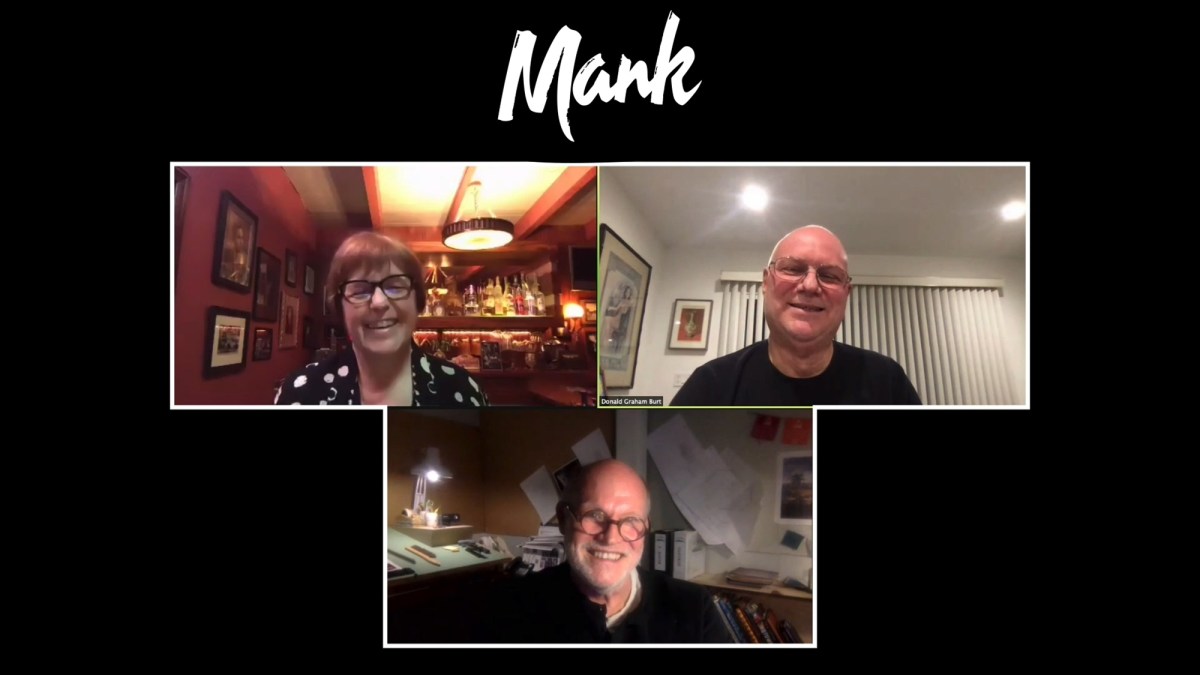
Continuing Below the Line’s look at the crafts behind David Fincher’s Mank, we spoke to Production Designer Donald Graham Burt, his sixth go-round with Fincher after the first worked together on 2007’s Zodiac. A year later, Burt would win the Oscar for Production Design for his work on Fincher’s The Curious Case of Benjamin Button. Besides performing those duties for six Fincher films, Burt also played a significant role in the designs for Fincher’s Golden Globe-winning Netflix series, House of Cards.

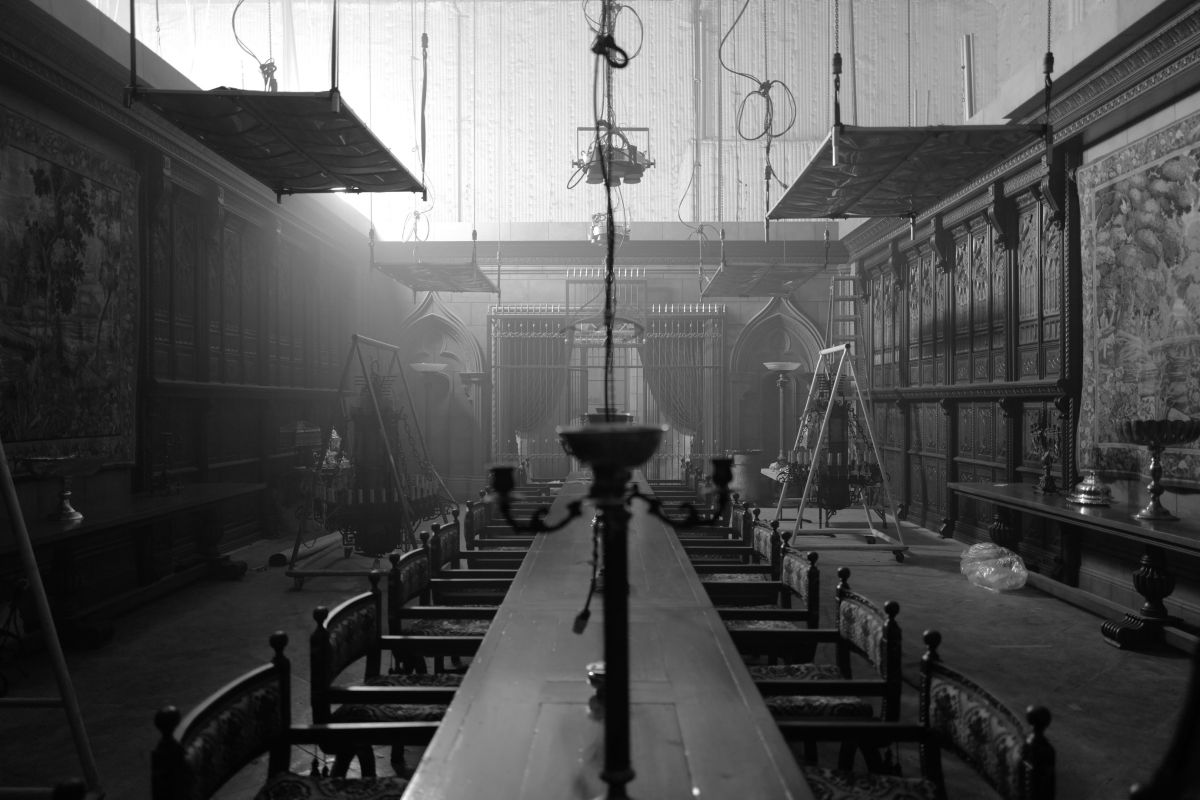
Burt’s definitely a bit of an old school Hollywood vet, going back to some of his work in the ‘90s like The Joy Luck Club and Dangerous Minds. Still, Mank offered Burt a number of new challenges, the first one being the fact that the film would be shot entirely in black and white, the second would be how it would task Burt and his team to recreate some of Hollywood’s most iconic locations from the ‘30s and ‘40s. You only have to watch the movie or look at some of the images below to agree that Burt and his art department came through with flying colors… even without having any actual color.

Below the Line spoke with Burt over the phone for the following interview.

Because We Love Making Movies: Production Designer Donald Graham Burt. Pt. 2, Mank

Eren Celeboglu
February 14, 2021
Because We Love Making Movies (Instagram, Facebook)

Because We Love Making Movies is an ongoing conversation with filmmakers who work behind the scenes to make the movies we love. These are the invisible warriors we don’t think of: Production & Costume Designers, Cinematographers, Editors, Producers, and the whole family of artists who make movies with their hands and hearts.

Today, we have a special treat… Production Designer Donald Graham Burt returns to talk about designing and making MankDavid Fincher’s love letter to old Hollywood & California, and the portrait of a man in conflict with everyone. It is a masterclass in filmmaking and the power of limitations from the most humble of masters.

Recommended Viewing: Citizen Kane, Sunset Boulevard, and Mank.

Listen to the podcast:

Apple Podcasts
Spotify

Listen to Pt. 1 of this conversation

Director Aaron Sorkin discusses The Trial of the Chicago 7 with David Fincher

A DGA Virtual Q&A

January 23, 2021
The Director’s Cut. A DGA (Directors Guild of America) Podcast

The counterculture movement of the 1960s clashes with the hostile Nixon administration in Director Aaron Sorkin’s historical drama, The Trial of the Chicago 7.

Set in the aftermath of what happened after a peaceful protest turned into a violent encounter with the police at the 1968 Democratic National Convention in Chicago, Sorkin’s film recounts the infamous 1969 trial of seven political activists – that included moderate Students for a Democratic Society led by Tom Hayden, militant Yippies led by Abbie Hoffman and Jerry Rubin, and Bobby Seale of the Black Panthers – who were all charged with conspiracy in an unfair trial that transfixed the nation and sparked a conversation about mayhem intended to undermine the U.S. government.

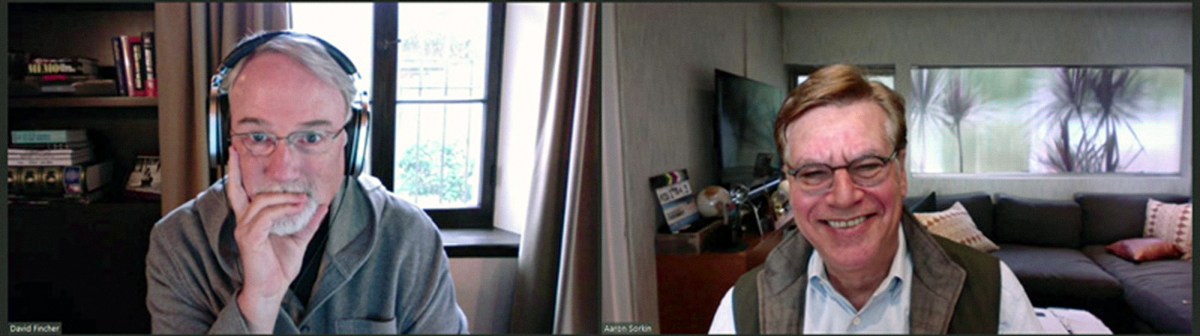
On January 23, Sorkin discussed the making of The Trial of the Chicago 7 in a DGA Virtual Q&A session moderated by Director David Fincher (Mank).

During the conversation, Sorkin spoke about how he came up with a plan to shoot the riot scenes despite his budgetary limitations.

“I find a constraint like that forces you to get creative,” said Sorkin. “It forces you to have an idea. So we came up with this plan, we were going to get a few wide shots and we were going to take advantage of the tear gas. We got smoke everywhere. I discovered what happens when you shoot light through smoke so I wanted smoke in every scene. I could not get enough smoke. It didn’t matter where we were.”

In addition to his directing work on The Trial of the Chicago 7, Sorkin was nominated for the 2017 DGA Award for Outstanding Directorial Achievement in First-Time Feature for his debut film, Molly’s Game. He was also part of the producing team (which includes DGA President Thomas Schlamme) that won multiple Emmy awards for “Outstanding Drama Series” for their work on the series The West Wing. Sorkin also took home an Academy Award for “Best Writing, Adapted Screenplay” for David Fincher’s feature The Social Network.

Sorkin has been a DGA member since 2016.

Listen to the podcast:

DGA.org
Apple Podcasts
Spotify
YouTube

Making Mank

Director David Fincher and cinematographer Erik Messerschmidt shoot a black-and-white masterpiece for the 21st century.

February 12, 2021
Netflix Queue

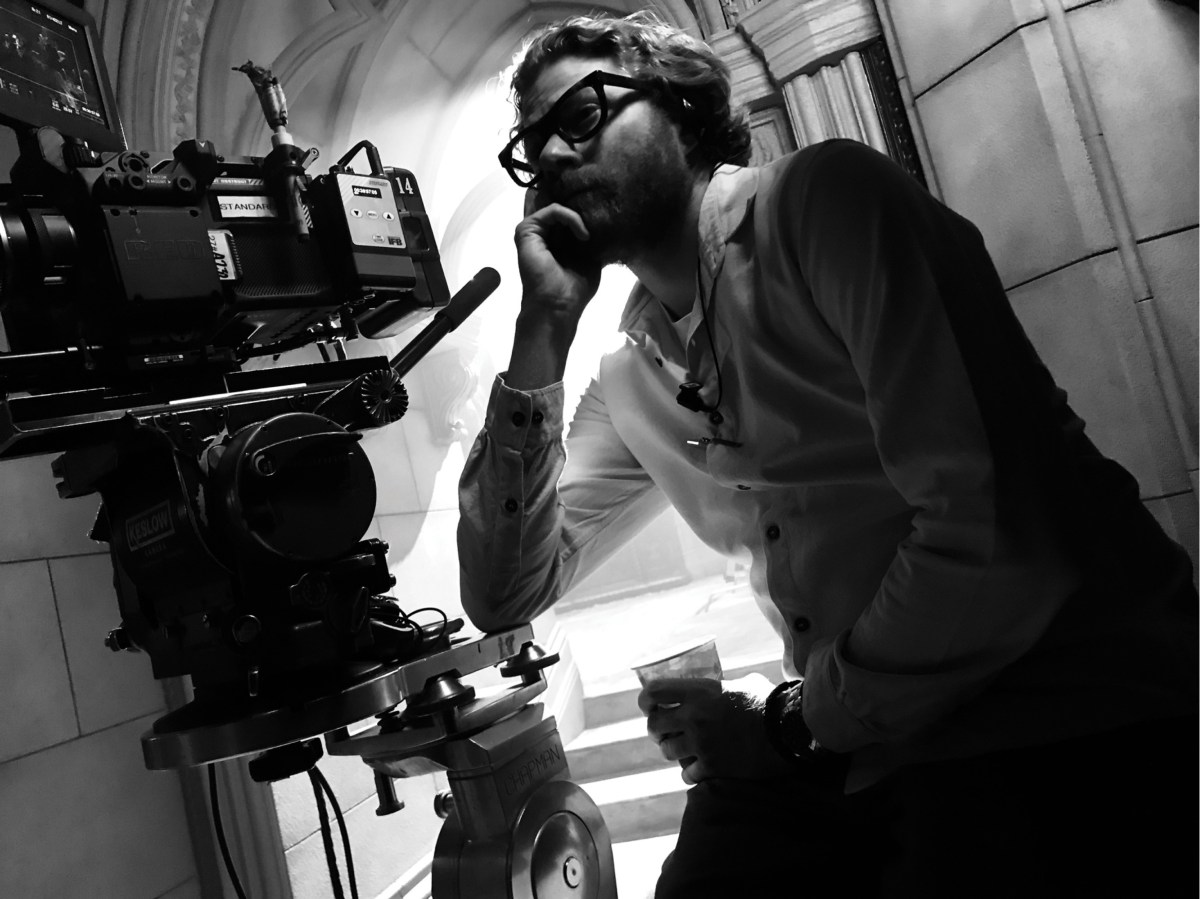
It’s a milestone for any up-and-coming cinematographer, landing that first feature film assignment. For Erik Messerschmidt, that all-important project turned out to be Mank, David Fincher’s ambitious chronicle of Herman Mankiewicz and how the irascible screenwriter came to pen the first draft of what became Orson Welles’s cinematic landmark Citizen Kane.

On paper, Mank could not have been more daunting. Messerschmidt would be working side by side with a famously exacting filmmaker, on a high-profile drama starring Oscar winner Gary Oldman in the title role. He’d also be shooting entirely in black and white.

“I was like, Oh cool, I get to do black and white,” Messerschmidt recalls. “Then I realized how naïve that was, and it freaked me out. It really freaked me out.”

Fortunately, Messerschmidt had some history with Fincher. He had worked as a gaffer on the director’s 2014 thriller Gone Girl, and deeply appreciated his direct communication style and the specificity of his vision. Impressed by Messerschmidt’s pragmatism and work ethic, Fincher subsequently hired him for the F.B.I.-profiling drama Mindhunter, and the professional relationship deepened from there.

When Fincher turned his sights to Mank, he knew whom to call. “I’m a big believer in multidisciplinary thinking,” he explains. “Erik was obviously somebody who knew how to run his manpower, but he could also speak to his crew in myriad ways that imparted slightly different nuances. He can split hairs in terms of foot-candles or T-stops or F-stops but also have a conversation about Carol Reed or how Marlon Brando never hit his mark.”

Together, Fincher and Messerschmidt plotted how best to shoot the character-driven period drama, which was written by the director’s late father, Jack Fincher. One of the most challenging sequences was a nighttime stroll taken by Mank (Oldman) and the screen siren Marion Davies (Amanda Seyfried) through the palatial grounds of Hearst Castle. Onscreen, the friends are bathed in moonlight, yet those scenes were actually shot during the day using a classic Hollywood camera technique known as day for night. (The sequence was filmed largely on location at Pasadena’s Huntington Library, Art Museum, and Botanical Gardens; the menagerie of animals in the background was added in digitally during post-production.)

The scope of the production might have proved overwhelming were it not for the rapport between director and cinematographer. “All we do all day is ask questions of the people that we’re working with. I was completely thrilled to be working for someone who had answers to those questions and who was genuinely interested in and curious about what it was that we were doing,” Messerschmidt says. “Being in a situation where you can have a really productive conversation with the director, that is so rare and so important.”

The duo spoke to Queue about what makes their partnership work.

Read the full interview

Settling the Score

Director David Fincher talks the music of Mank with composers Trent Reznor and Atticus Ross.

Jon Burlingame
February 12, 2021
Netflix Queue

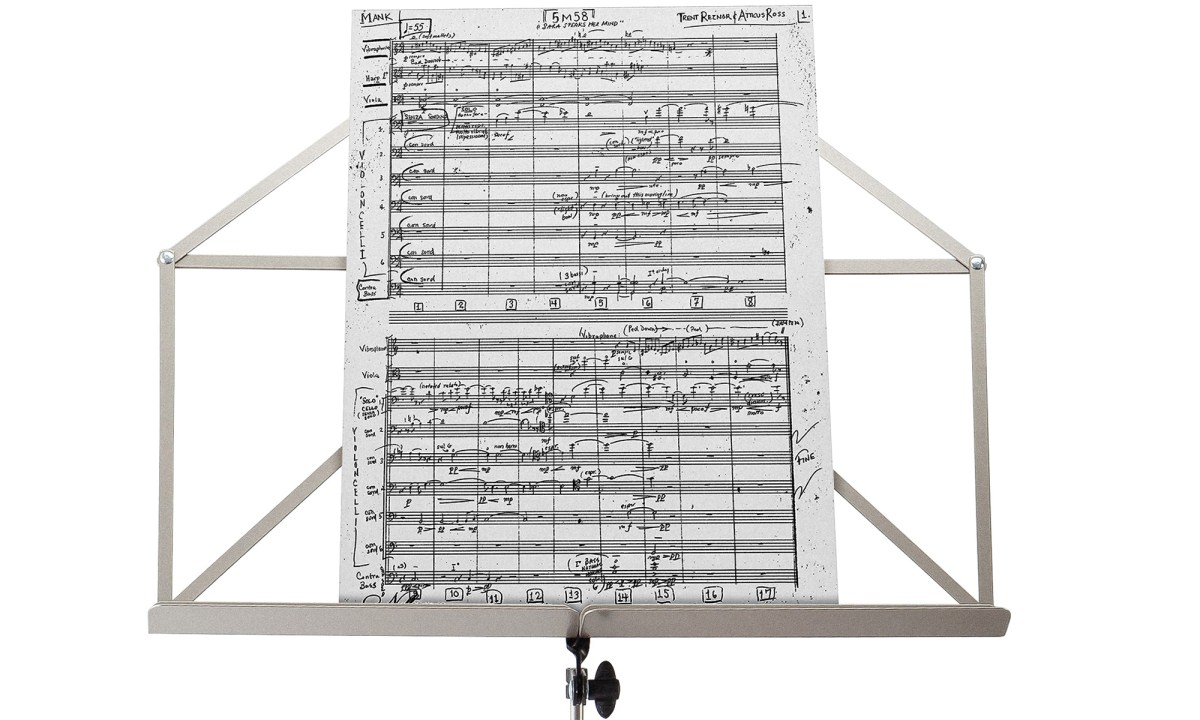
Trent Reznor and Atticus Ross have written a dozen film and television scores together. Not just partners in Nine Inch Nails, they have won multiple awards for music in visual media: an Oscar and a Golden Globe for The Social Network, a Grammy for The Girl with the Dragon Tattoo, an Emmy for Watchmen. But they had never tackled a project quite like Mank.

Director David Fincher, whose films The Social Network, The Girl with the Dragon Tattoo, and Gone Girl Reznor and Ross also scored, came to the duo with a period piece set between 1930 and 1940 and shot in black and white, the story of Hollywood screenwriter Herman “Mank” Mankiewicz (played by Gary Oldman).

Reznor and Ross’s previous scores had been created with synthesizers, samplers, and sequencers in their Los Angeles studios, where they recorded all of the music themselves. Mank required something different: a more traditionally orchestral score, with swing-jazz and dance-band elements appropriate to the era. It was an arena in which neither Reznor nor Ross had any prior experience.

So they listened to the popular music of the 30s and 40s and, intriguingly, the early film scores of Bernard Herrmann, the longtime Orson Welles collaborator. His music for Citizen Kane proved inspirational in terms of the style of orchestral writing that frames Mank.

Ultimately, they created more than 90 minutes of original music, played by the equivalent of a 70-piece orchestra and big band. Because of the pandemic raging through the summer and fall of 2020, all of the musicians performed individually in their home studios and were mixed together into a seamless whole.

“It was an incredibly intoxicating, inspiring environment,” Reznor says of working with Fincher. “We felt like artists, not artisans, being challenged to try to make something awesome.”

We talked to the musicians and the director about creating the music for Mank.

Read the full interview

True Colors

Costume designer Trish Summerville enters the world of black-and-white filmmaking for Mank.

Jessica Shaw
February 12, 2021
Netflix Queue

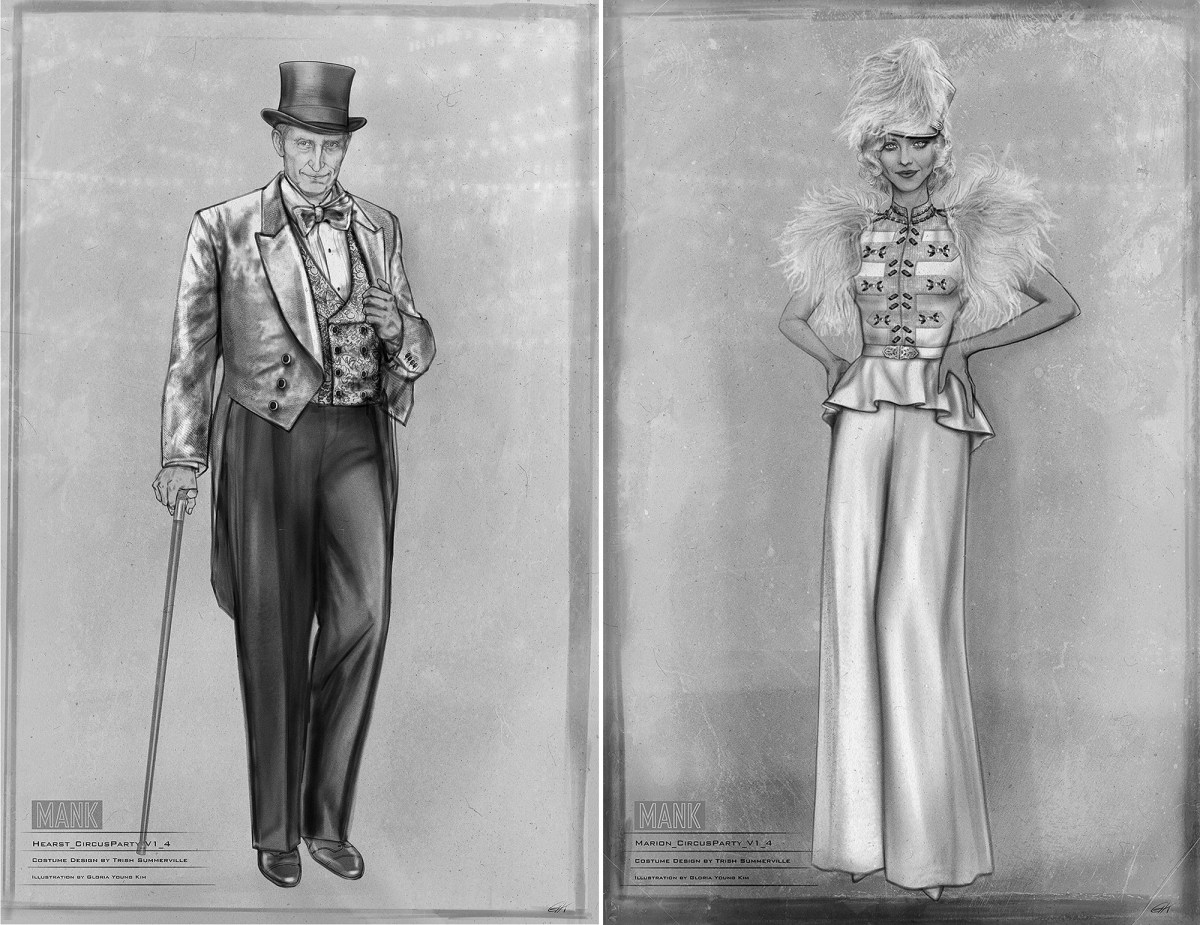
Costume Sketches by Gloria Young Kim

The first thing Trish Summerville heard from her friends when she signed on to be the costume designer for David Fincher’s Mank was, “That is going to be so easy for you!” People wondered how difficult it could possibly be to dress a cast for a black-and-white film set in the 1930s and 40s, about Herman Mankiewicz, the screenwriter who penned the first draft of what would become Orson Welles’s Citizen Kane. “I kept hearing, ‘You can just use any color you ever wanted and never worry,’” Summerville recalls, laughing at the thought. “That was definitely not the case.”

In fact, it couldn’t have been further from the truth. Summerville is a Hollywood force herself, having costume-designed films like The Hunger Games: Catching Fire, and Fincher’s Gone Girl and The Girl with the Dragon Tattoo, among others. Before Mank, she had worked on projects that incorporated black and white through flashbacks, but she had never done a complete picture sans color.

She immediately immersed herself in the style and learned some tricks of the trade. For instance, a light blue might be beautiful in person, but it’s going to look light gray onscreen. A true black can be too severe; navy reads as a softer alternative. A dark or saturated color that’s striking in real life will seem equally flat in black and white. On top of that, some fabrics strobe and some patterns with contrasting colors resemble confetti. Even a color that looks great can distract an actor in a dialogue-heavy scene and should therefore be avoided.

“Any project with Dave is a dream and you know it’s going to be challenging and exciting, Summerville summarizes, calling me from the set of Slumberland, her next film, “but my brain definitely had to adjust.”

Read the full profile

The Minds Behind the Sets of “Mank” Share Their Experience Re-Creating Old Hollywood in Black and White

Netflix’s film starring Gary Oldman, Amanda Seyfried, and Lily Collins has been nominated for a host of accolades, including a Golden Globe for Best Motion Picture.

Lauren Wicks
February 9, 2021
Veranda

For those in the television and film industry with dreamy job titles like production designer or set decorator, the fun begins long before filming, deep in the throes of research. And that was especially the case for Netflix’s Mank, a period piece filmed in black and white in 2020.

“Any opportunity to work on a period film has everybody in our business, especially those in our department, salivating to hear that we get to go back in time, discovering how society functioned and the nuances of the period: the furnishings, the architecture, the lifestyles,” says Donald Burt, the film’s production designer. “It felt like we were living in the film, and that’s what it’s all about: presenting a story in a format that feels like it was actually made then.”

Burt spent much of his design preparation time at the Academy of Motion Pictures library, scouring through documents from filming methods to formal letters, sorting out old gambling debts between executives to decipher thought processes regarding films from nearly 100 years ago.

“This is not a documentary, so we needed to take some license, but I always say I put research and information into a blender and see what comes out to best help tell the story we are trying to tell,” says set decorator Jan Pascale. “It’s so exciting to not only do a black-and-white film but to dive into the history of Hollywood and L.A., learning how people communicated back then.”

Pascale recalls offering typewriters to the casting agents, and it proving a greater challenge than originally thought to find people to type efficiently on them. Though “QWERTY” was created long ago, managing a modern keyboard is much easier than the models of yesteryear. The same goes for making a movie in color.

Read the full profile

More Like This: Spotlight on Mank, featuring Trent Reznor, Atticus Ross, Erik Messerschmidt and more

Krista Smith
February 10, 2021
More Like This (A Netflix Queue Podcast)

A podcast from Netflix Queue, the journal that celebrates the people, ideas, and process of creating great entertainment on Netflix and beyond. Host Krista Smith is joined by a different co-host each episode – Franklin Leonard, Tre’vell Anderson, and others – to give an insider’s peek into the creation of your favorite films, series and documentaries and the incredibly talented people who make them.

More Like This gets the Mank treatment! In this very special episode, Krista takes us behind the scenes of David Fincher’s Mank, sharing interviews with key members of the creative team. Composers Trent Reznor and Atticus Ross talk about the power of storytelling through music, how they pulled inspiration from composers of the past, and how pandemic restrictions forced them to record a 70-piece orchestra one instrument at a time; set decorator Jan Pascale demonstrates how the smallest details make the biggest impact; cinematographer Erik Messerschmidt details how he combined classic and modern techniques to transport a 21st century audience back in time; and editor Kirk Baxter explains why David Fincher once called him 50% blacksmith and 50% poet. Enjoy this deep dive into the process of making movie magic with film collaborators at the top of their game, and be sure to see their work in Mank, now streaming on Netflix.

Listen to the podcast:

Apple Podcasts
Spotify
Google Podcasts
Stitcher

Simplecast
PodBean

Excerpt with Erik Messerschmidt:

Cinefade VariND