The Nick Taylor Horror Show: The Empty Man, Writer/Director David Prior

Nick Taylor (Twitter)
April 1, 2021
The Nick Taylor Horror Show

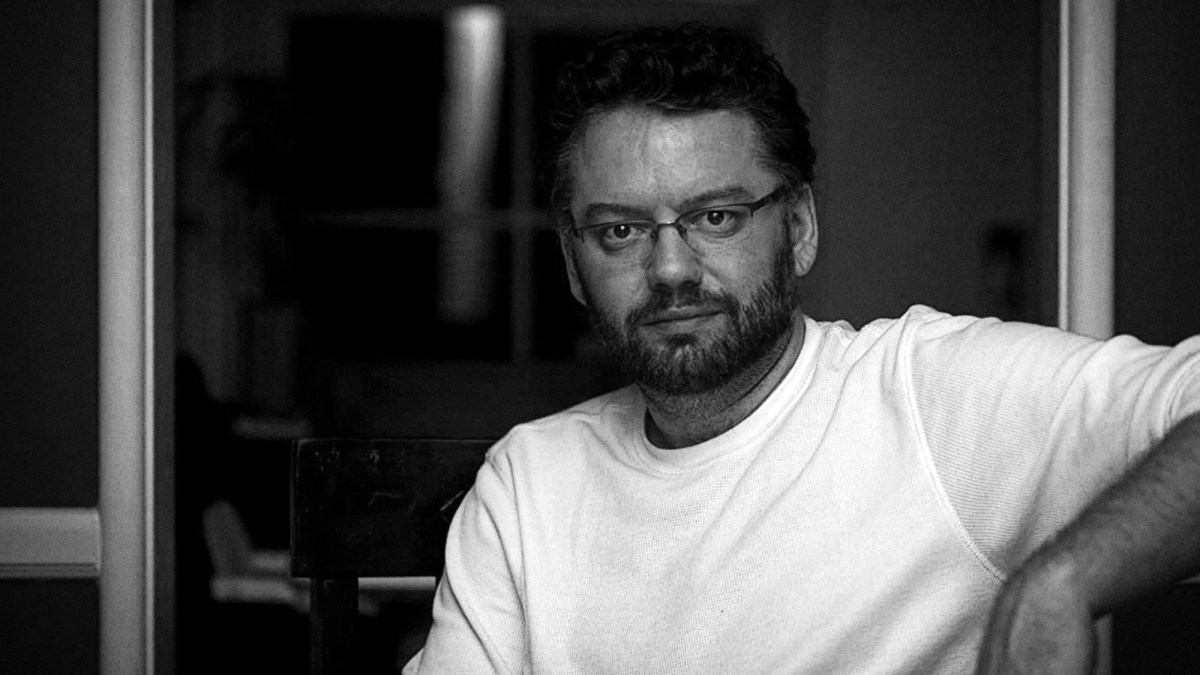
David Prior is an American writer and director who made his feature directorial debut with The Empty Man, an epic in the world of horror, one of the most criminally overlooked horror movies of 2020, and one of the most ambitious horror movies of recent years . It has the scope and execution of a Chris Nolan movie while mixing elements of cults, quantum horror, and creepypastas into an extremely unique mythology that is all its own.

The story behind the making of The Empty Man is very harrowing. In the middle of shooting in South Africa, it was temporarily shut down due to weather conditions, during which a key studio executive who greenlit the film left the studio, essentially leaving the movie abandoned. If that wasn’t enough, once the movie finally got finished, David had to endure a series of calamities, including negative test screenings and studio interference which kept the movie in limbo for years. If that wasn’t enough, once the movie was finally released, it was in theatres during the height of the pandemic only to get largely negative Rotten Tomato reviews (which were very unjust) and thus be completely buried.

However, as of the past few weeks, The Empty Man has been seeing a major resurgence as a number of outspoken critics have been singing the praises of the movie and thus causing it to get the attention it deserves. The story behind The Empty Man brings to light the many issues that can befall a movie but also shows the power of the internet to champion a movie when it belongs in the spotlight. I’m personally thrilled that The Empty Man is getting the viewership that it has been; it’s a must-see, and I’m convinced it will be considered a horror epic for years to come.

In this conversation with David, we got into the whole story behind The Empty Man, his directorial processes, and what he learned observing directors like David Fincher, Tim Burton, and Peter Weir when he visited them on set while producing special features for multiple DVD titles. All of this and so much more on today’s episode of The Nick Taylor Horror Show.

Read the full article and listen to the podcast:

The Nick Taylor Horror Show
Apple Podcasts
Spotify
YouTube
Stitcher
Audible (Amazon)

Watch The Empty Man

Secret Handshake Podcast: Bonus Features. Writer/Director David Prior (The Empty Man)

Jacob Knight and Marten Carlson
March 4, 2021
Secret Handshake

For this very special edition of Bonus Features, Jacob and Marten talk to David Prior, the writer/director behind last year’s criminally underseen horror picture The Empty Man. Over the course of our lengthy chat, David dives into his career as a special features pioneer during the the early days of DVD, and just what happened to his future cult classic at Disney/Fox.

Listen to the podcast

Watch The Empty Man

Not On Blu-ray?: Fight Club Compared

Blu-rays vs iTunes HD vs D-VHS vs DVD vs Laserdisc

Mac
April 7, 2018
Not On Blu-ray?

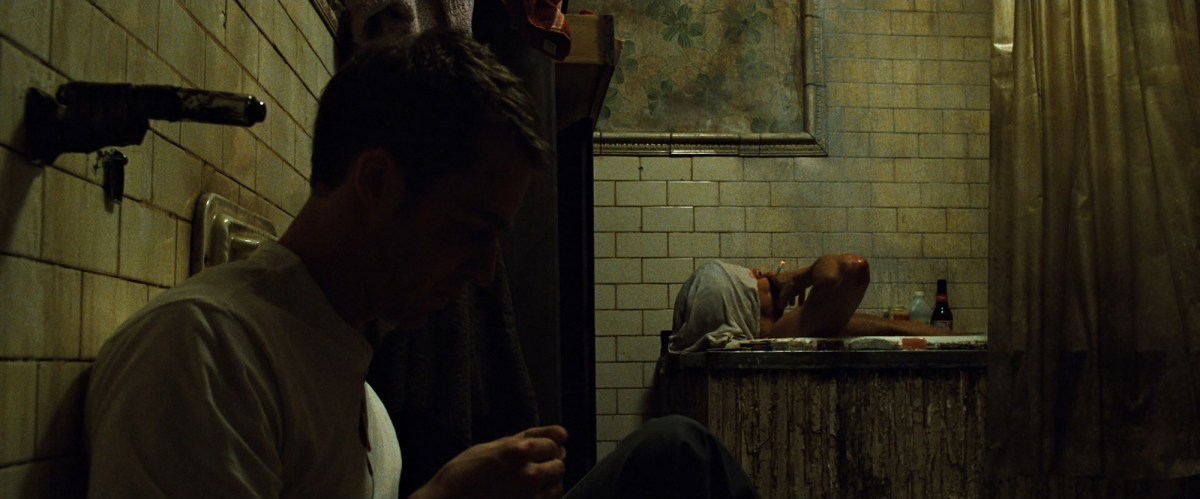
Caustic, nihilistic and controversial, Fight Club successfully adapted Chuck Palahniuk’s transgressive fiction novel, it’s a credit to screenwriter Jim Uhl’s excellent adaptation that the voice of the original novel is heard so clearly, and at the same time the film proved to be an enormous success. Though much credit is also due to the excellent sound and editing: so much in this film depends on hitting exactly the right tone.

Based on a reader suggestion, I decided to take a look at the various home video versions of Fight Club that are available.

Filming Fight Club

Fight club was photographed by Jeff Cronenweth, a then hot and upcoming Cinematographer who until that point hadn’t shot a major feature, but did have the advantage of being Blade Runner cinematographer Jordan Cronenweth’s son. Fincher has worked with both father and son on a number of projects culminating in ‘Alien 3’. Subsequently Jeff did camera work on a number of Fincher’s other features including ‘Se7en’ and ‘The Game’.

An Interview with Cronenweth in American cinematographer records Fincher’s preference for both natural and pre-existing lighting in locations over elaborate lighting setups. This necessitated the choice of higher speed stocks.

The film was shot using the Super35 format, and framed at 2.35:1. Daylight scenes were shot on Kodak EXR 100T and Vision 250D film, while the majority of night scenes were shot on ‘faster’, grainier Vision 500T.

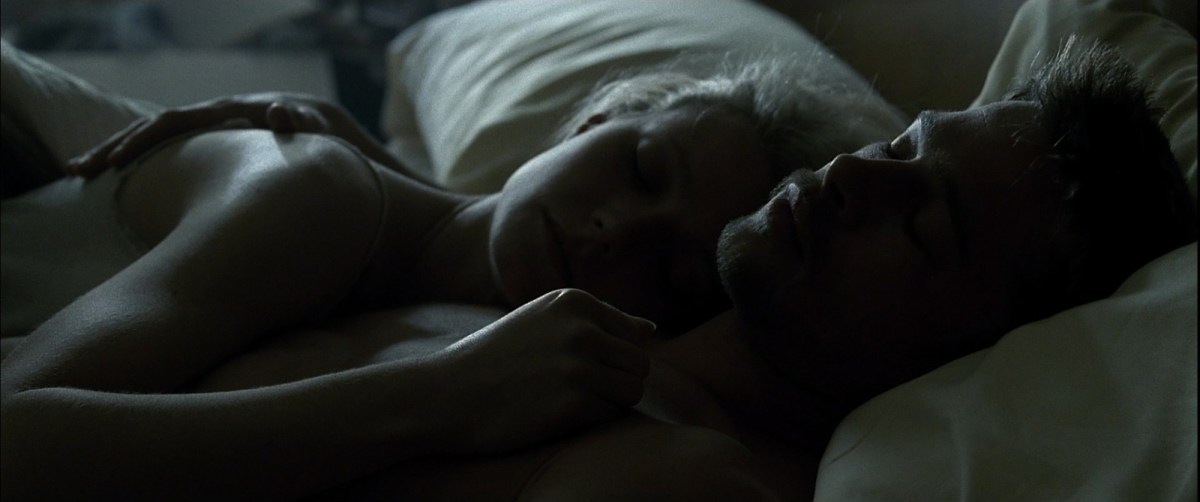
Selected night scenes from the film were 5% flashed at the laboratory, which boosts contrast and enhances detail in the darker parts of the frame. Additionally a handful of release prints were treated with the Technicolor’s ENR silver retention process (bleach bypass) at the 80 IR level.

Shooting in Super35 at an aspect ratio of 2.35:1 provides considerable latitude for re-framing during the editing process, which David Fincher may have developed a taste for when working on the various home video editions of Se7en.

Read the full article

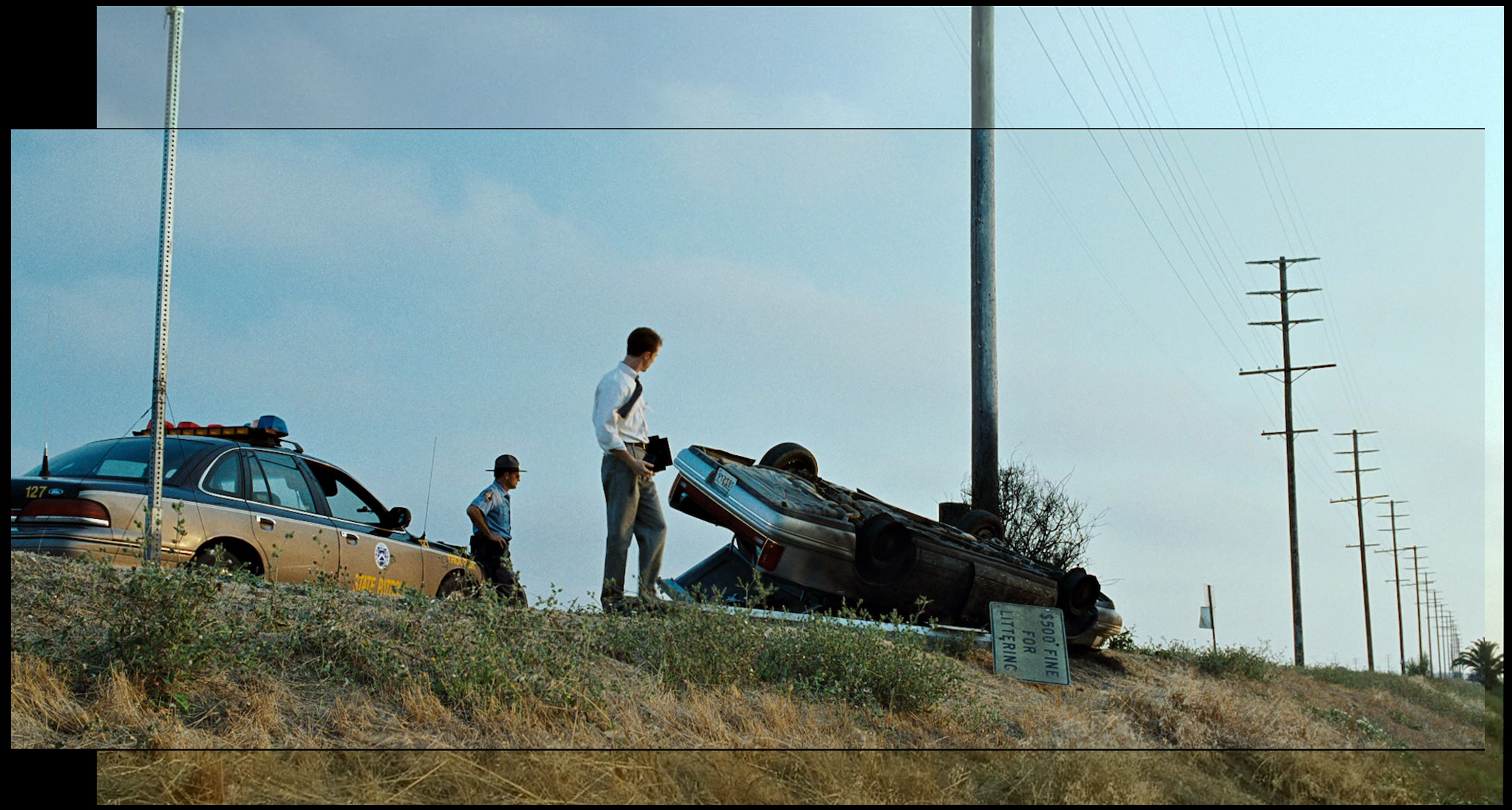
Here the composition is noticeably skewed between the 16:9 and 2.35:1 versions.

Not On Blu-ray?: The Mysterious Case of Se7en

Mac
June 4, 2013
Not On Blu-ray?

Se7en is a dark crime-horror fantasy, written by Andrew Kevin Walker, directed by David Fincher with cinematography by Darius Khondji. The film was a success both commercially and critically. However due to the complexity of the photographic process, it is difficult to be certain that any of the home-video releases reflect the image seen in first run showings. This article will examine the various video releases of Se7en, and explain the process by which they came about, and attempt to pick the best amongst them.

Se7en Through The Lens

During production careful consideration was put into developing the film’s ‘look’ by both the art department and the Cinematographer.

  • Super 35 cameras were used, which allowed the use of faster and wider ‘spherical’ lenses with shallower depth of field than comparable anamorphic lenses
  • The use of Super 35 also allowed some flexibility in re-framing shots in post production, since the film was intended to be projected in a 2.40:1 aspect ratio
  • On set smoke was used to reduce contrast and provide atmosphere to scenes
  • For some scenes the negative was ‘flashed’ using a Panaflasher to further reduce contrast, and bring out shadow detail
  • The film was pushed one stop (under-exposed and over-developed) to increase density and  saturation
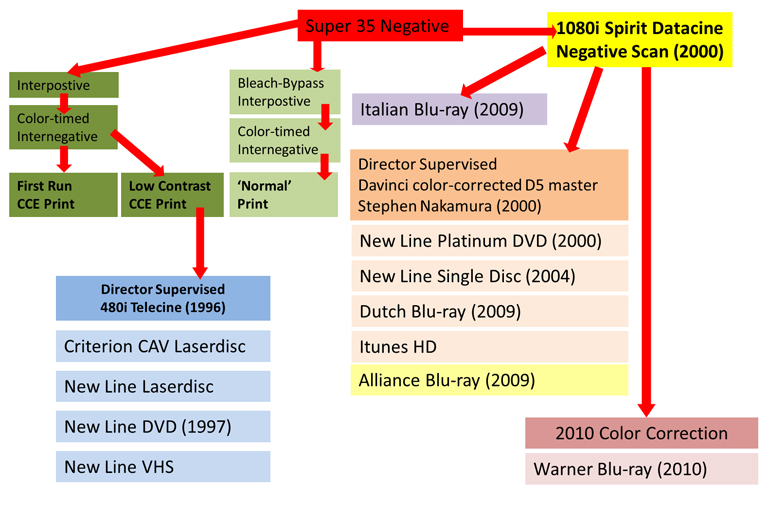
  • A Deluxe ‘Color Contrast Enhancement’ or ‘CCE’ bleach-bypass process was used for first run prints, increasing contrast, effectively crushing blacks
  • The CCE process was deemed too expensive for the majority of first and second-run prints, which were then struck from an inter-positive that had itself been bleach-bypassed, which approximated the effect of the CCE process. This meant that there would be differences between the first-run showings of the film, and subsequent runs

Read the full article