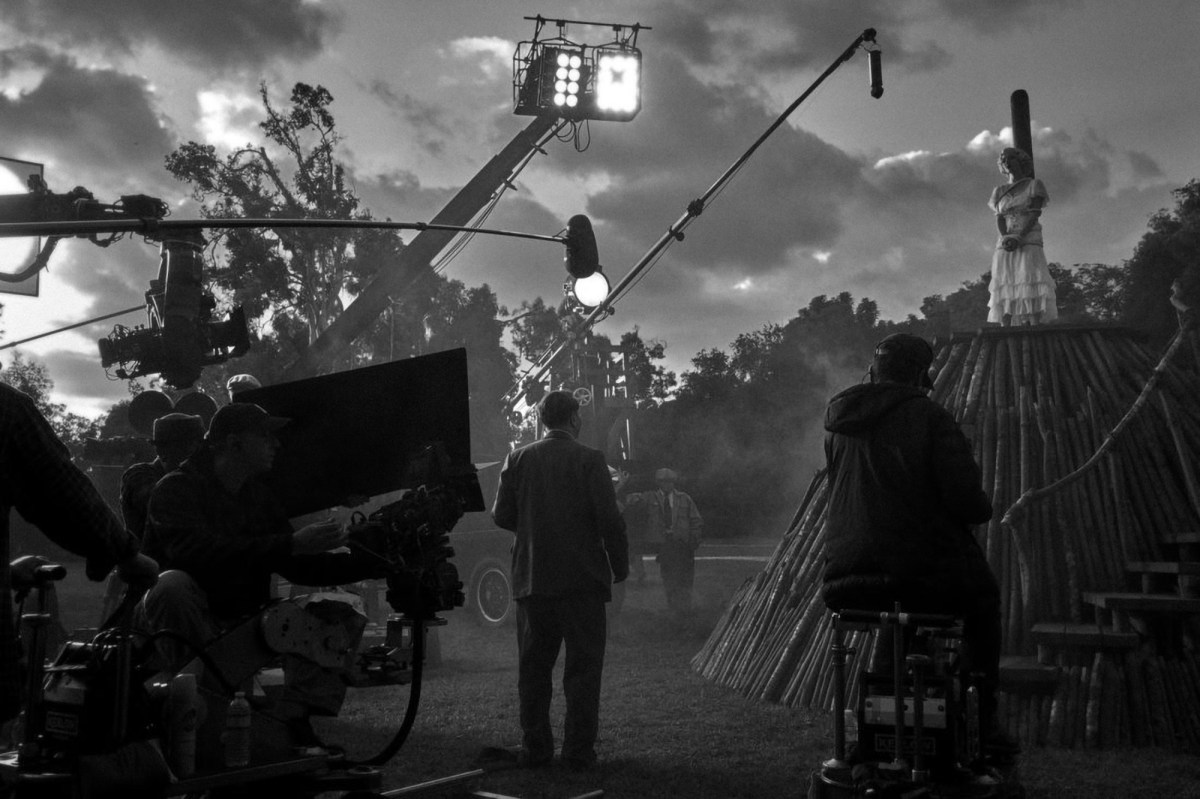
“Mank,” David Fincher’s new Hollywood film about old Hollywood, pays homage to its source material by shooting in black and white. But if you ask its cinematographer, Erik Messerschmidt, the Netflix feature is anything but a throwback.
How was it that you came to work on “Mank”?
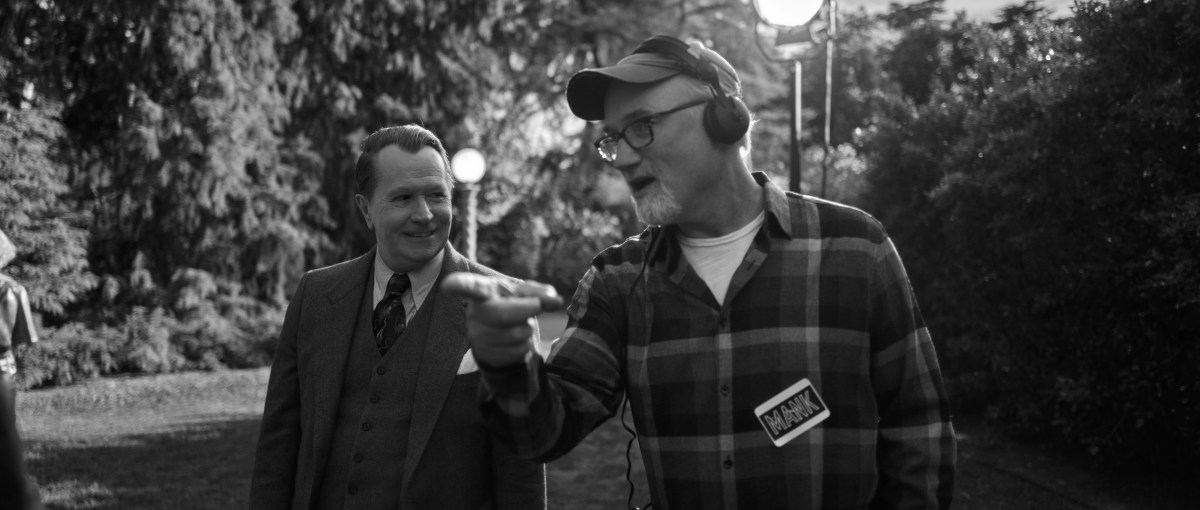
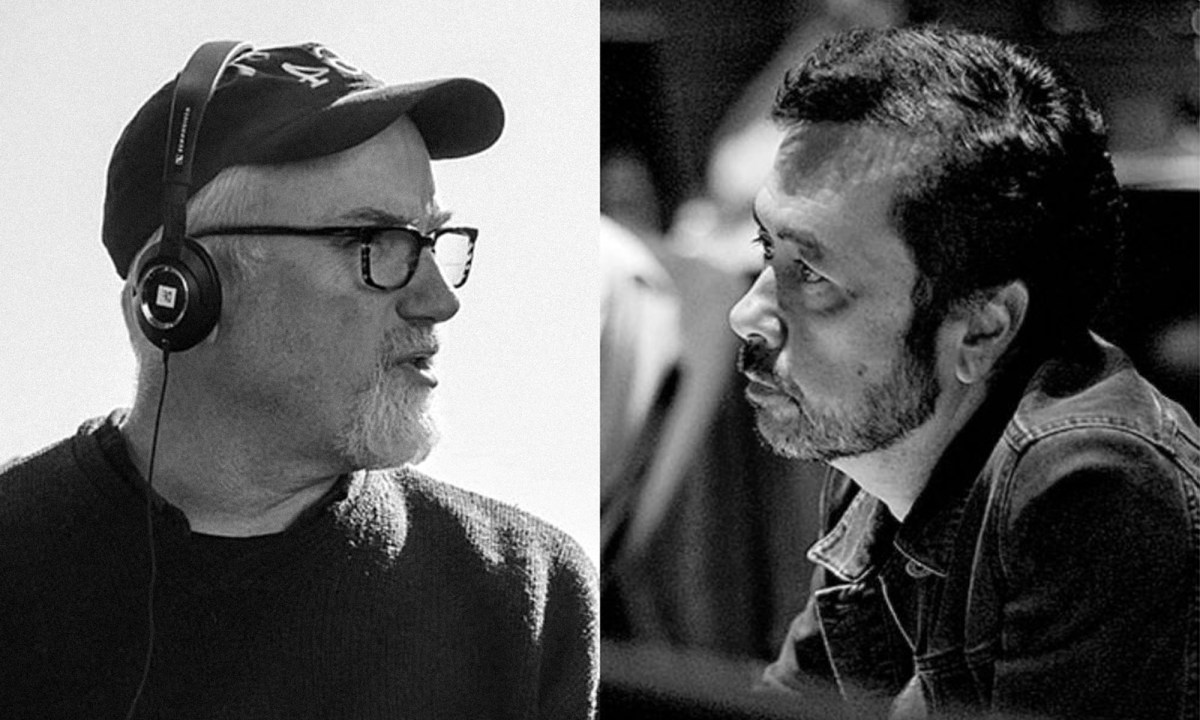
I have worked with David Fincher for several years. We had done the television show “Mindhunter” together. We had developed a really good working relationship and a friendship. I met him on the film “Gone Girl”; I was the gaffer on “Gone Girl,” and I initially met David there. After we did “Mindhunter” together, we had a really good shorthand, and I made it my business to really align myself and try to figure out what it was that David wanted, and try to support him as best as I could. He and I see the world, I think, in a very similar way, at least visually. So it was very easy to be in sync in terms of which decisions are needed. We’re very rarely in opposition, and when we are, it’s a constructive one. I was so thrilled to be invited; it was like a dream.
David Fincher’s Mank follows Herman Mankiewicz during the time he was writing the classic film Citizen Kane. Mank, as he was known, wrote or co-wrote about 40 films, often uncredited, including the first draft of The Wizard of Oz. Together with Orson Welles, he won an Oscar for the screenplay of Citizen Kane, but it’s long been disputed whether or not he, rather than Welles, actually did the bulk of the work on the screenplay.
The script for Mank was penned decades ago by David Fincher’s father, Jack, and was brought to the screen thanks to Netflix this past year. Fincher deftly blends two parallel storylines: Mankiewicz’s writing of Kane during his convalescence from an accident and his earlier Hollywood experiences with the studios, as told through flashbacks.
Fincher and director of photography Erik Messerschmidt, ASC, (Mindhunter) used many techniques to pay homage to the look of Citizen Kane and other classic films of the era, including shooting in true black-and-white with Red Monstro 8K Monochrome cameras and Leica Summilux lenses. Fincher also tapped other frequent collaborators, including Trent Reznor and Atticus Ross for the score and Oscar-winning editor Kirk Baxter, ACE, who won for the Fincher film’s Girl With the Dragon Tattoo and The Social Network.
I recently caught up with Baxter, who runs Exile Edit, to discuss Mank — starring Gary Oldman in the main role — the fourth film he’s edited for David Fincher.
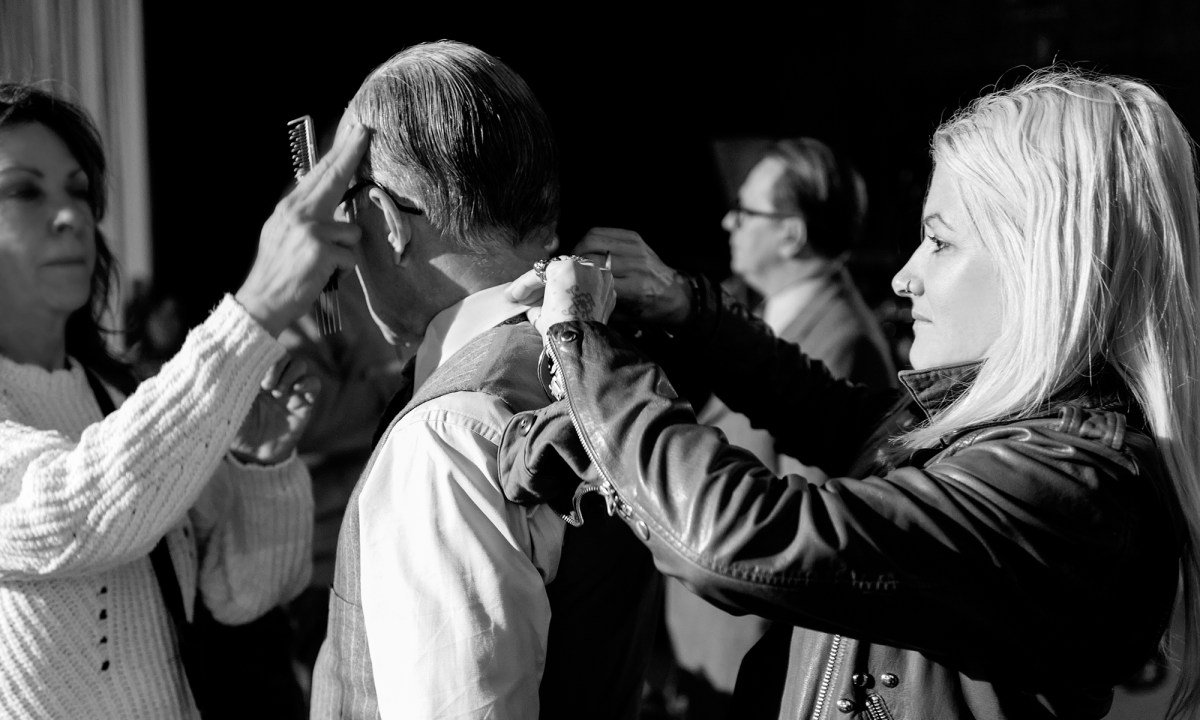
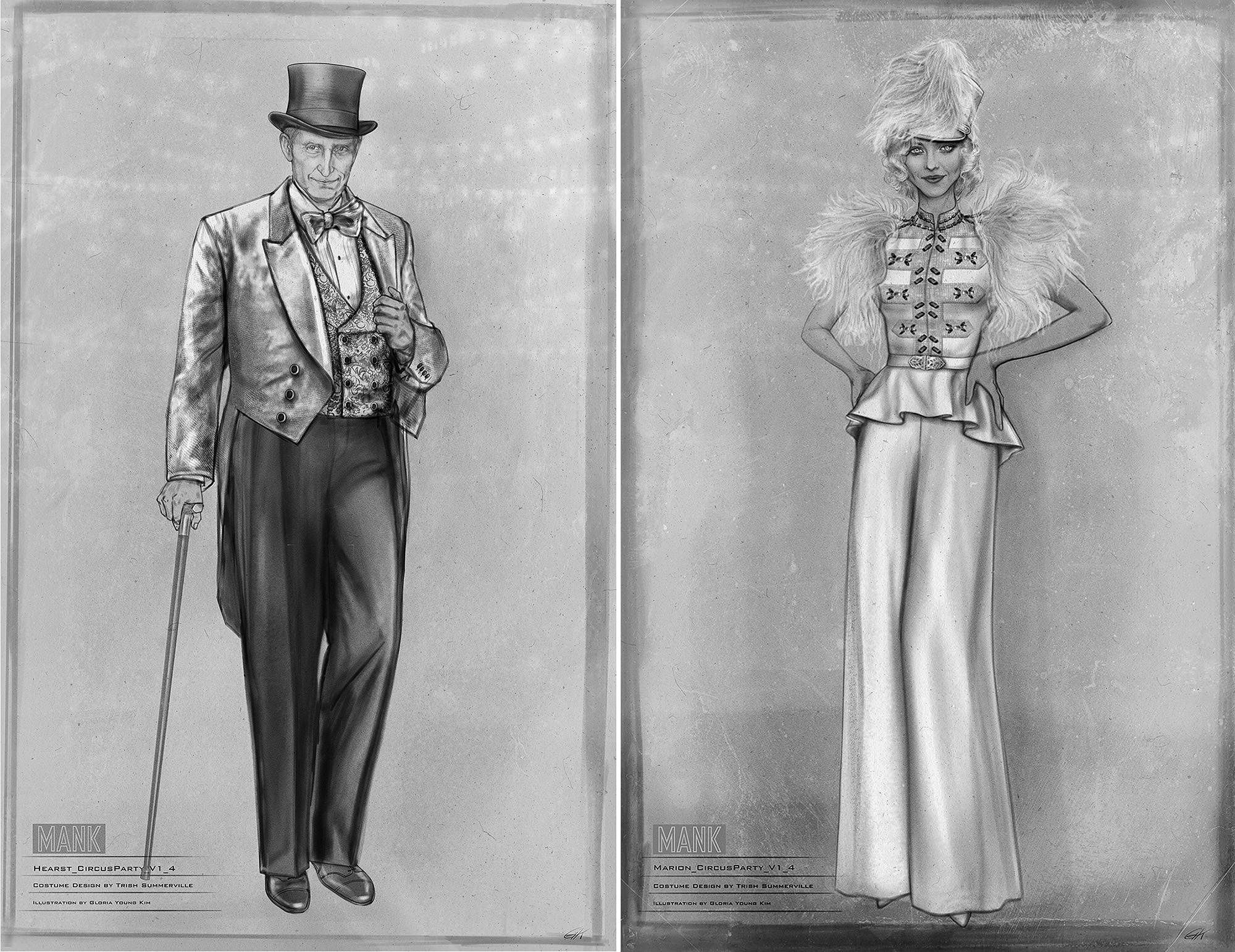
“I keep making this joke that it’s Fincher-vision because it’s not just black-and-white, it’s this really specific way that he’s going to light the film,” says costume designer Trish Summerville about the unique visual style of “Mank,” directed by David Fincher. The film tells the story of “Citizen Kane” writer Herman Mankiewicz, and it’s shot to resemble films of the 1930s and 1940s. That presented Summerville with equally unique challenges and opportunities. We spoke with her as part of our “Meet the Experts” costume designers panel. Watch our interview above.
“The black-and-white was the most challenging thing: figuring out how we wanted to make that work, doing different testing on clothing and fabrics … so we could see how it would read,” Summerville explains. “Even though you think you don’t need a color palette, you really do, because if not, when you’re looking at it with your naked eye on set, it becomes very jarring.” And understanding color was crucial for achieving the right effect in the finished product “so that when it read in black-and-white on the screen and on the monitors it didn’t just all come across as flat, it had dimension to it, sheens and tones.”
It helped that the film was portraying so many well-known figures with documented looks and styles — not just Mankiewicz, but Marion Davies, William Randolph Hearst, Louis B. Mayer, and more. “We could find things of [Mank] at work, on sound stages, and also at home,” Summerville says. “We even at one point found these images of him at one of his kids’ bar mitzvahs, so that was great, it was a whole family photo.”
But in a film with so many male characters, it was also important “to give each one of the men their own kind of characteristics and dress them towards who those characters really were … so that not everybody read as a navy suit in a room.” That research and detail, in collaboration with Fincher’s direction, Donald Graham Burt‘s production design and Erik Messerschmidt‘s cinematography, “all of it has these special touches that make you feel you’re transported to the 1930s.”
There are a lot of reasons to like “Mank.” 1. It’s great filmmaking. 2. It has an irresistible backstory: David Fincher wanted to pay tribute to his late father, Jack, by directing his screenplay; 3. It tackles a well-known topic (Hollywood in the 1930s-‘40s) from an unusual angle. 4. It’s not what people expected, always a good thing in a film.
It’s not about the making of the 1941 classic. “I hope this movie exists as more than just an addendum or footnote to ‘Citizen Kane,’ ” Fincher tells Variety. “I hope there is enough human behavior and an interesting enough look at humanity that it doesn’t require a master’s degree in film theory.”
Among other things, it is a character study of Herman J. Mankiewicz, including his risky decision to write “Citizen Kane.” It’s also about the times he lived in, and how events fed into his creativity.
Fincher says Gary Oldman doesn’t look like Mankiewicz, but has the writer’s disarming charm. “I needed an actor’s actor, to play someone who walks into a room and everyone would say ‘That’s the guy.’
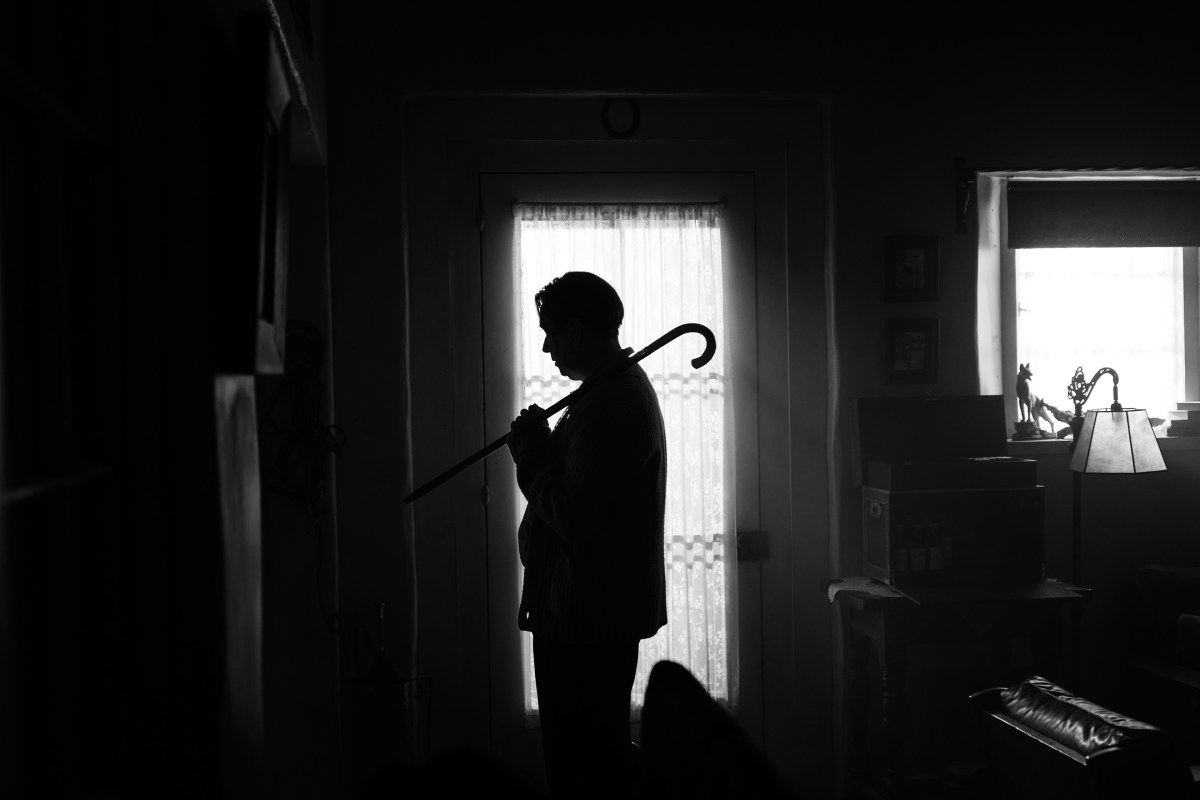
Herman Mankiewicz—a washed-up Hollywood screenwriter writing the first draft of Orson Welles’s 1941 biopic about William Randolph Hearst—may seem an unlikely hero for a 2020 biopic. He is rarely remembered today outside of cinephile circles, but in telling his story, David Fincher’s Mank delivers a loving tribute to Golden Age Hollywood films, a clear-eyed dissection of a company town, an unexpectedly timely depiction of 1930s fake-news shenanigans, and an unabashed homage to Citizen Kane, all wrapped up in a snappy, stylishly retro package.
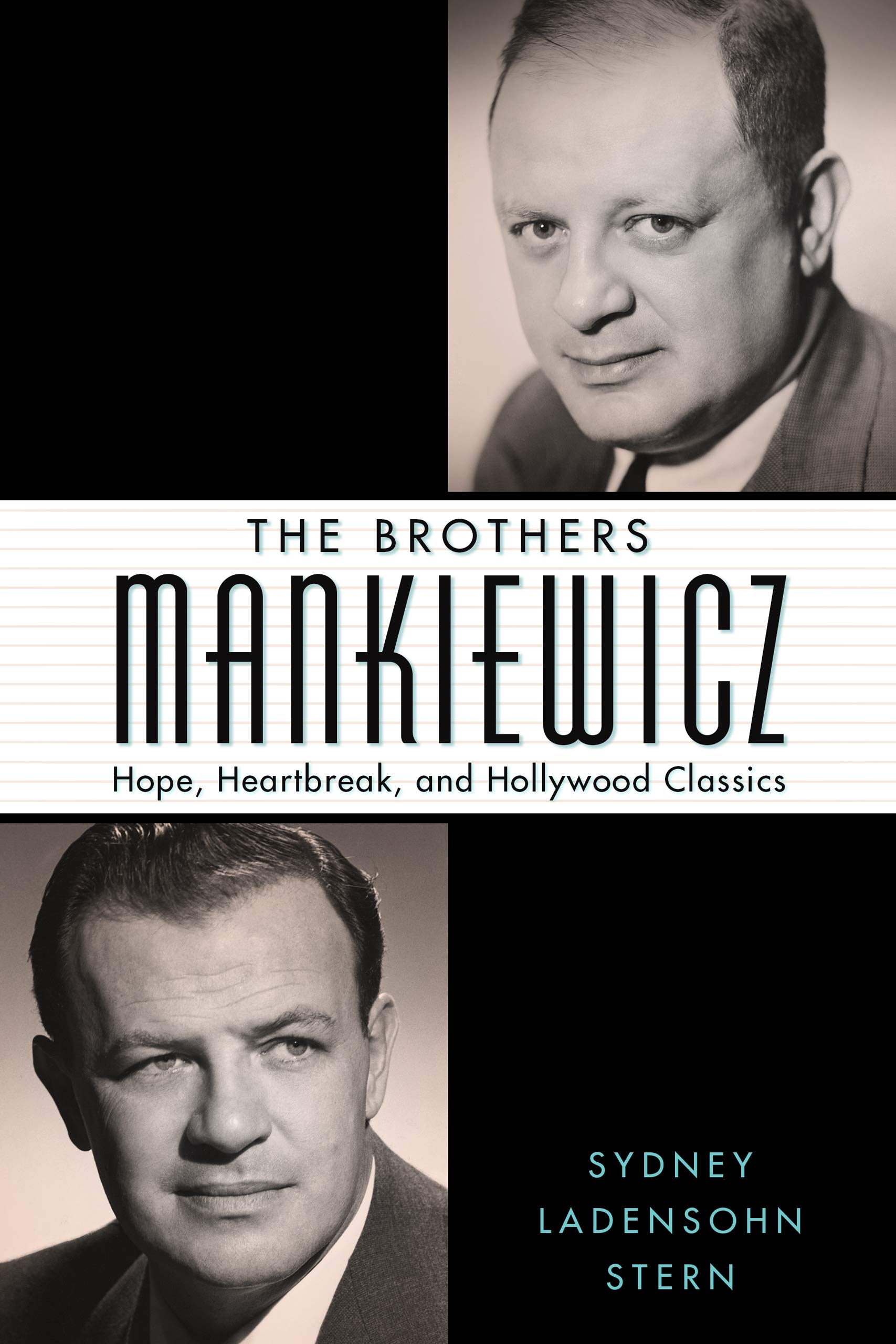
Welles is rightly revered as the twenty-five-year-old wunderkind behind Citizen Kane, but when Herman Mankiewicz went to Hollywood in 1926, he, too, was a promising young man. At twenty-eight, he was not only the New York Times’ assistant theater editor under George S. Kaufman and the New Yorker’s first theater critic, he was an aspiring playwright collaborating with both Kaufman and Marc Connelly. Unfortunately, Herman was also an alcoholic with a gambling problem and a penchant for getting himself fired. So, despite despising the movie business, his periodic attempts to escape back to his native New York and his friends in the Algonquin Round Table writers’ group failed, and he remained in Hollywood for the rest of his life.
At first he was successful. As head of Paramount’s writing department, he recruited journalist friends who created the wisecracking, irreverent sensibility of many 1930s movies. He produced the Marx Brothers’ Monkey Business and Horse Feathers. At Metro-Goldwyn-Mayer, David O. Selznick had Herman write an all-star adaptation of George Kaufman and Edna Ferber’s hit play Dinner at Eight. As the first writer assigned to The Wizard of Oz, he objected to adapting the book, then said that if the studio insisted, they should film Oz in color and shoot the Kansas sequences in black and white, a suggestion that led to the movie’s iconic use of sepia.
Mank begins soon after that, with Herman on his way east to take one more stab at rekindling his newspaper career when fate intervenes in the form of Orson Welles. Citizen Kane revitalized Herman’s career in the 1940s, but he spiraled down again, dying in 1953 at the age of fifty-five.
After that, he was largely forgotten until February 1971, when the New Yorker published a two-part, 50,000-word piece by Pauline Kael, in which she wrested away screenplay credit from Orson Welles and handed it almost entirely to Herman. Kael’s inaccurate and unfair account was actually an attempt to rebut auteur theory critics by arguing that Citizen Kane was not the product of one man’s singular genius and vision, but rather an example of the studio system at its best. Kael’s claims on Herman’s behalf were so hyperbolic and her dismissal of Welles so outrageous that although her arguments were effectively debunked at the time, Welles’s defenders have been attacking Herman ever since.
In October 2019, I published a biography of Herman and his younger, more successful brother, writer-director Joseph L. Mankiewicz (All About Eve, Cleopatra), and after living with Herman in my head for a decade or so, I had mixed feelings about the prospect of a David Fincher biopic. Like most biographers, I had become proprietary about my subjects, and though I imagined a movie would raise Herman’s profile, film is such a powerful medium that I knew no matter how inaccurate it might be, Fincher’s concept and Gary Oldman’s portrayal would become the prevailing version of Herman for the foreseeable future. To my immense relief, they cared very much about accuracy. So much so, in fact, that the first time I saw Herman, Joe, and Herman’s wife, Sara, up on the screen and heard them saying many of the same things they say in my book was an incredibly moving experience. They were the Herman, Joe, and Sara I had imagined. It was surreal in a good way.
David Fincher has actually been thinking about Herman decades longer than I have. He acquired his love of movies from his late father, journalist Jack Fincher, and because the two revered Citizen Kane above all, David was interested enough to seek out Kael’s piece while he was still in junior high school. The notion that Herman’s Marx Brothers sensibility and newspaper background fed into Citizen Kane intrigued him, so when Jack retired around 1991 and wanted to write a screenplay, David suggested he consider Herman as a subject. Jack liked the idea, and over the years, he wrote draft after draft while David tried to get it made. It took almost three decades to find a producer, mostly because of David’s insistence that he shoot in black and white. By the time Netflix assented, Jack, who died in 2003, did not live to see the final result. David dedicated Mank to his father.
When director David Fincher called to tell costume designer Trish Summerville that his long talked-about film “Mank” — starring Gary Oldman as “Citizen Kane” screenwriter Herman J. Mankiewicz — had gotten the green light, she knew it was destined to be “smart, funny, poignant, beautiful; it would tick all the boxes!”
“I definitely jumped at the chance,” says Summerville, who worked with Fincher on numerous other projects, though never before on a black and white feature film. “Besides a great story, with David I knew it was going to be incredible. I love working with him, and aside from this, he’s one of my favorite humans.”
David Fincher and Ren Klyce came of age during a seminal time for Hollywood: when the pair were just kids, a group of ’70s filmmakers was reshaping what it meant to make movies, right from the pair’s native Bay Area. In a biographical detail almost too perfect to be true, George Lucas rented a house in Marin County to edit his “THX 1138,” that just so happened to be located right next door to the Klyce family’s home. A single suburban lawn is all that separated a then-9-year-old Ren from the great Walter Murch, just as he was starting to change modern movie sound forever, work he’d continue throughout the decade with another NorCal auteur, Francis Ford Coppola. And it would be on a Lucas-produced animated feature, “Twice Upon a Time,” that future sound designer Klyce would meet his Coppola, a then-19-year-old Fincher.
Over the last 25 years, as Hollywood has utilized the multi-channel surround technology pioneered by Murch to create bombastic soundtracks that all too often mask a lack of craft, Klyce has helped Fincher explore the subconscious underbelly of his own films, constantly refining how sound can be used to shape a viewer’s emotional response.
“To me, sound design is not about 96 channels all at 11, and two side cars giving you this sound pressure-gasm; to me, it’s very much about the detail and the nuance and maybe things that you wouldn’t even be aware that you heard until the second or third time you saw it,” said Fincher in an interview about his collaboration with Klyce. “I can’t talk more enthusiastically about someone [Klyce] I feel has very subtly pushed what sound designers do.”
Mehruss Jon Ahi and Armen Karaoghlanian January 13, 2021 Interiors
David Fincher’s Mank (2020) depicts 3 incredibly unique locations in California with a multitude of interior and exterior architectural spaces. The visual presentation of the film, combined with the Art Direction and Set Decoration, creates a masterful, multifaceted level of Production Design that is rarely seen in cinema. It is a film that warrants multiple viewings and its attention to architectural details should be commended.
In an exclusive interview with Interiors, we spoke with Donald Graham Burt, who is the Production Designer for Mank.
INT: You’re a longtime collaborator of David Fincher‘s but what was it about Mankspecifically that interested you in taking on the project?
DGB: First and foremost it was an opportunity to work on a project that was a period Los Angeles project – and even more specifically a period project about the film industry. To be able to delve into the history of the studios and the roots of the industry in its early years in Los Angeles – when portions of the city were still undeveloped – was an experience to cherish. David’s projects are always of high caliber and there is a professional level at which he works that is rewarding to be a contributor to.
With his transfixing digital black-and-white cinematography, DP Erik Messerschmidt, ASC, breathes gorgeous life into the world of 1930s Hollywood in Mank, David Fincher’s vivid retelling of the genesis of Citizen Kane and the tumultuous partnership between screenwriter Herman J. Mankiewicz and director-star Orson Welles.
Messerschmidt joined us for an extended conversation to discuss the craft behind Mank, the legacy of Citizen Kane, and the work of visualizing Hollywood’s ideas of itself. The discussion will be moderated by J.D. Connor, Associate Professor of Cinematic Arts at the University of Southern California.
Film at Lincoln Center Talks are presented by HBO.







 The Fincher Analyst