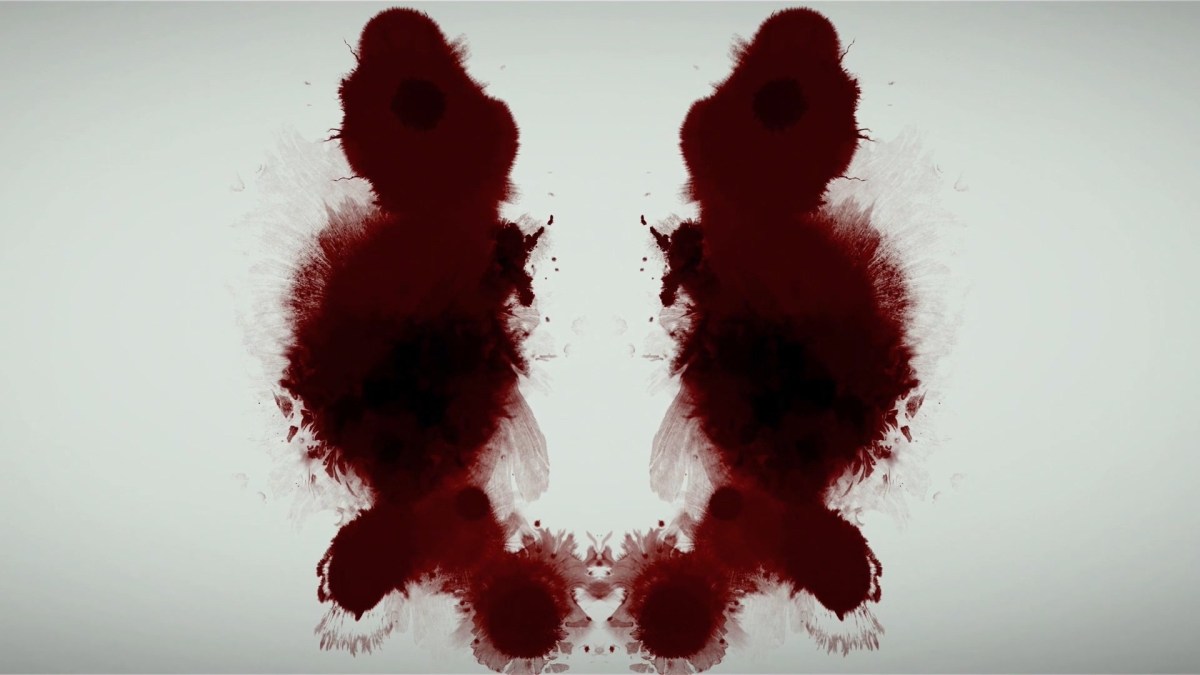
The MINDHUNTER Teaser Blood Animation by Joe Fleming

JoeMotion.tv

Joe Fleming is a motion designer and animator based in New Orleans, LA. Originally from Omaha, NE, Joe has always had a passion for art and design. He developed his craft while studying Graphic Design at Loyola University in New Orleans. He fell in love with the city and its rich creative scene. While working with clients and colleagues from around the world, he is able to draw from their unique styles and techniques.

MINDHUNTER

Art Direction & Design: Neil Kellerhouse
Edit + Sound + Color: Kirk Baxter, Studio Exile
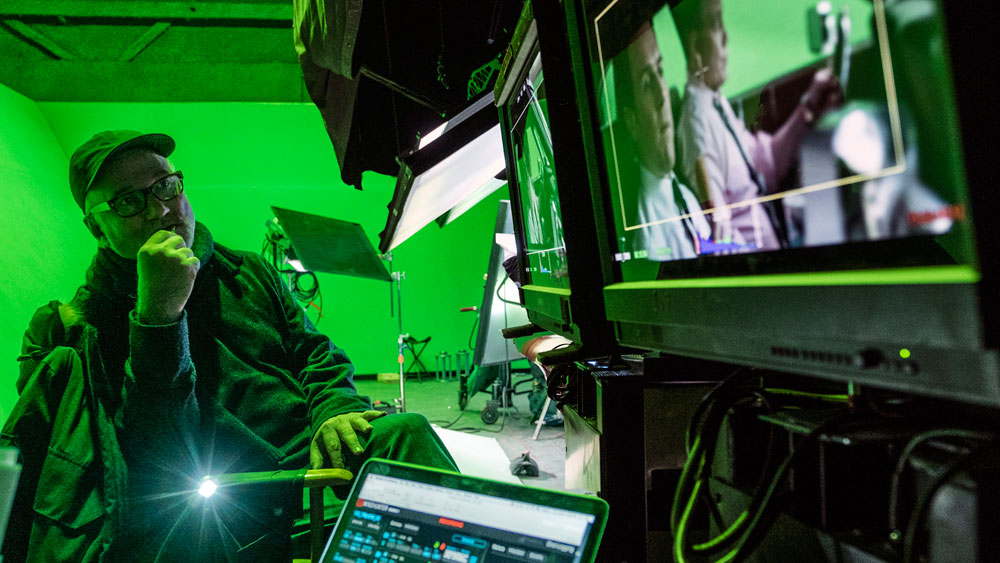
Blood + Logo Animation: Joe Fleming

2017-03-02 Joe Fleming - Mindhunter. Teaser Animation

2017-03-02 Joe Fleming - Mindhunter. Teaser Animation 01

2017-03-02 Joe Fleming - Mindhunter. Teaser Animation 07

Click to enlarge:

(Joe Fleming, JoeMotion.tv)

Hooked on Sonics: David Fincher, Composer Jason Hill Bend Sound and Time on ‘Mindhunter’

10/14/2017 by Paula Parisi
Billboard

The year is 1972. On May 7, Tony Orlando & Dawn is in the middle of a four-week ride atop the Billboard Hot 100 with “Tie a Yellow Ribbon Round the Old Oak Tree,” and Edmund Kemper is indicted on eight counts of murder in Santa Cruz, Calif. Welcome to the world of David Fincher’s Mindhunter, a circa 1970s crime drama that debuts on Netflix this weekend.

Set within the FBI’s elite Behavioral Sciences Unit, the show delves into the psyche of high-profile serial killers because, “How do we get ahead of crazy, if we don’t know how crazy thinks?” In other words, as sophisticated a study in depravity as audiences are likely to see outside of a theater showing a Fincher film, and he wanted the music to match.

Fincher’s facility with score has been validated with an Oscar, a Grammy and two noms for his past four films, which include Gone Girl, The Girl with the Dragon Tattoo, and The Curious Case of Benjamin Button. House of Cards, another show Fincher executive produces for Netflix, has accumulated five Emmy nominations for composer Jeff Beal (who won this year). And he famously convinced Trent Reznor to score 2010’s The Social Network, resulting in Oscars for the Nine Inch Nails principal and collaborator Atticus Ross. But Fincher is surprisingly modest about accruing any of that acclaim.

“I just hire people that are great and get out of their way,” says the man who was the enfant terrible of ’80s music video.

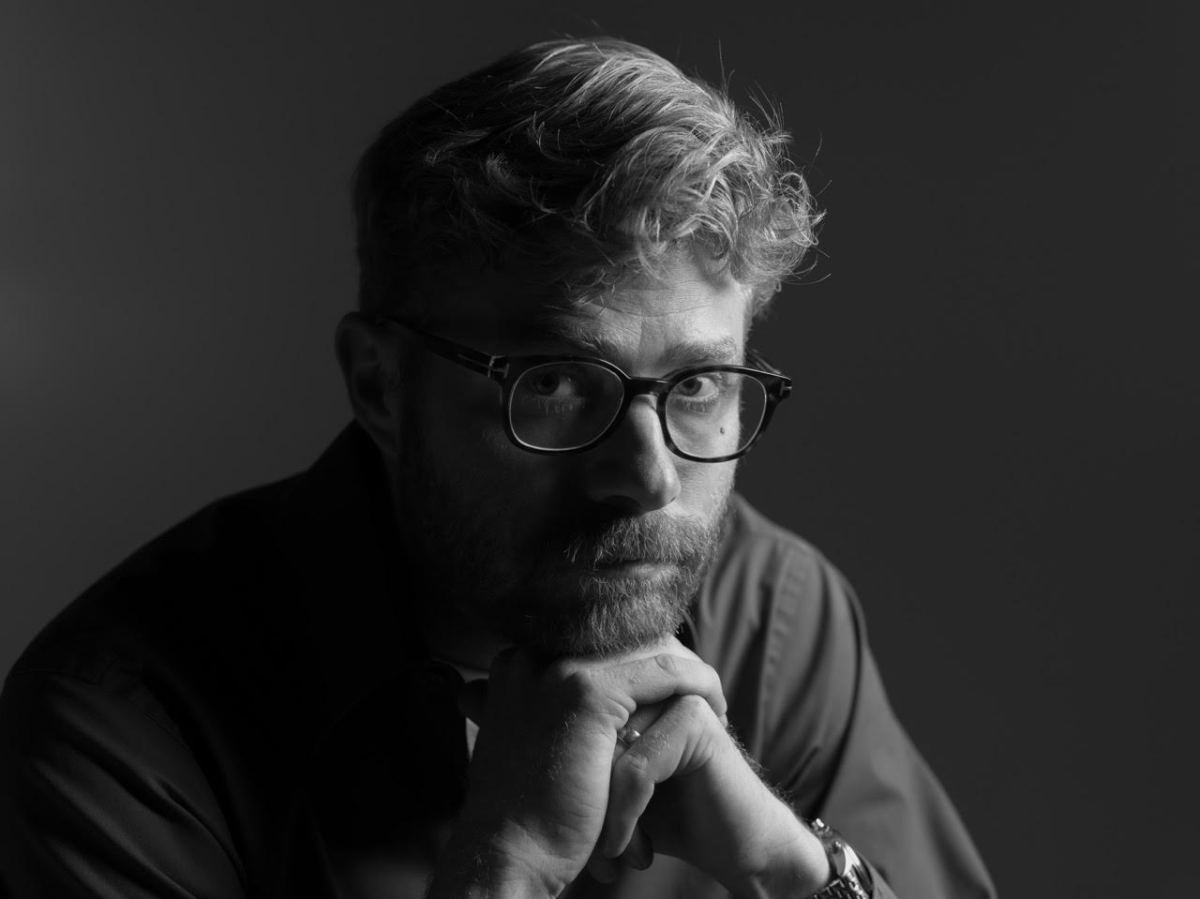
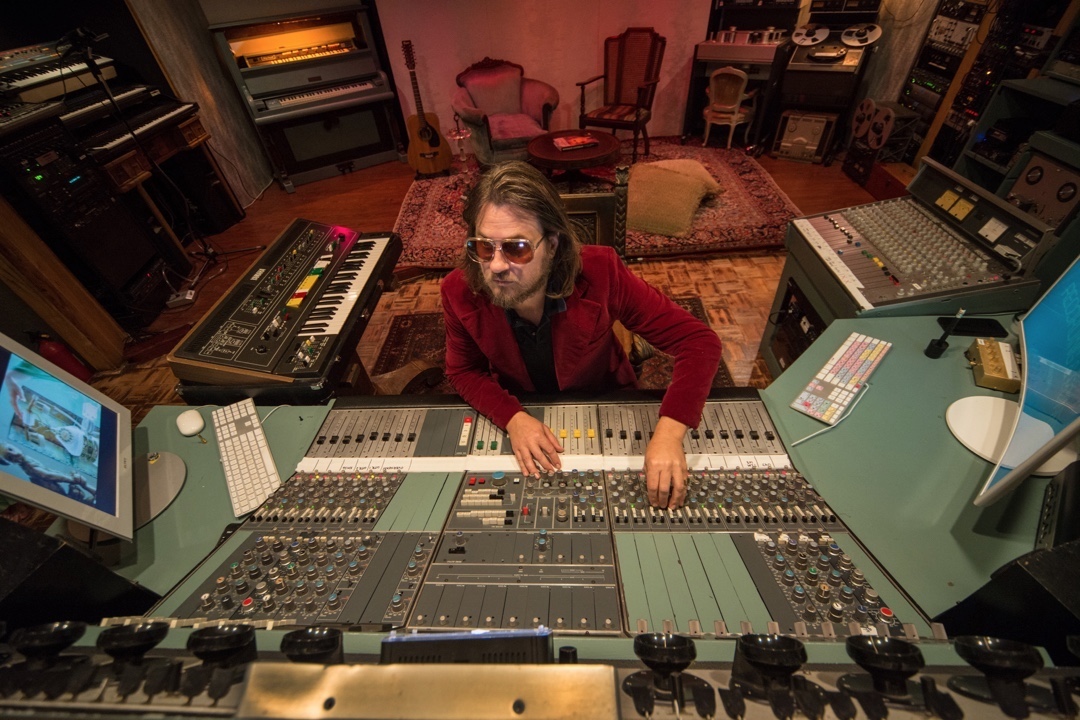
The muted, subterranean Mindhunter soundtrack is composed by erstwhile alt pop comet Jason Hill — he soared, he shined, he fell short of being a star with bands Louis XIV and Vicky Cryer. But the 42-year-old rose to the occasion for Fincher, who asked him to craft a score that wouldn’t sound, literally, like music.

Read the full profile

Why David Fincher’s ‘Mindhunter’ DP Believes ‘There Are No Rules’ in Lighting

Hawkins DuBois
October 13, 2017
No Film School

‘Mindhunter’ DP Erik Messerschmidt shot the darkly intimate show with custom-made RED Xenomorphs.

When it comes to cinematography, every filmmaker, every movie or show, and every shot is different. While there may be a “textbook” way to approach a scene, there is no “correct” way. Even so, patterns and styles always emerge, and few filmmakers have developed a look as distinctive as David Fincher‘s. While Fincher is best known for his mysterious and gritty films, ranging from Fight Club to The Social Network, he’s recently ventured into the realm of streaming television, where he has produced and directed the critically-acclaimed House of Cards, and now seeks to expand on that success with the recently-released Mindhunter for Netflix.

Mindhunter tells the story of a pair of FBI agents, played by Jonathan Groff and Holt McCallany, as their work in the Elite Serial Crime Unit leads them down a dark path where they interrogate and explore the mindsets of serial killers and rapists. It’s another psychologically tense world from the mind of Fincher, and a significant part of what brings this world to life is the work of cinematographer Erik Messerschmidt, who keeps audiences grounded and in the moment.

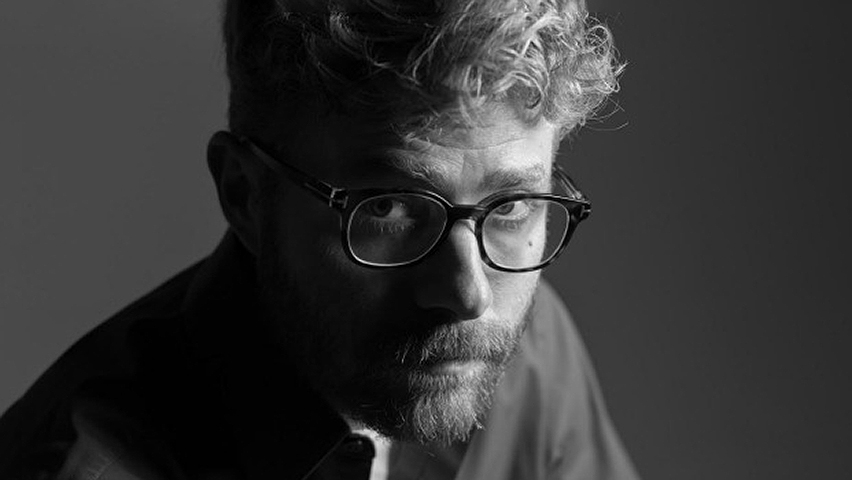
Messerschmidt, a longtime gaffer in the industry, built up years of knowledge while working alongside some of the best DPs in Hollywood, and his unique background allowed him to creatively solve problems and accentuate story with his camerawork. No Film School recently sat down with Messerschmidt to talk about his career and Mindhunter, including his decision to come up through the lighting department, mastering crew-management skills, and how to incorporate natural lighting into your shots.

Read the full interview

Exclusive: DP Claudio Miranda on ‘Only the Brave’, Shooting Fire, and David Fincher Stories

By Adam Chitwood
October 12, 2017
Collider

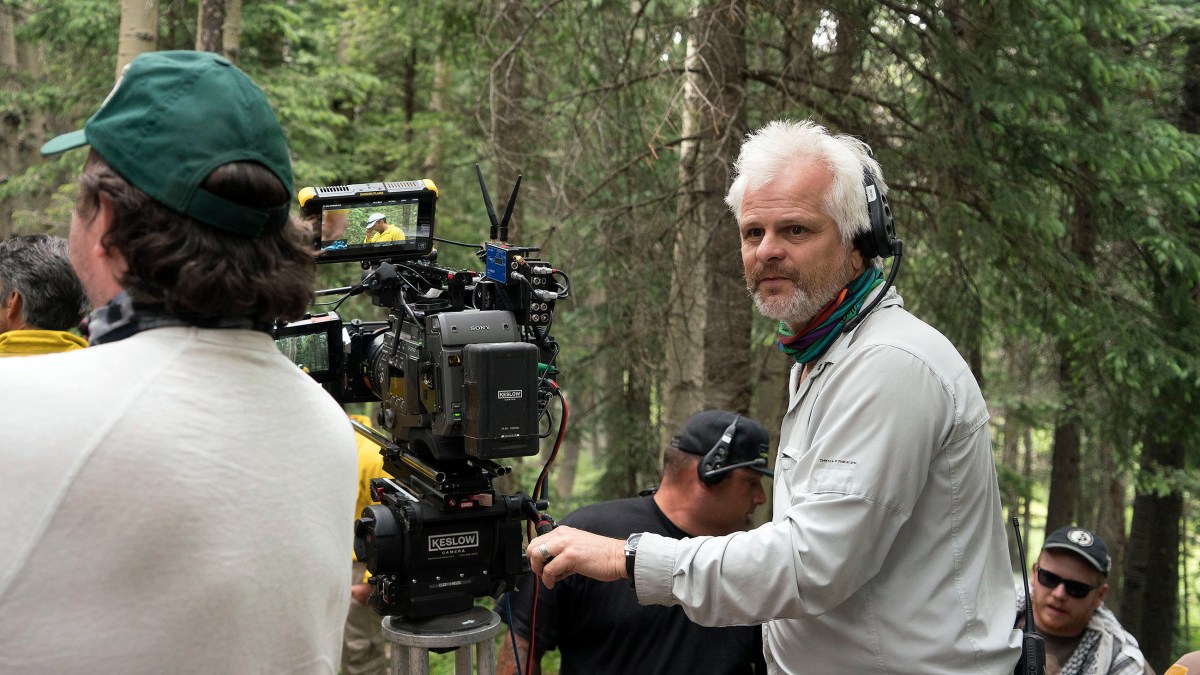
Claudio Miranda has had an interesting career thus far. After working as a gaffer on films like Se7en and Fight Club, filmmaker David Fincher (with whom he’d worked on a few commercials and music videos as a cinematographer) asked him to serve as the cinematographer for the wildly ambitious 2008 film The Curious Case of Benjamin Button. That VFX-intensive effort scored Miranda an Oscar nomination and led to him then shooting visually breathtaking movies like Tron: Legacy and Oblivion, and of course Life of Pi, for which he won the Best Cinematography Oscar.

Miranda’s latest film reteams him with director Joseph Kosinski for the third time and also marks something of a departure—the true story drama Only the Brave. The film revolves around one unit of local firefighters who battled the Yarnell Hill wildfire in 2013 to tragic results. Josh Brolin leads a cast that includes Miles Teller, Jeff Bridges, James Badge Dale, Taylor Kitsch, and Jennifer Connelly.

With Only the Brave hitting theaters on October 20th, I recently got the chance to have an extended conversation with Miranda about his work on the film. He talked about his working relationship with Kosinski, the challenges of capturing real fire onscreen, shooting on location, and his approach to shooting realistic visual effects.

But I’m also a big fan of Miranda’s work in general, so the conversation veered off into his early days working as a gaffer for Fincher, and we discussed his “trial by fire” experience shooting Benjamin Button as well as what it’s like to work with Fincher and how his gaffer work with other cinematographers like Harris Savides and Dariusz Wolski has shaped his approach. Finally, with Kosinski next set to direct the Top Gun sequel Top Gun: Maverick, I asked Miranda what the prep has been like on that movie so far.

It’s a wide-ranging and refreshingly candid conversation that hopefully admirers of Miranda’s work, or just those curious about cinematography in general, will find illuminating. I certainly had a great time chatting with the talented DP.

Read the full interview

John Carroll Lynch on playing the president, a killer clown, and the Coen brothers’ warmest character

A.A. Dowd
9/27/2017
A.V. Club

Welcome to Random Roles, wherein we talk to actors about the characters who defined their careers. The catch: They don’t know beforehand what roles we’ll ask them to talk about.

The actor: Over two decades of big- and small-screen work, John Carroll Lynch has become one of Hollywood’s consummate “that guy” character actors, capable of punching up the margins of whatever he’s in. Theatrically trained, the Colorado native made his first big impression as eternally supportive husband Norm Gunderson in the Coen brothers’ Oscar-winning Fargo, before scoring a reoccurring role as crossdressing older brother Steve on The Drew Carey Show. Since then, he’s carved out an eclectic body of film and television supporting performances, playing his imposing stature for both paternal, Gundersonian decency (such as during a moving one-episode appearance on The Walking Dead) and for supreme, skin-crawling creepiness (like in Zodiac or The Invitation). Lynch has also worked with several major directors, from Martin Scorsese to Clint Eastwood to John Woo. Recently, he’s picked up the filmmaking bug himself; his directorial debut Lucky, starring the late Harry Dean Stanton in one of his final roles, opens in New York and Los Angeles this Friday, before expanding into further markets.

[…]

Zodiac (2007)— “Arthur Leigh Allen”

First thing’s first. Is Arthur Leigh Allen the Zodiac Killer?

JCL: No, and the reason I don’t think so is twofold. First, in performing the role, David Fincher asked me to play it as an innocent man. [Pauses.] Until the end. [Laughs.]

AVC: Until that last scene with Robert Graysmith.

JCL: And then the other thing was… and this is going to sound like a weird defense, but… Arthur Leigh Allen was a pedophile. To get to be a pedophile, to really choose to do that, consciously in your life, it’s my belief that you have to run through some really severe walls of societal norms and morals. It has to be a mania, an obsession, of such grand proportions for you to ignore the health and safety of children to do it—I don’t see how you go, “I want to sleep with children and kill people.” The only way I can think of it not being that way is if he molested children—[Aside.] this is a horrible answer—and he realized that wasn’t it. He just thought it was. But I find that hard to believe. Now, that’s a terrible defense of Arthur Leigh Allen. He wasn’t the Zodiac Killer, he wasn’t a serial killer, because he was a pedophile. But I will say that the circumstantial evidence that Graysmith presented, and that David Fincher expanded upon during the making of the movie, is pretty overwhelming.

AVC: But there have been so many suspects over the years. People have made these iron, convincing cases against several people.

JCL: Sure. That’s what the movie’s about, isn’t it? I think that movie is about the virus of obsession. And I don’t think that’s stopped. The Zodiac isn’t the first one to do that, obviously. The first one I can think of us is the guy here [in Chicago]. The Devil In The White City.

AVC: Oh, right, with the death hotel. Holmes?

JCL: Yes, H.H. Holmes. That guy may be the first recorded one. Although Jack The Ripper was before that. But it’s like the myth of vampirism. There’s just something attractive to people about these men who see themselves as above humanity. To be released from the constraints of moral society. We might be seeing that play out in other ways.

AVC: David Fincher has this reputation as an intense perfectionist, sometimes demanding 50 takes to get a scene right.

JCL: As a person who came from the theater, I love that. It doesn’t bother me at all. The fact that he wanted to do it again was perfectly fine with me. I was also aware of it, so I didn’t take it personally. I didn’t think, “I suck now” because we were on 50. I think if you get to 50 with Clint Eastwood, you’re doing something wrong. [Laughs.] But Fincher is meticulous. He’s like the other masters I’ve worked with. They understand filmmaking to a degree that I could only dream of. And they are following their passion. This is a poor analogy, but Picasso was a cubist and went through a wide variety of movements in his career. He could have drawn figures better than anyone if he wanted to. He didn’t want to. So that’s what it’s like working with David Fincher. He’s after something. And it takes him 50 takes to get it.

AVC: He knows what he wants.

JCL: He knows what he’s looking for, and he knows how to get it. I also think he likes the performances of exhausted actors. He finds something interesting about that.

Read the full interview

‘Lucky’ director John Carroll Lynch talks Harry Dean Stanton’s final role

By Jason Fraley
September 26, 2017
wtop

Podcast: 28:04 min

WASHINGTON — He’s one of the most prolific character actors in Hollywood history, from “Cool Hand Luke” (1967) to “Alien” (1979), from “Paris, Texas” (1984) to “Repo Man” (1984).

Now, just days after his death at age 91, Harry Dean Stanton gives his final performance in the indie dramedy “Lucky,” marking the directorial debut of actor John Carroll Lynch (“Fargo”).

[…]

Who can forget his suspect in David Fincher’s “Zodiac” (2007)? His acting chops are on display in two scenes: first as he’s called into the police station where the cops remark, “Nice watch.” They don’t seem to notice the clue right under their noses: the watch is a “Zodiac” brand.

“[Fincher] did a great job,” Lynch said. “That [acting] foursome — Elias Koteas, Anthony Edwards, Mark Ruffalo and I — had one of the best days on set that I’ve ever had.”

His final scene is just as brilliant, as Jake Gyllenhaal’s Detective Robert Graysmith enters Lynch’s hardware store, engaging in a silent staredown that suggests he’s the killer.

“Graysmith so desperately needs to know,” Lynch said. “The scene is written like the end of ‘Moby Dick’ where Ahab is tied to the whale. Melville writes, ‘The whale looks at Ahab, and Ahab looks at the whale.’ That’s how I saw it. They recognize each other in that moment.”

Read the full interview

The Music of Jason Hill for David Fincher

Jason Hill (SoundCloud)

2014. “She” cover for the Gone Girl Teaser Trailer

Produced, arranged and mixed by Jason Hill. Featuring Richard Butler on vocals.

2015. Music for Videosyncrasy

6 tracks. Written, Performed, Produced and Mixed by Jason Hill.

2017. Mindhunter (Netflix)

Big Score: Fincher Plucks Obscure Jason Hill as ‘Mindhunter’ Composer

Newcomer Jason Hill (front) landed a plum assignment, composing music for David Fincher’s new Netflix series Mindhunter.

By Paula Parisi on August 3, 2017
Max the Trax

Unknown yesterday, Jason Hill has landed in the Hollywood music mix with a bang, landing composer duties on David Fincher’s new Netflix series Mindhunter, premiering Oct. 13. Multi-instrumentalist Hill has spent the past 15 years kicking around the rock scene, performing with members of The Killers and The New York Dolls in various configurations, led his own band, Louis XIV, and was also in Vicky Cryer.

Read the full article


View this post on Instagram

Mindhunter

A post shared by JASON HILL (@jasonhillofficial) on

Thanks to Dante

Steven Soderbergh: ‘There’s no new oxygen in this system’

The American director discusses his long-awaited return to feature filmmaking with Logan Lucky.

Interview: Matt Thrift
Illustration: Robert Manning
Little White Lies

It’s been four years since Steven Soderbergh announced his retirement from filmmaking, slamming the door on his way out with an impassioned cri de coeur on the state of the industry at the San Francisco Film Festival. In the event, it turned out to be more of a working-vacation, what with his 2013 TV movie, Behind the Candelabra, and two seasons of The Knick released in the interim. Now he’s back on the big screen with Logan Lucky, one of his best films to date, bringing with it a new fight against the system with the film’s experimental distribution model. We sat down for a long chat with American cinema’s most restless workaholic, the original Sundance Kid.

Read the interview

Thanks to Joe Frady

Art of the Title: Angus Wall & Elastic

Art of the Title: Angus Wall

Art of the Title: Elastic

In Studio Partners:

Design: Elastic
Editorial: Rock Paper Scissors
VFX: a52

Still Image: Joe LaMattina

The One Thing Game of Thrones, Westworld, and The Crown Have in Common

Along with shows including American Gods, The Defenders, True Detective, and more, they’ve all got gorgeous, elaborate opening credits designed by Elastic.

By Nick Romano
August 24, 2017
Vanity Fair, Hollywood

How do you set the tone for the sprawling world of Game of Thrones in just under 120 seconds? Ask Angus Wall. For the past six years, the designer—who created the HBO drama’s striking main-title sequence—has been devising new bits of opening animation for Thrones to coincide with the drama’s plot progression. Viewers know within the first two minutes of an episode whether they’re heading to Winterfell, King’s Landing, or beyond the Wall—where the night is truly dark and full of terrors. This year, the show’s plot has taken fans to new and long-absent locations including Dragonstone, Oldtown (where Sam studies to be a maester), and Eastwatch-by-the-Sea, which means the sequence itself has also had to evolve.

Read the full article

Elastic.tv
Elastic on vimeo