We sit down with Ren Klyce to talk about his work as Supervising Sound Editor and Re-Recording Mixer on David Fincher’s latest film Mank. We go down a rabbit hole on how he created the ‘patina’ over the entire soundtrack to make it feel like it was made in the depression era. It was no easy task….
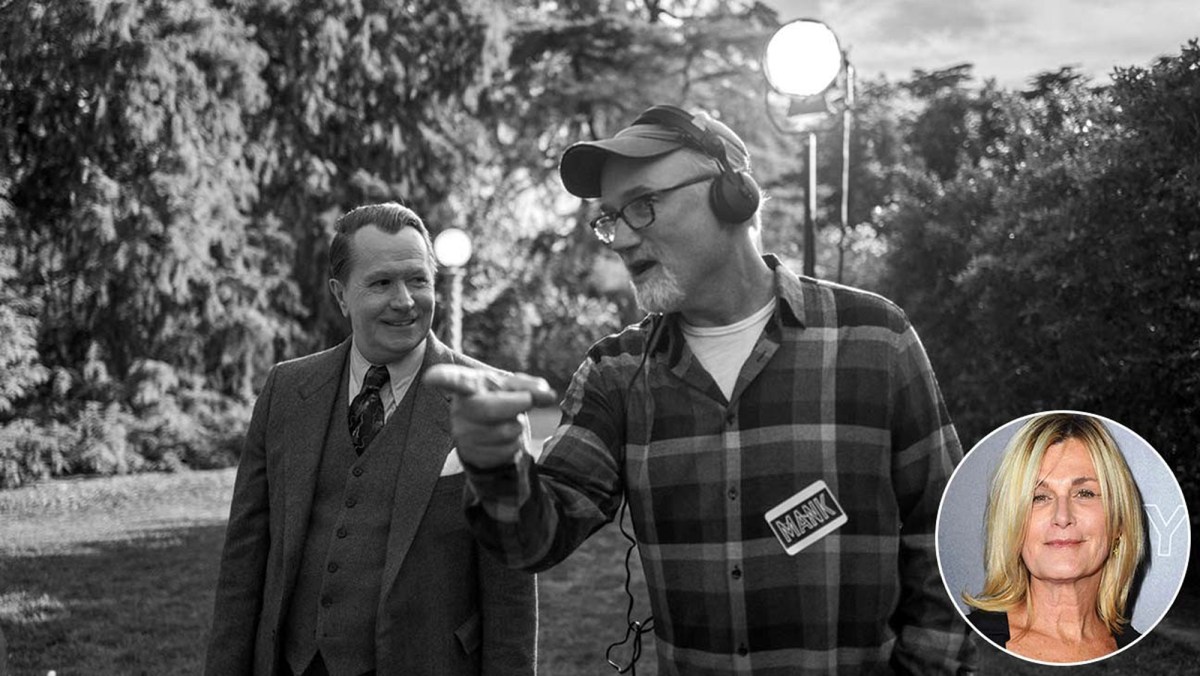
David Fincher and Ren Klyce working on the soundtrack for Mank
The reverb send fader moves sent with the film for foreign versions of Mank
“Mank” is one of 2020’s most technically dazzling films. David Fincher‘s perfectionism transported us back to the Golden Age of Hollywood to tell us the story of Academy Award winning screenwriter Herman Mankiewicz (played by Gary Oldman) and the film has been hailed as one of the year’s best, most recently being rewarded as one of the Top 10 films of the year by the American Film Institute (AFI). Many members from the film’s production were kind enough to give us a behind-the-scenes look into the making of the film including Academy Award-nominated sound designer Ren Klyce, Costume Designer Trish Summerville & Co-Producer/VFX Producer, Peter Mavromates.
The Next Best Picture Podcast is proud to be a part of the Evergreen Podcasts Network. Listen to the podcast:
Please take a moment to review us on Apple Podcasts here. And if you’re feeling generous, you enjoy what you hear and want to hear more, please help support us on Patreonfor as little as $1 a month and you’ll receive some exclusive podcast content.
Control. When six film directors got together virtually for The Envelope Roundtable in December, the issue of control — both when you have it and when you don’t — came up again and again.
Regina King, the Oscar-, Emmy– and Golden Globe-winning actress who makes her feature debut as director with “One Night In Miami,” a fictional telling of the real-life night that Malcom X, Cassius Clay, Jim Brown and Sam Cooke spent together in a motel room, described herself as “a control enthusiast.”
In explaining how she moved from making “Nomadland,” a stripped-down road movie starring Frances McDormand, to the upcoming Marvel action ensemble “Eternals,” Chloé Zhao said she reflected on an older interview with David Fincher, where he spoke about balancing between having a plan and allowing things to happen on set.
For his part, the notoriously exacting Fincher, director of “Mank,” the story of how Herman J. Mankiewicz came to write the script that would become “Citizen Kane,” spoke candidly about how control is an illusion, “the greatest fallacy of our profession,” whereas Aaron Sorkin, director of the 1960s historical drama “The Trial of the Chicago 7” and an Oscar winner for his screenplay to Fincher’s own “The Social Network,” admitted how intimidated he was to be on a panel as a director alongside his former collaborator.
The British Paul Greengrass, who made the elegiac post-Civil War-set western “News of the World,” added that for him, “the pitiless exposure of your weaknesses is the essence of directing.”
When asked how he came to a particularly bold creative decision in making “Da 5 Bloods,” his drama about Black soldiers who fought in Vietnam, Oscar winner Spike Lee simply referred to trusting his four decades of moviemaking experience.
All six filmmakers also shared their thoughts on the future of the film industry and how they can’t wait for audiences to return to movie theaters.
David Fincher’s black and white epic, Mank, revisits the storied Hollywood era of the late 1930s when Orson Welles was writing what would go down in history as one of the best films of all time, Citizen Kane. But did he write it alone or with the help of Herman Mankiewicz, a once sought after screenwriter fallen prey to twin drinking and gambling problems? In Fincher’s version of events, based on a screenplay by his father, Jack Fincher, Mank the man (Gary Oldman) may have burned through the industry’s goodwill, but he was indubitably a co-writer on the film. However, the question isn’t central to Mank the movie.
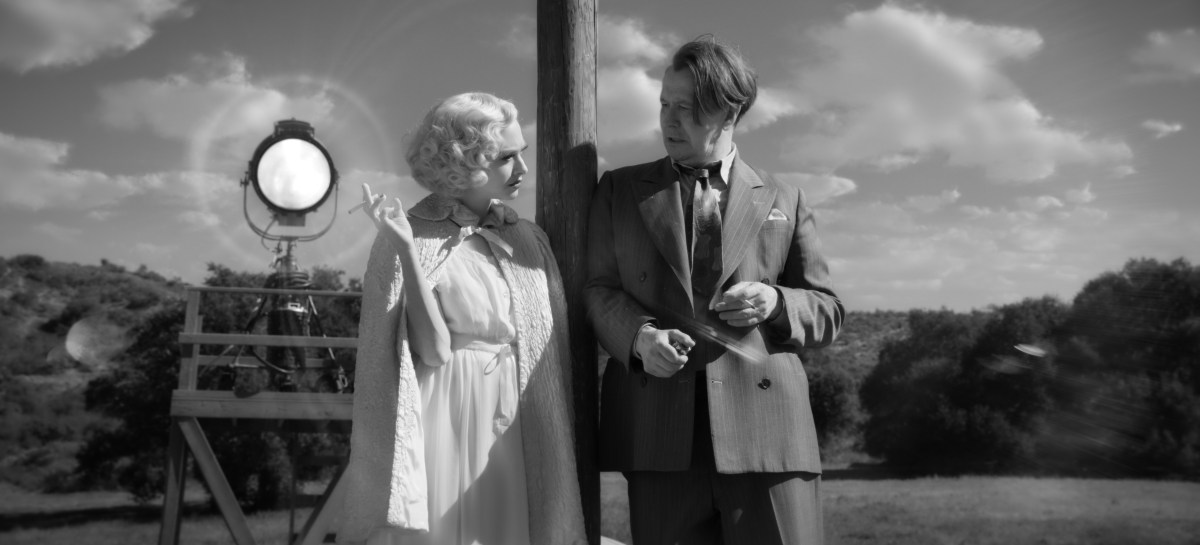
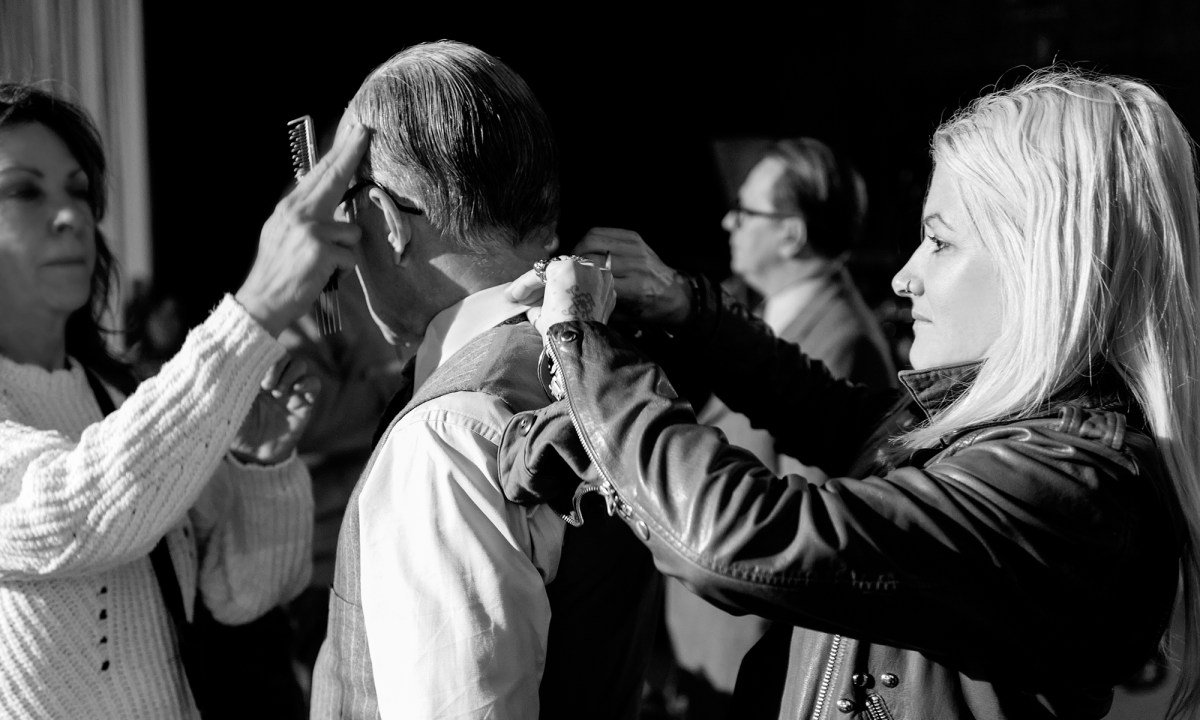
Instead, the film’s focus is a gloves-off look at the gilded lives of Depression-era honchos Louis B. Mayer (Arliss Howard), William Randolph Hearst (Charles Dance), and Irving Thalberg (Ferdinand Kingsley), and the effect their political meddling and pay machinations have on the vast army of writers, grips, costume designers, and makeup artists who work beneath them. For Mank costume designer Trish Summerville (Red Sparrow, The Girl With the Dragon Tattoo), “one of the things I really enjoyed about the film was that we got to dress every walk of life of the 30s and 40s.” Though much of the film is set in an out-of-the-way house where Mank has been set up to heal from an injury and dry out, and spends most of his time in bed in a robe, Summerville’s work spans ample plebeian daywear to Marion Davies’s (Amanda Seyfried) furs (a high-end faux fur hand-painted to mimic silver mink) and gowns and the sharply tailored suits favored by Los Angeles power brokers of the day.
Our latest guests on Soundtracking are a duo Edith’s been chasing since we started this podcast, so it’s an absolute thrill to finally lure them on.
Trent Reznor and Atticus Ross burst onto the film-composing scene with their score for David Fincher’s The Social Network, for which they won an Oscar in 2010. The trio have since joined forces on The Girl With The Dragon Tattoo and Gone Girl.
Trent and Atticus’s most recent work can be heard on Fincher’s Mank and Pete Docter’s Soul, which you can watch right now on Netflix and Disney + respectively.
The two films couldn’t be more different and had wildly contrasting musical requirements – which is testimony to the range of their talents.
Laray Mayfield worked with the two-time Oscar-nominated director on his biggest features and has developed a great relationship as well as a shorthand with the auteur.
When he came back for his first feature film in a half-decade, Mank, David Fincher brought his trusted casting director Laray Mayfield into the fold. Over the past few decades, Mayfield has cast nearly all of the features (and even Fincher’s foray into television, Netflix‘s Mindhunter) that make up Fincher’s portfolio, including Fight Club, The Social Network and Gone Girl. The pair is quick to praise each other’s style, work ethic and personality.
“Our working relationship is amazing. I am so fortunate to have worked with Dave for as long as I have. We have been working together since 1986. It is creative, lively, challenging in the best sense of the word and warm because we are also dear friends,” Mayfield says of Fincher. “We have a shorthand that has been developed over 35 years. I do usually have an idea of what David will like because we like the same things in actors, but I try to surprise him because Dave always gives me a safe place to experiment and really think outside the norm.”
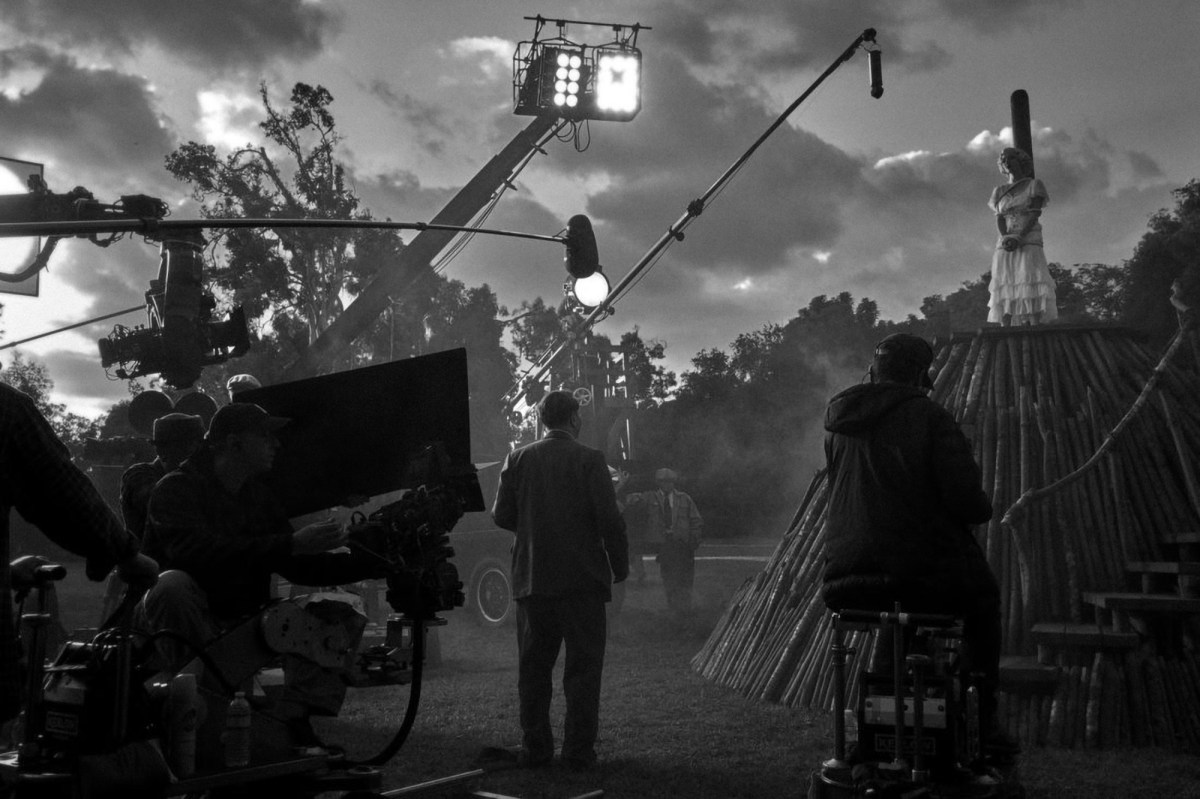
“Mank,” David Fincher’s new Hollywood film about old Hollywood, pays homage to its source material by shooting in black and white. But if you ask its cinematographer, Erik Messerschmidt, the Netflix feature is anything but a throwback.
How was it that you came to work on “Mank”?
I have worked with David Fincher for several years. We had done the television show “Mindhunter” together. We had developed a really good working relationship and a friendship. I met him on the film “Gone Girl”; I was the gaffer on “Gone Girl,” and I initially met David there. After we did “Mindhunter” together, we had a really good shorthand, and I made it my business to really align myself and try to figure out what it was that David wanted, and try to support him as best as I could. He and I see the world, I think, in a very similar way, at least visually. So it was very easy to be in sync in terms of which decisions are needed. We’re very rarely in opposition, and when we are, it’s a constructive one. I was so thrilled to be invited; it was like a dream.
David Fincher’s Mank follows Herman Mankiewicz during the time he was writing the classic film Citizen Kane. Mank, as he was known, wrote or co-wrote about 40 films, often uncredited, including the first draft of The Wizard of Oz. Together with Orson Welles, he won an Oscar for the screenplay of Citizen Kane, but it’s long been disputed whether or not he, rather than Welles, actually did the bulk of the work on the screenplay.
The script for Mank was penned decades ago by David Fincher’s father, Jack, and was brought to the screen thanks to Netflix this past year. Fincher deftly blends two parallel storylines: Mankiewicz’s writing of Kane during his convalescence from an accident and his earlier Hollywood experiences with the studios, as told through flashbacks.
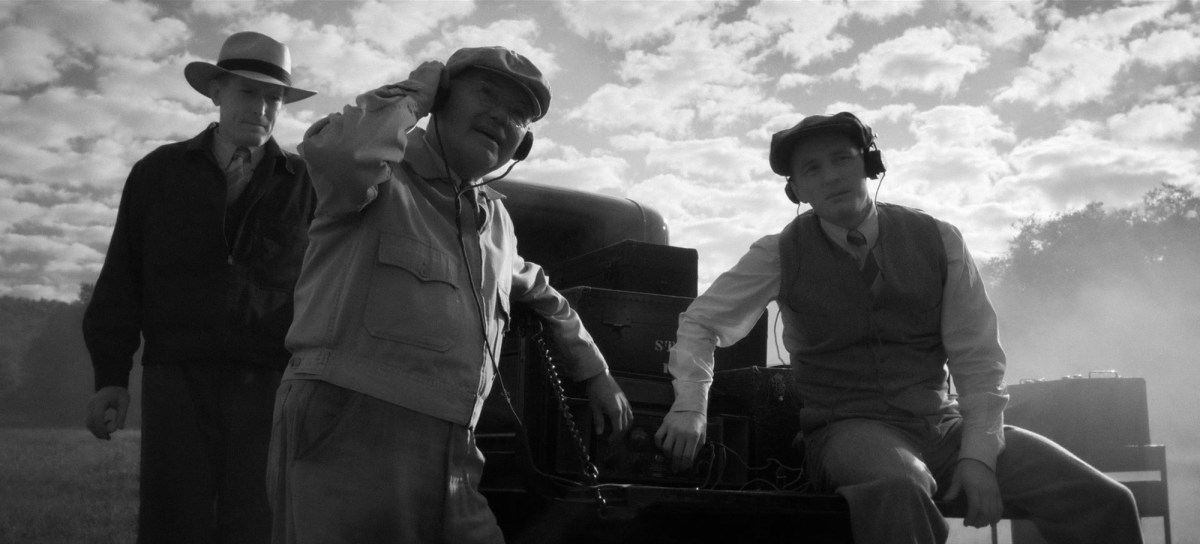
Fincher and director of photography Erik Messerschmidt, ASC, (Mindhunter) used many techniques to pay homage to the look of Citizen Kane and other classic films of the era, including shooting in true black-and-white with Red Monstro 8K Monochrome cameras and Leica Summilux lenses. Fincher also tapped other frequent collaborators, including Trent Reznor and Atticus Ross for the score and Oscar-winning editor Kirk Baxter, ACE, who won for the Fincher film’s Girl With the Dragon Tattoo and The Social Network.
I recently caught up with Baxter, who runs Exile Edit, to discuss Mank — starring Gary Oldman in the main role — the fourth film he’s edited for David Fincher.
“I keep making this joke that it’s Fincher-vision because it’s not just black-and-white, it’s this really specific way that he’s going to light the film,” says costume designer Trish Summerville about the unique visual style of “Mank,” directed by David Fincher. The film tells the story of “Citizen Kane” writer Herman Mankiewicz, and it’s shot to resemble films of the 1930s and 1940s. That presented Summerville with equally unique challenges and opportunities. We spoke with her as part of our “Meet the Experts” costume designers panel. Watch our interview above.
“The black-and-white was the most challenging thing: figuring out how we wanted to make that work, doing different testing on clothing and fabrics … so we could see how it would read,” Summerville explains. “Even though you think you don’t need a color palette, you really do, because if not, when you’re looking at it with your naked eye on set, it becomes very jarring.” And understanding color was crucial for achieving the right effect in the finished product “so that when it read in black-and-white on the screen and on the monitors it didn’t just all come across as flat, it had dimension to it, sheens and tones.”
It helped that the film was portraying so many well-known figures with documented looks and styles — not just Mankiewicz, but Marion Davies, William Randolph Hearst, Louis B. Mayer, and more. “We could find things of [Mank] at work, on sound stages, and also at home,” Summerville says. “We even at one point found these images of him at one of his kids’ bar mitzvahs, so that was great, it was a whole family photo.”
But in a film with so many male characters, it was also important “to give each one of the men their own kind of characteristics and dress them towards who those characters really were … so that not everybody read as a navy suit in a room.” That research and detail, in collaboration with Fincher’s direction, Donald Graham Burt‘s production design and Erik Messerschmidt‘s cinematography, “all of it has these special touches that make you feel you’re transported to the 1930s.”









 The Fincher Analyst