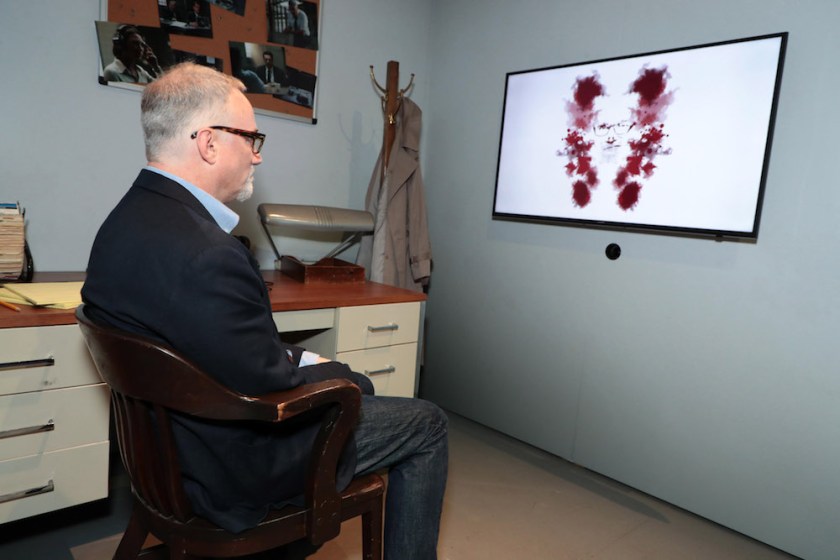
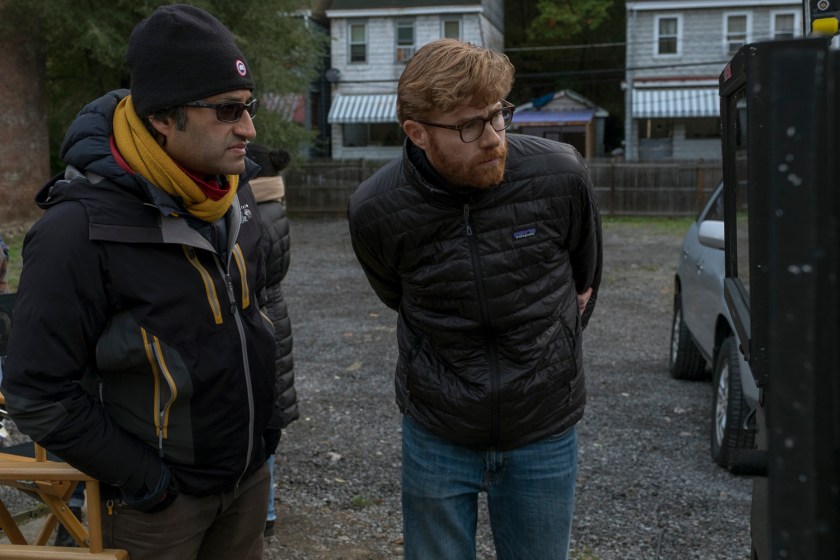
With Mindhunter, Netflix reunites with director David Fincher for the first time since he helped the streaming service launch into original programming with their first series, House of Cards. In Mindhunter, Fincher’s attention to detail proved a perfect match for creating the dark world of obsession and intrigue that is the true story of the origin of the FBI Behavioral Science Unit. Based on the real-life experiences of FBI special agent, John Douglas, who pioneered the practice of psychological profiling, Mindhunter takes place in the 1970’s and follows two FBI agents who radically expand criminal science as the study the methods and motivations of serial killers. But getting so close to real world monsters has consequences, and their encounters with the darkest of humanity begin to change them and the way they work.
–Yertle the Turtle and Other Stories (1958) by Dr. Seuss –The Code Breakers (1967) by David Kahn –Codes and Ciphers: Secret Writing Through the Ages (1964) by John Laffin –Secret Writing: The Craft of the Cryptographer (1970) by James Raymond Wolfe –The Beast from 20,000 Fathoms (1953) film directed by Eugene Lourie –Dick Tracy Lunchbox, 1967 – Animal Crackers (cookie) –The Most Dangerous Game (1932) film directed by Irving Pichel and Ernest B. Schoedsack –Hair, original musical poster, show debut in 1967 –They Laughed When I Sat Down: An Informal History of Advertising in Words and Pictures (1959) by Frank Rowsome, Jr. –McElligot’s Pool (1947) by Dr. Seuss –TIME Magazine “Race and Reform on Campus,” Volume 93 No. 16, April 18, 1969 –The Asphalt Jungle (1950) film directed by John Huston –The Wrong Man (1956) film directed by Alfred Hitchcock –The Celebrated Cases of Dick Tracy, 1931-1951 (Anthology, 1970) by Chester Gould –Fox in Socks (1965) by Dr. Seuss –Curtain and The Mysterious Affair at Styles (1975) by Agatha Christie –An Artist in America (1951) by Thomas Hart Benton –Drawing: Seeing and Observation (1973) by Ian Simpson –Drawing the Female Figure (1975) by Joseph Sheppard –Mainstreams of Modern Art: David to Picasso (1961) by John Canaday –Homicide Investigation (first published 1944) by Lemoyne Snyder –Rescued in the Clouds (1927) by Franklin W. Dixon –LIFE Magazine “Confrontation in Harvard Yard,” Vol. 66 No. 16, April 25, 1969 – Slinky Toy Commercial from the 1960s – Slinky Toy –I Died A Thousand Times (1955) film directed by Stuart Heisler –Star Trek, Season 3 Episode 4 “And the Children Shall Lead” (1968) guest starring Melvin Belli, portrayed by Brian Cox in Zodiac – Aquavelva (alcoholic drink) – Reprise: The Code Breakers (1967) by David Kahn – Reprise: Codes and Ciphers (1964) by John Laffin –Richard Nixon Presidential Campaign Button, 1968 – “I Am Not Avery” button – 6 extremely rare first edition covers of Ian Fleming James Bond Novels: Dr. No (1958), For Your Eyes Only (1960), Moonraker (1955), On Her Majesty’s Secret Service (1963), You Only Live Twice (1964), The Spy Who Loved Me (1962) –Six Crises (1962) by Richard M. Nixon –San Francisco (first published 1969) edited by Jack McDowell and Dorothy Krell –The Selling of the President, 1968 (1969) by Joe McGinniss –Rubber Life Magazine, Vol. 01, No. 01, (1972) –Dirty Harry (1971) film directed by Don Siegel –Pong (1972) video game by Atari – I Looked and Listened: Informal Recollections of Radio and TV (1970) by Ben Gross – The Crime Vaccine: How to End the Crime Epidemic (1996) by Jay B. Marcus –The FBI in Our Open Society (1969) by Harry & Bonaro Overstreet – Kidnap: The Story of the Lindbergh Case (1961) by George Waller –The Property Man (1914) film directed by Charlie Chaplin – McCall’s Sewing Book (1968) by McCall Corporation – Them! (1954) film directed by Gordon Douglas –Illegal (1955) film directed by Lewis Allen – The World Almanac – Centennial Edition (1968) – The Rink (1916) film directed by Charlie Chaplin – Conquest (1937) film directed by Clarence Brown and Gustav Marchaty –Key Largo (1948) film directed by John Huston – Zodiac: The Shocking True Story of the Nation’s Most Bizarre Mass Murderer (1986) by Robert Graysmith
Zodiac (2007) Credits:
Directed by David Fincher
Production Design by Donald G. Burt
Art Direction by Keith Cunningham
Set Decoration by Victor J. Zolfo
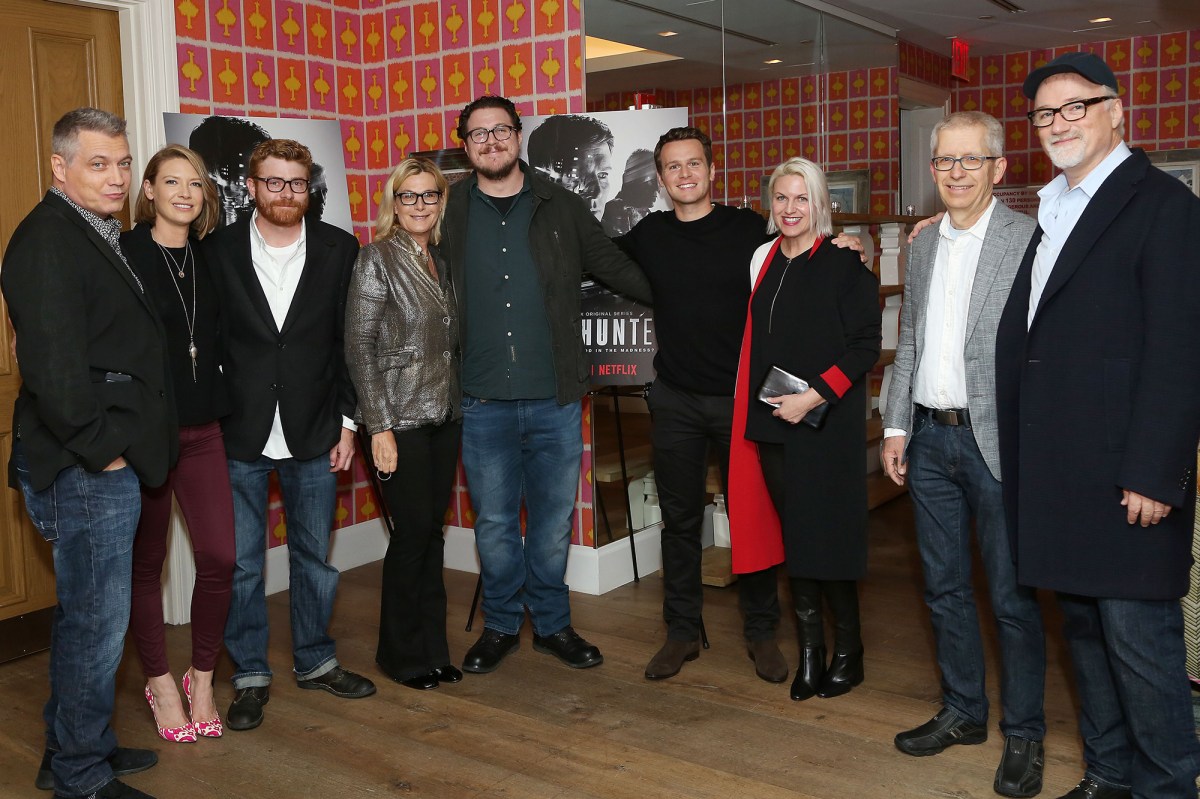
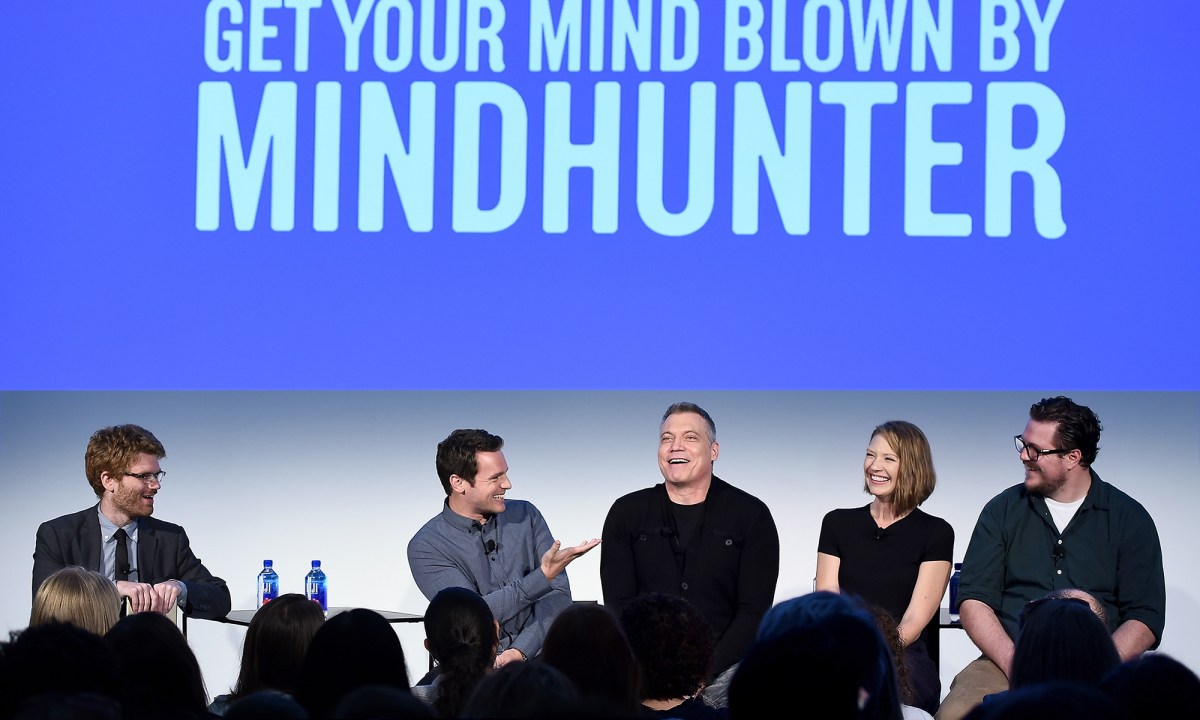
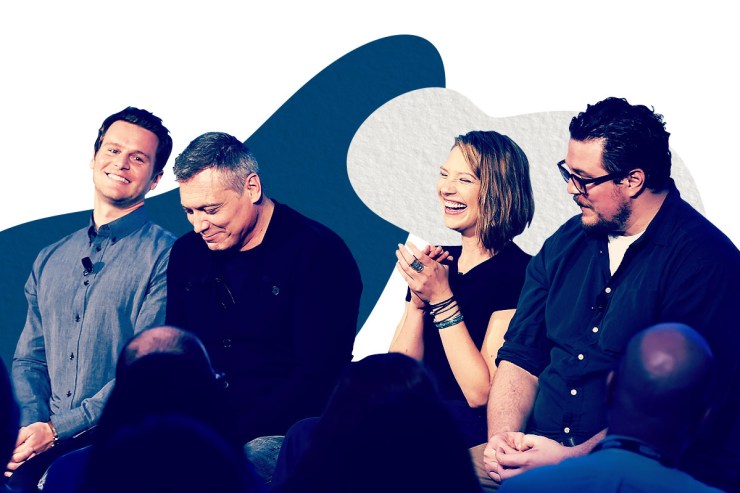
David Fincher (Director & Executive Producer), Laray Mayfield (Casting Director), Jennifer Starzyk (Costume Designer), Erik Messerschmidt (Director of Photography), Steve Arnold (Production Designer), Cameron Britton, Anna Torv, Holt McCallany, Jonathan Groff.
The first rule of Fight Club is: You do not talk about Fight Club. The second rule of Fight Club is: YOU DO NOT TALK ABOUT FIGHT CLUB! – Tyler Durden
We are going to talk about Fight Club _ the score, that is. Since the film was first released in theaters almost 20 years ago, it has managed to stay afloat in the pop culture atmosphere thanks to a strong cult following. The subject matter and performances were and still are a big part of the movie’s appeal, but the film’s standout score, created by legendary writer-producer duo The Dust Brothers, has a lot to do with it, too. This Saturday night, for the first time ever, both Brothers (who aren’t actually related) will present the score live at the Wiltern.
A ‘joyously nerdy’ video in which I attempt to assemble all the components to recreate the reel-to-reel title sequence from the Netflix Show Mindhunter.
Special thanks to Jason Moore (on Patreon) for the tip regarding The Professionals episode.
The music used in my recreation of the title sequence is ‘Spirit Of the Dead‘ – by Aakash Ghandi and is from the youtube audio library (Download link).
NOTE: The TDK tape leader was created specifically for the sequence with CGI to hide the original Sony one:
Comment by Kenneth Palkow (Kenney’s Custom Props) in Techmoan’s video 2020
Very nicely done, Techmoan. It’s amazing to see how many people fell in love with that recorder.
Working for David Fincher and having the opportunity to work with some very talented individuals was amazing. About 40% of the prop was recreated. We had acquired a couple machines. There was also one we found in a museum but did not get that one. In the end, I had 2 machines to work with. Some logos you noticed were not present anymore and that’s because that was a part I machined… like the head roller cover. The original had some deep gouged marks.
Since the recorder needed to look new from that time period, it was best to make a new one. I machined that part aluminum. There were other parts I needed recreate and machine. As you know, these machines are rare and it was just easy to tear the recorder down to every nut and bolt and give it a complete restoration. The hardest part was the housing and lettering. Some of it I had to recreate while other parts was just a refinish. In the end, I decided to match the original finish using ceramic based gun coatings. It was a durable finish and the color match ended up being perfect. So, the entire housing and misc parts, like the head/roller cover I totally refinished with this coating.
The next challenge was the reels themselves. David wanted a .005″ chamfer specifically on all edges of the reels. This was mainly because he was going to do plenty close ups and the details and the details had to be spot on. Again, I created a CAD model based on metal reels of that time period and machined them out of aluminum. I had to make custom fixtures to machine these parts because they are so thin. The center hubs a created a CAD model and 3D printed. I then wet polished the hubs down to 2000 grit. The hubs in the sequence were placed upside down. I did not intend or ask for my company initials to be visible…. that just happened by chance or intentional by the prop master or even possibly David was happy enough with my work that he did this for me. Either way, I was really excited to see that in the sequence.
I think The Fincher Analyst is correct about the tape having a cg overlay done. There were many other details I recreated as well…. like the rubber seal between the clear cover and housing. That part I did a cad model, printed a master, pulled a mold, and cast the recreated seals in rubber. The clear cover is also custom made. I did modify the locking knob on the cover to a magnetic one so the actor would just have to pull up vs trying to fidget with trying to get it to release… or worrying about it locking up and not release fluidly for the camera. Remember, the seen had to be very fluid.
Anyway, I hope this gives you some insight as to how much effort David wanted put into that opening sequence. Another friend of mine, Max Burman did the corpse stills you see.
Comment by Kenneth Palkow (Kenney’s Custom Props) in Adam Savage’s Tested video May 16, 2023
Hey brother, thank you for the shout out.
Yes, yes, and yes…. David Fincher 100% was extremely meticulous about detail on this reel to reel. His specifications was .005 of an inch chamfer on the reels edges alone. We had two machines at our disposal and I took one to create a superhero prop for that opening sequence alone.
Since a good portion of the recorder had damages, such as deep scratches, gouges, etc etc, I had to re-create those parts by CNC machining. The seal for the top cover I 3-D print it and even the top cover is not original. I had to make a new one from scratch. The top cover where the pick ups are that says Sony, I did not remove the logo, because that part as well I had to remake from scratch. Again, CNC machining. There were areas of machining that I was holding half a thou tolerance. Lol, I know, crazy. But, I was instructed that this would be an extreme close-up scene. The rest of the machine I tore down, refinished the side panels the back panel to take out all of the scratches gouges and then did a refinish using KG gun coatings. There was some Cerakote as well in there.
The reels were probably the most pain in the butt. Machining, thin metal like that can be problematic with vibration so I had to form a custom jig that sandwiched the reels down so I can machine the chamfers. The center hub is 3-D printed and if you look closely on the Opening sequence when he is tightening the reel knob, you will see my company initials KCP. That actually was an accident and no one was supposed to see that but someone put the reels upside down. I’m not gonna complain. Lol.
Truth be told this task of refinishing/fabricating. This reel to reel went in front of two other prop shops before it ultimately ended up in my hands. David was extremely adamant about the quality of this prop that the Prop Master took it to two shops. One of the shops tried, but could not give the quality level of work David was asking for.
That second shop gave me a call one day and said “Kenney don’t be mad at me but I’m sending somebody your way. They are being truly anal about the detail and I told them if you’re looking for someone that’s anal, you need to go to Ken shop“. Not five minutes later Prop Master called me at about 20 minutes later I was on a flight to Pittsburgh for a morning meeting the next day. I looked at the previous work done by the last shop, and thought to myself this is some pretty good work and question whether I could pull off with David wanted. Ultimately, that opening sequence is a project I’m most proud of being a part of and definitely one of the most beautifully done.
And last, I did make mention to the art department that in exchange for the hard work, David needed to bring me on for World War Z 2. Lol there was a lot more to this project but that’s pretty much the gist of it. Thanks again, brother, for the shout out.
If by any chance, you would like files to the the reel to reel or any of the other parts, let me know.
In 2014, Trent Reznor and Atticus Ross scored Gone Girl, the duo’s third collaboration with director David Fincher (following 2010’s The Social Network and 2011’s The Girl With the Dragon Tattoo).
Gone Girl’s music consists of dark ambient pieces with layered synths, guitars, and electronic noises, and was inspired by the background music Fincher heard at a chiropractor’s office that was “inauthentically trying to make him feel alright,” according to Reznor.
To this end, the soundtrack juxtaposes lush new-age synths and percussion with distortion, noise, and stuttery beats. I’ll explore the synth behind many of the film’s sounds, as well as how to create these tones using software instruments in your own DAW.
Over the last few years, 8K has become accepted as an acquisition format for 2K & 4K delivery. Michael Cioni, of Panavision & Light Iron, believes that it is time to start pushing 8K as a distribution format. Listen as he challenges common misconceptions about the validity of 8K exhibition.
Cioni uses Moore’s Law to explore the idea that the resolution of our capture and delivery of video will continue to grow far into the future. In the early years of Light Iron, Michael and his team faced many challenges in moving from a 2K to 4K digital intermediate for their customers. But they overcame those challenges and are now working toward supporting 8K distribution.
La-La Land Records, Twentieth Century Fox, Fox Music and Universal Music Special Markets present the expanded and remastered re-issue of the original motion picture score to the 1992 feature film ALIEN 3, starring Sigourney Weaver, Charles S. Dutton, and Charles Dance, and directed by David Fincher.
Renowned composer Elliot Goldenthal (Batman Forever, Pet Semetary, Heat) composes an astounding musical tapestry of suspenseful atmospherics and pulse-pounding action – featuring some of the most effective cues ever composed for the legendary ALIEN franchise. Goldenthal’s artistic triumphs here would propel him into a series of acclaimed scores to important genre films that continues today.
Expanded by more than 40 minutes beyond the original 1992 album assembly (which appears here remastered on Disc 2), the presentation showcases the film score in all its glory, along with bonus alternates. Produced by Nick Redman and Michael Matessino, associate produced by Neil S. Bulk, and remastered and mixed by Matessino from original digital masters, this special 2-CD set is limited to 3500 units and features exclusive in-depth liner notes by writer Jeff Bond and sharp art direction by Mark Banning. Starts Shipping May 3.
Goldenthal himself once called the score to be his “Symphony No. 1”. Whilst creating the score in Los Angeles, the Los Angeles riots of 1992 were going on and he has noted that the wild and tempestuous atmosphere in the city was an influence on the music’s dark and visceral sound.
20th Century Fox Fanfare, Alien3 “Soured” version
Written by Alfred Newman; arr. by Elliot Goldenthal.
Art of the Title: “I was curious about the Fox fanfare which ends on the minor note before it goes into the film. It also goes from mono to stereo (or surround), which is interesting. Was that you or the sound designer?”
David Fincher: “That was me. Well, it was me and Elliot Goldenthal. ‘Can you take the Fox fanfare and just sour it?’… Because we’re about to do that with the film.”
Fincher will direct the two-hour long season premiere and finale:
Andrew Dominik (“The Assassination of Jesse James,” “Killing Me Softly”) will helm another two, and filmmaker Carl Franklin (“Devil In A Blue Dress,” “One False Move”), who’s become something of a journeyman director on TV in recent years (“House Of Cards,” “The Leftovers,” “13 Reasons Why,” “Vinyl” and more), will direct the rest and bulk of the show.
Fincher is currently in Pittsburgh doing prep on season two which starts at the end of the month. It should keep him busy for most of the year and regardless, I’m told Netflix intends to hold it for an early 2019 release. The “Mindhunter” filmmaker directed all the reshoots for every episode of season one and he’ll be doing the same for season two; they’ll be baking in time for that as well.
Dominik was apparently a big fan of Fincher, and their connection is through Brad Pitt who starred in the aforementioned ‘Jesse James’ and has obviously led many a Fincher movie including “Seven,” and “Fight Club,” “The Curious Case of Benjamin Button,” and possibly the “World War Z” sequel if they can ever figure out the script.
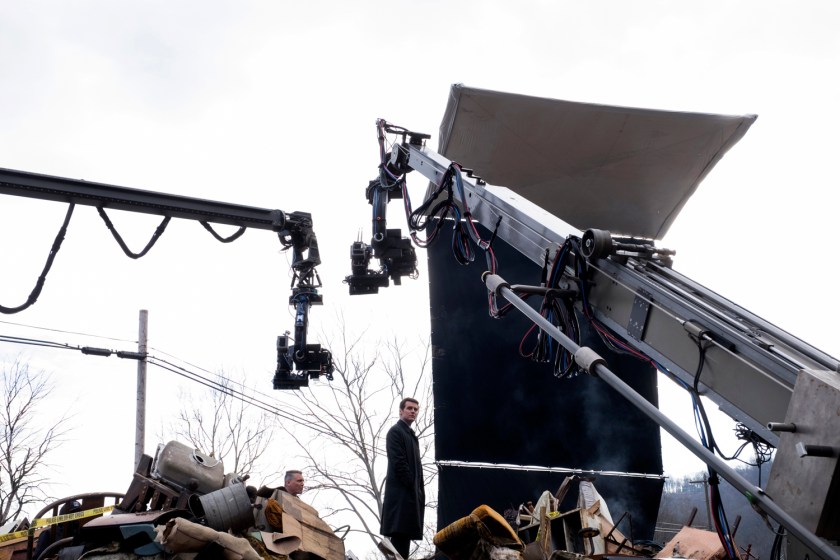
David Fincher went looking for the 1970s — and found them in Pittsburgh. but that was just the start for the esteemed producer-director and his team, who recreated the era for Mindhunter, the Netflix series about two pioneering FBI profilers.
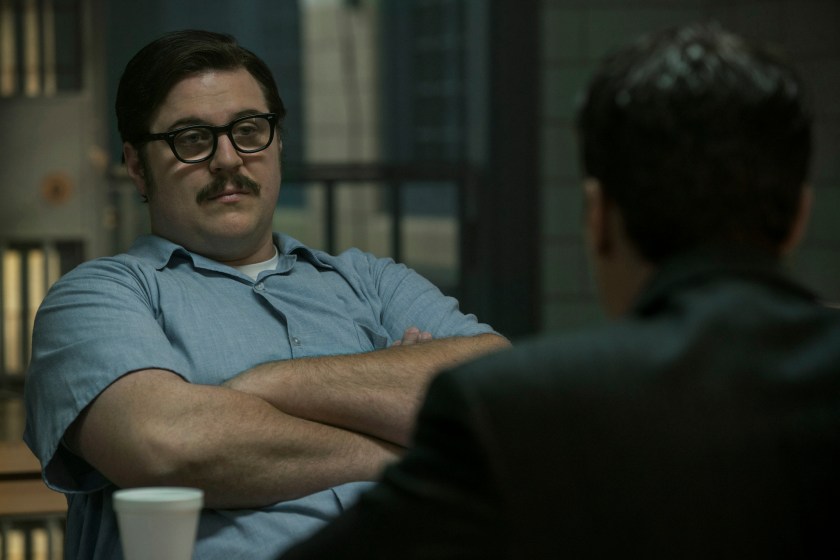
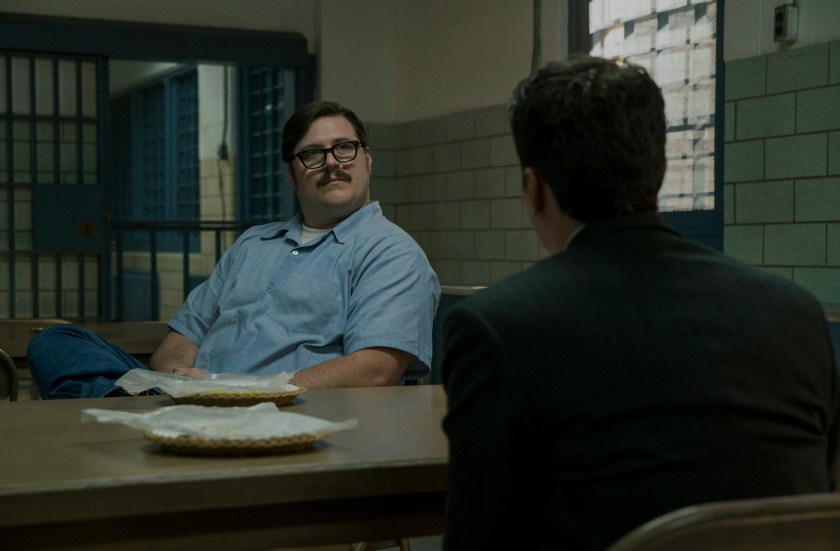
Watching the Netflix series Mindhunter, you may shudder as convicted serial killer Ed Kemper (Cameron Britton) casually chats about his string of brutal murders, or flinch when — spoiler alert! — a bird hits the fan courtesy of mass murderer Richard Speck (Jack Erdie).
What you’re less likely to notice is the precision with which the show’s late-’70s landscape has been created. David Fincher considers that a win.
“It’s really important that it feels like two people having a conversation — and that 40 people aren’t on their iPhones simultaneously just outside of frame,” says Fincher, who is executive-producing the series with Joshua Donen, Charlize Theron and Ceán Chaffin. “The great news is, I lived through the ’70s, so I remember what that looks like.”
Created by Joe Penhall — and based loosely on FBI agent John Douglas‘s book Mindhunter: Inside the FBI’s Elite Serial Crime Unit — the series explores the birth of criminal profiling.
Special agent Holden Ford (Jonathan Groff, playing a fictionalized version of Douglas) and his partner, Bill Tench (Holt McCallany), work alongside psychologist Wendy Carr (Anna Torv) to dig into what makes murderers tick. Shot in Pittsburgh, the show is a window on a time before the term serial killer had been coined, much less become the focus of TV shows and casual conversations.
While that seemingly more innocent time is reflected partly in the show’s relative lack of gore, the decade’s thornier complexities required a critical eye (or, in this case, eyes) to see past the polyester-covered clichés.
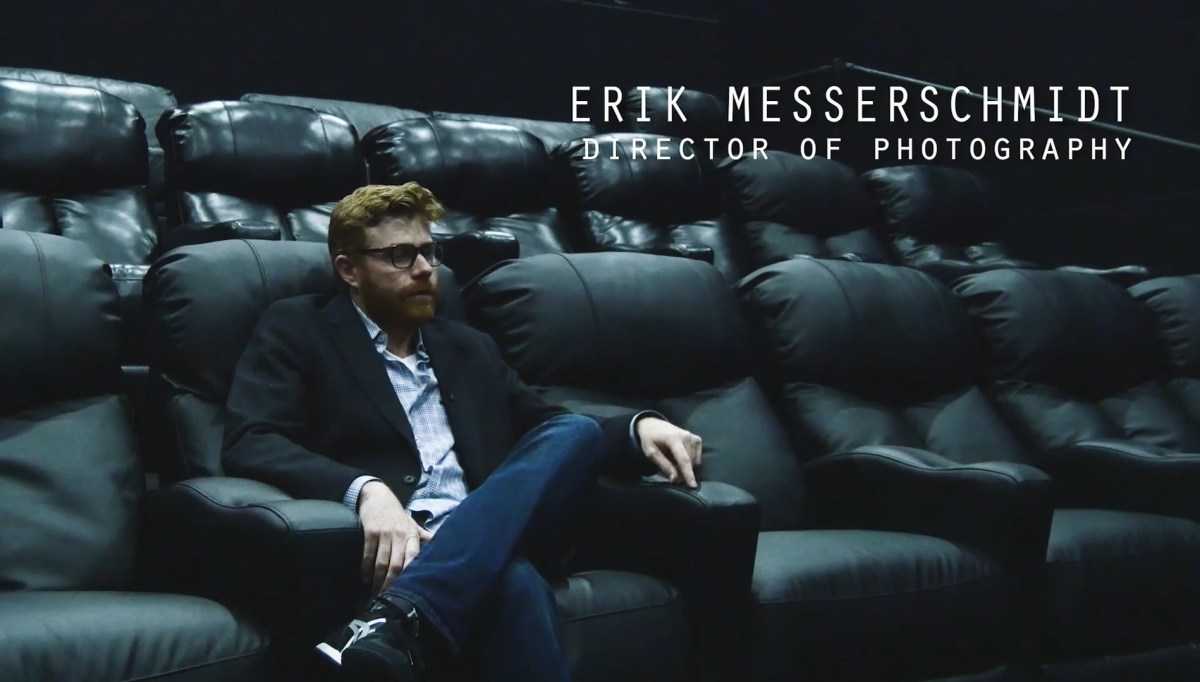
“David is the most holistic filmmaker I’ve ever met,” director of photography Erik Messerschmidt says. “The tone of every scene is important, and [so are] how the costumes and lighting and set decoration and everything play a part in creating the finished product.”
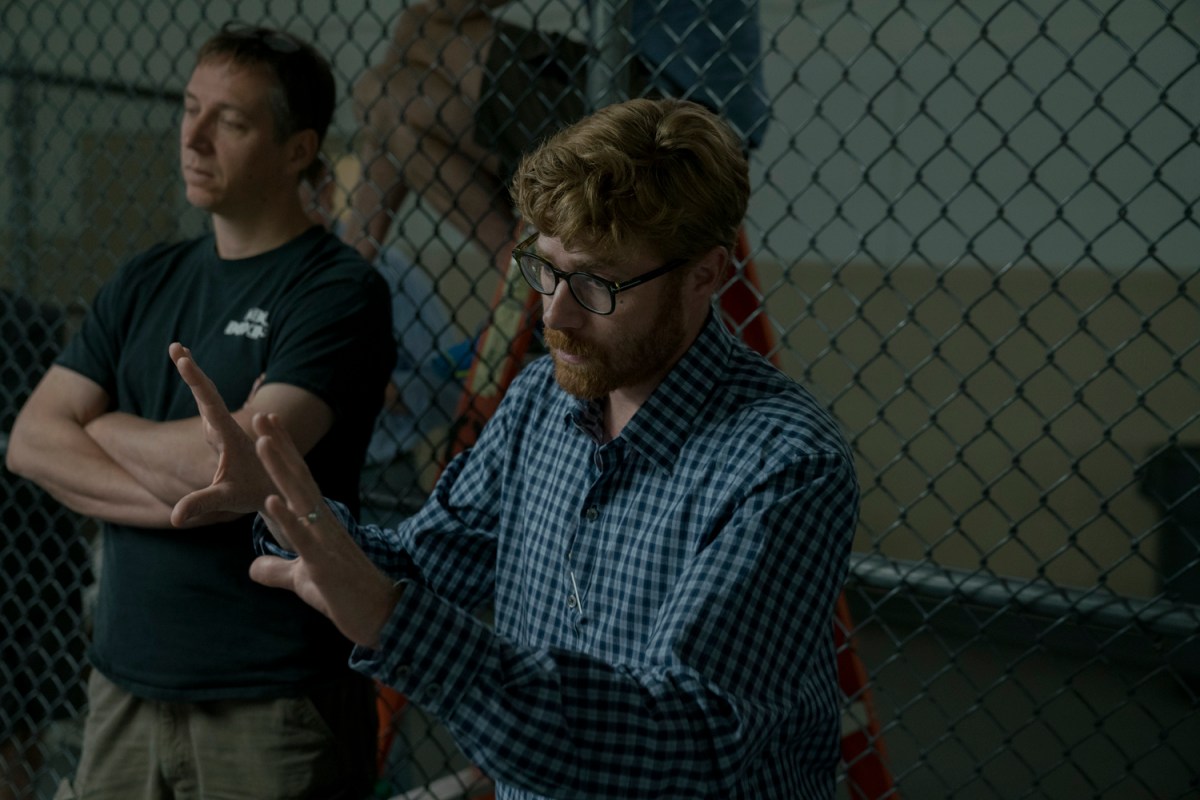
Fincher, who directed four of the first season’s 10 episodes, is famously meticulous, but he says the secret to getting it right is finding the right people.
“I don’t think you keep a project in a kind of design and aesthetic wheelhouse by being a dictatorial influence. Just stomping your feet and holding your breath is not going to make stuff work,” he says. “A lot of times, you have to empower people who are the advance troops and the follow-up troops to make decisions that are based on conversations that you have.”
In this case, one of the first decisions — where to shoot — was daunting.
“Our biggest issue,” Fincher says, “was: where do we find 1978?”