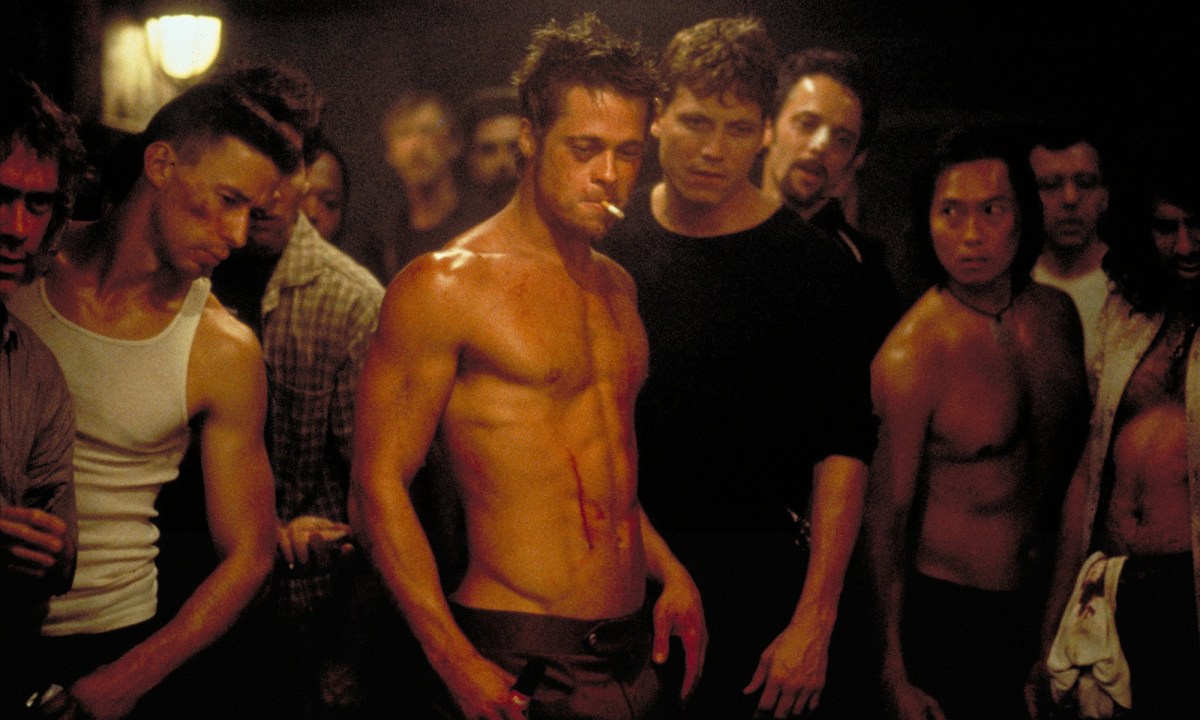
What the hell is Fight Club anyway? A horror film about a Jekyll-and-Hyde office worker who becomes a terrorist? A drama about late 20th century masculinity in crisis? A warped romance about a man trying to change himself into someone as interesting as the woman he loves? A thriller about a decadent generation goading itself into extremism?
Executives at 20th Century Fox certainly struggled with Fight Club. Unsure how to market a film in which young men beat one another to a pulp and stole bags of fat from the bins of liposuction clinics, the studio placed ads for it during World Wrestling Federation matches. Meanwhile, Fight Club‘s posters, dreamed up by an expensive design firm, featured a pink bar of soap with the title incised into its waxy surface. It certainly looked unlike anything else stuck up outside a movie theater in 1999, even if most people walking past wouldn’t have had a clue as to what it meant – the soap being a wry reference to a key scene in the film.
The bewildering split between TV ads during wrestling matches, which emphasized the film’s bruising bare-knuckle scenes, and the artistic posters with their pink bars of soap, were an indication, perhaps, of Fight Club‘s slippery quality. How do you get people to go and see a film like this, Brad Pitt or no Brad Pitt?
In retrospect, it’s little surprise that some of Fox’s higher-ups didn’t like Fight Club – least of all one Rupert Murdoch, the media mogul whose News Corporation had acquired Fox in 1985. Here, after all, was a film which openly attacked corporations, advertisers and the entire capitalist system.
One of Fight Club‘s producers, Art Linson, recalled the first screening of the film for Fox’s executives; they were, he said, “flopping around like acid-crazed carp wondering how such a thing could even have happened.”
There was one executive who did believe in Fight Club: Fox’s studio head Bill Mechanic. In the mid-90s, Chuck Palahniuk‘s Fight Club novel was doing the rounds at Fox before it had even been published, and was originally envisioned as a low-budget movie to be made through the studio’s Fox 2000 division, which specialized in independent film. Along with production executives Laura Ziskin and Kevin McCormick, Mechanic was an enthusiastic champion of Fight Club‘s spiky humor and unpredictable plot.
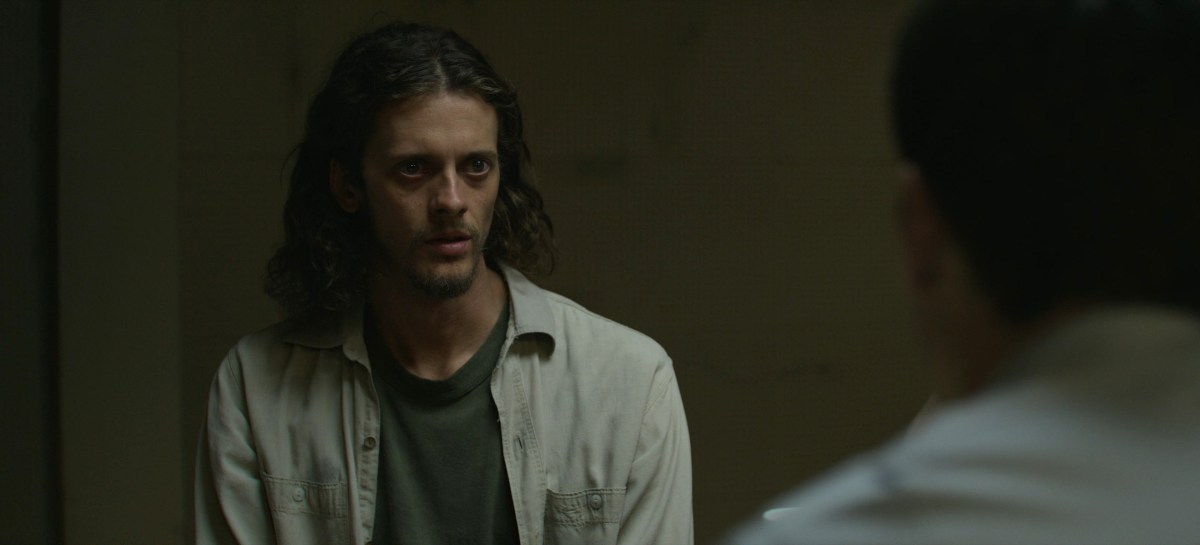
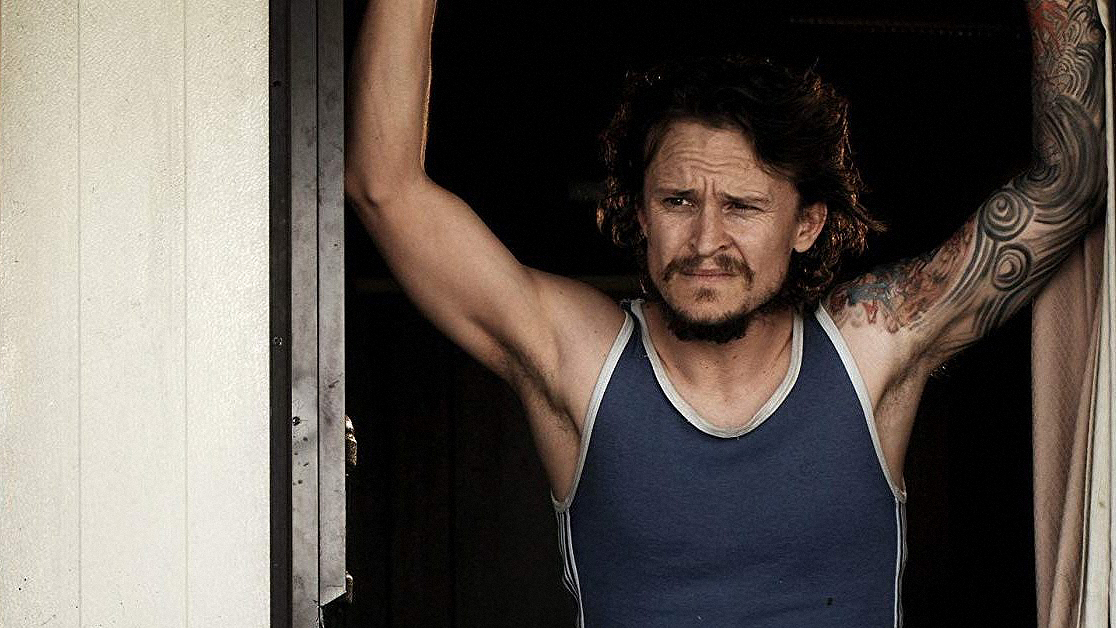
I had the pleasure – and a lot of fun – interviewing actor, Adam Zastrow, who recently excited us playing the role of Darrell Gene Devier on Netflix’s hit show Mindhunter. During our conversation we talked about Adam realising his dream of becoming an actor, the shows he was part of leading up to Mindhunter and what it means when David Fincher says, ‘Take 50!’
[…]
PC: Getting back to David Fincher. I was reading the other day someone saying the reason he shoots a scene 70 times is because he suffers from OCD but that isn’t the case at all is it. He wants to get the best possible scene, it’s not because he has perfectionist issues.
AZ: I hate when people use the word ‘perfectionist’ when they are talking about David and the amount of takes he does because I was told about that – I don’t want to say ‘warned’ but I was ‘told’. Before going out I was told be prepared for long days Fincher likes to do a lot of takes. After having done it – those 70 takes fly by, it does not feel like you are doing 70. Fincher himself addressed this in an interview – he really hit it right on the head – it’s not that he’s a perfectionist (that’s not the issue at all) it has more to do with your pre-production staff. The guys will build sets for months, the art guys, you have all these people spending the better portion of a year just to make sure a scene looks the way it’s supposed to or to just make sure the drinking fountain in the back works even if nobody is using it. All these people put all this time and effort into this production and how dare you rush through shooting! It’s almost like a slap in the face to all these people. It’s like, ‘Okay, you spent 6 months building this scene and we’re going to come in and just shoot three takes in 12 minutes, now we are going to walk away and ask you to tear the damn thing down.’ No. No. No. I think it’s as much trying to find the best performance as it is taking the time to finding the best performance. You owe it those people not to rush through anything. When I heard that I thought, ‘Oh my God! That makes so much sense.’
PC: It’s like when you spend hours making dinner and someone wolfs it down in like 5 minutes.
AZ: Yeah exactly, exactly. I 100 per cent agree that you find stuff on take 70 that you did not even think about. As someone who’s never experienced that kind of dedication to the shoot, you get to take twenty or thirty and you’re like, ‘Okay. I rehearsed this for months. We rehearsed this together for a week. We’ve gone through this thirty times, there’s nothing else for me here to find. I’ve giving you everything that there is.’ Also from take 30-45 they are all the same, they are kind of all blah, because at that point you’re either over-thinking or under-thinking your character and you really feel like there is nothing else to give. And then, right around that point, there’s a weird moment that happens where you just stop thinking about it at all: you’re no longer under- or over-thinking it, you are just doing it because you are just going through the motions. And you’re like, ‘Okay, let’s just do this because I have to,’ and then this beautiful, beautiful thing happens where, all of a sudden, as soon as you stop thinking about it, all of this shit comes out of you that you never even knew was there! I think that’s what he’s going for. He does it enough times to where you are so used to it that you are not thinking about it, and that’s where the best stuff comes from. If you film a scene where you come home from work, you throw your keys on the table, you take your jacket off and you put it on the hook, you take your shoes off and you walk into the kitchen and you do whatever it is you do. If you were to film that scene, every single one of those moves is going to seem so cold and so calculated because it’s written in the script and you know what you are supposed to do and it’s fine, and most of the audience are not going to notice how calculated it looks – but a good audience will – and that’s what separates great shows from okay shows, and amazing shows from really decent shows, amazing directors from half-decent ones – it’s that kind of thing that half won’t notice but the ones that do are going to call you out.
PC: That’s a great explanation actually.
AZ: It’s one thing to say you shoot a scene 70 times and it looks more ‘natural’ but what does that mean? That exactly what ‘natural’ means. You are putting your keys on the hook because you’ve done it a million times, it’s like getting all of your emotion to that point where you forgot that you did it, like when you leave the house and get half-way down the road and have to turn back because you don’t remember if you have locked the door. It’s that exact thing. Fincher wants your emotions and everything on camera to be stone natural – that you are not even 100 percent sure that you did it.
That’s what I think makes all of his stuff so, so good. I’ve heard so many people talk about the 70 takes thing and how it’s unnecessary, but after doing it I’m almost wishing everyone would do it: because everything looks so much better, and so natural and yeah, you might not see it, but those that do, it makes that difference.
Austin Film Festival (YouTube, vimeo) June 18, 2016
Screenwriter Andrew Kevin Walker dissects his bleak thriller masterpiece, Se7en and working with director David Fincher to create the cult classic film.
Join your hosts Ryan Turek and Rob Galluzzo as they welcome to the show Ben Scrivens, the owner/creator of horror T-shirt company Fright-Rags! Reviewed! TALES FROM THE HOOD 2, AMERICAN HORROR STORY: APOCALYPSE. The gang is also joined by special guest Andrew Kevin Walker, the screenwriter of David Fincher‘s SE7EN, SLEEPY HOLLOW, BRAINSCAN, 8MM, THE WOLFMAN, and much, much more. We get candid about the screenwriting process, the projects that never came to be, his working relationship with Fincher, and how he wrote SE7EN while working at Tower Records! All this and more!
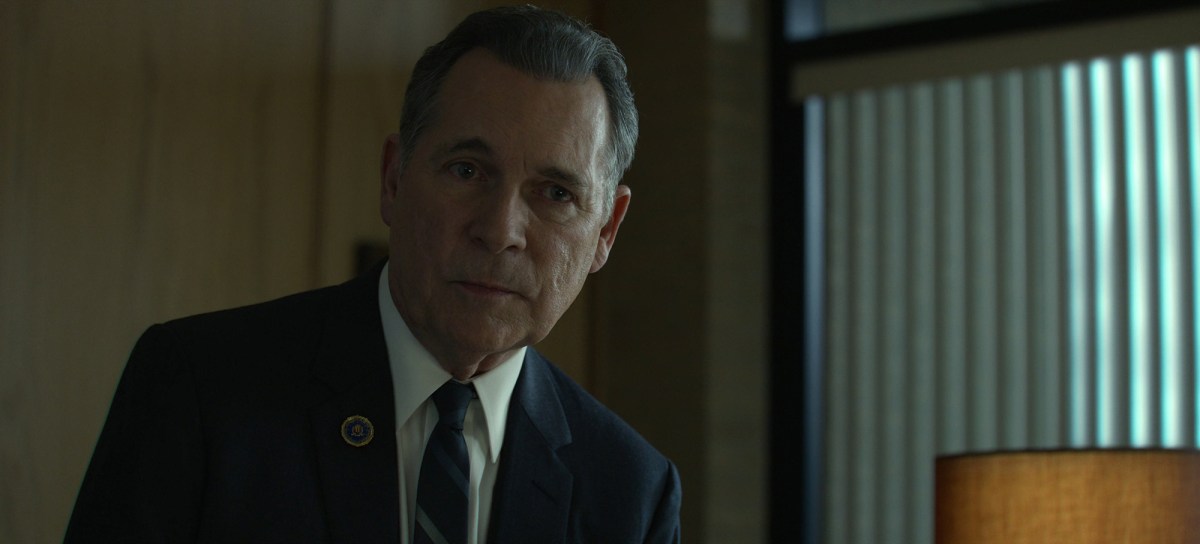
Cotter Smith was born in Washington DC, the son of a federal judge. He is an actor with a stage and screen presence spanning over 40 years. Most recently he can be seen on our screens as Unit Chief Shepard in David Fincher’s Mindhunter and as the Deputy Attorney General in The Americans but his on-screen career stretches back to Hill Street Blues (1982) and Blood Feud (1983) when he played Robert F. Kennedy. I was recently very privileged to talk with Cotter about his life and career in both acting and teaching, working with David Fincher and Steven Spielberg and much, much more.
[…]
DB: When you actually got the call from David Fincher: how did that come about?
CS: It was a call from my agent, initially, saying, ‘There’s interest. Would you be willing to read for David Fincher, for this series?’ And I said, ‘Absolutely. I’m a big fan.’ They said, ‘Well, first of all, let me tell you, it’s a guaranteed ten episodes already ordered for Netflix, but it would be a required eight months, in Pittsburgh.’ So I called my wife and said, ‘So here’s the deal, there’s this possibility, it’s not an offer but they’re interested in me, to come in and audition and we would be eight months in Pittsburgh.’ And she said, ‘Cotter, go get it, and get me out of here!’ (Laughs)
DB: She was packing her bags!
CS: She was so keen to leave New York. (Both laugh) So I auditioned. Then the wonderful casting agent, Julie Schubert, who was so helpful to me – she is really lovely, a casting agent who really loves actors and believes in the whole process – we had prepared, I think it was, these three or four scenes (I never met David) it was all on tape, that third one went off to him. She said, ‘You know, he takes a very long time to cast, so just relax. Everything he does he takes a very, very long time: from casting to shooting.’ So I said, ‘Okay,’ and a week later my agent called and said, ‘You got the job.’ I said, ‘What?’, ‘Yeah, you got the job!’ That was the first time it was ‘real’. I didn’t honestly believe I was going to get the job: I knew many, many, many people would want this job and, as an actor, you do these auditions and you don’t actually put much on them because it’s too heartbreaking if you don’t get them. I was so thrilled, and stunned. It’s exactly the kind of work that I want to do, with a kind of director that I want to work with: I love serious drama; he’s a master, master filmmaker. Just knowing he had cast me made me realize: ‘He knows what he’s doing, so this is going to be good.’ And it was. He’s so fun to work with. He’s challenging. He’s tough. He’s fast. He’s improvisational and you’ve really got to come with your A-game – which I like. He does endless takes: 30, 40, 50. My record was 64 takes on one scene. Endless shooting: we took eight months to shoot ten episodes. That’s a long time! Usually a director will be given eight days for an episode so that’ll be three months – he had eight months. But he’s David Fincher.
DB: And aiming as near to perfection as you can get?
CS: He’s a perfectionist. When you look at his work the proof is in the pudding.
DB: What about marks for the camerawork, are they really rigid?
CS: They’re necessarily rigid, at times, but it changes. On the spot, he will change things, change intention, change everything. It was fun.
DB: You don’t have to smoke as a character, do you?
CS: Thank God no! They sent out notices and said: ‘It’s the ‘70s, so who among you would be willing to smoke?’ And I just wrote back and said: ‘Absolutely no.’ And poor Holt McCallany said ‘yes’ and I think he regrets it to this day. This season he’s going to taper off. He really smokes.
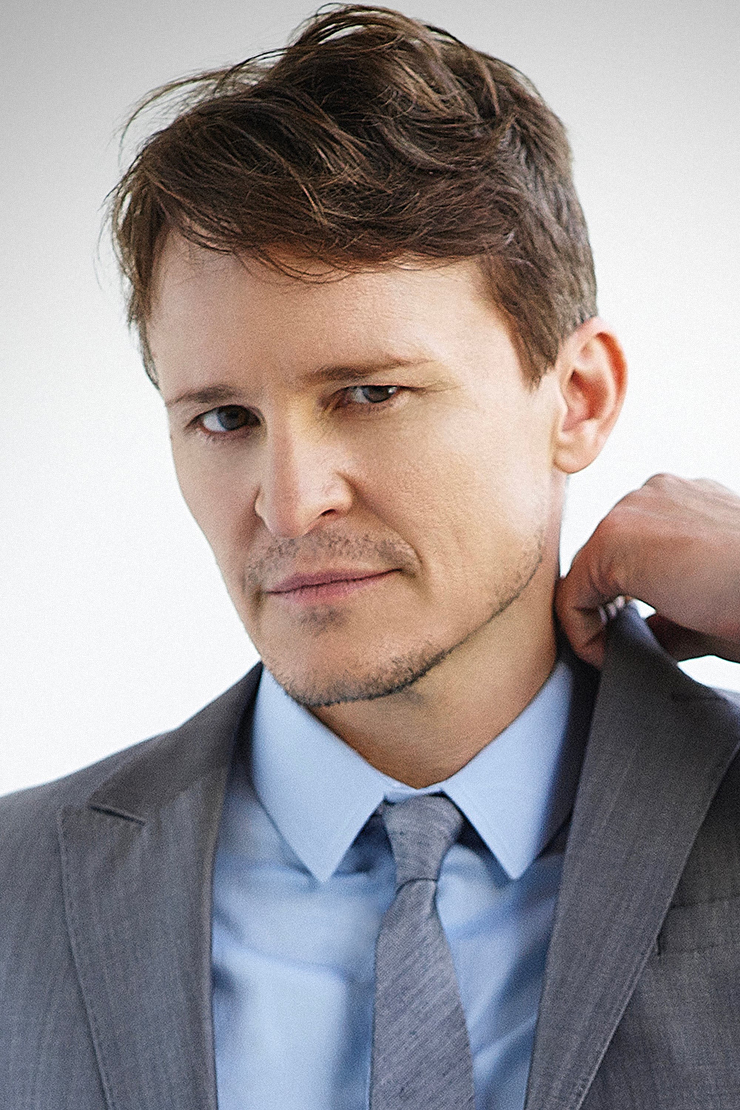
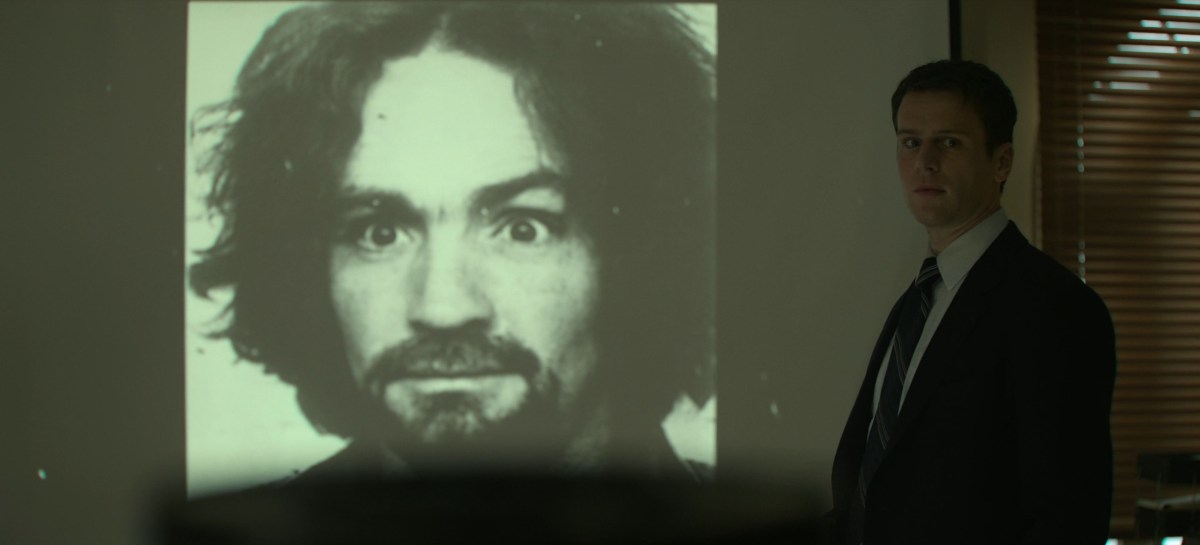
Two days ago, TheWrapbroke the news that Quentin Tarantino had cast Australian actor Damon Herriman as Charles Manson in Once Upon a Time in Hollywood, but sources say he wasn’t the first auteur to have that idea, as Collider has exclusively learned that David Fincher already cast Herriman as Manson in the upcoming second season of Netflix’s Mindhunter.
A representative for Netflix declined to comment.
Sources say that while Herriman will appear as a 1969-era Manson in the Tarantino film, his appearance in Mindhunter will be in the ’80s, when Manson was already behind bars. That lines up with previous reports that the second season will feature the Atlanta Child Murders, which took place between 1979 and 1981. Other serial killers expected to appear include the Son of Sam and, of course, the BTK Killer, who popped up throughout the first season, though he was never mentioned by name.
Sources say that while Herriman’s casting in the Tarantino film was announced first, he was actually cast in Mindhunter much earlier, and in fact, already shot his scenes in July. Either way, the fact that he booked projects from Fincher and Tarantino back-to-back should speak highly of his take on Manson. I mean, when masters of casting like Fincher and Tarantino vouch for you, who else do you need to impress in this town?
David Fincher‘s knuckle-biting Mindhunter series for Netflix is based on the true-crime book, Mind Hunter: Inside the FBI’s Elite Serial Crime Unit, an autobiography centered around the establishment of the FBI Investigative Support Unit, the foundation of which would become modern day criminal psychological profiling.
Each hour-long show (from the 10-episode run) was graded by colorist Eric Weidt, who navigated between ultra-modern capture technology, the time and place of late 70s cinema and the very specific needs of Fincher. Weidt started with Fincher as a visual effects beauty artist for the 2014 film, Gone Girl. Before that, he had worked in post production in the world of Parisian fashion.
With considerable experience in Photoshop and the Adobe infrastructure, Weidt brought his retouching talents to motion as photography and filmmaking began to bleed together. Weidt even created custom film-emulation ICC profiles and scanned grains for photographers transitioning from film to digital capture.
Colorist Eric Weidt.
Meanwhile, Fincher and his team had been working with FilmLight‘s Baselight color grading tools and plug-ins since The Curious Case of Benjamin Button, and on the Netflix series, House of Cards. Adding an editorial and visual effects team at his facility in Hollywood, Mindhunter was the first time that the auteur established his own in-house DI. Weidt was brought on to lead color.
“It’s important to note, we had a lot more time to work on this show than most grades,” Weidt pointed out during a special HDR presentation by FilmLight, Dolby, and Red Digital Cinema at the Dolby Cinema Old Vine theatre in Hollywood. He was given a simple brief: The show was set in the late 70s, centered on the FBI interviews of serial killers.
“The 70’s and serial killers backdrop brought to mind David Fincher’s Zodiac, which is an absolutely brilliant movie; a masterpiece in terms of both content and color,” he says. “The 70s has a distinct color palette. You say 70’s’ and everyone already has an image” he continues. Street photographers William Eggleston and Stephen Shore are personal sources of inspiration for initial color grading.
Post and edit began as production rolled in Pittsburgh. Dailies were usually available to Fincher by the following day. The production used FotoKem‘s nextLAB dailies system and the PIX asset and data management and delivery platform.
Due to overlapping shoot and post production schedules, “David looked at things on his iPad for two-thirds of the season,” says Weidt, explaining that he had a complex rendering process that allowed him to manage new HDR footage as well as sending regular corrections from Fincher to view in SDR. The Baselight workflow file was separated into two timelines, one for any creative color adjustments, and another that had stabilizations and lens emulations applied. Weidt would daisy-chain them, run it through the Dolby Vision HDR professional tools, which automatically take his XML trims, and using that, create offline files to view on an iPad or monitor.
“All you really need to do is add a trim pass layer to each shot, then hit analyze. It might take 40 minutes to analyze the whole hour’s episode. You come back, and you have your SDR version. It’s done, except that you are able to then do lift/gamma/gain, or some saturation adjustments on the trim pass. I found that maybe 85 percent of the time it looked like there wasn’t really anything to do. Out of the box, it’s pretty amazing.”
He continues that, “You don’t want to grade with both monitors, because you’ll go nuts. You have to learn to accept that the REC 709 compared to the HDR is going to look more dull.” Weidt says that Fincher’s color design for Mindhunter was heavily influenced by the organic palette of several classic films, such as McCabe and Mrs. Miller, All the President’s Men and the more chromatic yet grittier look of The French Connection. They also wanted a low contrast, information-rich picture, and had first experimented with low contrast optical filtration on set but preferred in the end to “set up the digital chain in a way that Fincher was getting the type of image that he wanted.”
The RED Xenomorph custom camera for Fincher.
“Low contrast does not mean low detail,” Weidt carefully points out. That required a camera with outstanding capabilities for the production. Cinematographers Erik Messerschmidt and Christopher Probst, ASC, employed a one-of-a-kind Red camera with a 6K Dragon sensor called Xenomorph, developed by Red to Fincher’s specifications. Weidt’s starting point for dailies, as well as any color work on the master, began with a low-contrast log curve based on REDgamma3 that maintained as much of the dynamic range provided by the Red Xenomorph as possible, and gave the SDR monitoring on set an approximation of Weidt’s HDR workflows.
“When you grade something, the tone curve can be your initial contrast,” says Weidt. “It’s a bit like choosing a film stock. With Red, at that time, the most current tone curve was REDgamma4. It’s a nice, contrast-y curve, but David wanted to go back to a previous tone curve, which was REDgamma3. It’s a softer curve, and it rolls off quicker and easier in the highlights and also in the shadows.”
With the Dolby Vision HDR toolset, custom color transforms helped manage the monitoring during production. From 6K .R3D files to linear OpenEXR files, they were able to go straight to grade in Weidt’s and Messerschmidt’s preferred ‘flat’ log. For Dolby Vision HDR mastering, Weidt used the Dolby Pulsar 4000-nit professional reference display, while the Rec709 passes were done with automated mapping to SDR from Baselight. For SDR, they used a Dolby PRM monitor at 120-nits.
The HDR look was developed in post production: “In HDR, we initially came across a lot of scenes where the light sources were taking too much prominence,” Weidt says. “David and his post supervisor Peter Mavromates really wanted an elegant balance. Mindhunter‘s HDR is not trying to strike you or slap you in the face. Just like the sound mixing, or cutting, it is not trying to blow your mind, but rather convey the story content. The latter is really what’s going to punch you.”
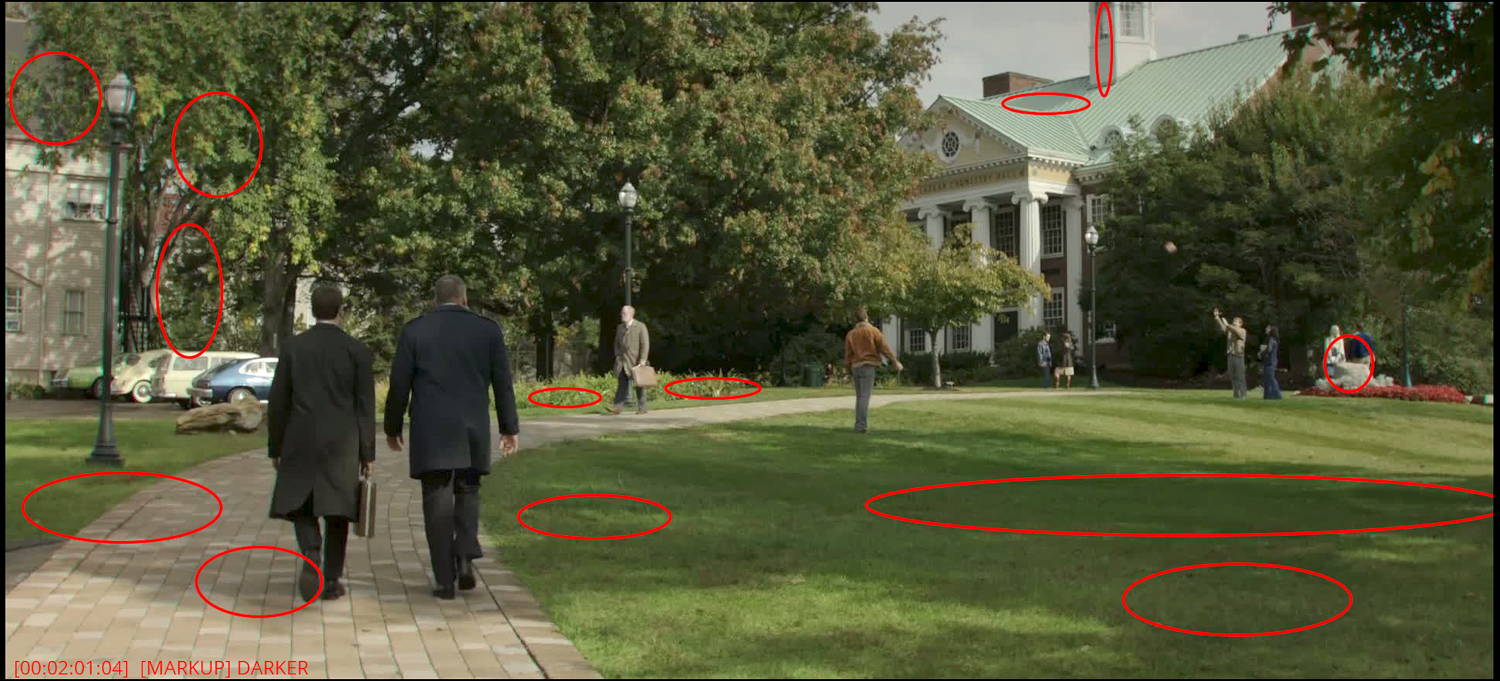
Areas of focus circled using PIX.
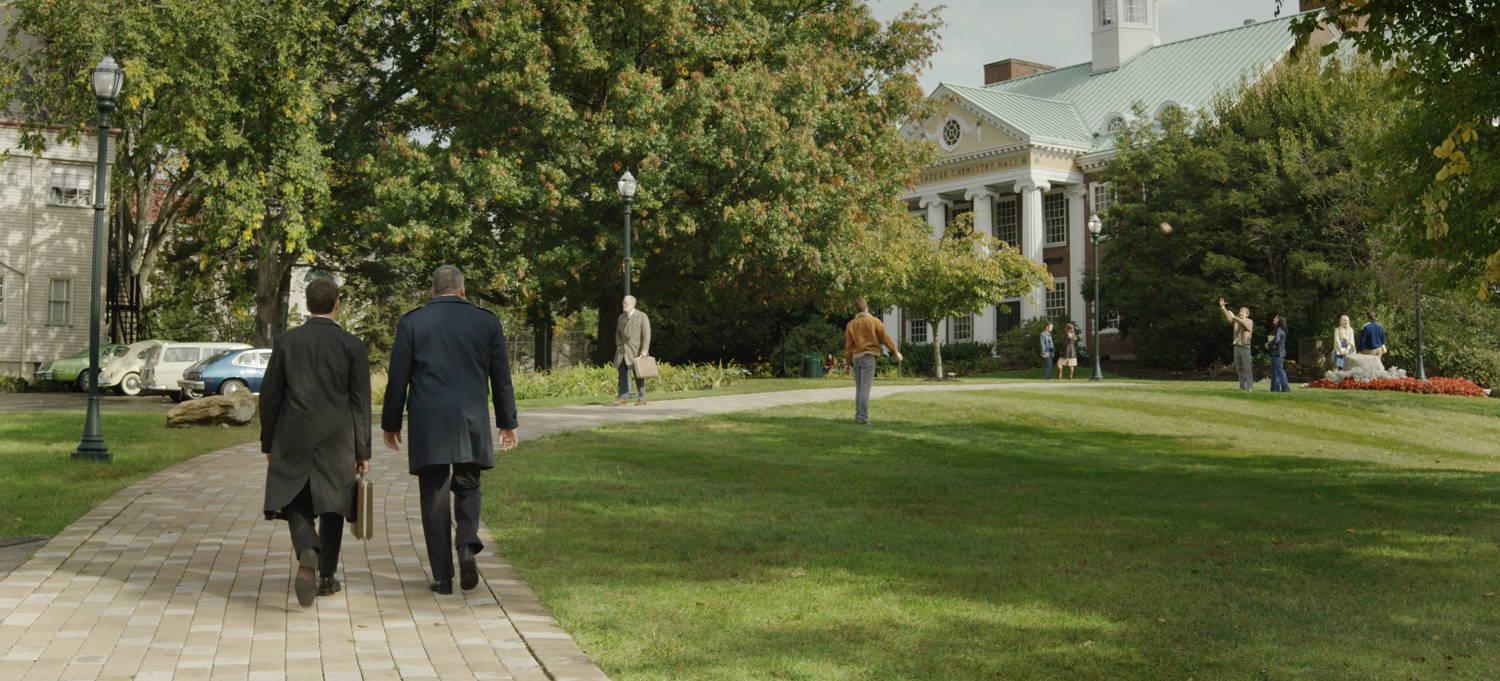
After the grade.
Many of Fincher’s notes require simple dodging and burning, performed primarily through Weidt’s use of shapes, masking and tracking in Baselight. Using PIX, Fincher would circle subjects or areas of a frame, giving suggestive chromatic terms like ‘sallow’ or ‘ruddy,’ and ‘equidistant’ or ‘symmetrical’ in regard to reframing. Mindhunter used a 5K working area extracted from the full 6K frame, ultimately downconverted to a 4K deliverable, a Netflix requirement. As a 2.2:1 center extraction, the editors were able to reposition the image subtly, as needed. The image was stabilized further as necessary by using sophisticated tracking for repositioning and resizing without loss of resolution upon deliverable at 4K.
“David is famous for having a visual style where he is going to stabilize two-thirds of the shots in an episode, or in a movie, so that everything is absolutely perfect,” says Weidt. “What he wants is that the camera, the gaze into the image, is totally unconscious, and you’re really in there without distractions that most people take for granted.” After Fincher returned to Los Angeles, their standard workflow on a scene together would start with a master shot that incorporated the characters as well as background, timing color and light levels for other shots and angles in scenes to be timed from that reference.
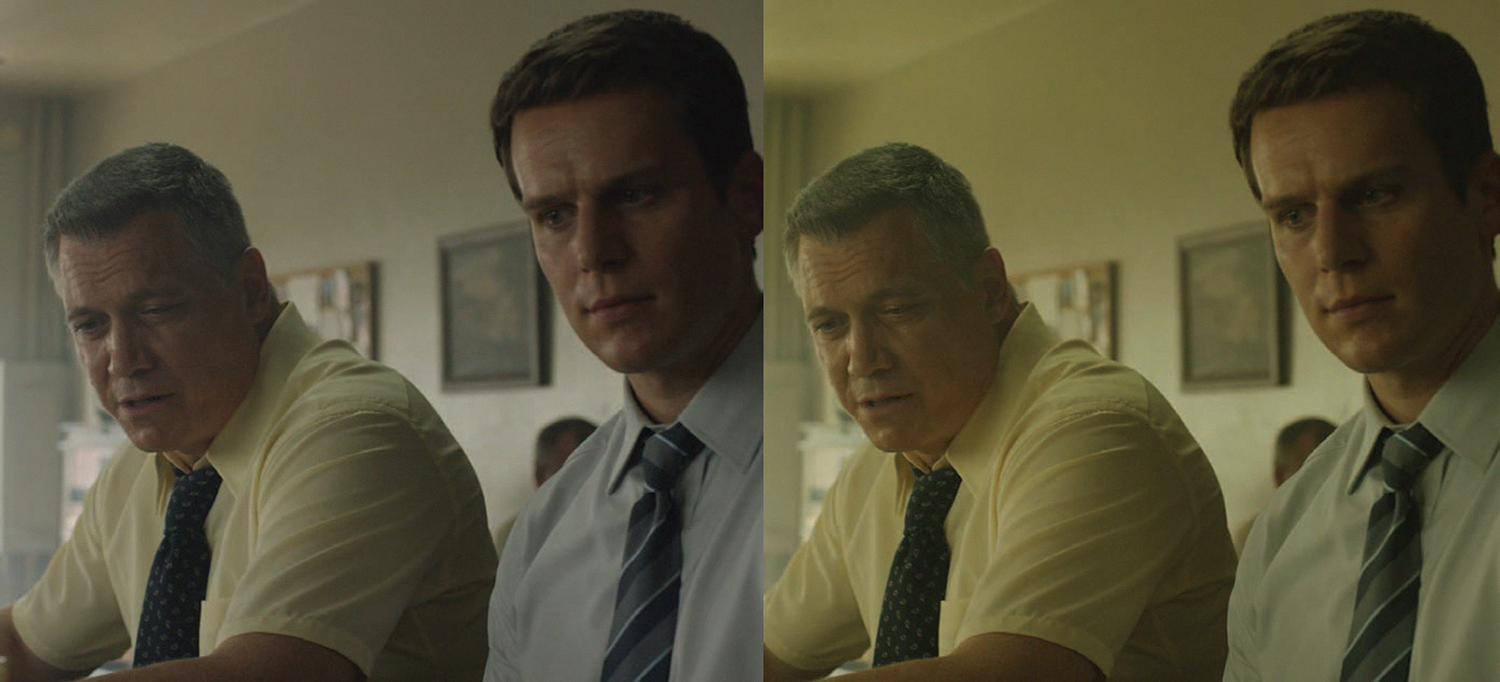
Fincher’s eye for detail goes far beyond that, though, and Weidt noted several corrected items that would have escaped his attention, like plants outside a prison that were too vibrantly green, or highlights in reflections that needed to be turned down to match light sources. “There are certain colors that David needs to suppress, and that’s mostly pink,” he continues. “Pink appears in people’s skin tones, and if you get it wrong in the grading suite and ends up on a monitor outside of that environment, it’s going to appear like they have pink faces and it looks really bad. David wants to control that.”
Before / After
Using Summilux-C primes from CW Sonderoptic, XML information was created for every focal length. This was a requirement on Mindhunter as simulations of grain, lens barreling and chromatic aberration in Baselight were tailored to the specific focal length throughout the show. Weidt even created anamorphic effects for the spherical lenses.
“David wanted to refer to 70’s in what could be called ‘the anamorphic wide-screen era,'” he says . “Unfortunately, that focal length is not something that’s carried through in metadata. It’s tallied by the camera assistant with name of the clip and the focal length and put into a database. I had to find a way to apply the right settings for every single clip, in the absence of metadata.”
Weidt was able to merge this information by teaching himself the Python scripting engine for asset management adding the focal length as a variable in the comment field. That enabled him to classify and organize shots by telephoto, standard and wide, then multi-paste effects into an alpha-numerically sorted timeline which came in handy throughout the production. “It worked beautifully,” he says.
He also added pseudo chromatic aberration “on every shot and every episode of Mindhunter,” which he developed himself, as the vast majority of plug-ins and filters will simply shift one of the primary color plates, stretching from center, resulting in bi-color aberrations. These created results that Fincher found lackluster, when for example given a cyan-red, he’d really only want the cyan. “I found the solution in Baselight, which essentially took 20 layers, using blending modes that are usually the purview of a compositing tool,” Weidt says.
Creating a specific ’70s look.
Mindhunter
is graded on Baselight.
“David directed four episodes of Mindhunter, but he’s the executive producer for the show, and he’s definitely the director of the DI,” he adds. “All of the color, he directed himself, with contributions from Erik.”
Weidt notes that next season will be shot using a Helium sensor, and HDR monitors will be on set along with a new ACES color space workflow. “We’ve got 20 layers just for chromatic aberration. We’ve got lens warping. We’ve got three different types of grain as well, because you couldn’t just have one,” Weidt adds, regarding the final rendering process.
“Season 2 is going to be just like a real walk in the park compared to season one. We learned so much.” Season 2 of Mindhunter is currently in production.
At the core of any story is the relationship between protagonist and antagonist, especially in a story where the protagonist must understand his enemy in order to find him. The best battles between good and evil are convoluted with characteristics that could be categorized as either, or neither. When hero and villain are more alike than either would want to admit, that makes for a dynamite struggle between them. There are so many books out there that explain how to achieve that element in storytelling, but few movies ever do it as well as David Fincher’s serial killer masterpiece Se7en (1995).
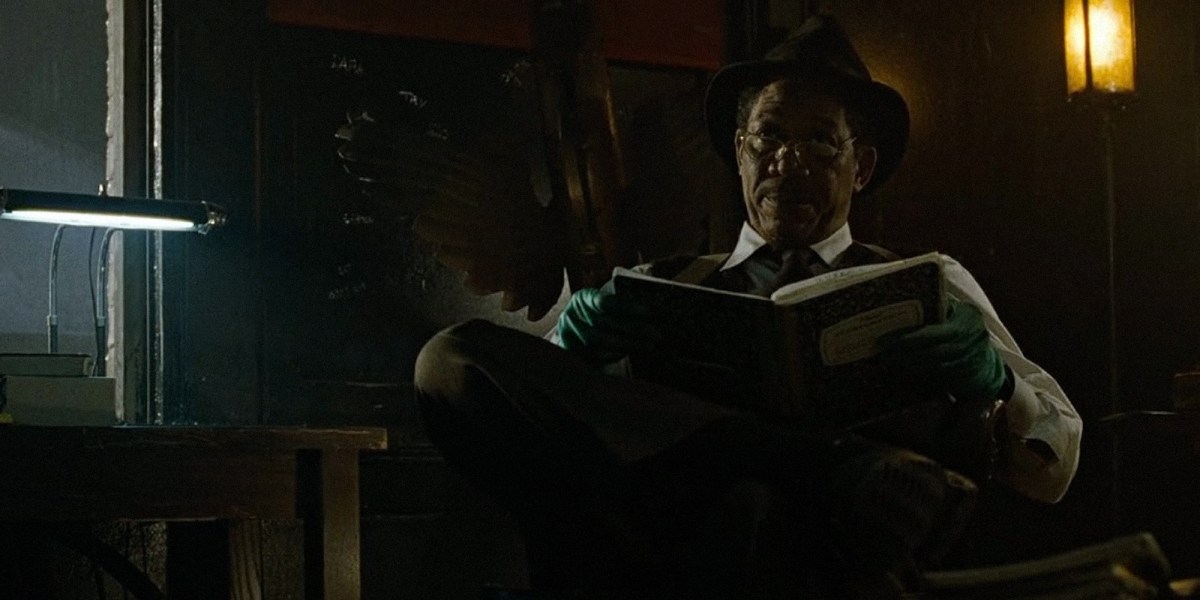
Honestly, we’ve learned to expect nothing less than greatness with a Fincher + serial killer collaboration, and Se7en was his first. This almost neo-noir thriller follows the investigation of a serial killer using the seven deadly sins to justify brutal killings all over an unnamed city. Detective Somerset (Morgan Freeman) is an aging homicide detective on his way out of the department when he’s assigned the worst last case. He’s paired with his replacement, an idealistic and determined young detective named Mills (Brad Pitt). They’re forced to work through their differences to solve the case, which is more horrifying and unpredictable than either could imagine.
There are viable arguments for who is the true protagonist in this movie, Somerset or Mills. For the sake of reading the rest of this article, just humor me if you disagree that Somerset is the protagonist in this story. He begins and ends this movie, most of the struggles are his own, and he’s in 90 percent of the scenes. While Mills has a major relationship with the killer John Doe (Kevin Spacey) as well, what convinces me that he is not the protagonist is the connection and similarities between Somerset and Doe.
The Netflix series’ breakout guest actor reveals what it took to pull off his haunting performance as the murderous Ed Kemper (hint: lots and lots of director David Fincher’s infamous takes).
You can’t always pinpoint exactly the moment when a show makes its big qualitative leap, but with Netflix‘s Mindhunter, it’s easy. Holden Ford (Jonathan Groff), an FBI agent experiencing frustration at his colleagues’ antiquated approach to murder investigation, goes to prison to visit a notorious killer and comes face-to-face with Ed Kemper (Cameron Britton).
Towering in stature, soft-spoken, viewing the world inquisitively through thick glasses, Kemper is intellectually vicious, yet unfailingly polite. By the end of one 10-minute conversation, we understand completely why Holden has been pulled into Kemper’s gravity and how this giant has instantly transformed his worldview.
It’s a show-changing character and a career-changing performance for Britton, making his first major TV role and earning his first career Emmy nomination. The actor talked with The Hollywood Reporter about his approach to the real-life killer, director David Fincher‘s notoriously exacting standards and more.
Cameron Britton (‘Mindhunter’) chats with Gold Derby editor Daniel Montgomery: It was difficult to get into the mind of a killer, and to get out of it.
Mindhunter’s Cameron Britton tells us how he was able to get into the mind of serial killer Ed Kemper, the toll it took on him, and how he ultimately got him out of his system.
Emmy-Nominee Cameron Britton On Becoming Ed Kemper In ‘Mindhunter’
Mindhunter‘s Cameron Britton talks to Awards Daily about how he became serial killer Ed Kemper, how the role impacted his life, and what his Emmy nomination means to him.
When Netflix’s Mindhunter premiered last fall, critics and audiences alike approached the dramatic series with respect and awe, thanks to the influence of the great director David Fincher. But everyone, literally everyone, was talking about Cameron Britton. His take on infamous serial killer Edmund Kemper captivated audiences. If you were talking about Mindhunter, then you were talking about Cameron Britton’s brilliant performance.
Here, Cameron talks to Awards Daily about how he wrestled with Edmund Kemper. He dove so deeply into Kemper that it took time to exorcise the role from his system. He also talks about what the role meant for his career and how he prepped for it by running lines with his close friends. It’s a fascinating conversation with an actor clearly on the rise in Hollywood.
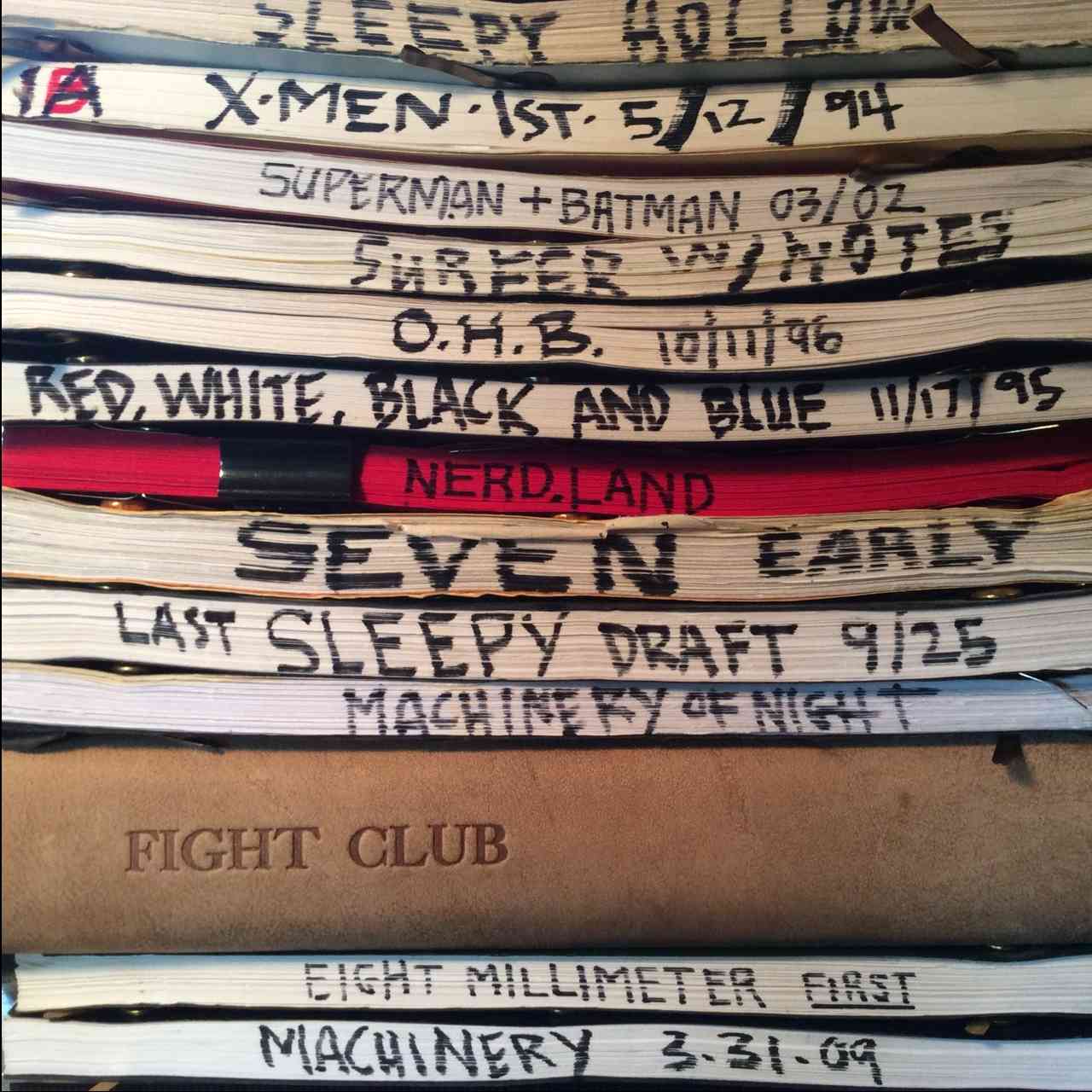
David Fincher’s film chttps://www.thebeliever.net/an-interview-with-david-fincher/areer behttps://www.thebeliever.net/an-interview-with-david-fincher/gan at the age of nineteen as an assistant cameraman at Industrial Light & Magic. In 1983, he relocated to Los Angeles to direct TV commercials and music videos. His commercial clients include Adidas, AT&T,Coca-Cola, Budweiser, Pepsi, and Nike. David has directed music videos for various artists including Madonna, The Rolling Stones, Michael Jackson, and A Perfect Circle. In 1987 he cofounded Propaganda Films with Dominic Sena, Greg Gold, and Nigel Dick, and has since become a motion-picture director with Panic Room, Fight Club, The Game, Se7en, Zodiac, and The Curious Case of Benjamin Button among his credits. His next film, The Social Network, is slated to be released this month.
Mark Romanek was born in Chicago. Romanek has directed numerous award-winning music videos for many artists including Fiona Apple, Beck, David Bowie, Johnny Cash, Coldplay, R.E.M., and Sonic Youth. Romanek wrote and directed the feature film One Hour Photo starring Robin Williams. The film had its world premiere at the 2002 Sundance Film Festival, and received the Prix du Public, Prix Premiere, and the Prix du Jury at the 2002 Deauville American Film Festival. His new film, Never Let Me Go, will be released this month.
Fincher and Romanek first met in 1990, when Romanek was signed to Satellite Films. Satellite was a “boutique” division of Propaganda Films, where Fincher was a director, and a music-video legend. The two directors spoke by phone for The Believer in early August 2010.
Season 1 brought us many familiar serial killer faces with the likes of Monte Ralph Rissell, Jerry Brudos (The Shoe Fetish Slayer), Richard Speck, Darrell Gene Devier, Edmund Kemper (the Co-Ed Killer), as well the murders of the Dennis Rader (the BTK Killer) subtly over-arch the season.
Mindhunter season 2 is setting itself up to be a doozy. Not only will we see interviews with more serial killers and the BTK Killer storyline continue to develop, but the show will also be taking on the Atlanta Child Murders; a string of 28 mostly child murders, that shook Atlanta from 1979-1981. These murders also spawned the “It’s 10 o’clock, do you know where your child is?” commercials.
Currently, the Mindhunters casting team is searching for actors to play the victims family members, Venus Taylor, Annie Rogers, D.A. Slaton, Mayor Maynard Jackson, Commissioner Lee Brown, and Deputy Police Chief Morris Redding.
Casting is also looking for Wayne Williams, a serial killer convicted of killing 2 men, but prosecutors believe he was responsible for murdered children because when Williams went to prison the child murders stopped.
Rumors and theories have been flying around the interwebs speculating which serial killers the show could possibly bring into season 2 for interviews or more. Well, we here at That Hashtag Show have that EXCLUSIVE information just for you!









 The Fincher Analyst