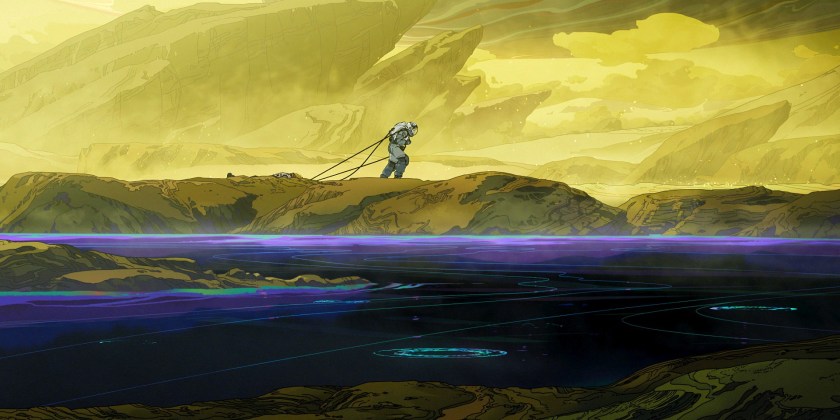
Oscar and Emmy winner Alberto Mielgo tells IndieWire about returning to the anthology with an animated original about a golden siren and an armored knight.
After nearly 40 years in the entertainment business, 3-time Oscar-nominee, David Fincher, has seemingly done it all. From his early years directing music videos for Madonna and Aerosmith, crafting memorable films like Seven and The Social Network, and working on acclaimed TV shows such as House of Cards and Mindhunter, Fincher’s resume appears to be complete. But what about animation?
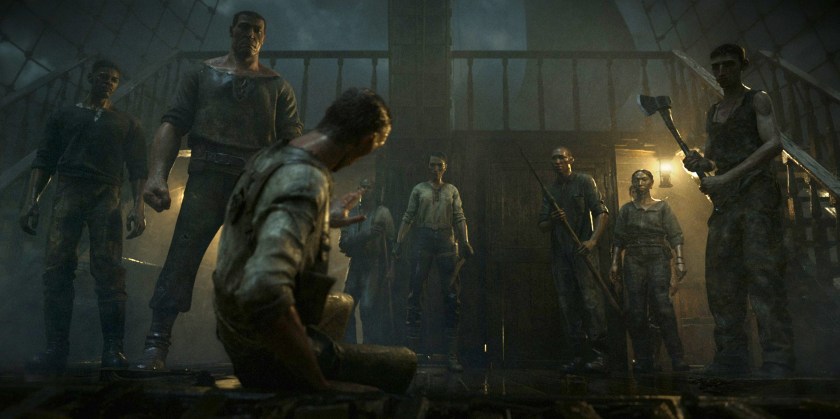
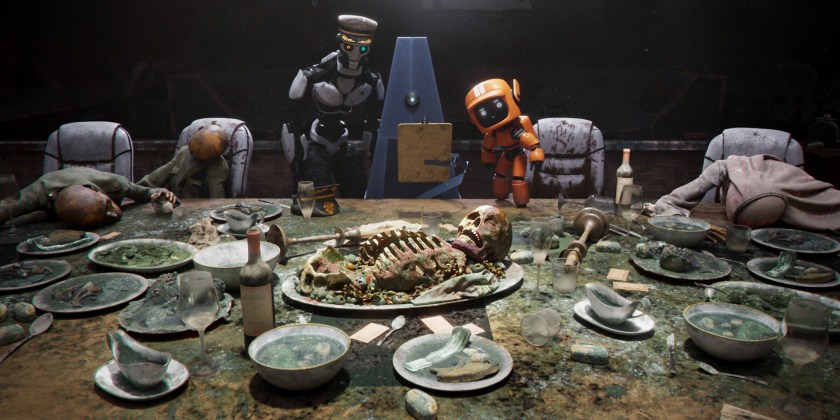
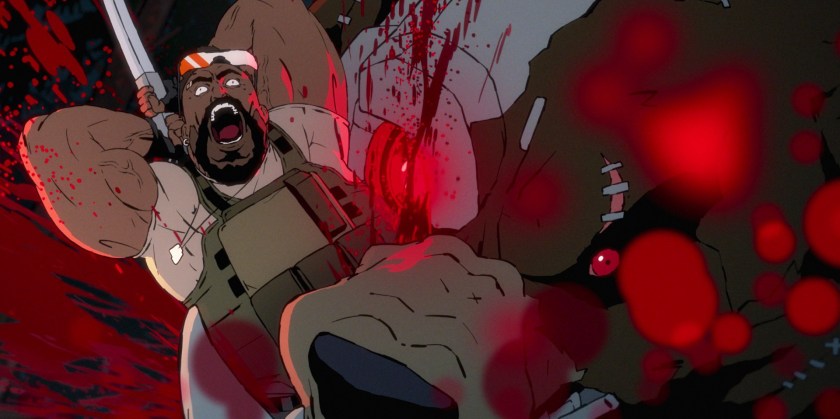
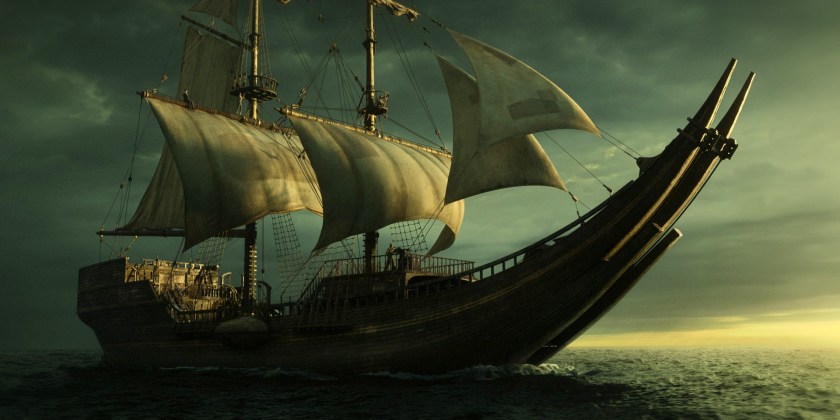
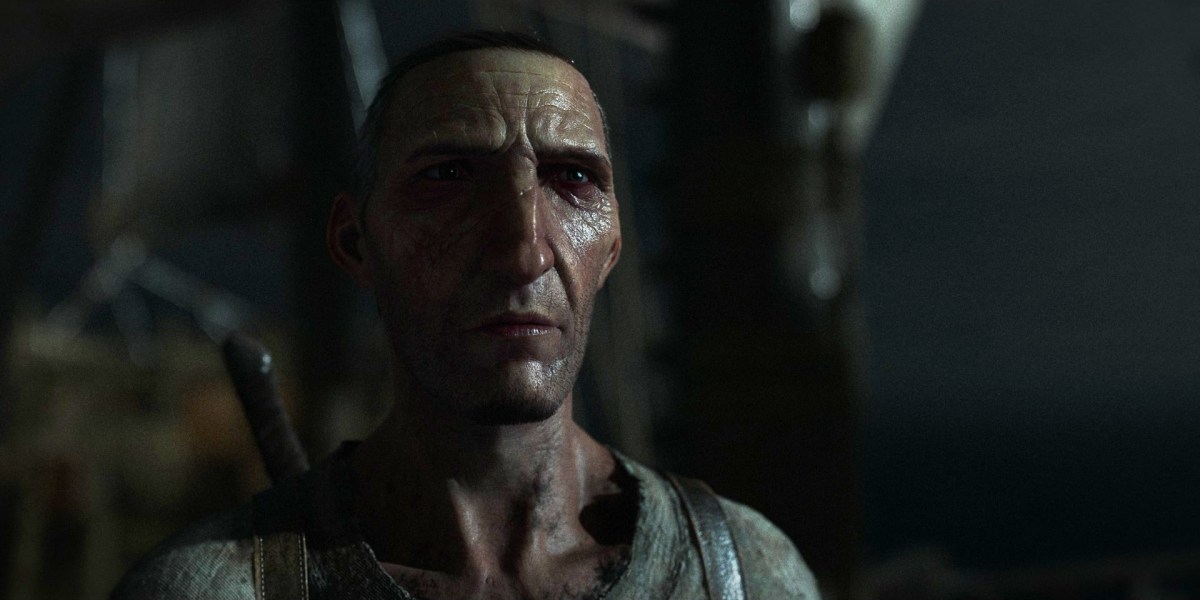
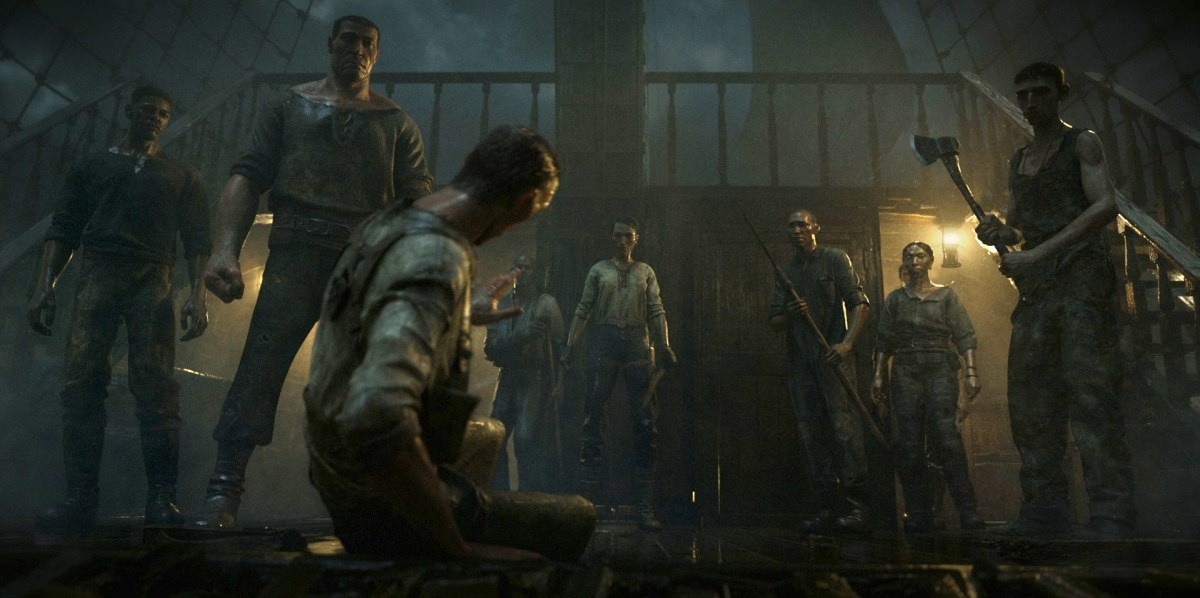
With the launch of Volume 3 of Netflix‘s mind-bending Love, Death and Robots anthology series, Fincher can finally check animation off his bucket list with his episode, titled “Bad Travelling.” In this seafaring horror story, a group of Jable shark hunters on a far-away planet are attacked by a giant crustacean. With the sailors’ lives in jeopardy, chaos and mutiny ensue.
Although Fincher has decades of experience working behind the camera on live-action projects, we wanted to know if animation brought any new challenges to the seasoned director.
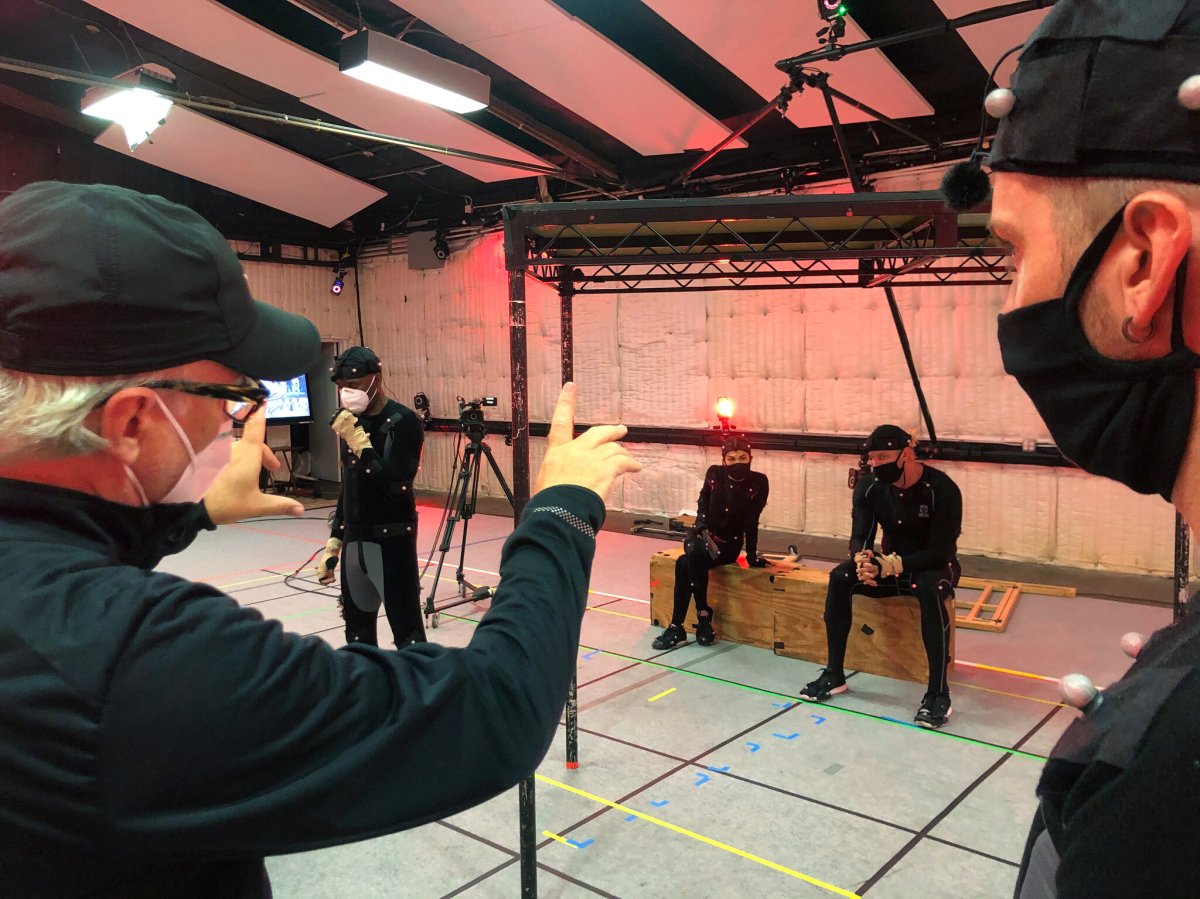
“Ultimately, directing comes down to understanding context and sculpting time, light, and behavior with that innate understanding,” Fincher told IGN. “In some cases, like in the case of motion capture, there are people in onesies with ping pong balls hanging off them, and you’re going, ‘Okay, now remember the ship is rocking and all…’ You’re there to add a little imagination sauce to all the other shit that they’re trying to keep in their heads. I mean, it does tend to look a little like Saturday Night Live. It’s a ridiculous thing to be asking somebody to do a one-act play, dressed in pajamas. So that aspect of it, it’s the same thing. You’re playing dress up, right? And you’re trying to say, ‘Look, from the audience’s standpoint, this needs to happen a little faster here, a little… This can go a little slower. Find that word.’ It’s all the same shit.”
If you’re a fan of David Fincher and Love, Death + Robots, you’re about to be very happy. Not only is Love, Death + Robots Volume 3 now streaming on Netflix, David Fincher directed one of the episodes, Bad Travelling, and it’s fantastic. Written by Se7en screenwriter Andrew Kevin Walker, it’s about a giant crustacean and a shark-hunting sailing vessel. I’d love to tell you more…but the best thing about Love, Death + Robots is not knowing anything about what you’re going to watch and just letting it happen.
Shortly after watching the episode, I was able to get on the phone with Fincher for a deep dive conversation about directing Bad Travelling and the making of Love, Death + Robots. During the sprawling conversation, Fincher talked about his history with animation, how he decided on the style of animation for his episode, how they decided where something should end, how everyone involved in the series is doing it for the love of the genre, and if they’ve thought about making a Love, Death + Robots feature film or doing a live-action version. In addition, he talked about his love of director Alberto Mielgo’s Jibaro (another Love, Death + Robots Volume 3 episode) and how he’s “never seen anything like it. I’ve never been that mesmerized.”
Trust me, if you’re a fan of Fincher and this amazing series, you’ll learn a lot about how it’s made.
Love, Death + Robots Vol 3. EXTREMING TOMORROW. May 20, 2022 ❤️💀🤖
Alan Watts – “Dream” Music: Apache – Lord & Master
Emmy-winning animated anthology LOVE DEATH + ROBOTS returns with a third volume executive produced by Tim Miller (Deadpool, Terminator: Dark Fate) and David Fincher (MINDHUNTER, Mank). Terror, imagination and beauty combine in nine new episodes which stretch from uncovering an ancient evil to a comedic apocalypse, telling startling short stories of fantasy, horror and science-fiction with trademark wit and visual invention.
The director made his first animated short for the new season of this Netflix anthology. “It was an incredibly freeing, eye-opening, mind-expanding way to interface with a story,” he said.
Before David Fincher became an A-list director and multiple Oscar and Emmy nominee — lauded for of-the-moment films like “Fight Club” and “The Social Network” and the TV series “House of Cards” and “Mindhunter” — he was one of the co-founders of the production company Propaganda Films. Propaganda was known for its visually dazzling TV commercials and music videos, and Fincher honed his craft in dozens of miniature movies made in myriad styles.
Yet until recently, he had never directed animation, even though he loves the medium so much that he signed on a few years ago to be an executive producer of the Netflix anthology animation series “Love, Death + Robots,” which returns for its third season on Friday.
“Love, Death + Robots” sprung from the ashes of a project Fincher had been developing with the “Deadpool” director Tim Miller since the late 2000s: a revival of “Heavy Metal,” the animated movie series inspired by the adults-only science-fiction and fantasy comics magazine. The first season of “Love, Death + Robots” debuted in 2019, featuring 18 episodes (ranging in length from 6 to 17 minutes) that adapted short stories by genre favorites like Peter F. Hamilton, John Scalzi and Joe Lansdale. An eight-episode second season followed in 2021.
Despite his involvement, Fincher never made a short of his own until Season 3, when he and the screenwriter Andrew Kevin Walker (who wrote Fincher’s crime thriller “Seven”) tackled a tale by the British science-fiction author Neal Asher called “Bad Travelling.” Set on the high seas on a distant planet, the story follows a merchant ship as it is tormented by a giant, intelligent crab that manipulates the crew members and then eliminates them one by one. Fincher described the short as “like a David Lean movie crossed with ‘Ten Little Indians.’”
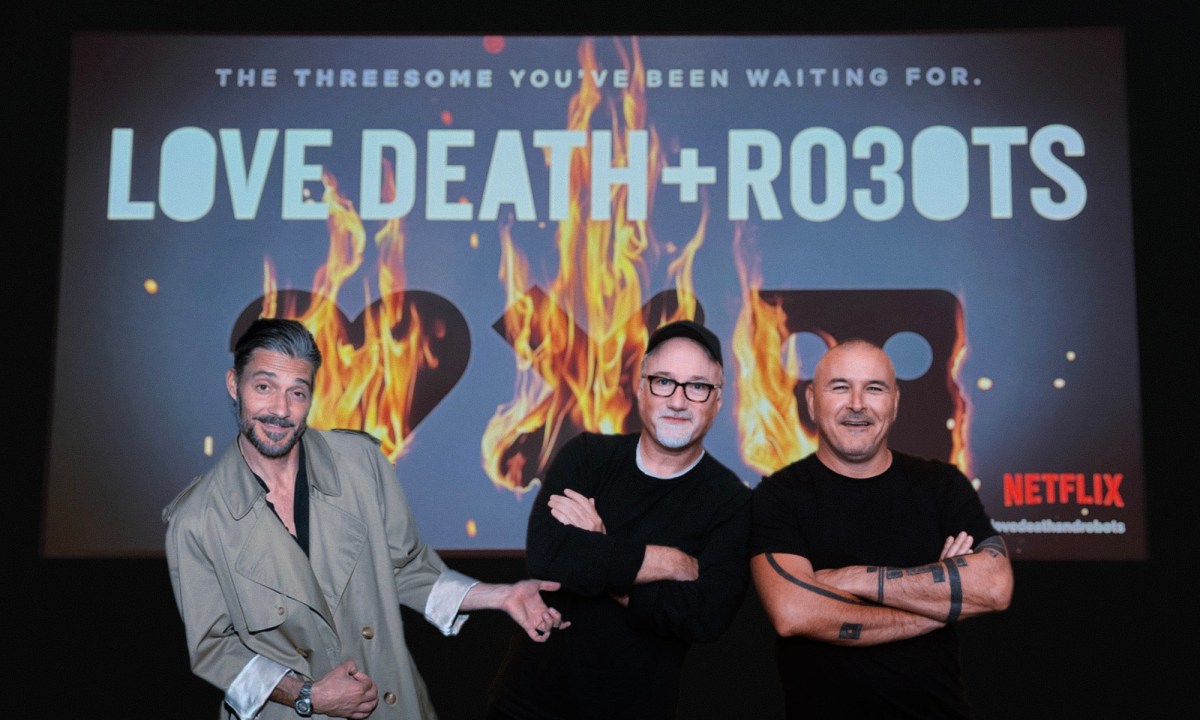
This month will see the return of “Love, Death + Robots” on Netflix, which is produced by Tim Miller and David Fincher. With the third volume arriving, something special is happening. Fincher will be helming his first animated short for the anthology streaming series.
Netflix has released a new trailer and announced Fincher is directing the segment “Bad Travelling” which was written by screenwriter Andrew Kevin Walker (“Se7en”) and based on a short story by Miller’s longtime pal, author Neal Asher. This marks Fincher’s first time directing something for the streaming series.
Netflix has also included a synopsis that reads as follows:
“A jable shark-hunting sailing vessel is attacked by a giant crustacean whose size and intelligence is matched only by its appetite. Mutiny, betrayal, and ventriloquism with a corpse.”
Emmy-winning animated anthology LOVE DEATH + ROBOTS returns with a third volume executive produced by Tim Miller (Deadpool, Terminator: Dark Fate) and David Fincher (MINDHUNTER, Mank). Terror, imagination and beauty combine in nine new episodes which stretch from uncovering an ancient evil to a comedic apocalypse, telling startling short stories of fantasy, horror and science-fiction with trademark wit and visual invention.
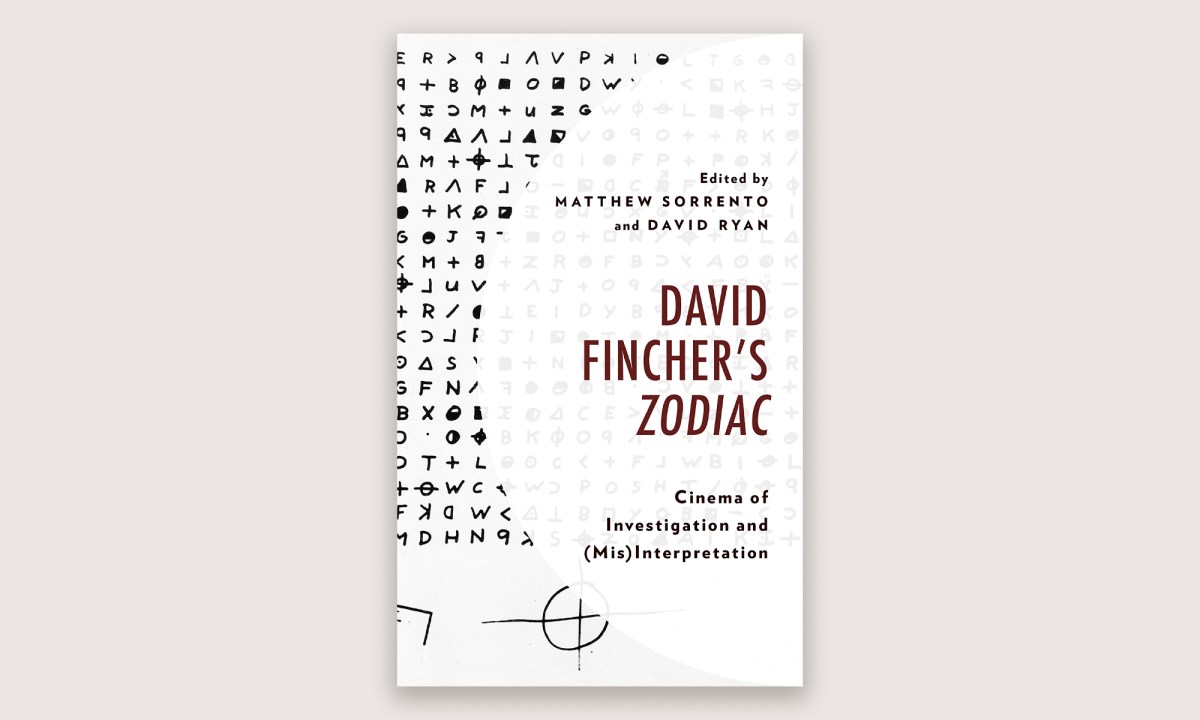
David Fincher’s Zodiac: Cinema of Investigation and (Mis)Interpretation, edited by Matthew Sorrento and David Ryan. 259 pp. Fairleigh Dickinson UP, 2022.
2007 was a good year for American film, with the likes of the Coen brothers’ No Country for Old Men and Paul Thomas Anderson’s There Will Be Blood earning heaps of critical and popular adoration. Coupled with their success at the Academy Awards (the former won four, including for Best Picture; the latter two), the films’ positions as “instant classics” are well cemented.
Somewhat neglected among discussions of this banner year, on the other hand, is David Fincher’s true-crime epic Zodiac; though initially left in its contemporaries’ shadows (as a point of comparison, it received zero nominations), it may very well have aged better than either of them. If Anderson’s and the Coens’ outings were dirges on late capitalism, then Fincher’s was something of a prophecy – one that anticipated the post-truth morass of our digital age. Given this unexpected prescience, Zodiac is ripe for critical reassessment.
Enter David Fincher’s Zodiac: Cinema of Investigation and (Mis)Interpretation, courtesy of editors Matthew Sorrento and David Ryan. What makes this particular film so alluring is its unique position as a literary adaptation, a piece of narrative nonfiction (one based on a still-unsolved case, no less), a self-reflective critique of news and multimedia, and a relatively early exemplar of what digital cameras can do in the right hands. The book mines these and many other critical avenues – from game theory, to death metal – with somewhat inconsistent, but never dull, results. While reading it, I was reminded more than once of Robert Graysmith’s (Jake Gyllenhaal) climactic, fevered conversation with investigator David Toschi (Mark Ruffalo) in the diner: “This is a case that’s covered both Northern and Southern California, with victims and suspects spread over hundreds of miles,” he tells Toschi as he struggles to connect the case’s overwhelming number of dots. Like the film itself, this collection has its fingers in many pots, is borderline obsessive, and makes some ambitious connections that may or may not actually be there. But, of course, that’s part of the fun.
It’s not often that we as viewers and lovers of television get an inside scoop on what the future of a favorite show would have been — especially once it’s canceled. In the case of Netflix’s Mindhunter, which released its second season back in 2019, the series technically wasn’t canceled so much as a possible third season was put on “indefinite hold” per David Fincher, though the series’ executive producer has also confirmed in interviews since that Season 3 likely isn’t happening, partly due to the fact that it would have required an even steeper budget than the previous one. Now, thanks to Season 2 director Andrew Dominik, we have even more of a sense of why Mindhunter‘s dead-in-the-water third season would’ve had a higher price tag.
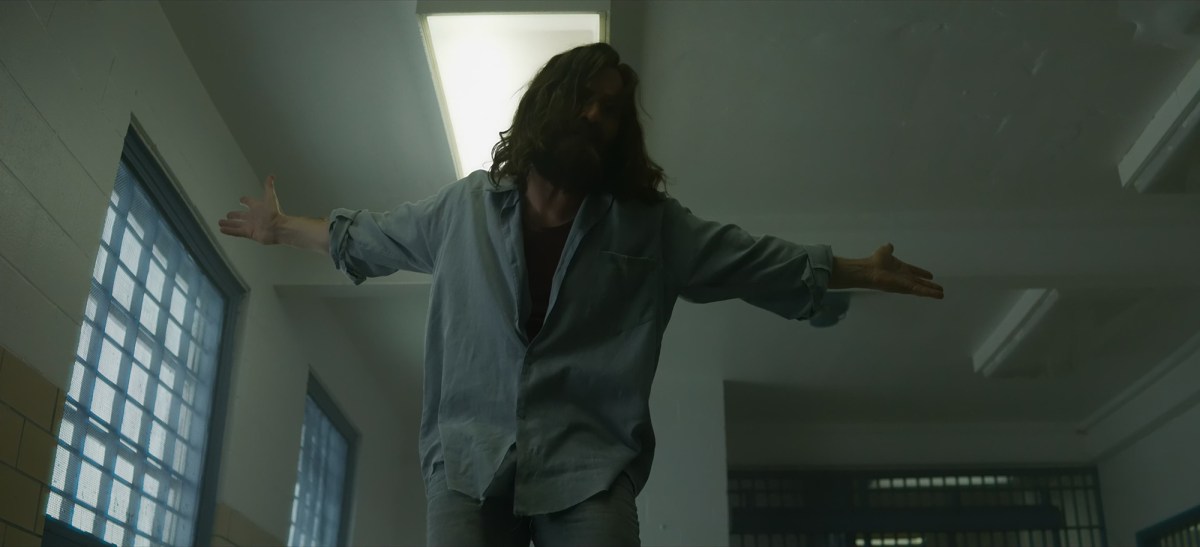
In speaking with Collider‘s own Steve Weintraub in a long-spanning interview about his documentary about Nick Cave and Warren Ellis, This Much I Know to Be True, the director also briefly touched on not only his experience with directing two of Mindhunter‘s Season 2 episodes, but also what the third season would have entailed in terms of its main story — as well as which real-life figures the FBI Behavioral Science Unit team consisting of Holden Ford (Jonathan Groff), Bill Tench (Holt McCallany), and potentially even psychologist Wendy Carr (Anna Torv) would have crossed paths with.











 The Fincher Analyst