
Netflix Film Club (YouTube)
February 28, 2021
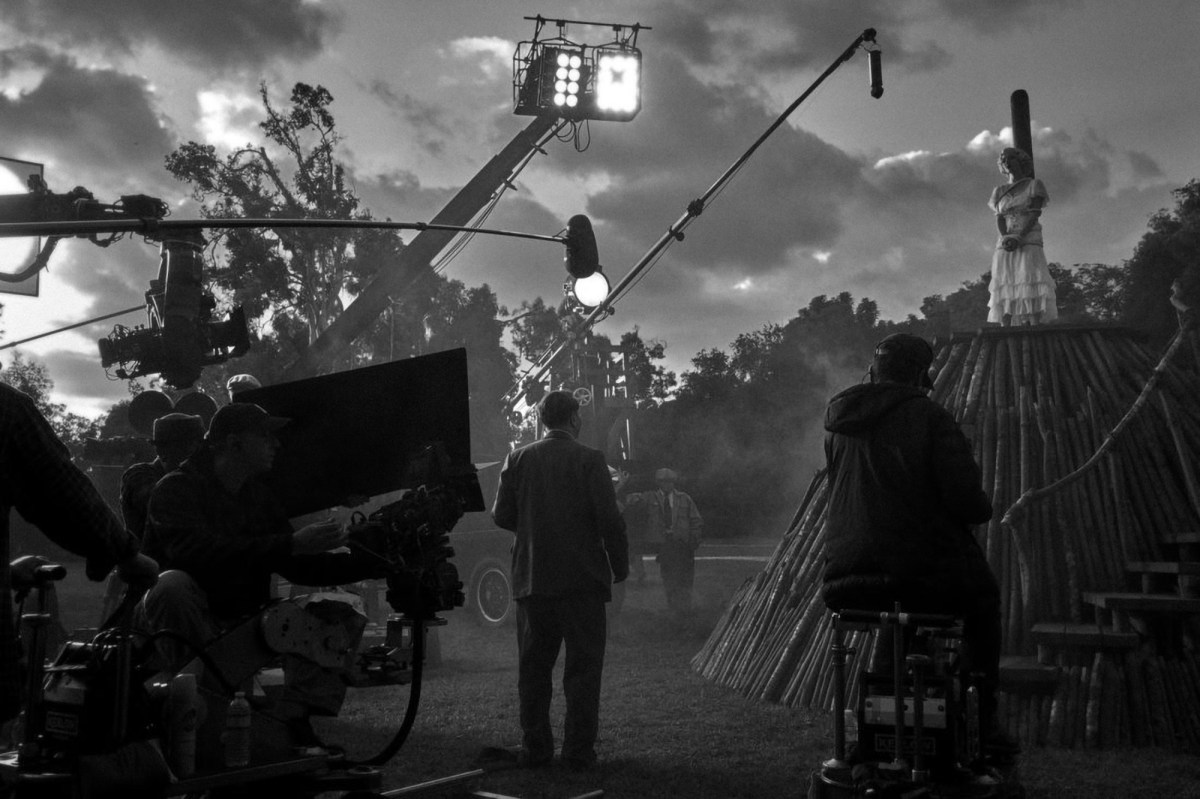
Join acclaimed director David Fincher, actors Gary Oldman and Amanda Seyfried, and the cast and crew of Mank, for a peek behind the curtain of Netflix’s black-and-white ode to Hollywood’s Golden Age.




Netflix Film Club (YouTube)
February 28, 2021
Join acclaimed director David Fincher, actors Gary Oldman and Amanda Seyfried, and the cast and crew of Mank, for a peek behind the curtain of Netflix’s black-and-white ode to Hollywood’s Golden Age.
Mara Webster
February 24, 2021
In Creative Company
1930s Hollywood is reevaluated through the eyes of scathing wit and alcoholic screenwriter Herman J. Mankiewicz as he races to finish “Citizen Kane.”
Q&A with Mank costume designer, Trish Summerville. Moderated by Mara Webster.
In Creative Company: YouTube, Instagram, Facebook, Twitter, Spotify, Apple Podcasts.
Antonio Ferme
February 22, 2021
Variety
While Netflix’s Oscar contender “Mank” was directed by David Fincher, the script was written by his father, Jack Fincher, prior to his death in 2003. Gary Oldman, who starred in the film as “Citizen Kane” screenwriter Herman Mankiewicz, said Fincher’s script was one of the best he had read in a long time.
“It is fun to be a detective and go off and read things and find out things and all of that,” Oldman said. “That’s great fun, but I felt that the work had really been done by Jack.”
In the Variety Streaming Room, hosted by deputy awards and features editor Jenelle Riley, the cast and crew of “Mank” discussed how Jack Fincher’s script was able to capture the extensive legacies of some of the icons from the golden age of Hollywood, as well as the challenges of shooting in black and white.
Amanda Seyfried, who portrayed William Randolph Hearst’s mistress Marion Davies, said that Fincher’s script infused new life into the cinema starlet’s legacy.
“None of what I read in my investigation was different from what the sense that I had gotten of her,” Seyfried said. “The essence was captured in that script right off the bat. So if I had nothing, I would have been okay.”
Aside from a handful of music videos and commercials, “Mank” was the first project cinematographer Erik Messerschmidt had ever filmed in black and white. He said the crew bounced many ideas off of each other when it came to figuring out what colors would look like on set.
“It becomes this very exciting kitchen of ideas, which is a very special thing to participate in,” Messerschmidt said.
When it came to fitting photos, costume designer Trish Summerville said she only sent them to Fincher in black and white. She said she did a lot of her research on what worked as far as which colors, prints and patterns translated well.
“Some things became really contrast-y and too kind of like confetti,” Summerville said. “Once we got to do the camera test, which I think helped us all greatly with seeing what the lighting was going to be, it helped with hair, with makeup, with clothes. It was a big tool for us.”
Edward Douglas
February 18, 2021
Below the Line
Continuing Below the Line’s look at the crafts behind David Fincher’s Mank, we spoke to Production Designer Donald Graham Burt, his sixth go-round with Fincher after the first worked together on 2007’s Zodiac. A year later, Burt would win the Oscar for Production Design for his work on Fincher’s The Curious Case of Benjamin Button. Besides performing those duties for six Fincher films, Burt also played a significant role in the designs for Fincher’s Golden Globe-winning Netflix series, House of Cards.
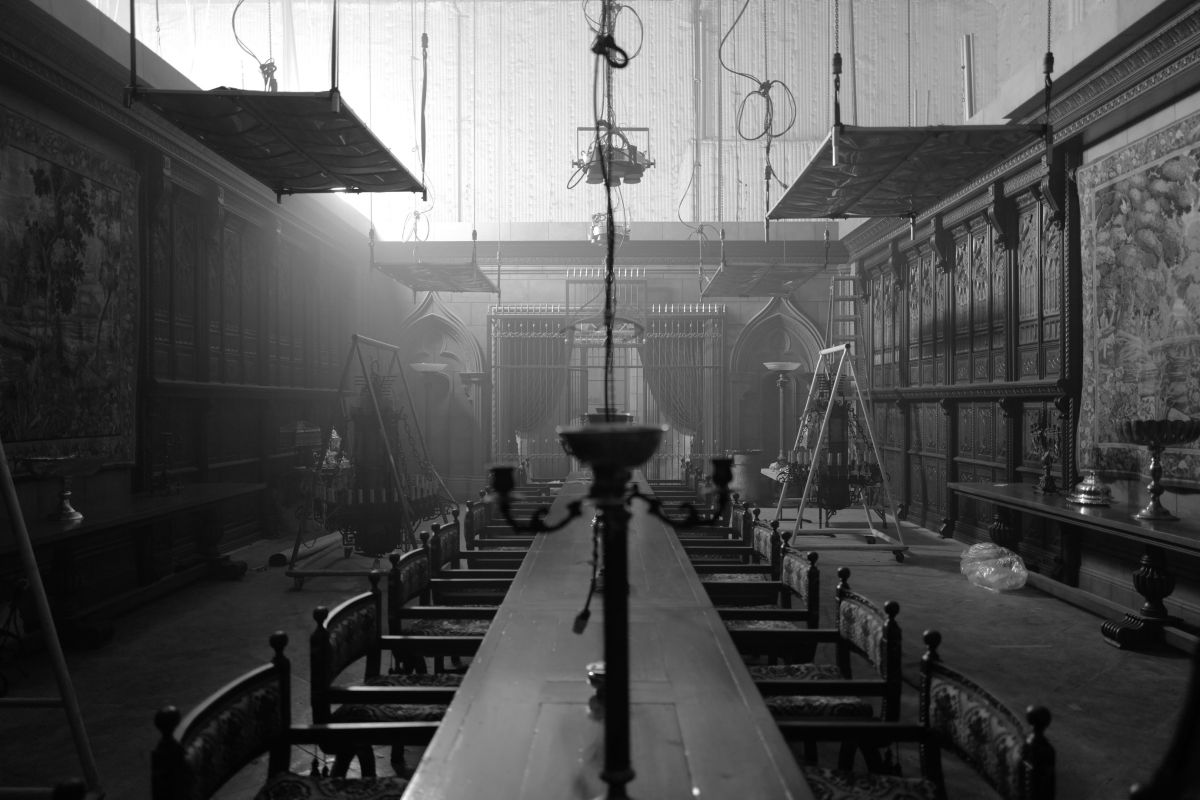
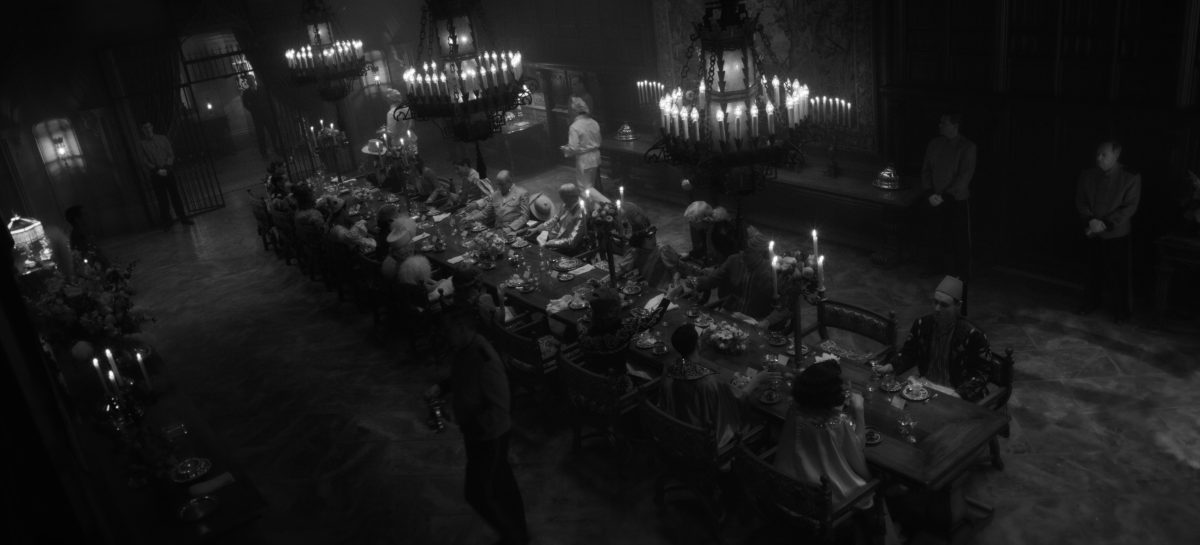
Burt’s definitely a bit of an old school Hollywood vet, going back to some of his work in the ‘90s like The Joy Luck Club and Dangerous Minds. Still, Mank offered Burt a number of new challenges, the first one being the fact that the film would be shot entirely in black and white, the second would be how it would task Burt and his team to recreate some of Hollywood’s most iconic locations from the ‘30s and ‘40s. You only have to watch the movie or look at some of the images below to agree that Burt and his art department came through with flying colors… even without having any actual color.
Below the Line spoke with Burt over the phone for the following interview.
Costume designer Trish Summerville enters the world of black-and-white filmmaking for Mank.
Jessica Shaw
February 12, 2021
Netflix Queue
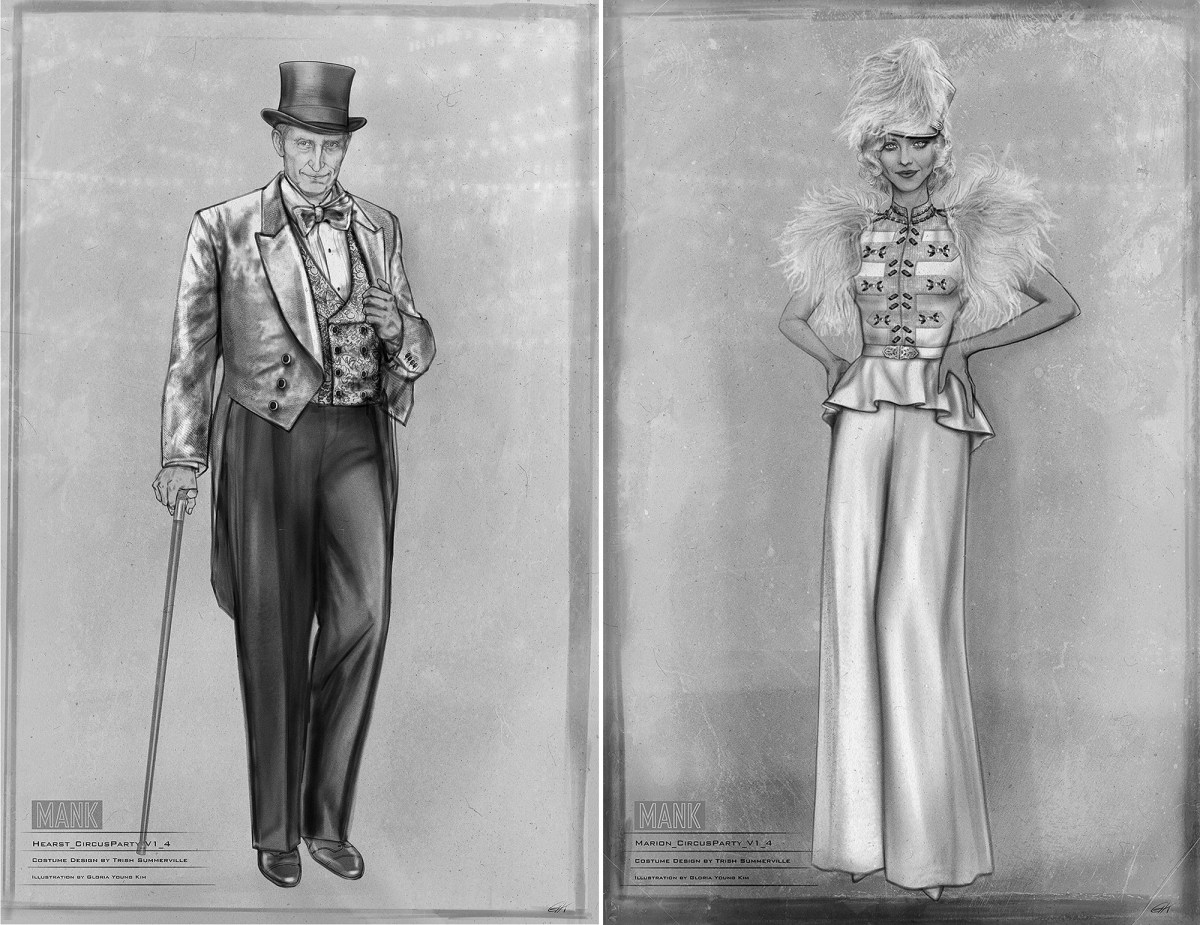
Costume Sketches by Gloria Young Kim
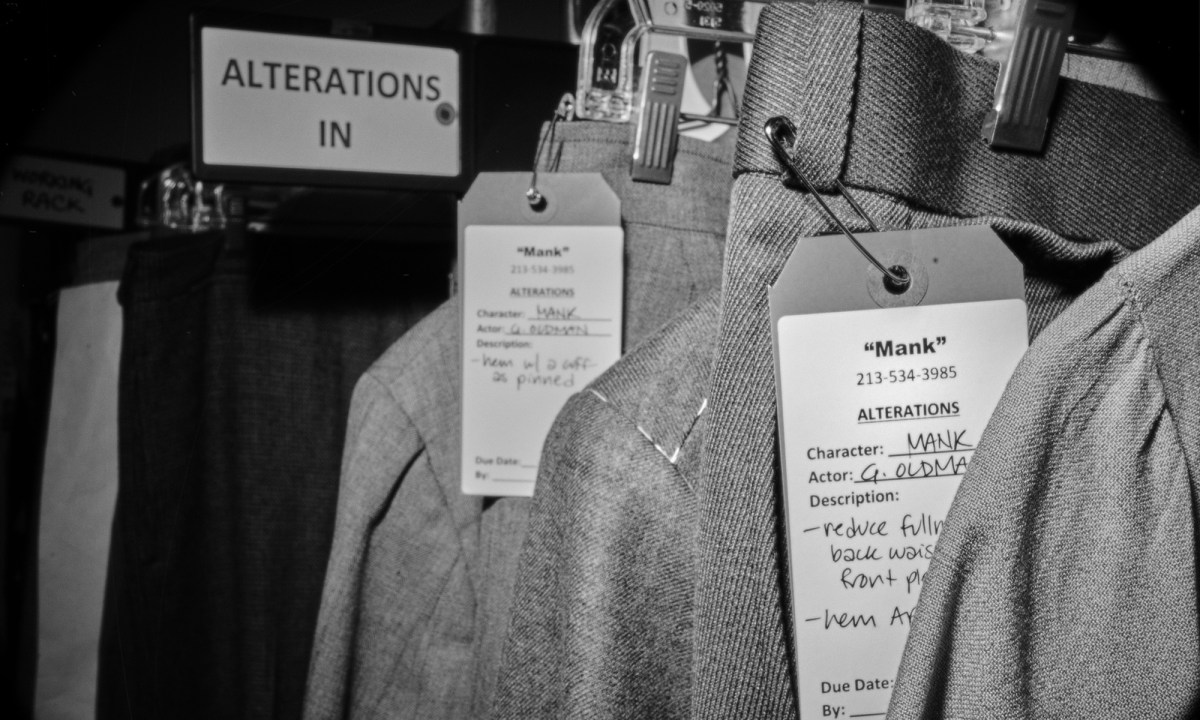
The first thing Trish Summerville heard from her friends when she signed on to be the costume designer for David Fincher’s Mank was, “That is going to be so easy for you!” People wondered how difficult it could possibly be to dress a cast for a black-and-white film set in the 1930s and 40s, about Herman Mankiewicz, the screenwriter who penned the first draft of what would become Orson Welles’s Citizen Kane. “I kept hearing, ‘You can just use any color you ever wanted and never worry,’” Summerville recalls, laughing at the thought. “That was definitely not the case.”
In fact, it couldn’t have been further from the truth. Summerville is a Hollywood force herself, having costume-designed films like The Hunger Games: Catching Fire, and Fincher’s Gone Girl and The Girl with the Dragon Tattoo, among others. Before Mank, she had worked on projects that incorporated black and white through flashbacks, but she had never done a complete picture sans color.
She immediately immersed herself in the style and learned some tricks of the trade. For instance, a light blue might be beautiful in person, but it’s going to look light gray onscreen. A true black can be too severe; navy reads as a softer alternative. A dark or saturated color that’s striking in real life will seem equally flat in black and white. On top of that, some fabrics strobe and some patterns with contrasting colors resemble confetti. Even a color that looks great can distract an actor in a dialogue-heavy scene and should therefore be avoided.
“Any project with Dave is a dream and you know it’s going to be challenging and exciting, Summerville summarizes, calling me from the set of Slumberland, her next film, “but my brain definitely had to adjust.”
J. Don Birnam
February 12, 2021
Below the Line
David Fincher’s Mank focuses on screenwriter Herman Mankiewicz as he puts the final touches on the script for Citizen Kane. The action, set in 1930s Hollywood, features luminaries from Irving Thalberg, William Randolph Hearst, and, of course, Orson Welles. Mank’s plot, however, it focuses on Gary Oldman as the principal character and on a magnetic performance by Amanda Seyfried as screen legend Marion Davies.
Given the setting—Hollywood on Hollywood—it is no wonder that Mank, in addition to an impressive cast, boasts production values that are also showy, including a Golden Globe-nominated soundtrack by Trent Reznor and Atticus Ross (who won an Oscar for the previous Fincher collaboration, The Social Network), and black and white cinematography by Erik Messerschmidt.
The lack of color makes sense and is effective in recreating the mood and style that most viewers’ minds have of that era. But it is not without its own set of challenges. In particular, how could a designer draw up costumes and clothing for the characters to convey the high echelons of Hollywood history some of Mank’s characters occupy, while working within the black and white environment? To find out, Below the Line News spoke to Mank’s costume designer Trish Summerville, whose work is as notable and as colorful as The Hunger Games: Catching Fire and Gone Girl, about working in black and white for the first time.
Jazz Tangcay
February 11, 2021
Variety
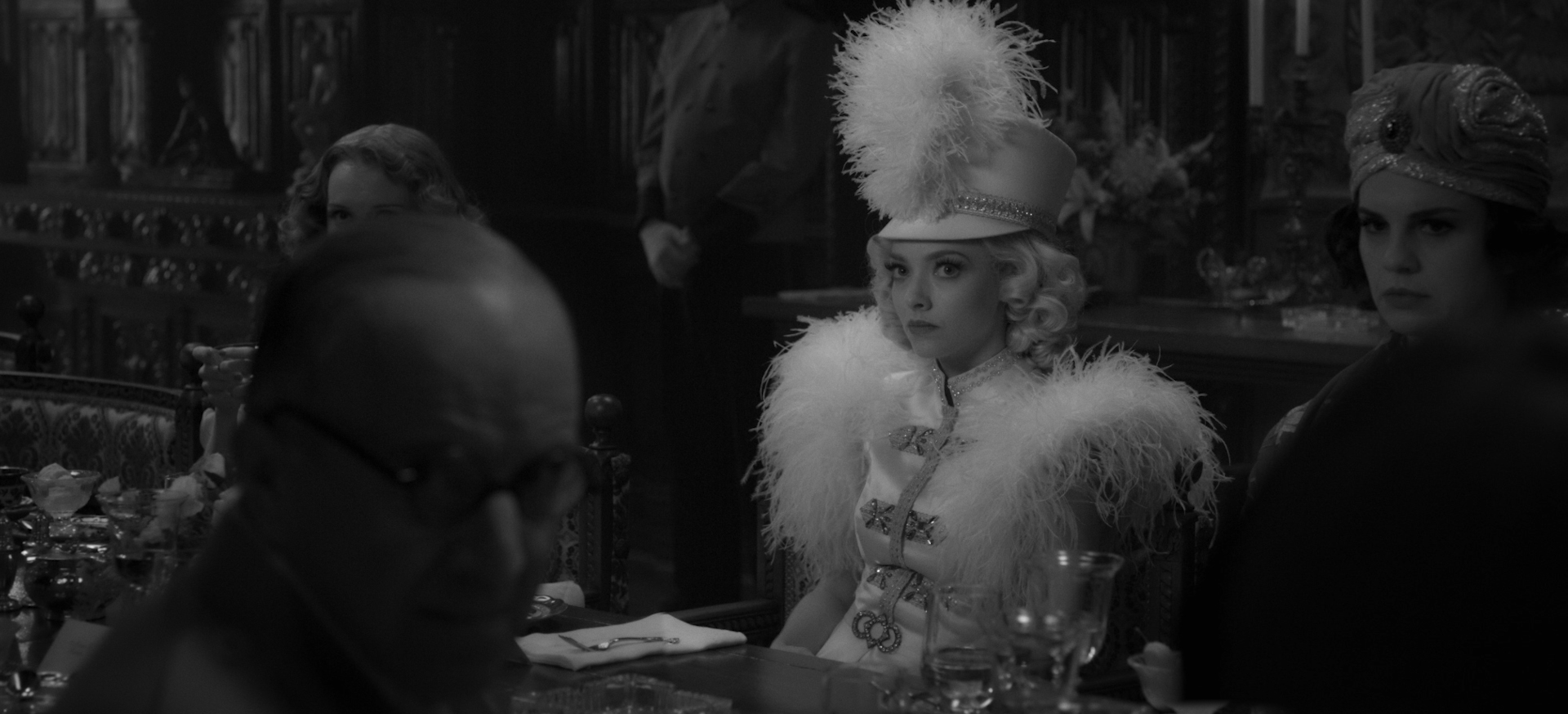
When it came to creating the costumes of David Fincher’s “Mank,” costume designer Trish Summerville had an advantage. “There were a lot of photographs out there,” she says, especially of Marion Davies, played by Amanda Seyfried in the black and white tribute to old Hollywood.
Summerville included a hat in her first sketch of Seyfried’s onscreen look, but since hair department head Kimberley Spiteri had made such a nice wig, Summerville ditched that idea.
The coat she sports, Summerville says, was a muted powdery blue. “It’s like a pale dusty periwinkle wool crepe. The fur is faux to mimic a minx, and we painted into it to give it more depth.”
Shooting in black and white gave her liberty to heavily paint on the costume to give the fur dimension. Summerville had ordered pattern books from the 1930s that had illustrations and the right silhouette for the time.
Phillip Boutte Jr.
February 10, 2021
Designing Hollywood Podcast (YouTube)
Designing Hollywood Podcast new home edition with guest talented costume designer Trish Summerville known for her work on:
The Hunger Games ‘Catching Fire’ (2013)
‘The Girl with the Dragon Tattoo’ (2011)
‘Gone Girl’ (2014) & most recent
‘Mank’ (2020)
With Host Phillip Boutte Jr. Produced by Ceo & Founder Martika Ibarra.
Thank you to our sponsor Gardena Cinema, the only old-fashioned single-screen stand-alone neighborhood movie theater still in operation in the Los Angeles area. Owned and operated by Judy Kim and the Kim family since 1976.
Abe Friedtanzer
February 7, 2021
AwardsWatch
One of the most acclaimed films of all time is Citizen Kane, released in 1941 and starring a young Orson Welles, who also directed. David Fincher’s epic Mank examines the role of another influential player, screenwriter Herman J. Mankiewicz. Released in select theaters in November before a December debut on Netflix, this black-and-white film is full of eye-popping sets and costumes. I had the chance to speak with production designer Donald Graham Burt and costume designer Trish Summerville about their approach to this ambitious project, their affinity for each other’s processes, and working with frequent collaborator David Fincher.
Abe Friedtanzer: When did you first see Citizen Kane, and how much did you want this film to look like that one?
Donald Graham Burt: Wow. I don’t know when I first saw it. It was years ago. And then of course I looked at it again before this film started. I don’t think it was so much about making it look like Citizen Kane. Obviously, the narrative involves Citizen Kane. It was more about making this be a film that felt like it was made during the same period. It was more about the 30s. We weren’t trying to replicate Citizen Kane in any way, shape, or form. That wasn’t the purpose of it. I don’t think we ever sat down and said, okay, in Citizen Kane, they did this, and they had a set that did this, and costumes that did this. That wasn’t the approach to it. Would you agree, Trish?
Trish Summerville: Definitely. I also, like Don, can’t remember when I first saw it. I was pretty young. I rewatched it, but wasn’t trying to mimic any of the costumes in it. It was just information for us to gather. We also looked at a bunch of other 30s black-and-white films.
Edward Douglas
February 5, 2021
Below the Line
Whenever David Fincher releases a new film, it’s a joy for cinephiles and filmmakers alike to see how the Oscar-nominated filmmaker has stretched the boundaries of filmmaking. His latest Netflix film Mank is no exception.
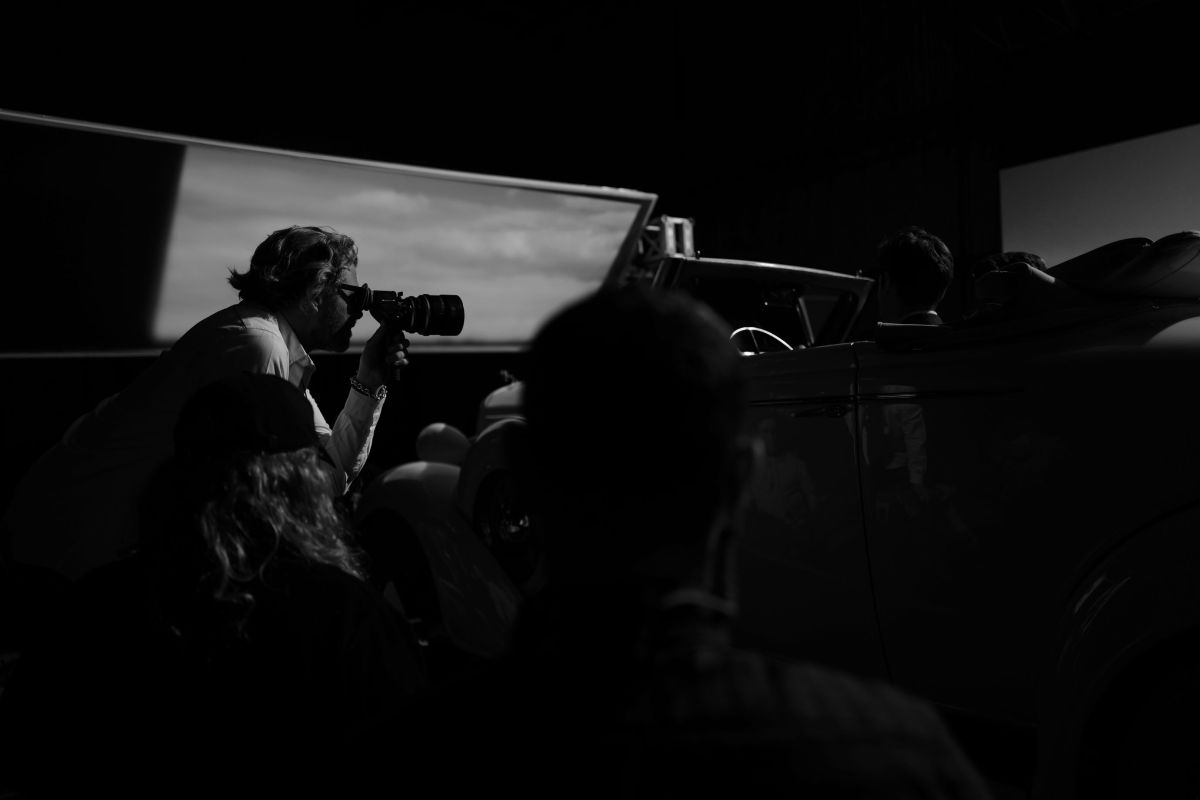
For the film shot all in black and white, Fincher teamed with his Mindhunter Cinematographer Erik Messerschmidt, and people have been quite awed by his camera and lighting work being that it’s his first film credited as a Cinematographer. That’s only part of the story – we’ll let him tell the rest – but the young DP has paid his dues by rising up the ranks through the electrical side of things.
Either way, the results are amazing as Fincher works from a script written by his late father, Jack Fincher, to tell the presumably fictionalized story of Herman Mankiewicz (Gary Oldman), the well-regarded Hollywood screenwriter whose many relationships during the ‘30s, led to the initial script that would eventually become Orson Welles’ Citizen Kane. Fincher’s film explores the way Mank viewed the relationship between mogul William Randolph Hearst (Charles Dance) and his girlfriend and ingenue Marion Davies (Amanda Seyfried) and molded that into Kane, all while battling his demons in a bottle with the help of his helper Rita (Lily Collins).
Below the Line got on Zoom with Mr. Messerschmidt a few weeks back to talk to him about what went into making such a gorgeous black and white film that stands next to Welles’ great cinematic masterpiece.



 The Fincher Analyst