Adobe: Netflix feature film Mank takes editorial workflows to a new level

Adobe Communications Team
March 09, 2021
Adobe Blog

Citizen Kane has long been regarded as a movie masterpiece for its cinematography, storytelling, and ahead-of-its-time visual effects. Who better to pay homage to the 1940’s film than director David Fincher, whose films are often lauded for these same characteristics? Fincher’s most recent project, the Netflix feature film Mank, brings to life a screenplay written by his late father, journalist Jack Fincher.

Netflix describes the film as “1930s Hollywood…reevaluated through the eyes of scathing wit and alcoholic screenwriter Herman J. Mankiewicz as he races to finish Citizen Kane.” This movie about a movie showcases the unique approach to storytelling and visual style that continues to make Fincher’s work stand out.

Helping Fincher to bring his signature style to life is a talented post-production team that includes post producer Peter Mavromates, editor Kirk Baxter, first assistant editor Ben Insler, assistant editor Jennifer Chung, and a number of additional assistant editors and VFX artists. Their collective credits include MINDHUNTER, Gone Girl, The Social Network, The Girl with the Dragon Tattoo, The Curious Case of Benjamin Button, House of Cards, and other features.

As co-producer of Mank, Mavromates oversaw the timing, budget, schedule, and integration between the editorial, visual effects, and finishing departments. Insler was responsible for integrating the overall project workflows. Chung prepped dailies and supported the editorial team throughout the post-production process and liaised with the sound, color, and visual effects teams.

The team constantly looks to refine and improve their workflows. “I love the mechanics of post-production,” says Insler. “If there’s a way we can eliminate a bottleneck or figure out a more efficient way to do things, I’m all over it. It’s one of my favorite things to do.”

Insler had that opportunity while working on Mank, which was edited using Productions in Adobe Premiere Pro. Already long-time users of Premiere Pro, Productions made it even easier for the editorial team to organize projects, collaborate, and scale, while solving issues such as avoiding duplicate clips and providing the ability to break large projects into smaller segments so that they open and save faster.

Read the full article

Film Editor Spotlight, with Kirk Baxter, ACE, editor of Mank

Mank and Adobe Premiere Pro take a new look at Old Hollywood

Adobe Video & Motion (YouTube)
March 9, 2021

How do you make a movie about the best movie ever made? With David Fincher, Gary Oldman, Netflix and Adobe Premiere Pro, Mank tells the story behind the story of Citizen Kane.

Mank’ DP Erik Messerschmidt On the Importance of Precision and Preparation


Jazz Tangcay

March 4, 2021
Variety

Erik Messerschmidt calls David Fincher’s process “precise.” And it is the greatest compliment. That precision is what Fincher is renowned for, his detail. He prefers the wider shots as he relays his character’s environments, but it’s what’s within the frame; that detail that gets the greatest performances out of actors, and gives audiences a full understanding of what is happening.

Mank,” a love letter to Hollywood’s golden age, is no different. Messerschmidt has collaborated with Fincher before on “Mindhunter,” and is no stranger to the Fincher process, but this was their first feature together.

Messerschmidt reflects on how Fincher works and how they collaborated on the black-and -white drama.

Read the full profile

How the ‘Mank’ VFX Team Meticulously Recreated ’30s LA in Black-and-White

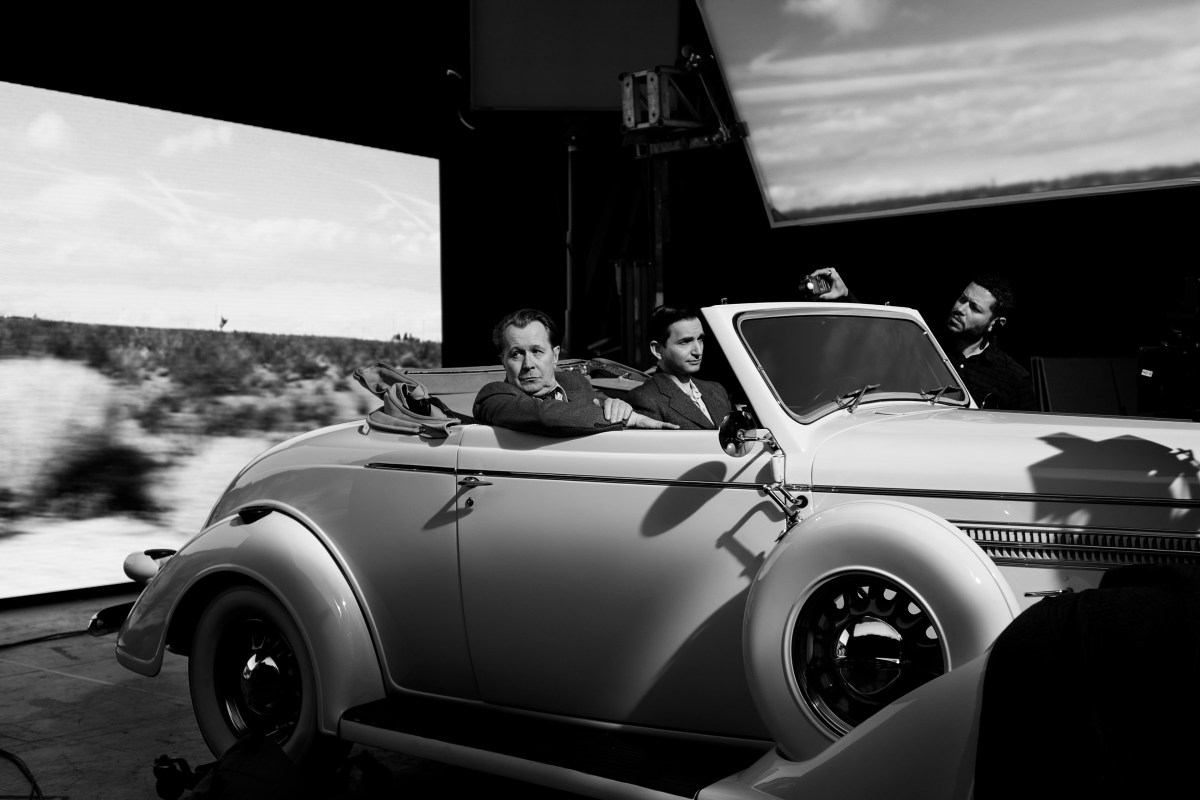
Fincher used retro VFX techniques powered by digital tech (including matte paintings and LED screens for rear projection).

Bill Desowitz
March 2, 2021
IndieWire

One of the major craft achievements of “Mank” was how David Fincher’s visual effects team meticulously recreated ’30s-era LA in black-and-white. (They used the matte paintings of Artemple, Territory’s LED screens, and Savage’s sky replacement with Unreal’s game engine.) The work has been shortlisted for the VFX Oscar and garnered a VES nomination for supporting visual effects.

“Most of the effects were what we call our ‘body and fender’ work, where [David] shot something and it’s not quite right and it needed to be replaced,” said visual effects producer Peter Mavromates. “For example, during the Louis B. Mayer birthday party at San Simeon, he didn’t want to deal with real fire in the fireplace, so those are all added [in CG] afterwards. He’s all about efficiency on set.”

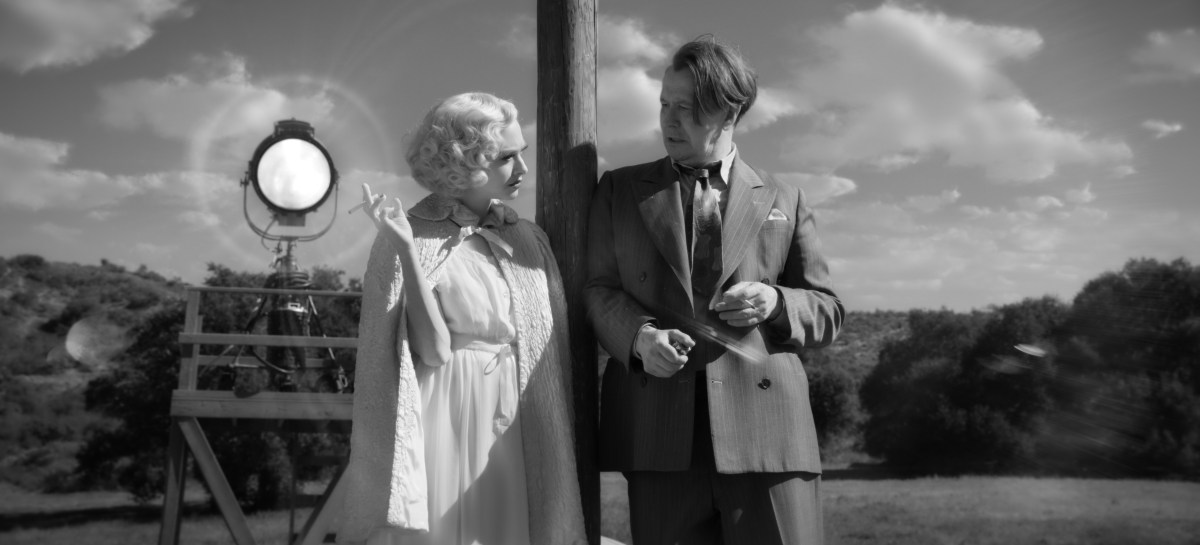
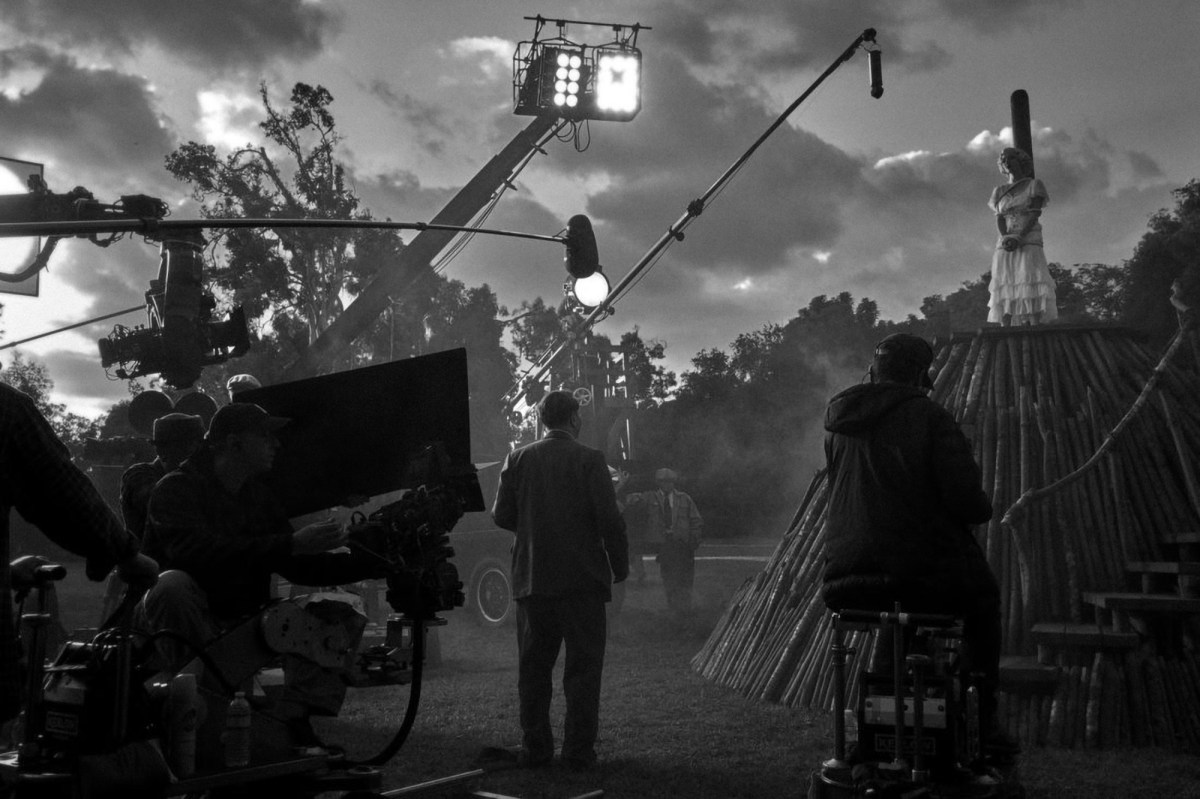
Also added were the cloudy skies during the shooting of an elaborate home movie with Marion Davies (Amanda Seyfried) tied to a stake. “Sky replacement of shots were for consistency using the Unreal game engine with 3D model placement,” Mavromates added.

Read the full profile

Writing the Look for Mank

Erik Messerschmidt, ASC channels cinematographic legend Gregg Toland, ASC to recreate classic era Hollywood for David Fincher

Adrian Pennington
March 1, 2021
RED Digital Cinema

Shot in black and white and often in deep focus, David Fincher’s Mank evokes 1930s classic cinema with rigorous attention to digital detail. Made for Netflix, this biographical drama stars Gary Oldman as Citizen Kane screenwriter Herman J. Mankiewicz as he races to finish the Kane screenplay for Orson Welles.

Famously, Fincher was among the first A-list directors to embrace digital filmmaking. Since the groundbreaking production The Curious Case of Benjamin Button (2008), he hasn’t deviated from using RED cameras and Mank was no exception. Fincher had always envisioned the screenwriter’s story being told in black and white.

“It would be a crime not to make this movie in black and white,” says Erik Messerschmidt, ASC, who recently earned an Emmy® nomination for shooting Fincher’s Netflix series Mindhunter. “Digital was just right for this project for all manner of reasons.”

Read the full profile

Costume Designer Trish Summerville Captures Old Hollywood Glitz and Gluttony in ‘Mank’

Shot in shadowy black-and-white mimicking the look of celluloid with plenty of Golden Age details, back lot and a Hearst Castle scene, the film streaming on Netflix Dec. 4 is a visual delight.

Booth Moore
December 4, 2020
WWD

The film was a passion project for Fincher, who even references certain deep focus shots from “Citizen Kane” while telling the story of his own tragic figure Mank, laid up after a car accident with a broken leg at a ranch in Victorville, Calif. ,with a looming deadline for “The American,” the script that would become “Citizen Kane.”

His personal drama is set against a pastiche of flashbacks to the time he arrived in Thirties Hollywood, with all its money and power politics, then driven not by liberalism but by the anti-socialist Republican Party. In one eerily familiar plot line, Mayer, Thalberg, Hearst and their cronies derail Democratic candidate Upton Sinclair using doctored newsreels in a moment of proto fake news. It’s this affront that inspires the antiestablishment Mank to base “Citizen Kane” on Hearst.

“Dave was particular about wanting to age film, and work in black-and-white, so for me, it was figuring out lighting and what type of camera he was going to use to shoot,” said Summerville, explaining that the old ways of working are harder than one would think. “I did a lot of swatching fabrics, going to rental houses, laying out different options and photographing them in the three different black-and-white settings of my phone. Then I would send them to him, and say give me a lead of where you are going. The closest thing was the monochromatic setting on my phone, he said, so I started photographing everything in that,” the designer explained.

Read the full profile

Insights Into The Lensing of “Mank,” “The Prom,” “Malcolm & Marie”

Cinematographers Erik Messerschmidt, Matthew Libatique, Marcell Rév discuss respective films, collaborating with directors David Fincher, Ryan Murphy, Sam Levinson

Robert Goldrich
February 26, 2021
Shoot

Mank (Netflix) marks cinematographer Erik Messerschmidt’s first narrative feature. It continues a series of firsts for the DP in collaboration with director David Fincher.

Messerschmidt, who earned ASC membership distinction last year, got a major break back in the day while serving as a gaffer for cinematographer Jeff Cronenweth, ASC, most notably on the Fincher-directed Gone Girl. During the course of that movie, Fincher had Messerschmidt do some promotional still work for Gone Girl and the two struck up a rapport. This eventually led to Messerschmidt becoming the DP on Fincher’s Mindhunter, the thriller series centered on an FBI agent’s quest to track down serial killers in the late 1970s.

Last July, Messerschmidt garnered his first career Emmy nomination for his lensing of Mindhunter. He’s shot the lion’s share of Mindhunter episodes, representing his first major TV gig as his DP endeavors prior to that were primarily in commercials and other short-form fare. 

Fincher then further expanded Messerschmidt’s reach–this time into the feature realm with Mank which centers on screenwriter Herman J. Mankiewicz (portrayed by Gary Oldman) as he races to finish the script for director Orson Welles’ Citizen Kane on a tight timetable, secluded in a bungalow in a desert town miles removed from Los Angeles as he recuperates from a car accident in 1940. Attending to him are his secretary Rita (Lily Collins) and his German nurse (Monika Grossmann).

In the process, through Mankiewicz’s worldview–marked by his abiding social conscience and wit, at times caustic–we are introduced to not only Hollywood but life in the 1930s, ranging from the struggle of the rank and file during the Great Depression to the grandeur of Hearst Castle and high society. We also become privy to Mankiewicz’s own inner struggles with alcoholism, as well as a professional battle with Welles (played by Tom Burke) over screen credit for what became the classic Citizen Kane. The Mank cast also includes Charles Dance (as William Randolph Hearst), Amanda Seyfried (as Marion Davies, Hearst’s wife), Tuppence Middleton (as Sara Mankiewicz, Herman’s wife), Arliss Howard (as Louis B. Mayer), Sam Troughton (as John Houseman), Tom Pelphrey (as Joe Mankiewicz, Herman’s brother), Toby Leonard Moore (as David O. Selznick) and Ferdinand Kinsley (as Irving Thalberg).

Read the full profile

True Colors

Costume designer Trish Summerville enters the world of black-and-white filmmaking for Mank.

Jessica Shaw
February 12, 2021
Netflix Queue

Costume Sketches by Gloria Young Kim

The first thing Trish Summerville heard from her friends when she signed on to be the costume designer for David Fincher’s Mank was, “That is going to be so easy for you!” People wondered how difficult it could possibly be to dress a cast for a black-and-white film set in the 1930s and 40s, about Herman Mankiewicz, the screenwriter who penned the first draft of what would become Orson Welles’s Citizen Kane. “I kept hearing, ‘You can just use any color you ever wanted and never worry,’” Summerville recalls, laughing at the thought. “That was definitely not the case.”

In fact, it couldn’t have been further from the truth. Summerville is a Hollywood force herself, having costume-designed films like The Hunger Games: Catching Fire, and Fincher’s Gone Girl and The Girl with the Dragon Tattoo, among others. Before Mank, she had worked on projects that incorporated black and white through flashbacks, but she had never done a complete picture sans color.

She immediately immersed herself in the style and learned some tricks of the trade. For instance, a light blue might be beautiful in person, but it’s going to look light gray onscreen. A true black can be too severe; navy reads as a softer alternative. A dark or saturated color that’s striking in real life will seem equally flat in black and white. On top of that, some fabrics strobe and some patterns with contrasting colors resemble confetti. Even a color that looks great can distract an actor in a dialogue-heavy scene and should therefore be avoided.

“Any project with Dave is a dream and you know it’s going to be challenging and exciting, Summerville summarizes, calling me from the set of Slumberland, her next film, “but my brain definitely had to adjust.”

Read the full profile

The Minds Behind the Sets of “Mank” Share Their Experience Re-Creating Old Hollywood in Black and White

Netflix’s film starring Gary Oldman, Amanda Seyfried, and Lily Collins has been nominated for a host of accolades, including a Golden Globe for Best Motion Picture.

Lauren Wicks
February 9, 2021
Veranda

For those in the television and film industry with dreamy job titles like production designer or set decorator, the fun begins long before filming, deep in the throes of research. And that was especially the case for Netflix’s Mank, a period piece filmed in black and white in 2020.

“Any opportunity to work on a period film has everybody in our business, especially those in our department, salivating to hear that we get to go back in time, discovering how society functioned and the nuances of the period: the furnishings, the architecture, the lifestyles,” says Donald Burt, the film’s production designer. “It felt like we were living in the film, and that’s what it’s all about: presenting a story in a format that feels like it was actually made then.”

Burt spent much of his design preparation time at the Academy of Motion Pictures library, scouring through documents from filming methods to formal letters, sorting out old gambling debts between executives to decipher thought processes regarding films from nearly 100 years ago.

“This is not a documentary, so we needed to take some license, but I always say I put research and information into a blender and see what comes out to best help tell the story we are trying to tell,” says set decorator Jan Pascale. “It’s so exciting to not only do a black-and-white film but to dive into the history of Hollywood and L.A., learning how people communicated back then.”

Pascale recalls offering typewriters to the casting agents, and it proving a greater challenge than originally thought to find people to type efficiently on them. Though “QWERTY” was created long ago, managing a modern keyboard is much easier than the models of yesteryear. The same goes for making a movie in color.

Read the full profile

Faux Fur and Jewelry Bring the World of ‘Mank’ to Life Onscreen

Jazz Tangcay
February 11, 2021
Variety

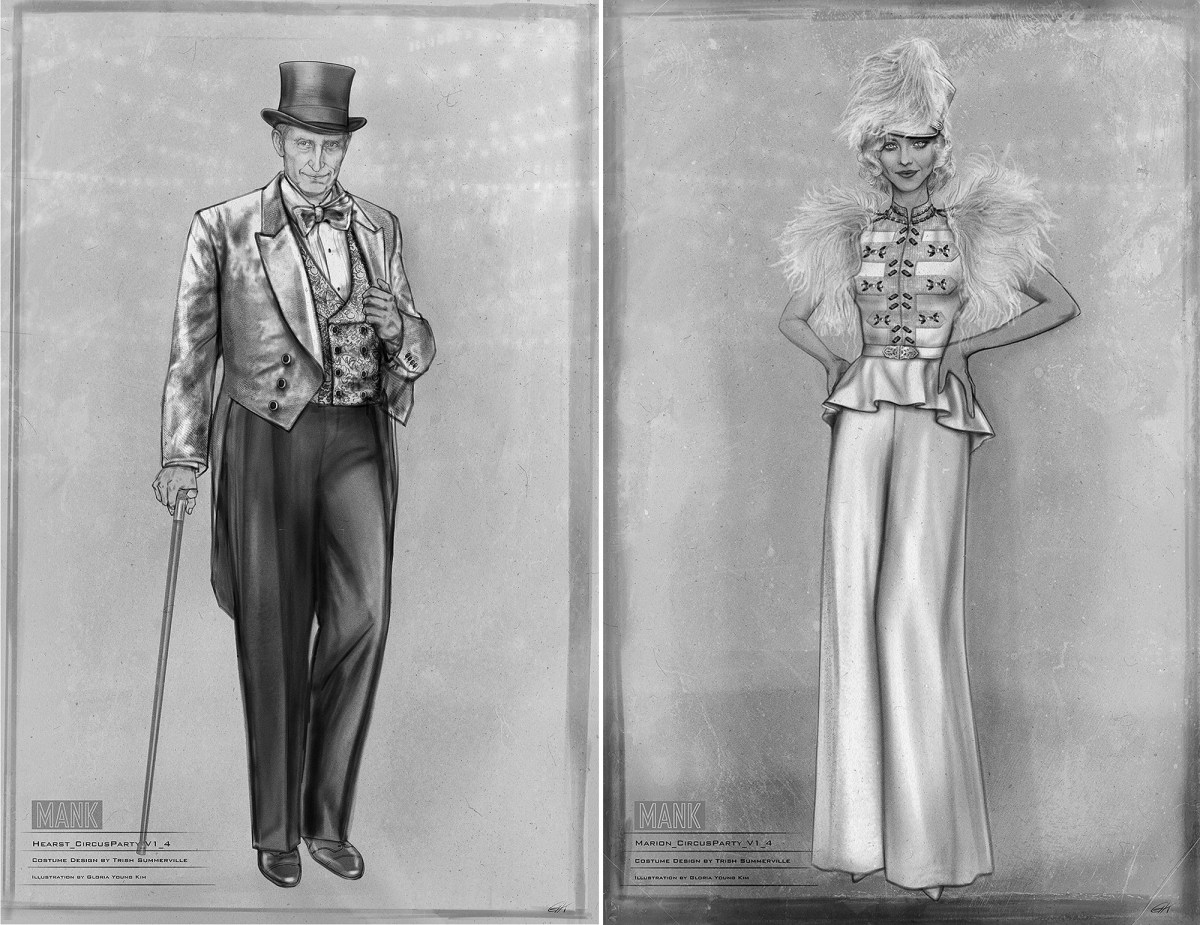
When it came to creating the costumes of David Fincher’s “Mank,” costume designer Trish Summerville had an advantage. “There were a lot of photographs out there,” she says, especially of Marion Davies, played by Amanda Seyfried in the black and white tribute to old Hollywood.

Summerville included a hat in her first sketch of Seyfried’s onscreen look, but since hair department head Kimberley Spiteri had made such a nice wig, Summerville ditched that idea.

The coat she sports, Summerville says, was a muted powdery blue. “It’s like a pale dusty periwinkle wool crepe. The fur is faux to mimic a minx, and we painted into it to give it more depth.”

Shooting in black and white gave her liberty to heavily paint on the costume to give the fur dimension. Summerville had ordered pattern books from the 1930s that had illustrations and the right silhouette for the time.

Read the full profile

Sound Designer Ren Klyce Gives ‘Mank’ That Classic Movie Palace Sound

Clarence Moye
February 10, 2021
Awards Daily

The first time I saw David Fincher’s Mank, I was immediately transformed to my local old-school movie palace, The Rialto. I could imagine myself reclined in the plush red seats, surrounded by red curtains with gold fringe. I could smell the freshly popped corn. And I could hear the film booming in that classic movie palace sound, waves of 1930s-era monaural luxury wafting through a giant center speaker.

Given the current pandemic, that kind of escapism is pretty priceless. It’s exactly what sound designer Ren Klyce and director David Fincher wanted the user to feel while watching Mank.

“That was David’s wish — that you would feel that when watching the film, but our fear along with that wish was that somehow we wouldn’t be able to convey that response,” Klyce explained. “I’m so glad that you picked up on that.”

Read the full profile