Over the last few years, the Oscar sound category has recognized war movies like “All Quiet on the Western Front,” science fiction movies like “Dune” and musicals like “West Side Story,” among others. There’s no formula for how to use sound effectively, but three of this year’s gems do share a sense that their sonic palette puts us in dangerous places: On the racetracks of 1950s Italy, in the frigid expanses of the Andes and inside the unsettling cranium of Michael Fassbender.
Cinematographer Erik Messerschmidt began his acclaimed collaboration with iconic director David Fincher as a gaffer on Fincher’s 2014 thriller Gone Girl. That initial introduction led to Messerschmidt lensing 16 episodes of the acclaimed Netflix crime drama Mindhunter for which he received a Primetime Emmy Award nomination. That close collaborative relationship with Fincher then morphed into Messerschmidt’s breakout moment as a celebrated cinematographer, his Oscar-winning lensing of Fincher’s 2020 Mank. His black-and-white cinematography not only echoed Gregg Toland’s Oscar-nominated work on Citizen Kane, but it also fully immersed viewers in 1940s cinema, a goal for the film that Messerschmidt shared with other Mank artisans.
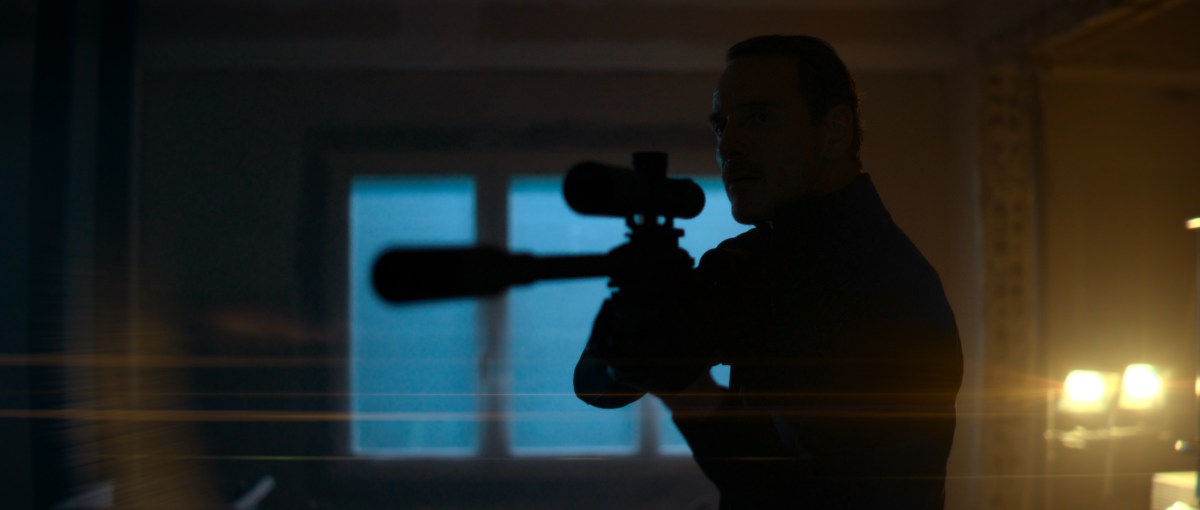
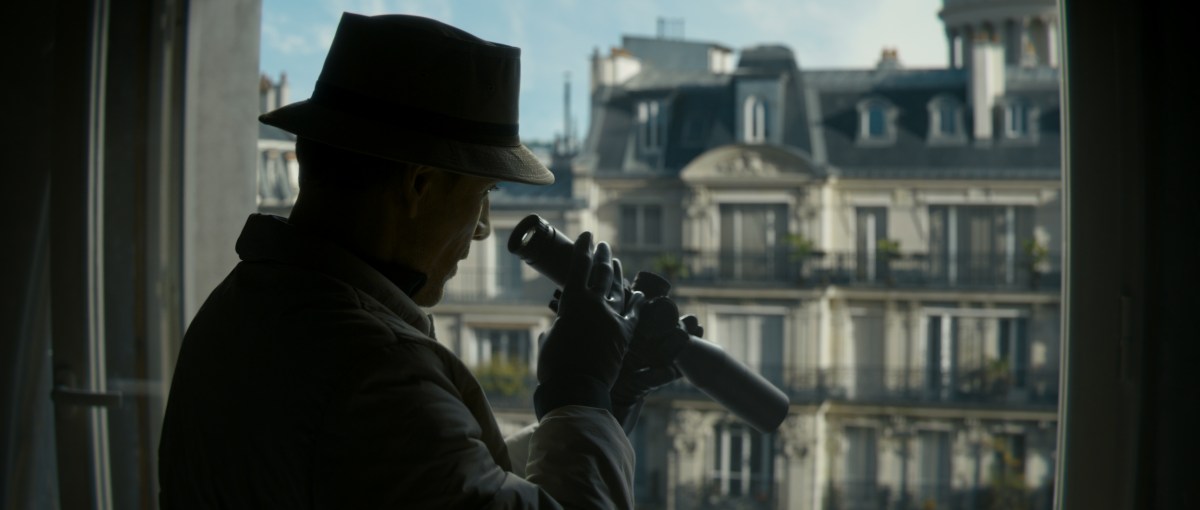
Now, Messerschmidt again collaborates with Fincher on an entirely different project, Netflix’s The Killer. The film thrusts both artists into a modern day world of a hired assassin (Michael Fassbender) as he botches a hit job and travels across the world to seek retribution. Traditionally, when approaching a project of this caliber, Messerschmidt would prep a “lookbook,” a collection of photographs intended to outline visual references for multiple aspects of the filmmaking craft.
But with The Killer, Fincher and Messerschmidt approached things differently.
“In the past when I’ve worked with [Fincher], I have sent him lookbooks, we’ll have references, or we’ll start with paintings or photography or other movies. We didn’t do that on this movie. We talked about pacing and timing and scene structure and point of view,” Messerschmidt shared. “The aesthetics of the look of the movie ended up being born through the process of exploration and scouting and location selection. Even though the movie is stylistic, it all comes from a place of realism, and that was always the intent.”
To follow The Killer on his world-wide journey, Fincher segments the film into chapters. Not only does this structure echo the graphic novel roots of the story (the film is based on the French comic by Alexis “Matz” Nolent and Luc Jacamon), but it also sets the tone within the larger world of its edgy, pulp fiction ancestors. Given that structure, Messerschmidt faced unique lensing challenges as The Killer moves from chapter to chapter.
The two latest feature films lensed by Erik Messerschmidt, ASC have him once again in the awards season conversation–director Michael Mann’s Ferrari (Neon) which will debut in U.S. theaters on Dec. 25, and David Fincher’s The Killer (Netflix), which has been already released theatrically and is now streaming on Netflix.
This installment of The Road To Oscar will focus on The Killer, which continues a longstanding collaborative relationship between the cinematographer and Fincher. Messerschmidt is no stranger to Academy Award banter, having won a Best Cinematography Oscar in 2021 for Fincher’s Mank. The film also garnered ASC and BSC Award wins for Messerschmidt.
Fincher has played a prominent role in Messerschmidt’s career. It all started back when Messerschmidt served as a gaffer for cinematographer Jeff Cronenweth, ASC, most notably on the Fincher-directed Gone Girl. During the course of that movie, Fincher had Messerschmidt do some promotional still work for Gone Girl and the two struck up a rapport. This eventually led to Messerschmidt becoming the DP on Fincher’s Mindhunter, the thriller series centered on an FBI agent’s quest to track down serial killers in the late 1970s. Messerschmidt in 2020 wound up garnering his first career Emmy nomination for his lensing of Mindhunter. He shot the lion’s share of Mindhunter episodes; the series represented his first major TV gig as his DP endeavors prior to that were primarily in commercials and other short-form fare. Fincher then further expanded Messerschmidt’s reach–first into the feature realm with Mank and then The Killer.
Netflix’s The Killer marks sound designer Ren Klyce’s 13th collaboration with David Fincher on a project spanning film and television. Their creative partnership resulted in Klyce receiving six Academy Award nominations, most recently for 2020’s Mank. (Klyce also received three other Oscar nominations for Disney-based work.) His work with Fincher excels creatively based on a shorthand gained from decades of idea sharing and artistic challenges that often redefine the relationship between sound design and the audience.
Fincher’s creativity and way of looking at a scene differently can still strike fear in the hearts of his filmmaking partners.
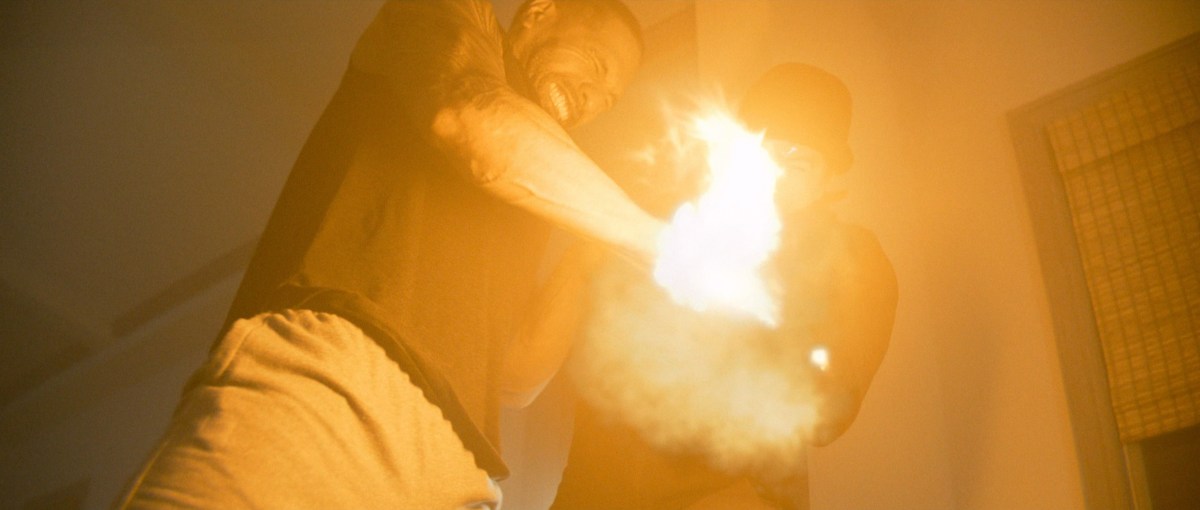
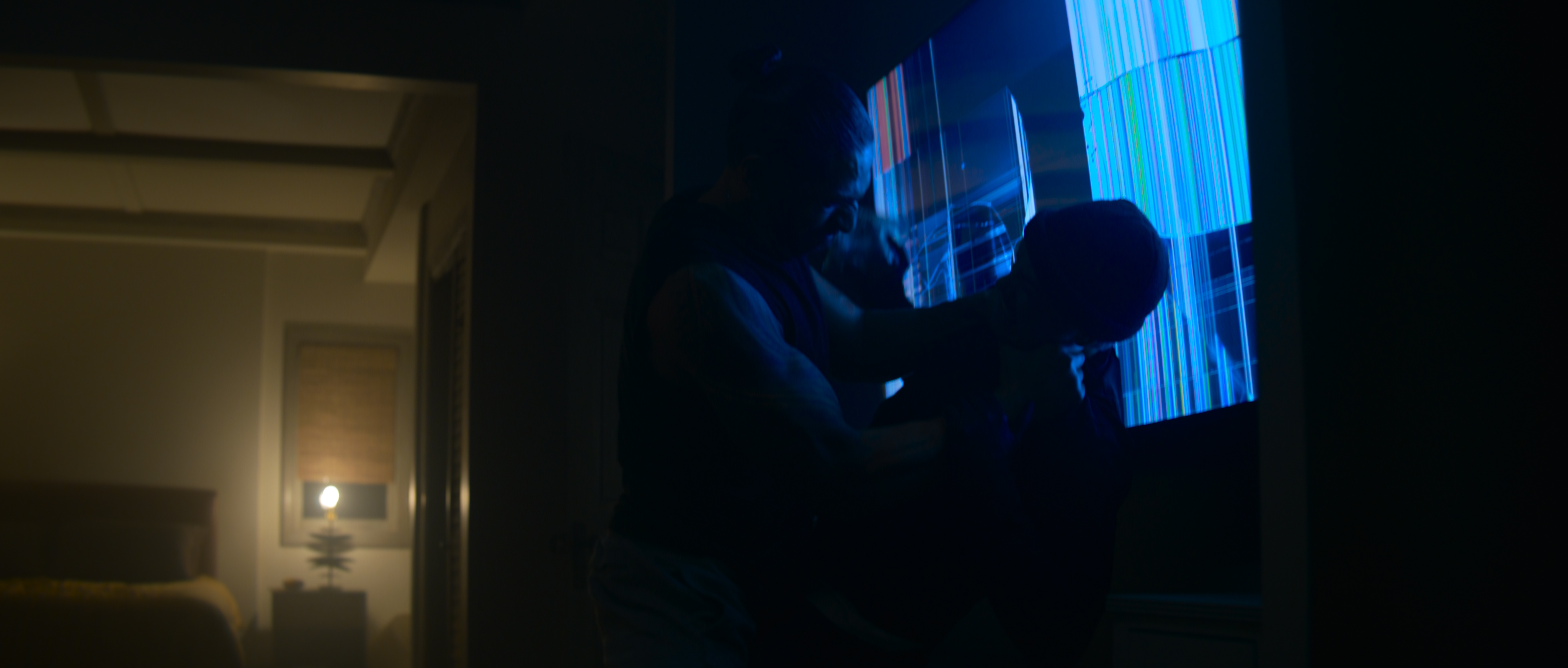
Take the climactic fight sequence in The Killer between Michael Fassbender’s Killer and Sala Baker’s Brute. Traditional filmmaking and sound design would have incorporated fight-based vocalizations (grunts, etc.) within the audio.
The violence in The Killer isn’t indiscriminate, or extensive, but it has impact. And as much as Michael Fassbender’s hitman often works with a gun, sometimes things required more intimacy than that.
His journey to dispense his brand of justice takes him to Florida to find The Brute (Sala Baker), a mountainous fellow assassin. In the dead of night, he decides to steal into his house – when all hell breaks loose.
“The Brute represents somebody who may have done horrible things to somebody close to him,” says David Fincher, setting the scene. “He’s come to get his retribution. But I always loved the idea that everyone’s plan works… till you get punched in the face.”
The confrontation grows and grows and would require the utmost effort from the cast, stunt team and other heads of department. “It’s full on,” says Michael Fassbender, who does his fair share of stunt work himself, but is clear who is taking the major beating. “It’s the most physical [this sequence]. Not so much for me, as for the two boys. The fight is messy, it’s intense.”
Before battle could commence, the stage needed to be set. Producer William Doyle had found the exterior of The Brute’s house, while the interior was built in a studio space in New Orleans, with production designer Don Burt having to consider what was right for the character, the story and the stunts.
“The set was built in conjunction with the whole design of the fight itself,” says Burt. “There were a couple of instances, like, ‘Let’s put the door here, to the left instead of the right, so that works better for flowing through to the next room.”
Burt talks highly of fight coordinator Dave Macomber, who worked for months prior to the production to help design the conflict. “He did a video of the action, set up boxes to simulate the rooms and things that would have to be broken, and he would send us specific notes on what would happen.”
There was then time dedicated to a walkthrough rehearsal on the set. “Ceán [Chaffin, producer] made sure that happened early enough so there would be time for the art department to rebound!”
Alongside Burt and Macomber, cinematographer Erik Messerschmidt worked to establish the geography of the house for the audience. “We had to think about how to explain the space, while simultaneously shooting a fight scene,” says Messerschmidt, who points out how they carefully considered the staging with a view to story and commonsense, rather than amping the natural chaos of a fight.
This extended to how the scene was lit with a view to reality. “The sequence is hard, the camera is moving all over the place, the actors are moving all over the place, and it’s fast,” says Messerschmidt. “So we have to think about how we’re going to stage it for the light.”
This meant discussions with the art department about finding sources, from lights fitted under the kitchen cabinets, to establishing streetlights outside. “We decided we wanted hard, artificial street light through the windows,” says Messerschmidt, which meant erecting lights on the exterior location to match that. “In terms of the scope of the movie, a tremendous amount of energy went into just figuring out that fight.”
For fight coordinator Dave Macomber, whose stunt credits include HBO’s Watchmen (2019) and Avengers: Endgame (2019), working with Fincher was a unique experience. “He’s different from any other director I’ve worked with,” says Macomber. “His approach to things, all the intricacies, being able to do the number of set ups he does at the speed that he does.”
He regards the director as being able to predict, or foresee, elements which only become obvious to others in retrospect. “It takes a second to go, ‘Okay, he wants this in order to be able to achieve that!’ Most people only see that when they’re looking at their movie.”
It would be easy to imagine a fight as simply a blizzard of blows, but Macomber sees the possibilities of revealing character in the carnage. “I’ve always thought of fight moves as kind of ‘action dialogue,’” he says. “So whenever we’re creating these kinds of sequences, I’m always trying to keep in mind the motivation of the person within the scene.”
Macomber recalls long conversations with Justin Eaton, the stunt double for Fassbender, as they choreographed the sequence, checking “Does that really make sense?” For Eaton, who has worked with Macomber several times, it was a hugely positive experience, not least because he saw his friend given license to explore what was best for the material. “Fincher gave Dave a lot of freedom, to kind of audition what he thought would be the best way to capture things. Dave was blown away, because Fincher is one of his favorite directors. He’s been like a kid in a candy shop working on this.”
“The way the fight is designed, it’s like each piece goes into the next piece,” says Sala Baker, whose work as a stunt performer and actor goes back to playing the physical incarnation of Sauron in The Lord of the Rings. “David is such a particular mind,” says Baker, who really enjoyed how curious and open the director was, exploring suggestions and ideas to the full. “If you say anything, he’s going to really get into it. And Michael is so easy to work with, fun and open to adjustments.”
Baker also stresses how well-looked after everyone is, however bruising their scenes might be. “It’s such an amazing working environment to have that kind of care.” Pain, of course, when you’re delivering stunts, is part of the job. As Dave Macomber explains, “The way I think about it is there’s a difference between pain and injury. And there’s a difference between injury and debilitating injury. We accept the fact that things are going to be painful!”
“I feel sorry for those guys,” says Fincher, reflecting on the reality of staging the fight, although it all aids the experience on screen. “I like the idea of the audience rooting for this confrontation,” says Fincher. “And then it goes on and on and on. And you’re kind of going, ‘Good God, it’s awful what they’re doing to each other!’”
For his muscular new thriller, David Fincher worked with many of his closest collaborators to develop inventive approaches to the film’s cinematography, with Erik Messerschmidt ASC, editing, with Kirk Baxter ACE, sound, with Ren Klyce, and score, with Trent Reznor & Atticus Ross.
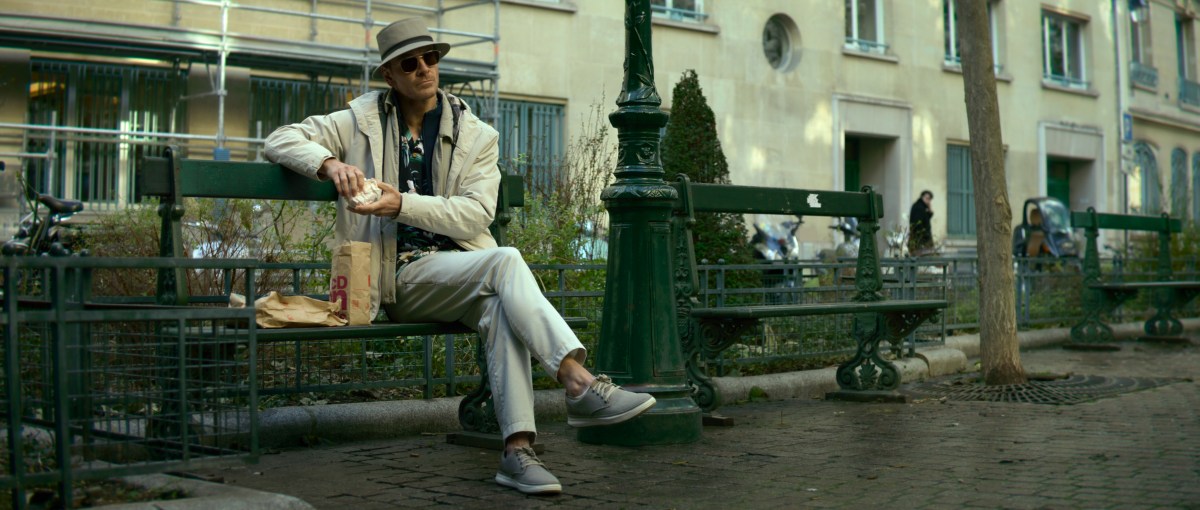
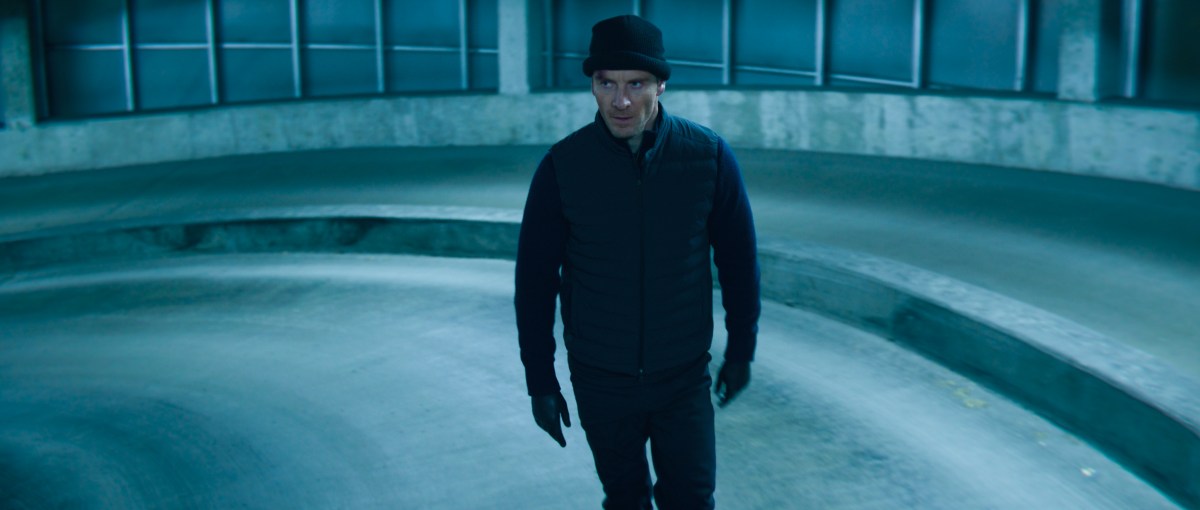
At the opening of David Fincher’s The Killer, Michael Fassbender’s unnamed assassin describes his look as based on a German tourist he saw in London. It’s a convenient disguise for blending in on the streets of Paris because, as he explains, no one wants to interact with a German tourist. But what does that look like off the page? That task fell to costume designer Cate Adams, working with the exacting director. “David had a lot of ideas about how he wanted him to look,” she says. “He did not want him to look cool at all, like a typical assassin.” The solution? Bucket hats, Skechers and “lazy people clothing.”
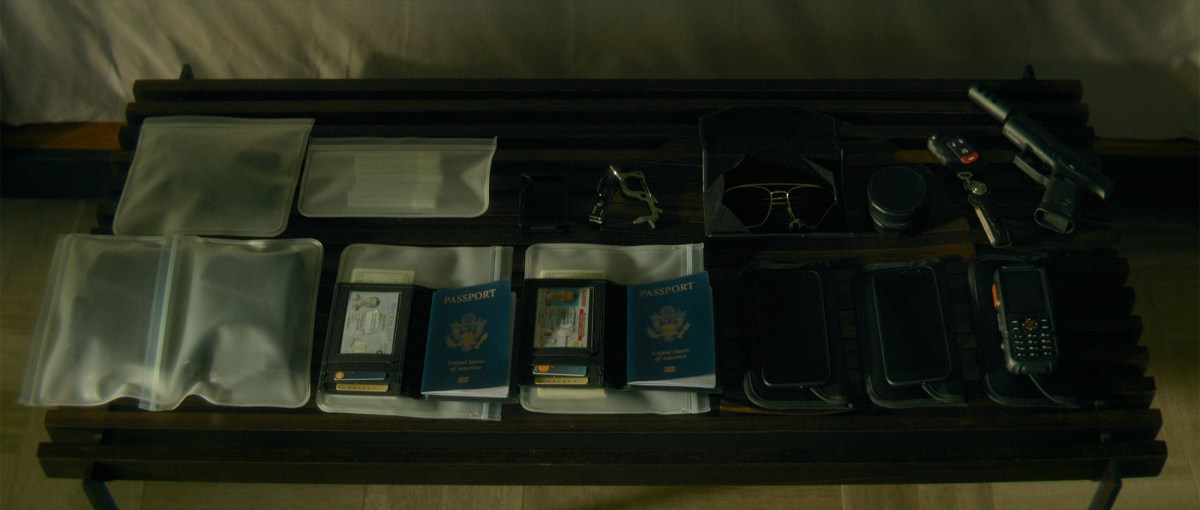
What’s a hit man without a code name? James Bond is 007; The Gray Man’s Court Gentry is Sierra Six; even Get Smart’s Maxwell Smart goes by Agent 86 when he’s on the clock. In David Fincher’s new assassin thriller The Killer, the titular professional has more than a few pseudonyms, and they all have a shared origin. Played by Michael Fassbender, this killer has a taste for television — every one of his aliases is borrowed from a classic sitcom. “He may have been raised on [television],” says The Killer screenwriter Andrew Kevin Walker (who previously teamed with Fincher on their shared breakout Se7en). “It may have been more of a parent to him than any parent.”
The running gag originated with an earlier Fincher/Walker collaboration. “I was doing a polish on Fight Club,” Walker tells Tudum. “Fincher and I realized that Edward Norton’s character had to have little name badges on, or sign up sheets for his support groups he would go to. And Fincher was like, ‘Well, let’s just use names from Planet of the Apes, like Dr. Zaius or Cornelius, etcetera.’ ”
When Walker began working on The Killer, he decided to similarly sneak casual sitcom name-drops into scenes where the main character introduces himself, as a subtle Easter egg for particularly discerning viewers. Fincher persuaded him to blow the idea up further. “I started even more obscure than they are now, with characters like Mr. Mooney,” foil to Lucille Ball on her ’60s vehicle The Lucy Show, Walker says. “It’s the genius of Fincher that he was like, ‘OK, here’s your kind of silly little hidden joke. Let’s bring it forward.’ ”
Under Fincher’s watchful eye, the production made sure to spotlight each and every alias. “When he was shooting a lot of the car interiors and doing a few tiny reshoots and inserts,” Walker says of Fincher, “he shot close-ups of plane tickets, close-ups of the driver’s license, he made sure to show every single name first and last.” You can see each of those names — as well as a handy guide to which sitcoms they spring from — below.
Generally good words to live by. In the case of director David Fincher, they’re also good words to work by, at least as it pertains to entertaining the notion of making a sequel to his new film, The Killer, available now on Netflix. “It doesn’t pay to have rules with that stuff. I’m the guy who, before Zodiac, said, ‘No more serial killers.'”
The joke is typical Fincher: dry, winking, and only humorous to those who possess the proper context. The filmmaker who brought us Kevin Spacey‘s serial killer John Doe in 1995’s Seven would, of course, continue to explore similarly murderous terrain, not just with 2007’s Zodiac, but in 2011’s The Girl With the Dragon Tattoo, and on two seasons of his Netflix show Mindhunter. While The Killer is not a serial killer film, it certainly has a series of killings. The movie stars Michael Fassbender as a nameless hit man who, after a job goes wrong, sets about visiting with routinely lethal consequences a succession of folks — including two fellow assassins, one played by Tilda Swinton— who might pose a threat to his future.
The film reunites Fincher with Seven screenwriter Andrew Kevin Walker in the pair’s first credited big-screen collaboration since the Brad Pitt-starring hit and pop culture sensation. The director tasked Walker to come up with a script that kept the dialog of Fassbender’s central character to the bare minimum. Walker recalls that Fincher told him to, “try and write it so this guy has literally ten lines of dialog spoken in the entire movie. As a point of pride, I did hand in a first draft that had literally 13 lines of dialog. It was the most I could get it down to and still have it function and be semi-natural.”
“There’s more than one way to lose your life to a killer…” So runs the tagline of Zodiac, a film which opened to little fanfare outside of Fincher aficionados in 2007, yet grew to be regarded as one of the best of the decade.
I visited the set in 2006, felt the warm aura of Mark Ruffalo, the intimidating charisma of Robert Downey Jr and the general indifference of Jake Gyllenhaal, who may have justifiably been suspicious of a journalist on set, or just had more important things on his mind.
I’ve just had the pleasure of talking with Tim Coleman about the film on his fine podcast Moving Pictures Film Club – which prompted a lot of thoughts, not least that there’s a reason I’m a writer rather than a broadcaster: I need the delete key.
The Fall Will Probably Kill You is a reader-supported publication. To receive new posts and support Nev Pierce‘s work, consider becoming a free or paid subscriber.
Watch the shorts by Nev Pierce, including Bricks, an Edgar Allan Poe adaptation starring Jason Flemyng and Blake Ritson, which David Fincher said about: “A morbid yet classy take on a morbid classic.”



 The Fincher Analyst