Editing David Fincher’s ‘The Killer’ on Premiere Pro

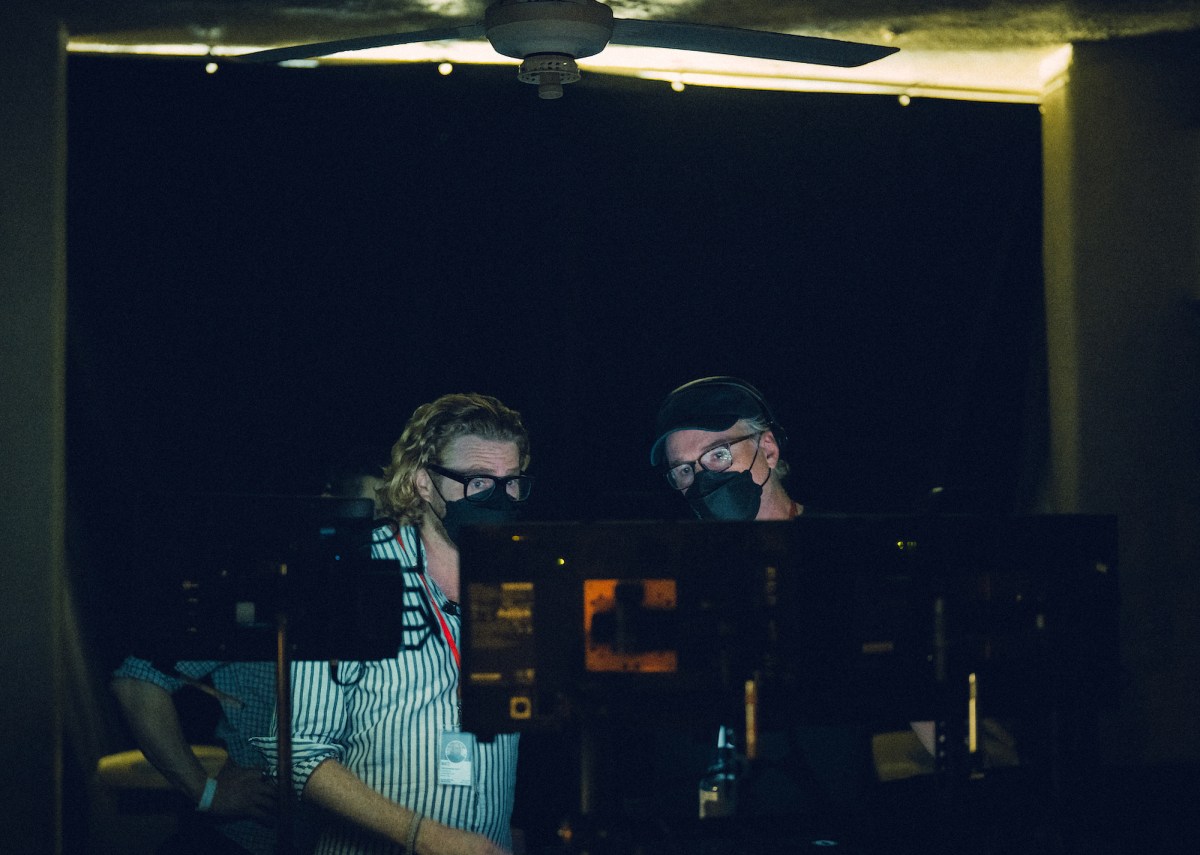
Netflix has another hit movie on its hands with David Fincher’s The Killer. We spoke to the film’s editor, Kirk Baxter, and Assistant Editor, Jennifer Chung, about how they put it together using Adobe Premiere Pro.

Andy Stout
November 10, 2023
RedShark

Kirk Baxter ACE picked up two Oscars working on previous Fincher titles you will probably have heard of, The Social Network (2010) and The Girl with the Dragon Tattoo (2011). In other words, The Killer has some serious pedigree behind it, and much like this year’s Academy Award for Editing winner Everything Everywhere All At Once, it was cut on Adobe Premiere Pro.

Jennifer Chung ACE was one of the Assistant Editors on The Killer and represents a 14-strong editing department. Chung is currently cutting her first indie feature (“It’s a different kind of stress,” she says laughing), but looking back on The Killer, is there any particular sequence that stands out as her favorite?

“I think it has to be the fight sequence,” she says. “The fight sequence is pretty epic. And it just goes on. I think Kirk did an incredible job with that; it’s just really fun to watch.”

“I watched something on TV which had a big fight sequence two nights ago, and I couldn’t follow it,” says Kirk Baxter, who edited The Killer and put the movie’s signature fight scene together. “I knew people were fighting, but I couldn’t track who owned what fist and what thing. It was just a jumble of limbs edited quickly.”

No such failure to follow the action in The Killer’s own fight scene, which Baxter says is essentially a sequence of 18 scenes with multi-camera setups depicting a single fight all strung together in a row. He was cutting the sequence as Fincher was shooting it. The shoot would break at lunchtime when he’d start cutting the first half of the day, getting the second half later at the end, then cutting into the evening and sending it to Fincher to see if any pickups were needed.

“It was this crazy, relentless week of all of us going around the clock to know that we had the thing,” he says. 

Read the full profile

“I Don’t Think Directors Should Be Amenable”: Erik Messerschmidt on Shooting The Killer and David Fincher’s Simple Process

Nick Newman
November 8, 2023
The Film Stage

One of my most-read pieces last year revolved around two films that hadn’t shown a single frame. Strange except for the fact that it was a conversation with Erik Messerschmidt, whose recent time’s been devoted to shooting new films by David Fincher and Michael Mann––exactly the subjects who will earn eyeballs with just a mention. One year later, with The Killer winding down its limited release before a Netflix debut on Friday, I spoke again with Messerschmidt about the intensive, exhaustive, rewarding process behind one of 2023’s supreme entertainments, and how being guided by modern American cinema’s most-obsessive auteur was the only way to get it right.

The Film Stage: I made a point of seeing The Killer at New York’s Paris Theater––it’s a nice-sized screen, well-projected, a Dolby sound system. The unfortunate truth is that most watching it on Netflix won’t have a comparable experience.

Erik Messerschmidt: Sure.

Millions of people can see it, but then you think about people’s set-ups––let alone competing for their attention. How do you generally feel about this dichotomy, and specifically with this film?

I think the cinema is an extraordinary community experience, and it’s for that reason that it’s worth protecting. I think there is something really extraordinary about being in the room and experiencing something at the same time, and there is something equally extraordinary of being a director and experimenting whether or not you can control the audience response en masse. You know? Which is something you can only really test in the cinema environment. Look: there’s a real thing about being able to pause it and go to the bathroom, or pause it and go grab another glass of wine or whatever––pause it and watch it later. The “captive audience” part of the cinema is what makes it unique and important. I don’t necessarily agree that the technology is the reason to go to the cinema. I think the immersive nature of being in the black room with the single screen without screaming kids and your phone sitting there––all the other distractions––that’s a real thing. And I think the sound is a real thing, although people have home theaters in their homes now and surround sound and stuff. But it’s not the same as being in a calibrated environment.

I sort of go back to my childhood and think… I didn’t see Star Wars projected until I was, probably, 19 years old, but I had seen it 50 times on my parents’ VHS. In the wrong aspect ratio. And it’s the movie that made me want to make movies. As a cinematographer––as a student of cinema––I think it’s vitally important to project cinema and encourage people to see movies in a cinema. This movie in particular is especially well-appreciated in a cinema, but I would argue more for the sound, to be honest––because of what Ren Klyce is doing with the sound. I hope people enjoy the picture, too, obviously. I don’t put much stock in the idea of “Oh, well, it’s going to be on Netflix so people are going to see the film on television.” I just think people see films on television anyway.

Half the movies I see, by the way––and I’m hesitant to admit it, but it’s true––are on airplanes. [Laughs] I think the goal of filmmakers is to reach the audience, and you want to reach as many as possible, and hope people see your movie in the cinema. That’s where it’s intended. But you have to accept the reality that there are many avenues to view the image, and if someone sees it on Netflix, hopefully next time there’s a screening they get up and go. When there’s a screening of Lawrence of Arabia I jump at the opportunity because there are so few opportunities, but it doesn’t mean I don’t enjoy it at home on my Apple TV either. [Laughs]

Read the full interview

Execution Is Everything

Oscar-winning DP Erik Messerschmidt ASC reteams with David Fincher for a live-action comic book adaptation that required a meticulous approach to its cinematography.

James Mottram
November 2023
British Cinematographer

When Erik Messerschmidt ASC got the call from David Fincher to work on his new film The Killer, it was an offer that arrived almost as stealthily as its lethal protagonist. “He only ever [asks] once he knows he’s going to make the film,” says the American-born cinematographer, who previously collaborated with Fincher across two seasons of the Netflix series Mindhunter (2017-2019) and the acclaimed Hollywood-set period tale Mank (2020), which won Messerschmidt an Academy Award for Best Cinematography. The Killer, an adaptation of the French graphic novel, written by Alexis “Matz” Nolent, offered a whole different set of challenges, however.

This tense, taut thriller follows a nameless assassin, played by Michael Fassbender, who is fighting for his life after a job he undertakes in Paris goes disastrously wrong. “When I first read it, I was so excited about how little dialogue is in the film. It’s all voiceover,” explains Messerschmidt. “Normally, when you shoot a scene in a narrative film, you’re shooting actors predominantly talking to each other. And this film… on the set it was quite a quiet place. Which is really, really interesting. And it changes the dynamic enormously.”

To borrow the film’s cunning tagline, “Execution is everything”, and making The Killer became a meticulous experience for Messerschmidt and his team. Choreographing the camera to reflect the perspective of Fassbender’s killer, as he watches from the shadows, required absolute perfection. “It became very much about precision,” he says. “It’s an enormous amount of pressure on the camera operator [Brian S. Osmond] on this film.” Every step of the background artists was accounted for, like an elaborate dance. “So, it’s all sort of in concert…[that] is the intention most of the time.”

If you are a subscriber, read the full profile in issue 120 of British Cinematographer

Or you can read it on the website

How David Fincher Turned ‘The Killer’ Into a Mean, Lean Punch to the Gut

The filmmaker on working with Michael Fassbender, that Smiths soundtrack, and how his adaptation of a French comic about an assassin became a Seventies B movie.

David Fear
November 8, 2023
Rolling Stone

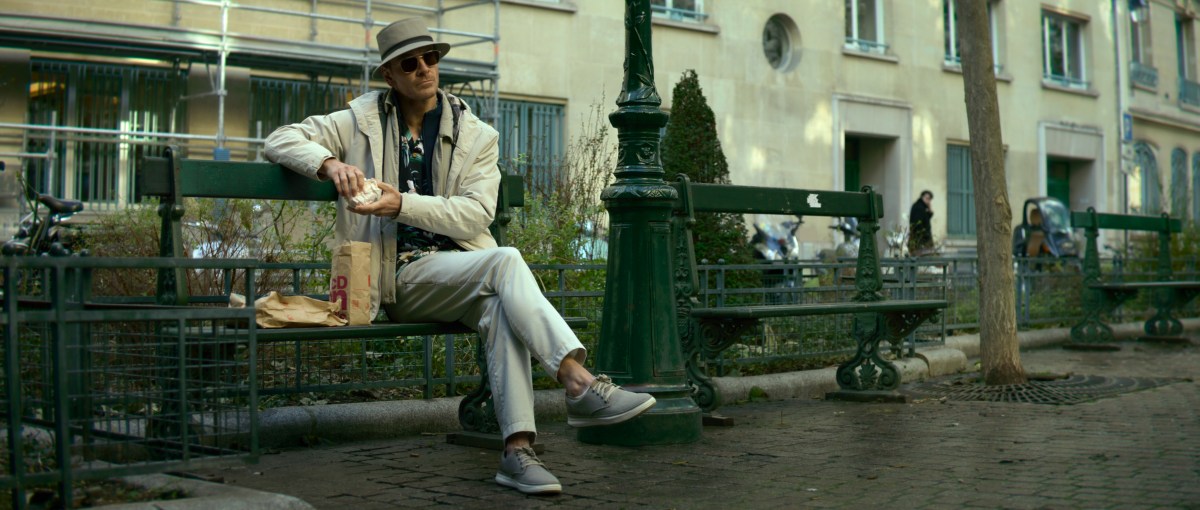
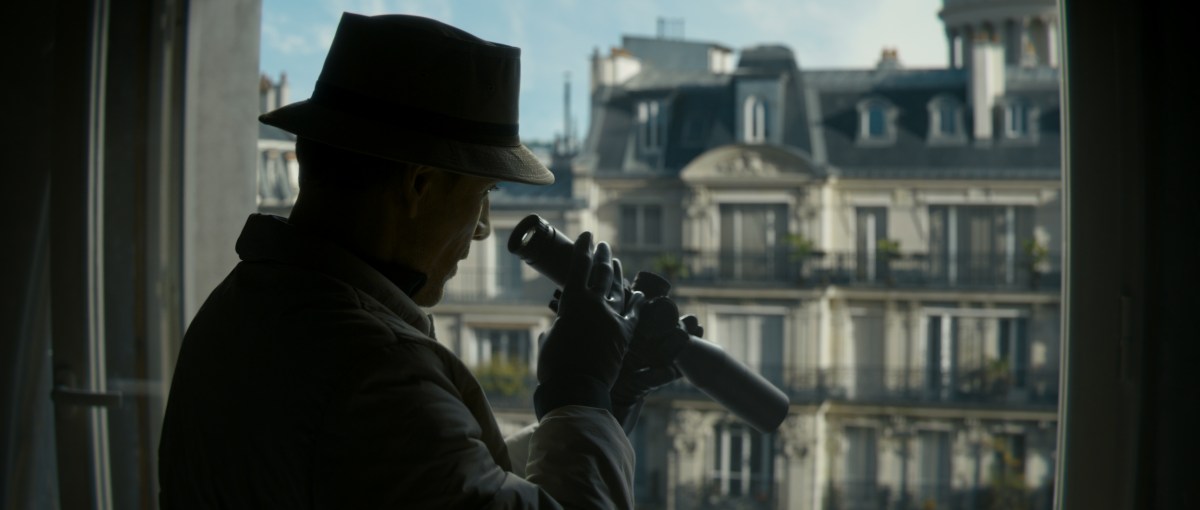
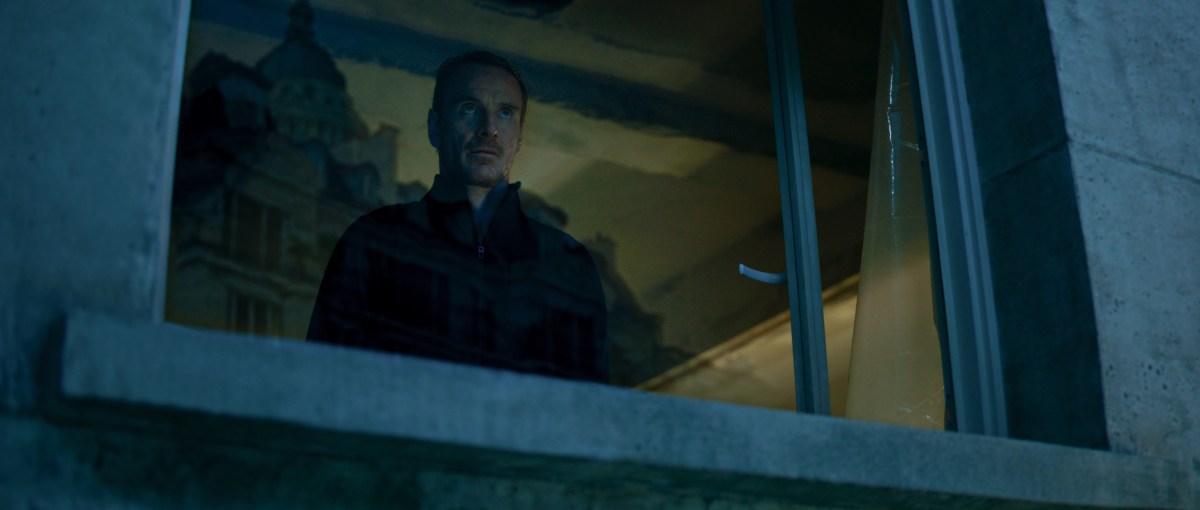
THE MAN IS a consummate professional. In the outside world, he could be anyone — just another ridiculous looking dude somewhere between the ages of 32 and 48, the everyguy in line behind you at an Ace Hardware store or in front of you at McDonald’s. But sitting here, in an unfinished WeWork office space, is this slender, limber apex predator in his natural habitat, and an extremely patient one. He’s perched here for days, just staring out the window at a ritzy apartment in Paris. Watching. Waiting. Whiling away the hours, doing nothing. It’s a key part of the job. “If you can’t stand the boredom,” he says, via voiceover narration, “the work is not for you.”

Should you suggest to David Fincher — world-class filmmaker, notorious perfectionist, and a gentleman who genuinely appreciates a good joke — that the line spoken by the title character of his new film The Killer is also a warning to audiences hiding in plain sight, he will laugh. The director will go into detailed explanations about why the unnamed hero (or rather, its “hero”: “Massive air quotes at work here”), played by Michael Fassbender, is not just a hit man but a very, very unreliable narrator. He’ll mention that the script, written by Se7en scribe Andrew Kevin Walker, borrows the idea of long interior monologues in lieu of nonstop action directly from the source material. And he’ll admit that they knew that any movie “probably being sold with an image of a guy with piano wire in his hand or putting someone into cold storage,” yet “starts out with 25 minutes of someone sleeping on sheetrock in an empty office, musing as to what it’s all about,” might potentially have viewers wondering what they’ve stumbled into. But Fincher will not say you’re wrong.

Read the full profile

David Fincher on filmmaking and his twisted new comedy, The Killer

As his new film gets ready to hit Netflix, the legendary director talks to Nick Chen about The Smiths, Michael Fassbender, and the similarities between directors and hitmen.

Nick Chen
November 6, 2023
Dazed

To prove the catchiness of “Unhappy Birthday” by The SmithsDavid Fincher sings to me the opening refrain with a huge grin. For our conversation, the 61-year-old director of feel-bad fare like Se7enZodiac, and The Girl with the Dragon Tattoo is in surprisingly good spirits. Or bad spirits, given the miserabilist nature of The Smiths.

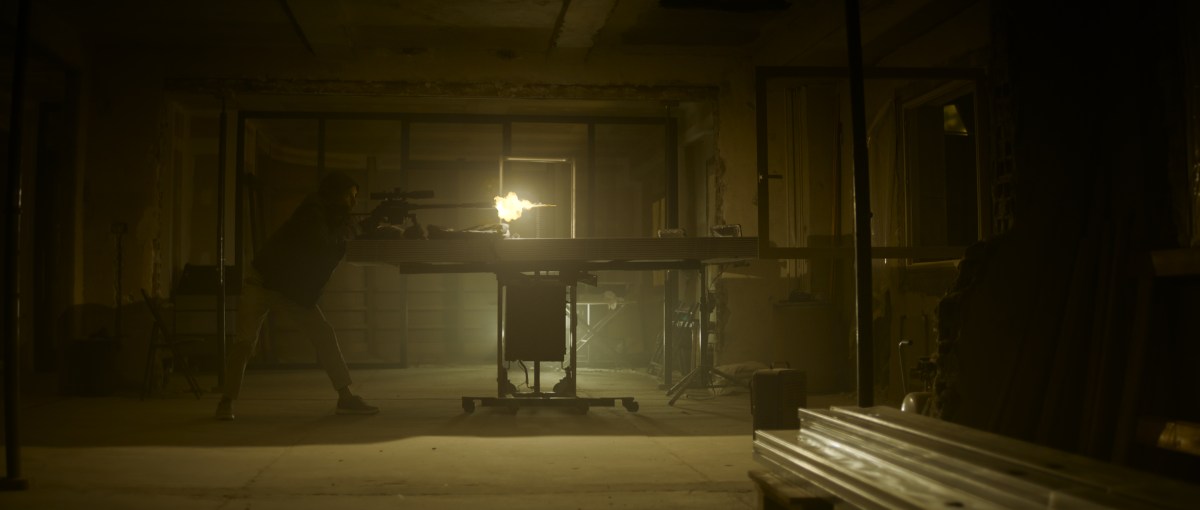
In Fincher’s sleek, bleak thriller The Killer, his second feature for Netflix, there are 11 killer songs by The Smiths on the soundtrack. An unnamed hitman (Michael Fassbender) – simply The Killer, in the credits – calms his nerves when operating a sniper rifle by listening to “How Soon Is Now?”, the tremolo reverberating through his earphones. “That guitar shouldn’t be comforting, because it’s sinister,” says Fincher, speaking in Ham Yard Hotel during the London Film Festival. “But to me, it’s comforting. We originally had Joy Division and Siouxsie and the Banshees[Trent] Reznor was like, ‘Every time we use The Smiths, it’s just funny.’”

After the black-and-white seriousness of Mank, Fincher has returned to the kind of big-screen, popcorn fun he delivered in Gone Girl – except it also mischievously isn’t. Adapted from a French graphic novel, The Killer is less of a John Wick-esque, gun-toting adventure and more observing an assassin do admin to bypass security measures. He shuffles through paperwork to identify home addresses, and fills in endless forms to join a victim’s gym. To remain faceless, he picks up Amazon purchases from a locker and eats at a McDonald’s that doesn’t involve entering a building. If it weren’t too meta, he’d wind down by using someone else’s password to stream Fincher’s House of Cards on Netflix.

Read the full profile

David Fincher: “Directors are trained dogs who like to do a backflip and be applauded afterwards”

The man who directed films such as ‘Seven’ and ‘Zodiac’ has released his latest film: ‘The Killer.’ In an interview with EL PAÍS, he reflects on his cinematographic technique, his fascination with criminal minds, his terrible experience directing ‘Alien 3′ and his reputation for being tough on set.

Tommaso Koch
5 November 2023
El País (in English)

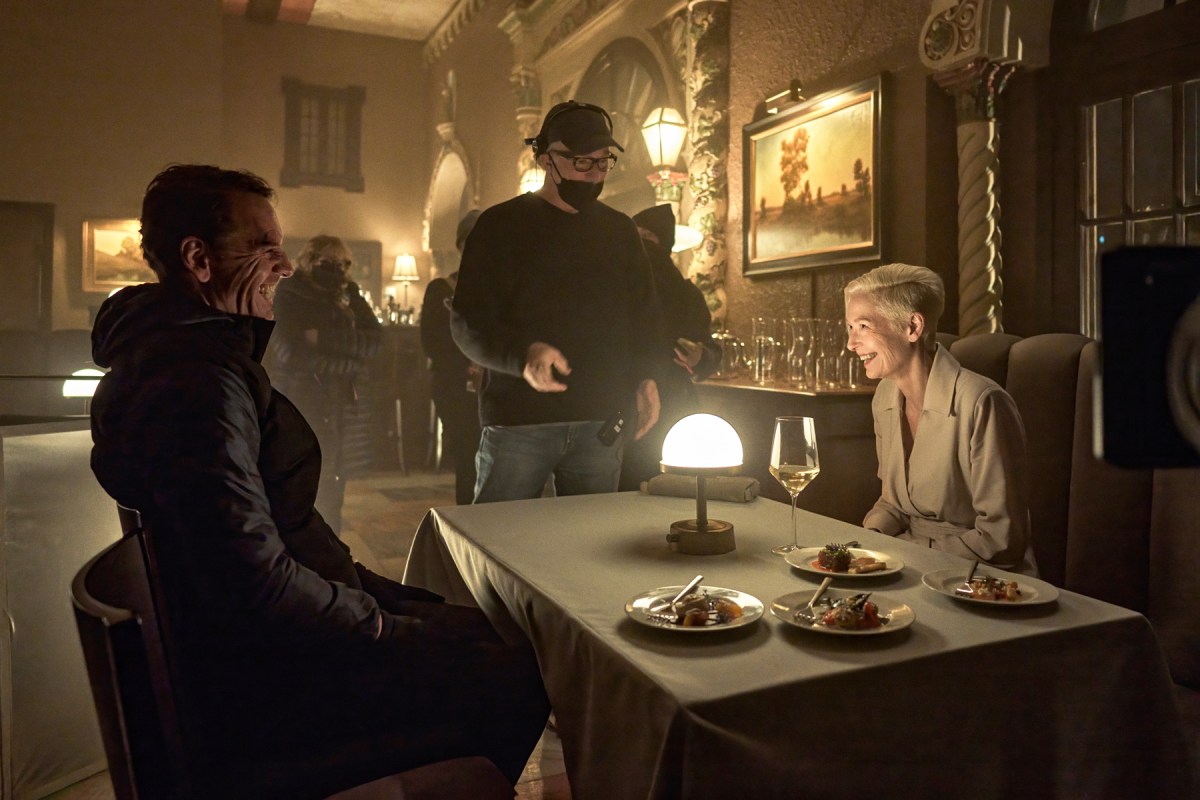
In front of David Fincher, there’s a table and a glass of water. The typical, minimal decoration of any interview. But the talent of the 61-year-old director isn’t typical or minimal at all. With just a few bursts of words, he can transform a nondescript setting into a sudden master class in cinema.

He’s always thinking about how something could be filmed, from where, with what intention. His long shots — assembled with frenetic phrases — are capable of turning even the dullest premise into a thriller.

The Denver-born director has a career that spans three decades, with iconic films such as Seven (1995), The Social Network (2010) and Gone Girl (2014). He’s one of the most-admired filmmakers on the planet, for his visual style, his extensive research into the abysses of the mind and his capacity for immersive narration.

Fincher is a relentless perfectionist, just like the protagonist of The Killer, his latest film, now playing in theaters and available on Netflix on November 10. The professional assassin has a perfect record… until, for the first time, he makes a mistake.

In Fincher’s career, there are hardly any. Except, perhaps, right at the beginning. He was 30-years-old and had a solid reputation as a director of music videos, when he was offered something on the big screen. From the vertigo of recording Madonna or Michael Jackson, he was suddenly part of something even more terrifying: Alien 3. But he wasn’t scared of the creature, he was simply horrified by the industry, its thirst for money, its managers, its obstacles to creativity. To this day, he says that no one hates that film more than him. “I was like, ‘Well, surely you don’t want to have the Twentieth Century Fox logo over a shitty movie.’ And they were like, ‘Well, as long as it opens.’ He added that the experience made him “a belligerent bastard.”

Another key to his fame is his impeccable workmanship. He’s always hunting for details, seeking the perfect final result. Some say he goes overboard. Gyllenhaal — who starred in Zodiac (2007) claims that Fincher “paints with people” while working. “It’s tough to be a color,” the actor added, in an interview with The New York Times. “It’s hard to be David Fincher,” Jodie Foster once said.

The director confessed, in a chat with Sam Mendes, that the phrase he repeats most on set is “shut the fuck up, please.” He admits that he becomes firm when he notices that someone is slacking. He believes it’s necessary, given the time and the money at stake. The viewer also isn’t allowed to relax.

Years ago, he was in talks to direct an installment of Spiderman, but what he proposed must have been so different that the executives despised it. With Fincher, it’s all love or hate.

The premiere of Fight Club (1999) — at the Venice Film Festival — awakened, above all, the latter sentiment. “They wanted to tear off our skin,” the creator said some time later. However, when he returned two months ago to the festival — where this interview was held — the event organizers welcomed him like a divo.

Read the full interview

I Will Survive

Seth Emmons
November 2023
Cinematography World / Leitz Cine

American cinematographer Erik Messerschmidt ASC reunited with director David Fincher for The Killer, the pair’s third collaboration following the Academy Award-winning feature film Mank (2020) and the critically-acclaimed series Mindhunter. The new Netflix Original neo-noir thriller is adapted from the eponymous graphic novel by French writer Alexis “Matz” Nolent and follows an unnamed assassin played, by Michael Fassbender, on a global hunt for revenge, only to find himself the subject of an international manhunt after a after a hit goes wrong.

Principal photography on the film began in November 2021 and wrapped in March 2022, with filming taking place in Paris, Dominican Republic and New Orleans, Louisiana, and St Charles in Illinois. Messerschmidt is quick to point out that The Killer is not a caper, but an exercise in observing the journey of a fascinating character, a professional who considers himself separate from the masses. But, when his meticulous planning goes wrong, the framework of his world gets knocked off balance as well.

The Killer exemplifies the decisive filmmaking style that Fincher has become known for and Messerschmidt embraces this methodology when working together.

The Killer is probably the most precise movie I’ve ever worked on,” he says. “There’s something to be said for spontaneity and the moments between the moments that you capture in an unexpected way, and I would never want to detract from the value of that. But, to me the most satisfying way of filmmaking is trying to be as sublime as possible. It’s hard work and you have to know where you’re going at every step to achieve it. It’s all about previsualisation and the pursuit of those ideas.”

“Sculpture is a great metaphor for how David works. He strips away anything extra – from the camera movement to the performance to the set dressing – and focusses on what the audience needs to learn from each scene. There’s no showing-off because it’s all about telling the story in the clearest, most effective way. The artistry presents itself in the micro decisions. This frame or that frame? Should the camera be here, or a foot further back? It becomes much more nuanced.”

Read the full profile on the Leitz Cine website

Read the full profile on Cinematography World (soon)

Killer Instincts

David Fincher aims to unsettle with Michael Fassbender as a ruthless assassin in gripping thriller The Killer.

By Nev Pierce
Photograph by Jean-Baptiste Mondino

November 1, 2023
Netflix Queue

The Killer is about an exacting professional whose meticulous methods and wry worldview are disrupted by unruly reality. This may be a clue as to why David Fincher wanted to make it. The Fight Club filmmaker is well-known for his tenacious approach to directing — always pushing for more. And in Michael Fassbender he has a leading man who is equally driven.

The Oscar-nominated star of 12 Years a Slave and Steve Jobs left screens for a few years to take up professional racing behind the wheel of a Porsche in the European Le Mans Series. This blend of danger and precision seems apt for playing the title character in The Killer, an unnamed assassin who aims to execute things — and people — perfectly.

We’ll get to how, or if, one can define “perfection” in cinema, but to an on-set observer, it might seem Fincher will settle for nothing less. While he would contest this, he knows his definitions can differ from others’. “My idea of professionalism is you work 24-7 to make good on your promises,” he says, before continuing with a self-aware smile. “Not a lot of people feel that way. Some people are like: ‘You do the best you can in 40 hours a week and let the chips fall where they may.’”

Read the full profile

Watch The Killer on Netflix

David Fincher: “Los directores somos perros adiestrados que aman hacer la voltereta y que los aplaudan después”

El creador de ‘Seven’ y ‘Zodiac’ estrena su última película, ‘El asesino’, y reflexiona sobre la técnica cinematográfica, su fascinación por las mentes criminales, su pésima experiencia en ‘Alien 3′ o su fama de duro en el plató.

Tommaso Koch
29 octubre 2023
El País

Ante David Fincher hay una mesa y un vaso de agua. Lo habitual, la decoración mínima de cualquier entrevista. Pero el talento del director (Denver, 61 años) poco tiene de común. Tanto que, con dos ráfagas de palabras, transforma el anodino cáliz en protagonista de una repentina clase magistral de cine. Cómo podría filmarse, desde dónde, con qué intención alguien lo cogería. Y un largo travelling de disquisiciones técnicas, montado a golpe de frases frenéticas, capaz de convertir en todo un thriller tan insulsa premisa. He aquí la síntesis más breve de la unicidad de su trabajo. La versión larga, en cambio, abraza tres décadas de carrera, películas como Seven, La red social, Perdida, Mank o la serie Mindhunter y el estatus de uno de los cineastas más admirados del planeta. Por su estilo visual, su indagación en los abismos de la mente, su narración envolvente. Un perfeccionista implacable, como El asesino de su último largo—estrenado ahora en una treintena de salas antes de llegar el 10 de noviembre a la plataforma Netflix—. Hasta que, por primera vez, comete un error.

En la trayectoria de Fincher apenas los hay. Salvo, quizás, justo al principio. Tenía 30 años y un sólido prestigio como director de vídeos musicales cuando le ofrecieron debutar en el séptimo arte. Del vértigo de grabar a Madonna o Michael Jacksonotro extraterrestre, más terrorífico aún: Alien 3. No tanto por el xenomorfo, en realidad: le horrorizaron los directivos, la industria, su sed de dinero, sus trabas a la creatividad. A día de hoy, dice que nadie odia esa obra más que él. “Pensaba: ‘No querrán el logo de Twentieth Century Fox sobre una película de mierda’. Y ellos decían: ‘Bueno, mientras se estrene…”, ha contado en alguna ocasión. Y añadió que la experiencia le volvió “un cabrón beligerante”.

Lee la entrevista completa (sólo para suscriptores)

Read the full interview in Spanish (for subscribers only)

Dead Reckoning

Oscar-winner Erik Messerschmidt, ASC, draws a bead on the mind of an assassin in David Fincher’s The Killer.

Kevin Martin
October 26, 2023
ICG Magazine

Consider this promotional material for the 1969 assassin-at-a-crossroads film Hard Contract: “Everything they do is 97 percent control and 3 percent emotion.” Compare that with the mantra from the nameless lead character in The Killer, director David Fincher’s newest feature for Netflix, shot by Oscar-winner Erik Messerschmidt, ASC. “Stick to your plan. Anticipate, don’t improvise. Trust no one. Never yield an advantage. Fight only the battle you’re paid to fight.”

It sounds pretty much the same, right? Both help illustrate the heart of a broad subgenre of films that includes Anton Corbijn’s The American (shot by Martin Ruhe, ASC), the aforementioned Hard Contract (shot by Jack Hildyard, BSC), The Eiger Sanction (shot by Frank Stanley, ASC, former IATSE Local 659 president) and Fred Zinnemann’s The Day of the Jackal (shot by Jean Tournier.) The common locus revolves around the assassin as a high-functioning sociopath, able to operate effortlessly in various circles without being found out. Given the inherent complexity of such a character type, it is easy to see how Fincher was able to attract Michael Fassbender to take the lead role.

Derived from a long-running graphic novel series by author Alexis “Matz” NolentThe Killer had been in gestation by Fincher for close to fifteen years. Depicting a murder-for-hire gone awry and its aftermath, the film is viewed through the eye of a seasoned assassin (Fassbender), who now finds himself a target and must seek out not only his erstwhile employers but also those they have deployed against him.

Messerschmidt’s history with Fincher began as Chief Lighting Technician on Gone Girl [ICG Magazine October 2014] before going on to shoot his Mindhunter series and then, in 2021, winning the Oscar for Mank. Messerschmidt had also shot episodes of FargoLegion and Raised by Wolves, and, more recently, the WWII aerial epic Devotion [ICG Magazine December 2022]. “What I initially found interesting about the script was how it is almost wholly absent of dialog,” Messerschmidt describes. “There is a significant amount of voice-over, a lot of which was present in the first script, but very little is spoken on screen – so in a sense, it’s like a silent film. This meant the way we told the story with the camera was that much more important. It’s an adaptation of a graphic novel, which are told in a similar way. I was fascinated by that kind of challenge.”

Read the full profile