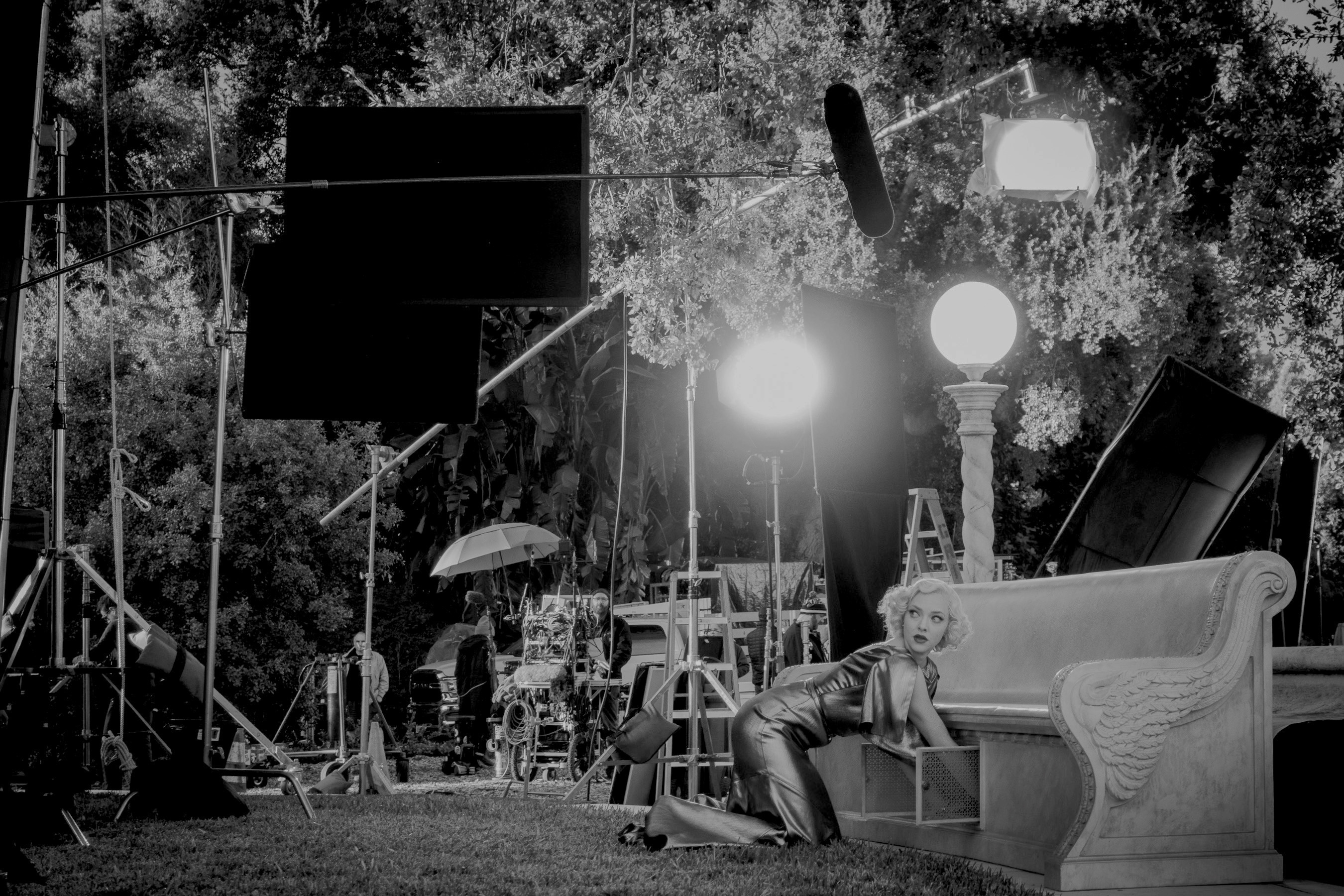
Homage to the Golden Age

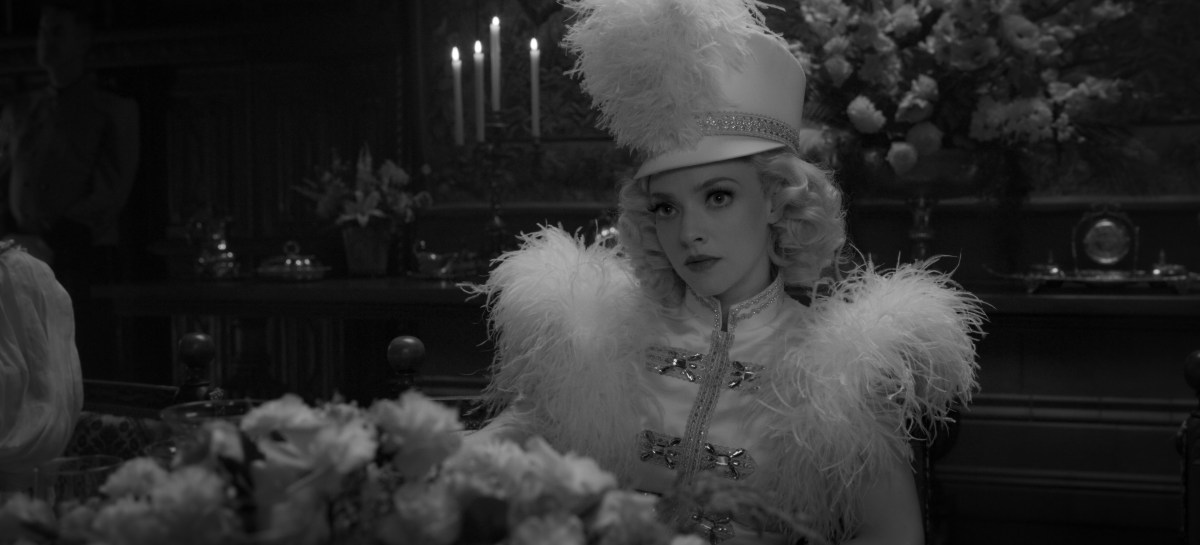
Mank wears its luminous black & white cinematography like a costume, blending in with the themes, but never distracting from the story

Chelsea Fearnley
February, 2021
Definition Magazine

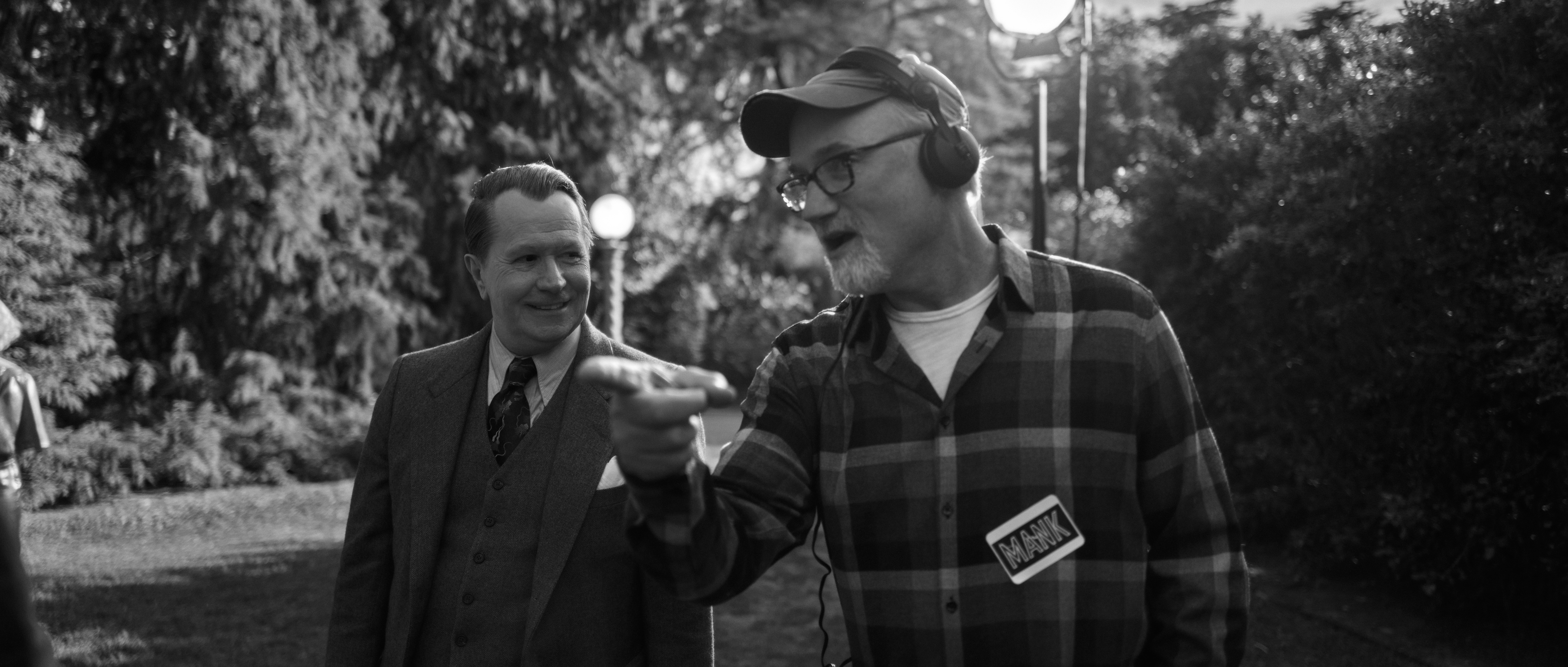
There was never any doubt that David Fincher’s brilliant Mank would be shot in black & white. The film follows a Hollywood screenwriter, Herman J Mankiewicz aka Mank (played by Gary Oldman), as he wrestles with the screenplay for Orson WellesCitizen Kane. It’s a sumptuous ode to the Golden Age of cinema – one that transports audiences to a place where they can understand and appreciate the homage – and yet, it is littered with modern filmmaking techniques that aren’t fooling anyone about its release date.

Fincher and cinematographer Erik Messerschmidt agreed that they didn’t want to be confined to shooting on film or within the aspect ratio of 1.37:1 that would have been accurate for the period – not with Fincher’s digital prowess and proclivity for a widescreen format. And, just in case there was any confusion about the technological resourcefulness of this film, Messerschmidt is even credited as being responsible for ‘Photography in Hi-Dynamic Range’ in the title sequence.

“Filmmaking has always been a medium where we selectively employ the techniques that are available on the day,” says Messerschmidt. Nonetheless, shooting in black & white demands huge amounts of creative courage and the cinematographer was conscious about being too seduced by the opportunity.

He explains: “Before I had even read the script, I sent Fincher some images referencing the film noir genre of that era. I soon realised that, thematically, Mank is not a noir film. There are certainly elements that call for hard lighting effects, such as the flashback sequences in the writers’ room or with Shelly Metcalf [a fictional test shot director friend of Herman’s] moments before his suicide, but I tried to ground much of it in realism. I didn’t want to draw audiences away from the storyline by being too dramatic, so I chose to light through windows and illuminate interiors with practicals.”
Read the full magazine

Right On Hue

Photo by Nikolai Loveikis

David Fincher’s black-and-white tribute to Old Hollywood took a radically different approach to the role of color in design.

January 29, 2021
Netflix Queue

In the annals of Hollywood, Herman Mankiewicz will forever be remembered as the screenwriter of Orson Welles’s towering classic Citizen Kane, but his impact on the history of cinema doesn’t stop there. Mankiewicz also served as an early, uncredited writer on The Wizard of Oz. His contribution? Suggesting that once Dorothy Gale travels over the rainbow, the film transitions from black and white to glorious Technicolor. “He walked away from that [project] saying, ‘This is all I can come up with,’” laughs director David Fincher. “It might be the greatest special effect in the history of the movies.”

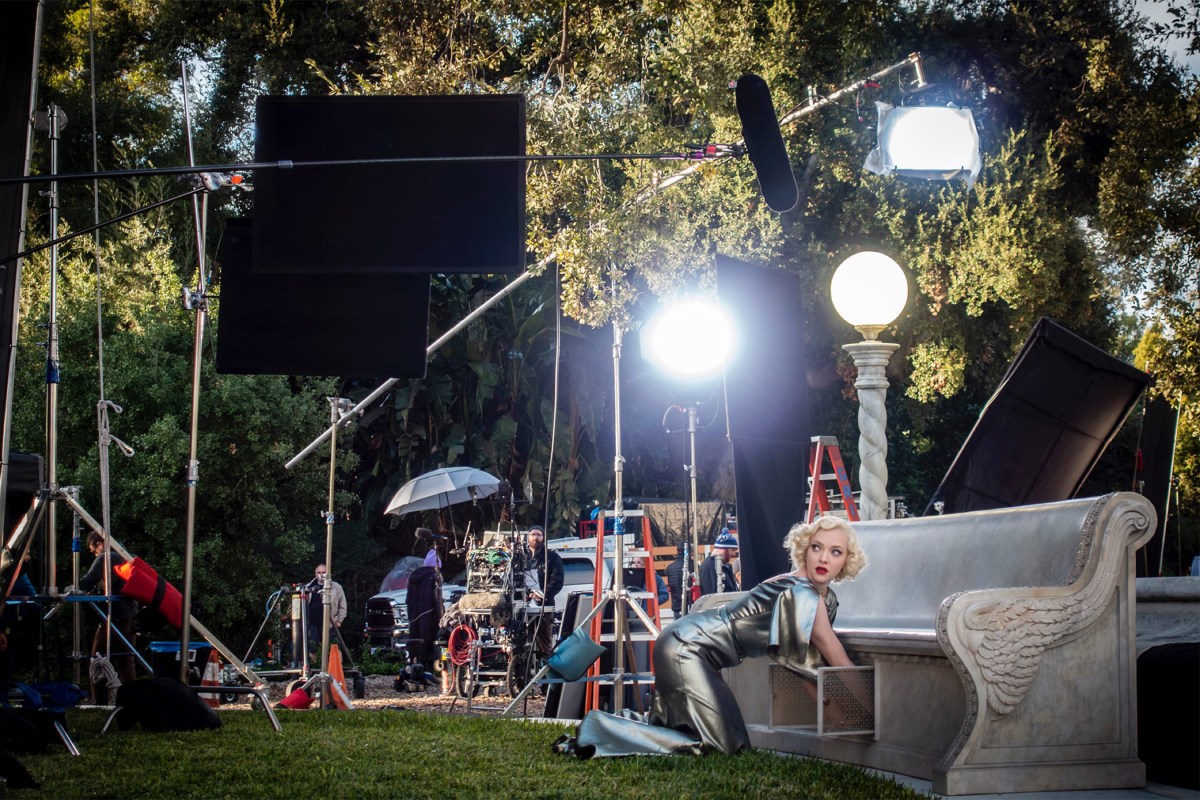
For Mank, Fincher’s backstage drama about the screenwriter’s life and his work on Kane, the director and his creative team journeyed from a world of color to one rendered entirely in black and white, shooting eye-catching sets and costumes with the RED 8K Helium Monochrome camera. That created an interesting artistic puzzle for Fincher and his collaborators to solve. From cinematography and production design to costumes and hair and makeup, each department needed to determine the best way to manipulate color to achieve the proper register of lights and darks onscreen.

“We had to train our senses to see through a lens of black and white,” explains Oscar-winning production designer Donald Graham Burt (The Curious Case of Benjamin Button). “It mandated a palette based on tone and contrast.”

Fortunately, they proved more than up to the challenge.

Read the full article

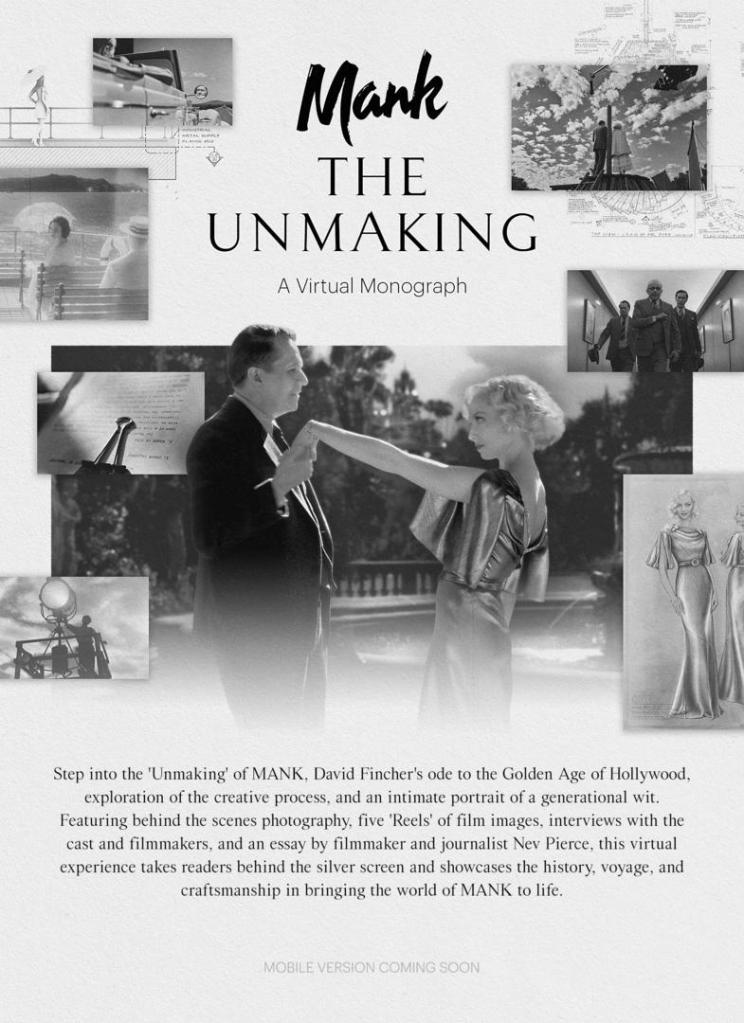
Mank, The Unmaking

January 28, 2021
Netflix

manktheunmaking.com [Old Domain]

mank.aristidebenoist.com

Text by:

Nev Pierce

Photography by:

Erik Messerschmidt
Miles Crist
Gisele Schmidt-Oldman
Gary Oldman
Ceán Chaffin
Nikolai Loveikis

Design and development by:

Watson Design Group, Inc.
Aristide Benoist

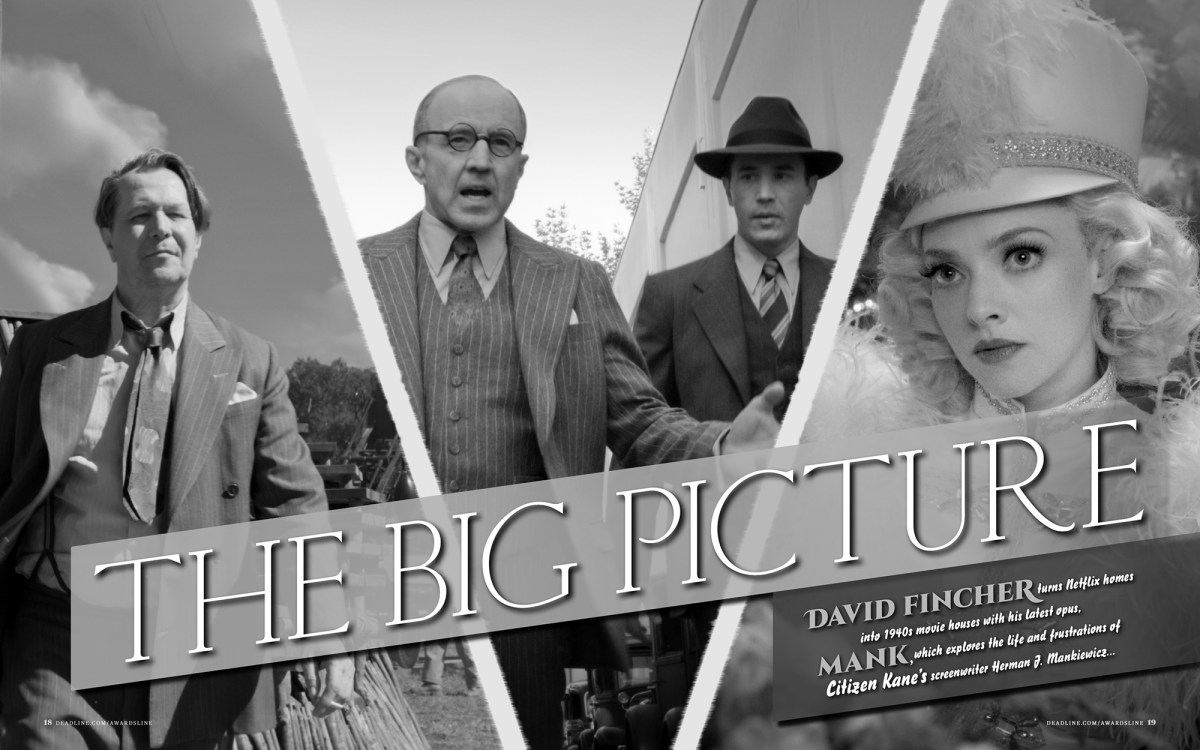
Awardsline: The Big Picture

David Fincher brings the big screen to us for his latest picture. With a cast led by Gary Oldman & Amanda Seyfried, is Mank a love letter to cinema’s golden age or an indictment of the shadier side of the movie biz?⁠

Joe Utichi
January 6, 2021
Awardsline (Deadline)

Read the full issue of Deadline Presents Awardsline

The Burning Question That Drove David Fincher’s Decades-Long Journey To Make ‘Man

Joe Utichi
January 6, 2021
Deadline

David Fincher turns Netflix homes into 1940s movie houses with his latest opus, Mank, which explores the life and frustrations of Citizen Kane’s screenwriter Herman J. Mankiewicz, as he works his way through the draft of what will become Orson Welles’ seminal directorial debut. With its title role imbued with Mankiewicz’s world-weary wit by Gary Oldman, and from a script first drafted more than 20 years ago by Fincher’s father Jack, who passed away in 2003, the film reignites the debate about the authorship of a film Welles might nearly have taken sole credit for. But it is about more than that besides; a love and hate letter to the machinations of the movie business, a remarkably timely examination of the façade of truth in the news media, and an intimate study of tortured souls beaten down by the world around them and their own insecurities. Joe Utichi meets Fincher, Oldman and Amanda Seyfried—who rehabilitates the image of actress and socialite Marion Davies—for a closer look.

Read the full profile