Mank makeup department head Gigi Williams explains her work on David Fincher‘s black-and-white dip into Hollywood lore, particularly the way she captured the eponymous screenwriter during an exhausted, overworked state.
Mank actors Gary Oldman and Amanda Seyfried sit down with casting director Laray Mayfield to discuss their work in David Fincher‘s acclaimed film. Oldman discusses tapping the vulnerability of the eponymous screenwriter and using his actual physicality for the portrayal, while Seyfried speaks to Marion Davies‘s legacy and how it shaded Seyfried’s depiction of her.
Mank star Amanda Seyfried sits down with costume designer Trish Summerville, makeup department head Gigi Williams and assistant head hair stylist Colleen LaBaff for a deep-dive discussion of their efforts in bringing Marion Davies to life on the screen for David Fincher‘s black-and-white ode to Hollywood’s Golden Age.
When makeup and hair designers Gigi Williams and Kimberly Spiteri were approached for Mank, they jumped at the chance to craft looks for an Old Hollywood drama, set in an era they both loved.
“Hollywood in the ’30s and ’40s was something that we’ll never get to see again. That whole studio system, it’ll never be like that again,” Spiteri says. “So it’s a chance to get a glimpse at what it was like, which I find fascinating.”
Directed by David Fincher, the drama is both a love letter to, and a critique of, Hollywood’s Golden Age, following alcoholic screenwriter Herman J. Mankiewicz (Gary Oldman), as he finishes the script for Citizen Kane.
It’s on projects like this, Spiteri says, that “what the hair and makeup department does as a craft matters. Whether you’re trying to emulate a character or just get the period right, you may not notice if it’s right. But you’re going to notice if it’s wrong.”
Certainly, in the case of Mank, every effort was made to make sure that the work was right, though period accuracy was not the only concern. Because the film would be shot in black and white, both Williams and Spiteri had to engage in a lengthy series of camera tests, to make sure that their designs would translate properly, and that Fincher would be satisfied with the looks conceived for every actor.
In years past, Williams had collaborated with Fincher on the 2014 film Gone Girl, as well as the Netflix series Mindhunter, climbing the rungs between those two projects from assistant makeup department head, to the head of her department. Spiteri, though, had never before worked with the revered auteur, so it would take some time to come to grips with his famously particular working style.
Below, the designers reflect on the joys and challenges of tapping into a “magical period in filmdom” for Mank. Additionally, they touch on the idiosyncrasies of Fincher’s “vernacular” as a filmmaker, with regard to makeup and hair, and the way in which Williams guided Spiteri through her first encounter with the filmmaker.
Join acclaimed director David Fincher, actors Gary Oldman and Amanda Seyfried, and the cast and crew of Mank, for a peek behind the curtain of Netflix’s black-and-white ode to Hollywood’s Golden Age.
A conversation with Costume Designer Trish Summerville, Makeup Department Head Gigi Williams, Assistant Makeup Department Head Michelle Audrina Kim, Hair Stylist Department Head Kimberley Spiteri, and Assistant Head Hair Stylist Colleen LaBaff. Moderated by Jessica Radloff.
Mank frames the origin story of Citizen Kane from the perspective of screenwriter Herman J. Mankiewicz as he’s hit a low point in life. Alcoholic, world-weary and hobbled by a broken leg sustained in a car crash, Mankiewicz is trundled off to a dusty desert cottage in Victorville, Calif., accompanied by a nurse and a typist tasked with keeping their cantankerous patient off the bottle so he can complete a screenplay for Orson Welles — a script that will serve as the foundation of Kane.
Pressed by Welles to finish the project, the bedridden “Mank” (as he’s known to his friends and colleagues) struggles to find creative inspiration, eventually drawing upon his memories of businessman, newspaper tycoon and politician William Randolph Hearst. Flashbacks transport us back to Mank’s headier days as a handsomely paid Hollywood scripter. After amusing Hearst with his barbed wit on a movie location, Mankiewicz is invited to mingle with members of the mogul’s inner circle and renews a friendship with Hearst’s mistress, actress and comedian Marion Davies. Mank’s Hollywood career is thriving, and his social standing is on the rise, but his proximity to power allows him to observe its corrosive influence firsthand — souring his worldview, but ultimately informing the plot of Citizen Kane and the sardonically unflattering portrait of its Hearst-like protagonist, Charles Foster Kane.
The script for Mank was initially fashioned by director David Fincher’s father, Jack, a journalist and screenwriter, who empathized with Mankiewicz’s plight and leaned into the controversial assertions of film critic Pauline Kael, whose 1971 essay in The New Yorker, “Raising Kane,” maintained that Mankiewicz was almost entirely responsible for the Citizen Kane screenplay, with little input from Welles. (That thesis has since been partially debunked by Welles supporters, including director and former film critic Peter Bogdanovich.)
Following his father’s death in 2003, Fincher retooled the Mank script with the help of screenwriter Eric Roth, making it less antagonistic toward Welles. “I never felt that the film should be a posthumous arbitration — that’s never been of interest to me,” Fincher told AC during a 90-minute Zoom interview that included Mank cinematographer Erik Messerschmidt, ASC. “What was interesting to me was that it’s [essentially] Rosencrantz and Guildenstern Are Dead — here’s a guy in the wings, and it’s his experience of this situation. What I found fascinating about Mankiewicz was [that] 30 percent of his output as a professional screenwriter in Hollywood was uncredited. And for one brief, shining moment — on a movie he did when he was old enough to sign a contract and understand the terms expressly — he said, ‘No, no, no — I don’t want this one to get away.’”
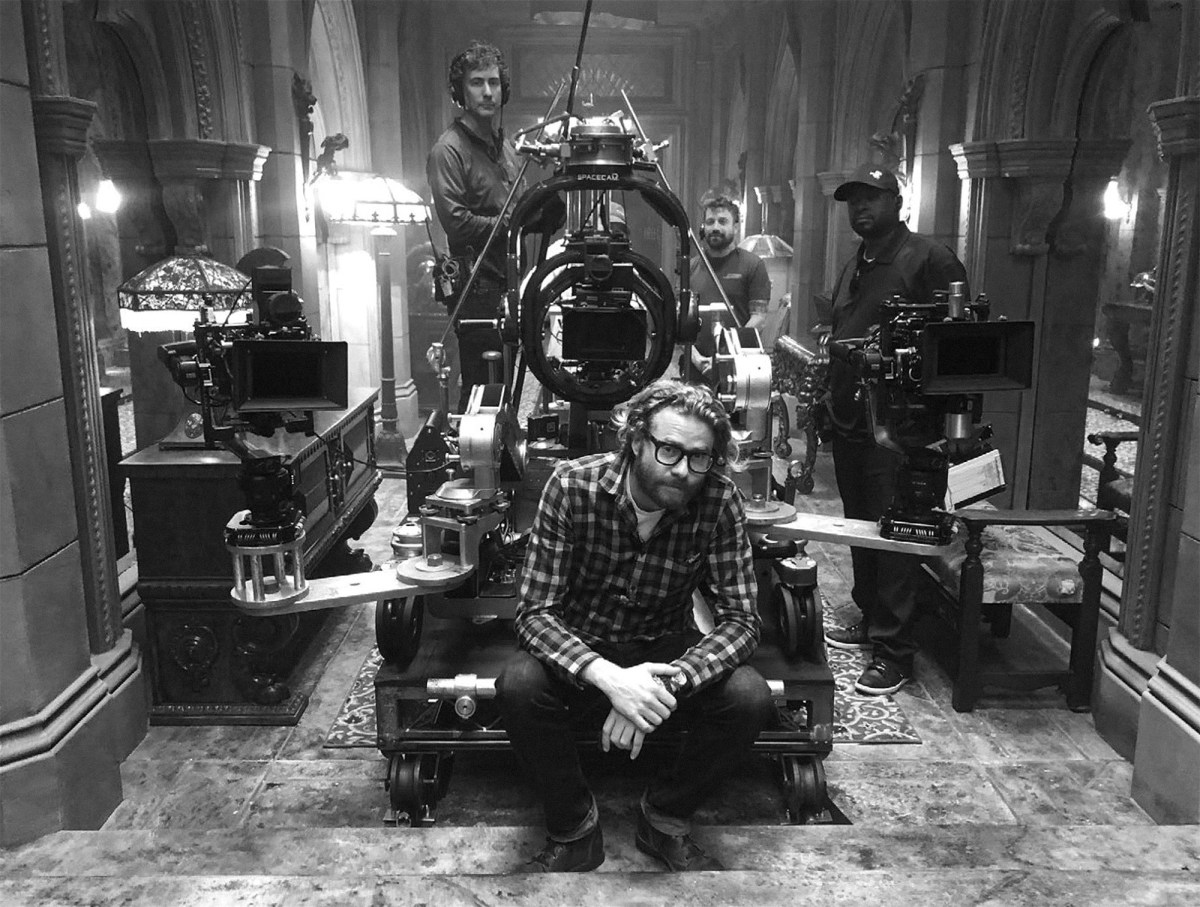
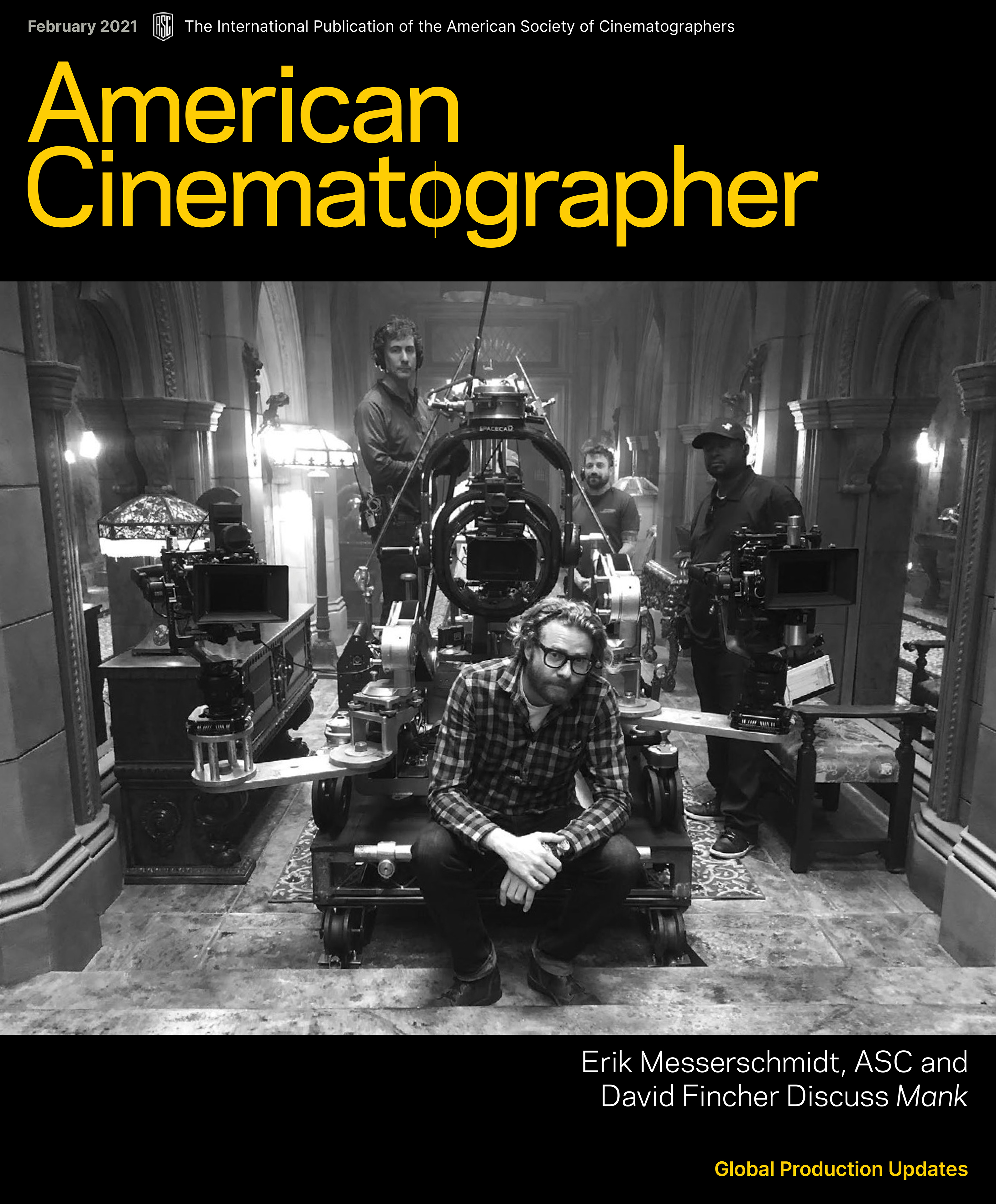
Erik Messerschmidt, ASC (foreground) on the set with (background, from left) boom operator Michael Primmer, B-dolly grip Mike Mull and A-camera 2nd assistant Gary Bevans. (Photo by key makeup artist Gigi Williams, courtesy of Netflix.)
“He just doesn’t like red,” reveals “Mank” makeup department head Gigi Williams about her director David Fincher. It is a curious sticking point for a black-and-white film and Williams admits in her exclusive interview with Gold Derby that she is unsure of the origins. She continues, “It’s like a bull with red, so even on this, I had to find reds that weren’t going to be too distracting for him while we’re on the set, even though he’s watching most of it through a monitor, which is black and white.” Williams notes that purple-leaning reds are especially egregious, whereas “he can handle” orange-leaning varieties. She laughs, “He just hates red. I mean, you go on the set and you go, ‘Oh, there’s a red thermos over there on the set. He’s not going to like that’ and you have to move it.”
By now, the crafts behind Mank are approaching legendary status. Each department needed to retrain their eye, rethink their typical approaches, to create the gorgeous designs for David Fincher’s black and white period film. Makeup department head Gigi Williams was certainly no exception.
Williams, who last worked with Fincher on Gone Girl, calls herself a subtle makeup artist. Her designs typically eschew loud, broad strokes in favor of a more subtle approach.
But a subtle approach would not work with the film’s black and white palate.
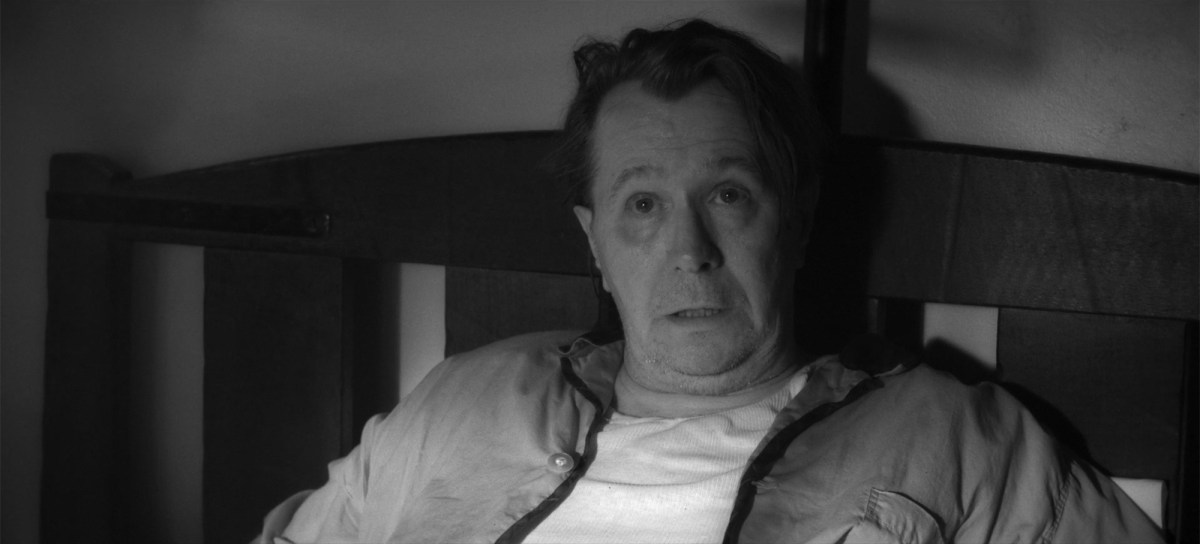
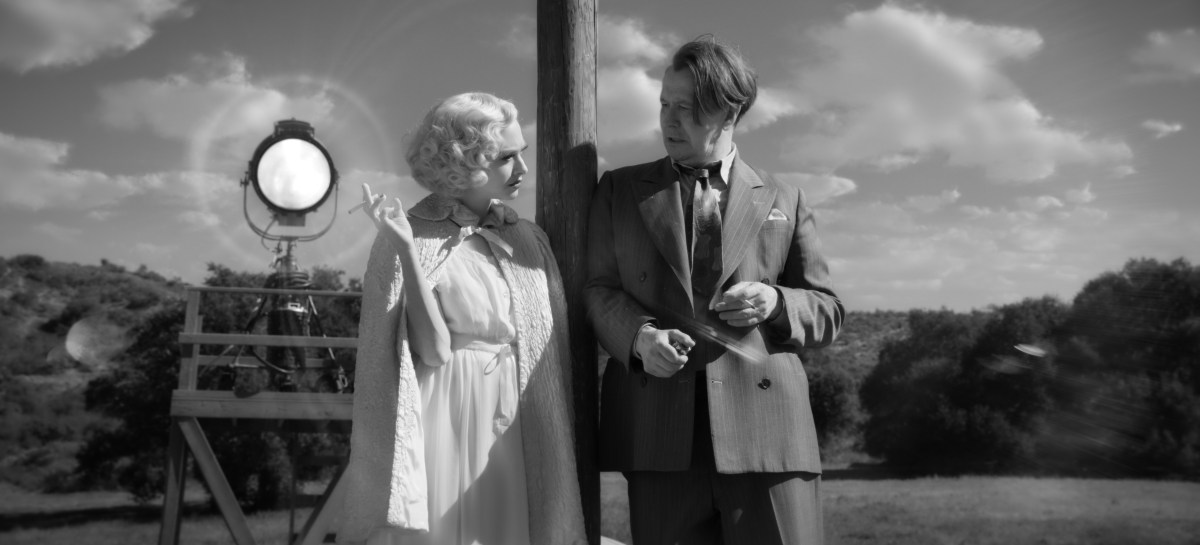
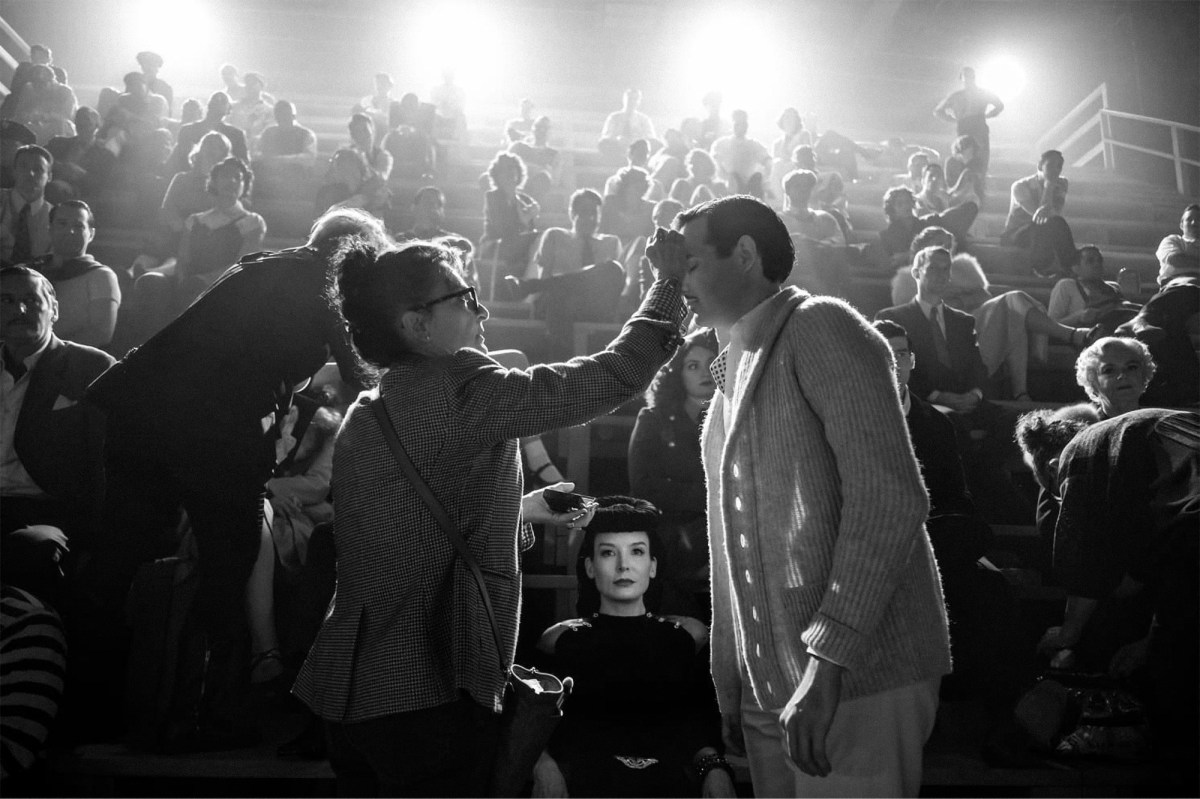
“For me, I had a lot of dark gel in men’s eyebrows. I used black mascara on every single man, and I piled it on because that’s how they looked in their photographs for the period. Even though they weren’t wearing mascara, but was the only way I could recreate that look,” Williams shared. “I found myself really having to push myself to a place that I wasn’t comfortable with which was a lot of makeup, oddly enough.”
In the annals of Hollywood, Herman Mankiewicz will forever be remembered as the screenwriter of Orson Welles’s towering classic Citizen Kane, but his impact on the history of cinema doesn’t stop there. Mankiewicz also served as an early, uncredited writer on The Wizard of Oz. His contribution? Suggesting that once Dorothy Gale travels over the rainbow, the film transitions from black and white to glorious Technicolor. “He walked away from that [project] saying, ‘This is all I can come up with,’” laughs director David Fincher. “It might be the greatest special effect in the history of the movies.”
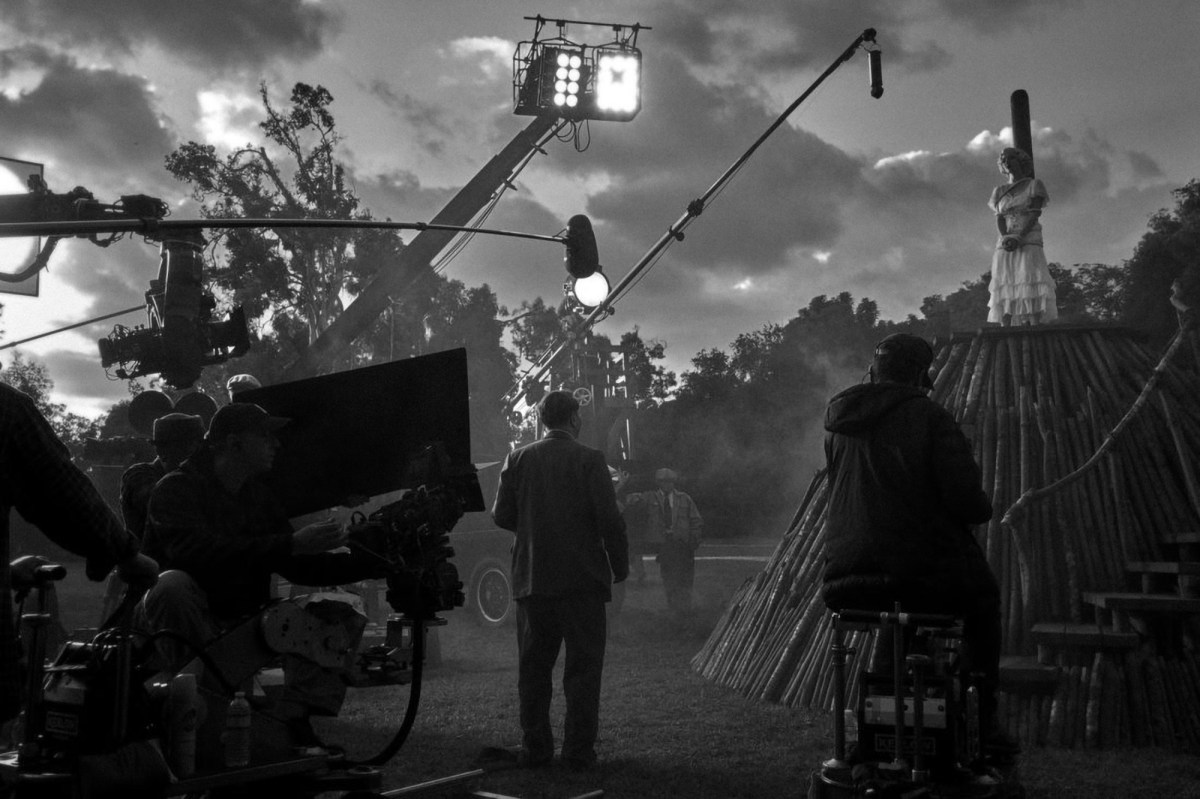
For Mank, Fincher’s backstage drama about the screenwriter’s life and his work on Kane, the director and his creative team journeyed from a world of color to one rendered entirely in black and white, shooting eye-catching sets and costumes with the RED 8K Helium Monochrome camera. That created an interesting artistic puzzle for Fincher and his collaborators to solve. From cinematography and production design to costumes and hair and makeup, each department needed to determine the best way to manipulate color to achieve the proper register of lights and darks onscreen.
“We had to train our senses to see through a lens of black and white,” explains Oscar-winning production designer Donald Graham Burt (The Curious Case of Benjamin Button). “It mandated a palette based on tone and contrast.”
Fortunately, they proved more than up to the challenge.
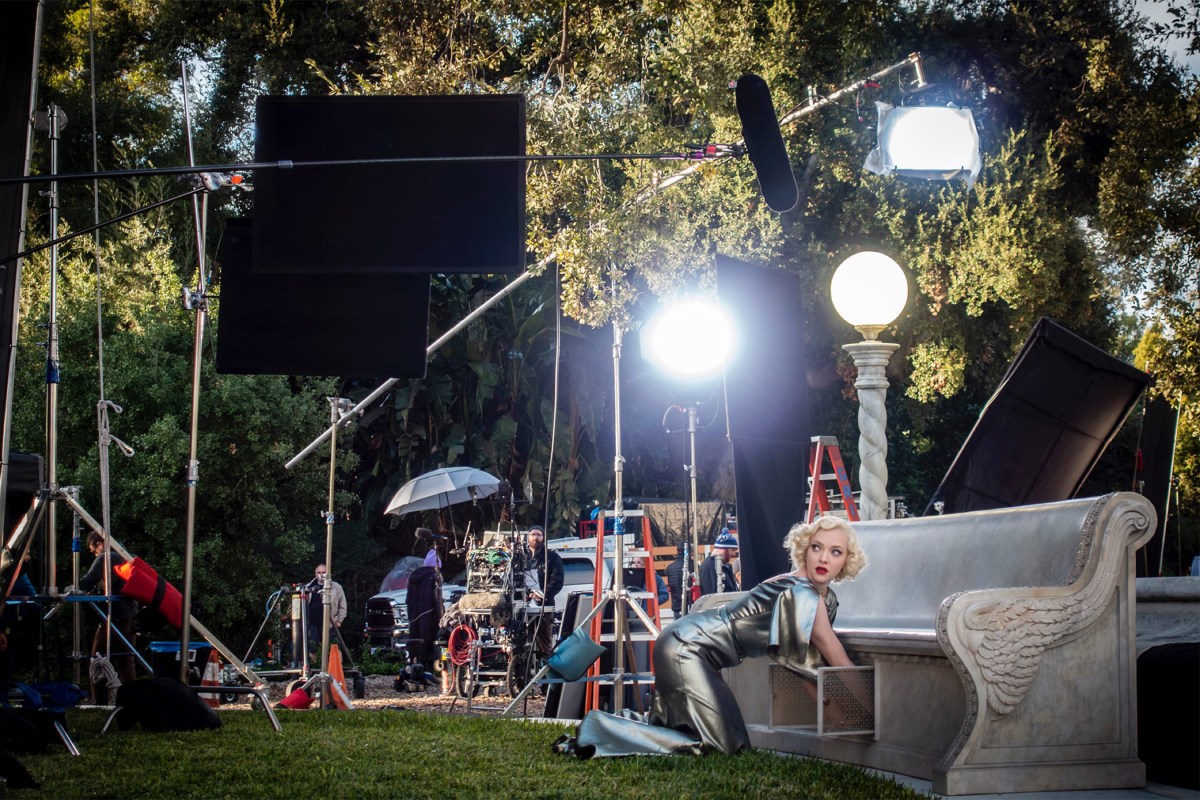
Now presenting MANK, for the first time in Glorious Color!
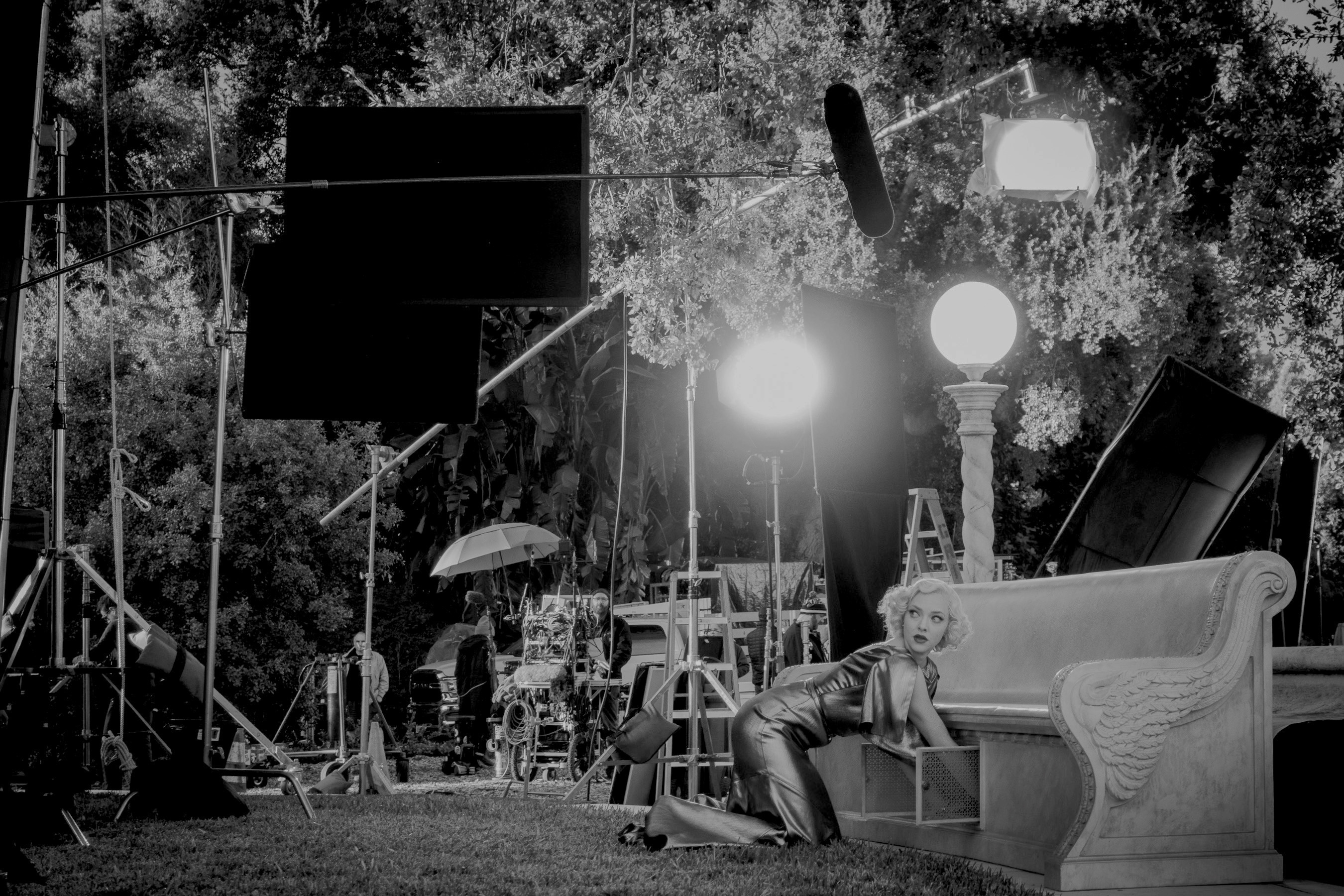
Making a film in black & white means every choice must be meticulously examined in color first. In these behind-the-scenes color shots, you can see how Fincher’s department heads created striking moments for the screen. pic.twitter.com/oNqtbzUkXo








 The Fincher Analyst