Production Designer Donald Graham Burt and Costume Designer Trish Summerville on Making ‘Mank’

Abe Friedtanzer
February 7, 2021
AwardsWatch

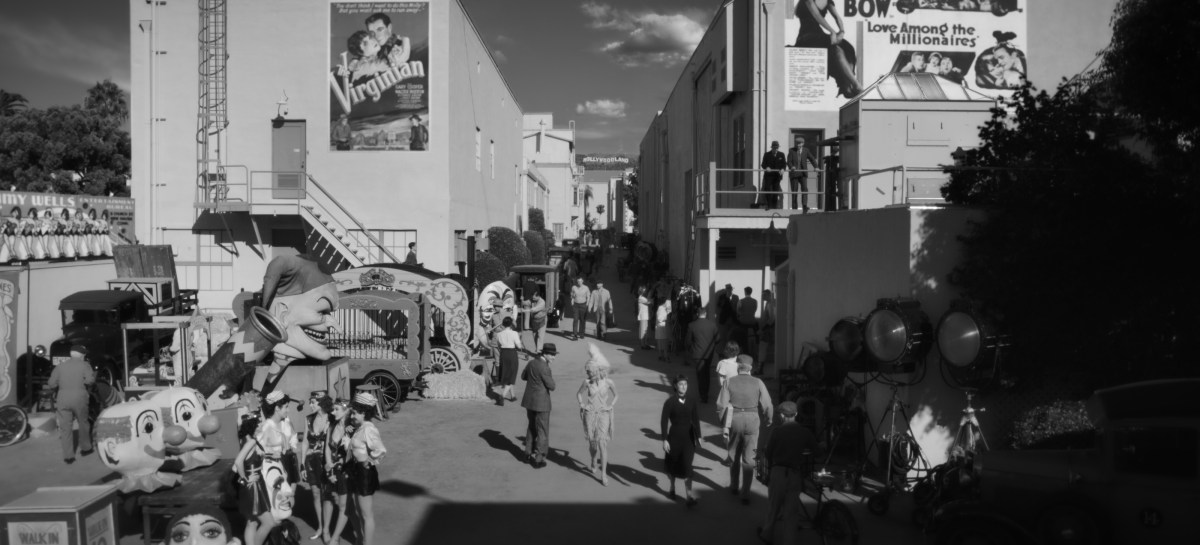
One of the most acclaimed films of all time is Citizen Kane, released in 1941 and starring a young Orson Welles, who also directed. David Fincher’s epic Mank examines the role of another influential player, screenwriter Herman J. Mankiewicz. Released in select theaters in November before a December debut on Netflix, this black-and-white film is full of eye-popping sets and costumes. I had the chance to speak with production designer Donald Graham Burt and costume designer Trish Summerville about their approach to this ambitious project, their affinity for each other’s processes, and working with frequent collaborator David Fincher.

Abe Friedtanzer: When did you first see Citizen Kane, and how much did you want this film to look like that one?

Donald Graham Burt: Wow. I don’t know when I first saw it. It was years ago. And then of course I looked at it again before this film started. I don’t think it was so much about making it look like Citizen Kane. Obviously, the narrative involves Citizen Kane. It was more about making this be a film that felt like it was made during the same period. It was more about the 30s. We weren’t trying to replicate Citizen Kane in any way, shape, or form. That wasn’t the purpose of it. I don’t think we ever sat down and said, okay, in Citizen Kane, they did this, and they had a set that did this, and costumes that did this. That wasn’t the approach to it. Would you agree, Trish?

Trish Summerville: Definitely. I also, like Don, can’t remember when I first saw it. I was pretty young. I rewatched it, but wasn’t trying to mimic any of the costumes in it. It was just information for us to gather. We also looked at a bunch of other 30s black-and-white films.

Read the full interview

Mank: A Writer in Exile

Cinematographer Erik Messerschmidt, ASC and director David Fincher discuss their creative collaboration.

Stephen Pizzello
February 4, 2021
American Cinematographer

Mank frames the origin story of Citizen Kane from the perspective of screenwriter Herman J. Mankiewicz as he’s hit a low point in life. Alcoholic, world-weary and hobbled by a broken leg sustained in a car crash, Mankiewicz is trundled off to a dusty desert cottage in Victorville, Calif., accompanied by a nurse and a typist tasked with keeping their cantankerous patient off the bottle so he can complete a screenplay for Orson Welles — a script that will serve as the foundation of Kane.  

Pressed by Welles to finish the project, the bedridden “Mank” (as he’s known to his friends and colleagues) struggles to find creative inspiration, eventually drawing upon his memories of businessman, newspaper tycoon and politician William Randolph Hearst. Flashbacks transport us back to Mank’s headier days as a handsomely paid Hollywood scripter. After amusing Hearst with his barbed wit on a movie location, Mankiewicz is invited to mingle with members of the mogul’s inner circle and renews a friendship with Hearst’s mistress, actress and comedian Marion Davies. Mank’s Hollywood career is thriving, and his social standing is on the rise, but his proximity to power allows him to observe its corrosive influence firsthand — souring his worldview, but ultimately informing the plot of Citizen Kane and the sardonically unflattering portrait of its Hearst-like protagonist, Charles Foster Kane.

The script for Mank was initially fashioned by director David Fincher’s father, Jack, a journalist and screenwriter, who empathized with Mankiewicz’s plight and leaned into the controversial assertions of film critic Pauline Kael, whose 1971 essay in The New Yorker, “Raising Kane,” maintained that Mankiewicz was almost entirely responsible for the Citizen Kane screenplay, with little input from Welles. (That thesis has since been partially debunked by Welles supporters, including director and former film critic Peter Bogdanovich.)

Following his father’s death in 2003, Fincher retooled the Mank script with the help of screenwriter Eric Roth, making it less antagonistic toward Welles. “I never felt that the film should be a posthumous arbitration — that’s never been of interest to me,” Fincher told AC during a 90-minute Zoom interview that included Mank cinematographer Erik Messerschmidt, ASC. “What was interesting to me was that it’s [essentially] Rosencrantz and Guildenstern Are Dead — here’s a guy in the wings, and it’s his experience of this situation. What I found fascinating about Mankiewicz was [that] 30 percent of his output as a professional screenwriter in Hollywood was uncredited. And for one brief, shining moment — on a movie he did when he was old enough to sign a contract and understand the terms expressly — he said, ‘No, no, no — I don’t want this one to get away.’”

The following Q&A is excerpted from the magazine’s conversation with Fincher and Messerschmidt about the Netflix project.

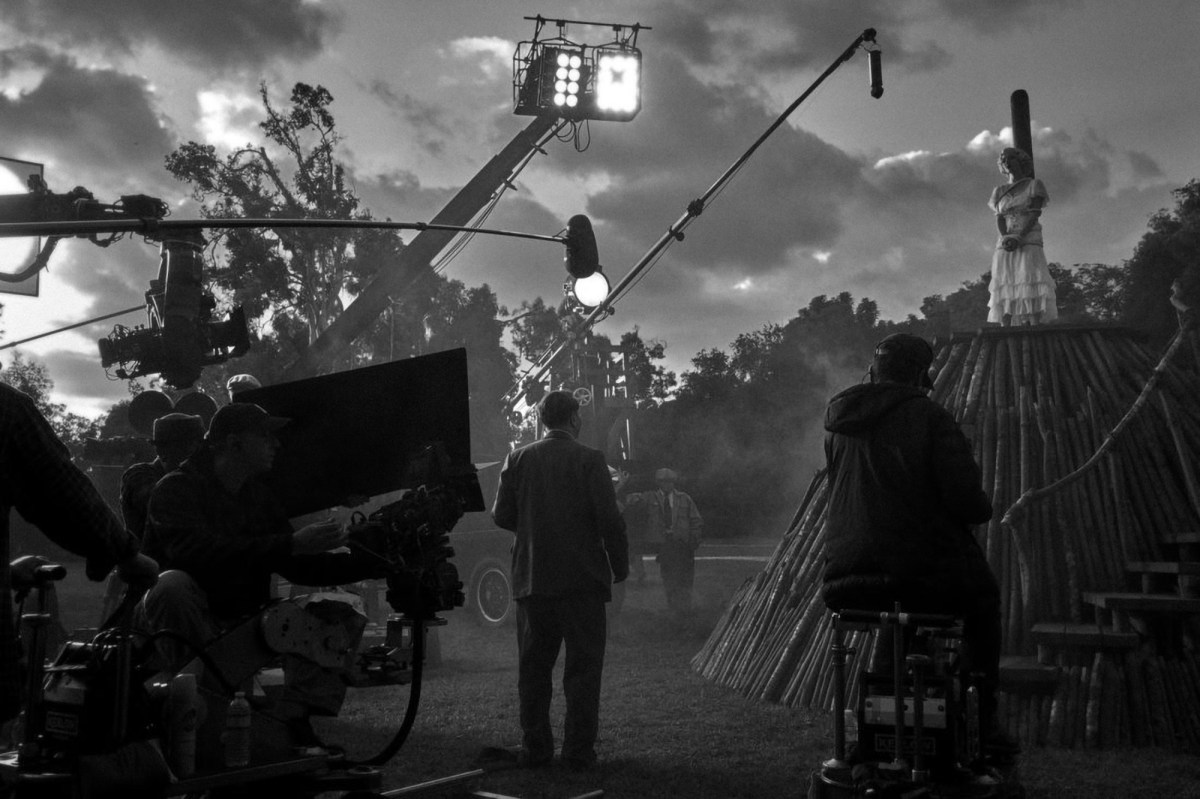
Erik Messerschmidt, ASC (foreground) on the set with (background, from left) boom operator Michael Primmer, B-dolly grip Mike Mull and A-camera 2nd assistant Gary Bevans. (Photo by key makeup artist Gigi Williams, courtesy of Netflix.)

Subscribe to American Cinematographer

Cinematography of ‘Mank’. How Erik Messerschmidt ASC Used a Variable Depth of Field

Focus pull in combination with Cinefade.

Cinefade VariND
February 5, 2021

Mank (2020) was beautifully shot by Erik Messerschmidt ASC in black and white, with scattered visual references to Citizen Kane (1941) – often cited as the best film ever made. The original cinematographer for Citizen Kane, Gregg Toland was incredibly influential, according to Messerschmidt. One of the most revolutionary things about Citizen Kane was Gregg Toland’s use of deep focus and Mank pays homage to this signature technique and introduces a novel storytelling tool – the Cinefade variable depth of field effect.

Oliver from Cinefade caught up with Erik to discuss his use of the VariND on Mank and his thought process behind some of the Cinefade scenes that feature a variable depth of field.

“There’s been a loss of using focus as a storytelling tool these days. You are always sharp on whoever is talking in modern cinema and I liked the idea of taking bespoke moments in the film and isolating characters with a variable depth of field. David [Fincher] had asked for a way to do this and it became a huge part of the film. I love the product, it’s great.”

Read the full profile

LA Story

Ron Prince
January 2021
Cinematography World

Earning your stripes as a cinematographer can be hard enough. But the prospect of shooting your first movie with a Golden Globe, Primetime Emmy and BAFTA Award-winning director, about one of the greatest films of all time, starring some of the best actors working today, and capturing it all in HDR B&W, would seem perfectly daunting.

“Yes, it was quite intimidating, but it was also unbelievably exciting,” admits DP Erik Messerschmidt ASC, as he recalls the invitation from David Fincher to capture the filmmaker’s next movie – the biographical drama Mank.

Mank takes place in Hollywood during the 1930s and early 1940s. It follows screenwriter Herman J Mankiewicz, played by Gary Oldman, and the process he undertook for Orson Welles to develop the screenplay for what would become Citizen Kane (1941, dir. Orson Welles, DP Gregg Toland ASC). Nominated in nine categories at the 1942 Academy Awards, Citizen Kane won the Oscar for Best Original Screenplay, shared by Welles and Mankiewicz.

The film, based on a screenplay by the director’s late father Jack Fincher, alternates between time periods, echoing the non-linear narrative of Citizen Kane, and revealing the trials and tribulations in Hollywood that inspired some of the characters and situations seen in the movie. These include Mankiewicz’s friendship with starlet Marion Davies, played by Amanda Seyfried, his association with newspaper tycoon William Randolph Hearst, played by Charles Dance, and his turbulent professional relationship with Welles, played by Tom Burke.

Shot entirely at 8K in High Dynamic Range monochrome, Mank also features allusions to Toland’s innovative cinematography, as well as classic day-for-night production techniques, and tips its hat to classic moments in the original film.

Mank had a limited theatrical release in November 2020, before streaming on Netflix in December. It received overwhelmingly positive reviews, with particular praise given to the direction, cinematography, production design, soundtrack and the performances, and is expected to feature strongly during the 2021 award season.

Fincher’s directorial credits include Se7en (1995, DP Dariusz Khondji AFC ASC), Fight Club (1999, DP Jeff Cronenweth ASC), Zodiac (2007, DP Harris Savides ASC) and The Social Network (2010, DP Jeff Cronenweth ASC). Messerschmidt, who came into cinematography from being a gaffer, had previously lit Gone Girl (2014, DP Jeff Cronenweth) for Fincher, after which he immediately made the leap into cinematography as the lead DP on the first two season of Netflix’s Mindhunter, directed mainly by Fincher.

“I first met David on Gone Girl and got along great with him during the shoot,” says Messerschmidt. “I ended up lighting some promotional stills for that film which David shot himself. It was our first opportunity to work together creatively one-on-one. It went really well, and we stayed in touch. Both he and Cean Chaffin, his producer, knew that I had ambitions to become a DP. So, when Mindhunter came along, they offered me the opportunity to shoot it. We have been working together ever since, and I was thrilled to be asked to shoot Mank.”

Read the full profile and Issue #001 for FREE (exclusive for this issue only)

Artist Spotlight: Mank Cinematographer Erik Messerschmidt’s Black and White World

Edward Douglas
February 5, 2021
Below the Line

Whenever David Fincher releases a new film, it’s a joy for cinephiles and filmmakers alike to see how the Oscar-nominated filmmaker has stretched the boundaries of filmmaking. His latest Netflix film Mank is no exception.

For the film shot all in black and white, Fincher teamed with his Mindhunter Cinematographer Erik Messerschmidt, and people have been quite awed by his camera and lighting work being that it’s his first film credited as a Cinematographer. That’s only part of the story – we’ll let him tell the rest – but the young DP has paid his dues by rising up the ranks through the electrical side of things.

Either way, the results are amazing as Fincher works from a script written by his late father, Jack Fincher, to tell the presumably fictionalized story of Herman Mankiewicz (Gary Oldman), the well-regarded Hollywood screenwriter whose many relationships during the ‘30s, led to the initial script that would eventually become Orson Welles’ Citizen Kane. Fincher’s film explores the way Mank viewed the relationship between mogul William Randolph Hearst (Charles Dance) and his girlfriend and ingenue Marion Davies (Amanda Seyfried) and molded that into Kane, all while battling his demons in a bottle with the help of his helper Rita (Lily Collins).

Below the Line got on Zoom with Mr. Messerschmidt a few weeks back to talk to him about what went into making such a gorgeous black and white film that stands next to Welles’ great cinematic masterpiece.

Read the full interview

How ‘Mank’ and ‘Soul’ Sound Designer Returned to Old Hollywood and Then Visited the Afterlife

For his two most recent films, Ren Klyce re-created how a 1940s movie would have sounded and then imagined the aural feel of life before birth and after death.

Carolyn Giardina
February 5, 2021
The Hollywood Reporter

Seven-time Oscar-nominated sound pro Ren Klyce, who was born in Japan and moved to Northern California at a young age with his parents, traveled all the way from 1940s Hollywood to an ethereal afterlife in the course of his work as supervising sound editor and rerecording mixer on his two most recent films, Netflix‘s Mank and Pixar‘s Soul. (He’s also credited as sound designer on Soul.)

Klyce has been friends with Mank director David Fincher since they were teenagers and has worked on all of Fincher’s features. The two met working on the George Lucas-produced Twice Upon a Time and, remembers Klyce: “We kind of clung to each other because we were the youngest people on the crew. David was doing visual effects. I was an art assistant back then.”

For the director’s latest effort, about the origins of 1941’s Citizen Kane, Klyce says, “David wanted to have the look and sound of something that was made in the early ’40s.”

Read the full profile

Mank: Behind the Sound

Glen Kiser, Director of the Dolby Institute
February 4, 2021
Netflix Film Club (YouTube) / Netflix Awards FYC

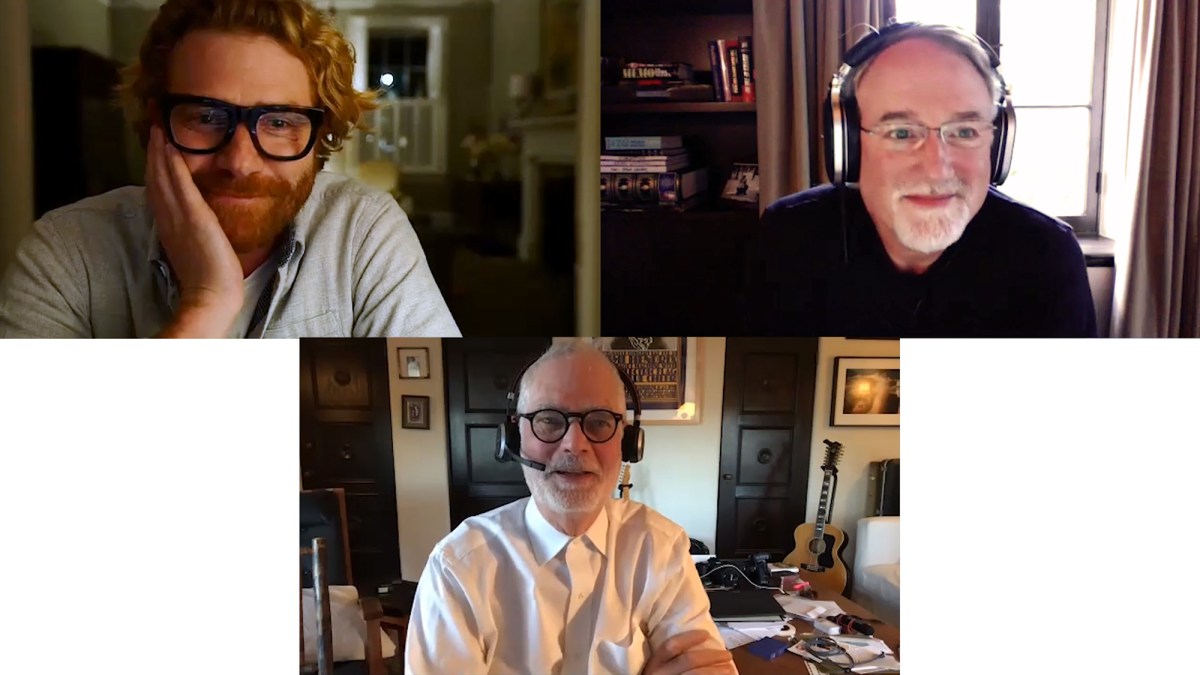
A conversation with Sound Designer Ren Klyce, Production Sound Mixer Drew Kunin, Supervising Sound Editor Jeremy Molod, Re-Recording Mixer Nathan Nance on behalf of MANK. Moderated by Glenn Kiser.

‘Mank’ makeup department head Gigi Williams on David Fincher: ‘He hates red!’

Riley Chow
February 5, 2021
Gold Derby

“He just doesn’t like red,” reveals “Mank” makeup department head Gigi Williams about her director David Fincher. It is a curious sticking point for a black-and-white film and Williams admits in her exclusive interview with Gold Derby that she is unsure of the origins. She continues, “It’s like a bull with red, so even on this, I had to find reds that weren’t going to be too distracting for him while we’re on the set, even though he’s watching most of it through a monitor, which is black and white.” Williams notes that purple-leaning reds are especially egregious, whereas “he can handle” orange-leaning varieties. She laughs, “He just hates red. I mean, you go on the set and you go, ‘Oh, there’s a red thermos over there on the set. He’s not going to like that’ and you have to move it.”

Read the full article

‘Mank’ Production Designer Donald Graham Burt On Recreating 1930s Hollywood, Hearst Castle

Clarence Moye
February 5, 2021
Awards Daily

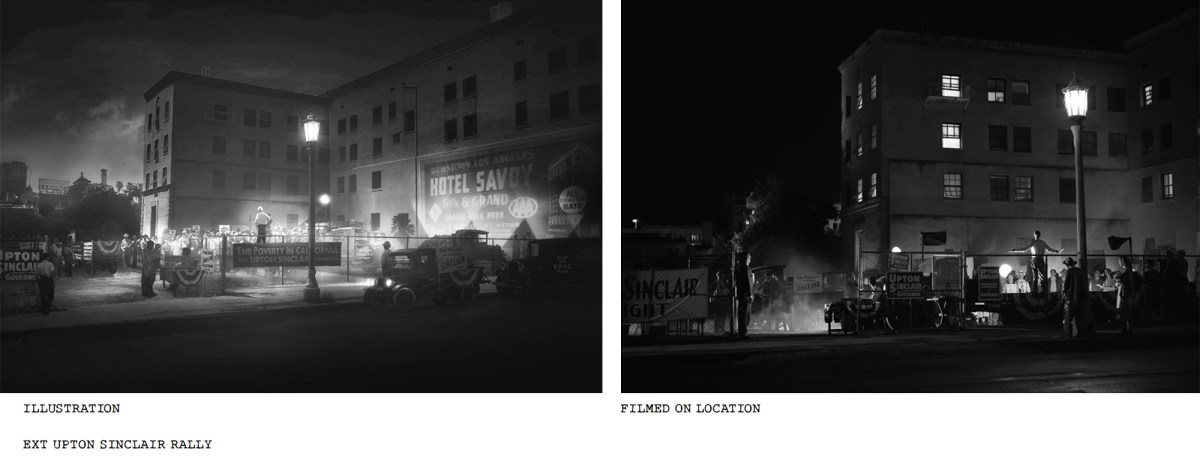
David Fincher set Mank in a world spanning 1930s and 1940s Hollywood. To tell the story of the events and relationships that led to the creation of the great Citizen Kane, Mank looks and feels as if it were made during that same period – a rare feat of technical and crafts wizardry. To re-establish this world, VFX can only get one so far (more on that another time), so Fincher and his production designer Donald Graham Burt needed to recall classic Hollywood structures as well as find a way to recreate the period experience of William Randolph Hearst’s castle located in San Simeon.

And you have to do all of that on an approximate $25 million budget.

“It’s a challenge, and that’s probably the thing that, if anything kept me up at night, then that probably did,” Burt laughed. “In the same token, if you really look at the movie and break it down, it is pretty simple. I’m sort of a minimalist at heart. If you just take it and say let’s keep it simple but let’s build complexity within that simplicity, then it serves you so well in terms of dealing with a tight budget.”

Read the full profile

Costume Designing “Mank” and “The Prom”

Insights from Trish Summerville and Lou Eyrich into their work, including collaborating with directors David Fincher and Ryan Murphy, respectively.

Robert Goldrich
February 5, 2021
Shoot

Trish Summerville has thus far been nominated for five Costume Designers Guild Awards in her career–two of the honors coming for David Fincher films, The Girl with the Dragon Tattoo in 2012 and Gone Girl in 2015. Summerville won for The Girl with the Dragon Tattoo, and again two years later for The Hunger Games: Catching Fire. Her other two Costume Designers Guild nods came for Westworld (TV) in 2017 and Red Sparrow in 2019. Westworld also earned Summerville a primetime Emmy nomination in 2017.

Now for this awards season, Summerville reunites with Fincher on Mank (Netflix) which centers on screenwriter Herman J. Mankiewicz (portrayed by Gary Oldman) as he races to finish director Orson Welles’ Citizen Kane on a tight timetable, secluded in a bungalow in a desert town miles removed from Los Angeles as he recuperates from a car accident in 1940. Attending to him are his secretary Rita (Lily Collins) and his German nurse (Monika Grossmann).

In the process, through Mankiewicz’s worldview–marked by his abiding social conscience and wit, at times caustic–we are introduced to not only Hollywood but life in the 1930s, ranging from the struggle of the rank and file during the Great Depression to the grandeur of Hearst Castle and high society. We also become privy to Mankiewicz’s own inner struggles with alcoholism, as well as a professional battle with Welles (played by Tom Burke) over screen credit for what became the classic Citizen Kane. The Mank cast also includes Charles Dance (as William Randolph Hearst), Amanda Seyfried (as Marion Davies, Hearst’s wife), Tuppence Middleton (as Sara Mankiewicz, Herman’s wife), Arliss Howard (as Louis B. Mayer), Sam Troughton (as John Houseman), Tom Pelphrey (as Joe Mankiewicz, Herman’s brother), Toby Leonard Moore (as David O. Selznick) and Ferdinand Kinsley (as Irving Thalberg).

Summerville jumped at the opportunity to again team with Fincher, deeming him “one of my favorite people in the world and also to work with. He has a hilarious sense of humor that a lot of people don’t get at times.” On Mank she collaborated closely with Fincher, cinematographer Erik Messerschmidt, ASC and production designer Donald Graham Burt on the overall tone, look, feel and coloring. “The reason David has collaborators who want to work with him is that he himself is a collaborator,” observed Summerville. “He gives you a lot of room. It’s not ‘my way or the highway.’ He always wants you to show him more stuff, what else do you have. He’s open to ideas. There’s a lot of trust and dialogue.”

Read the full profile