
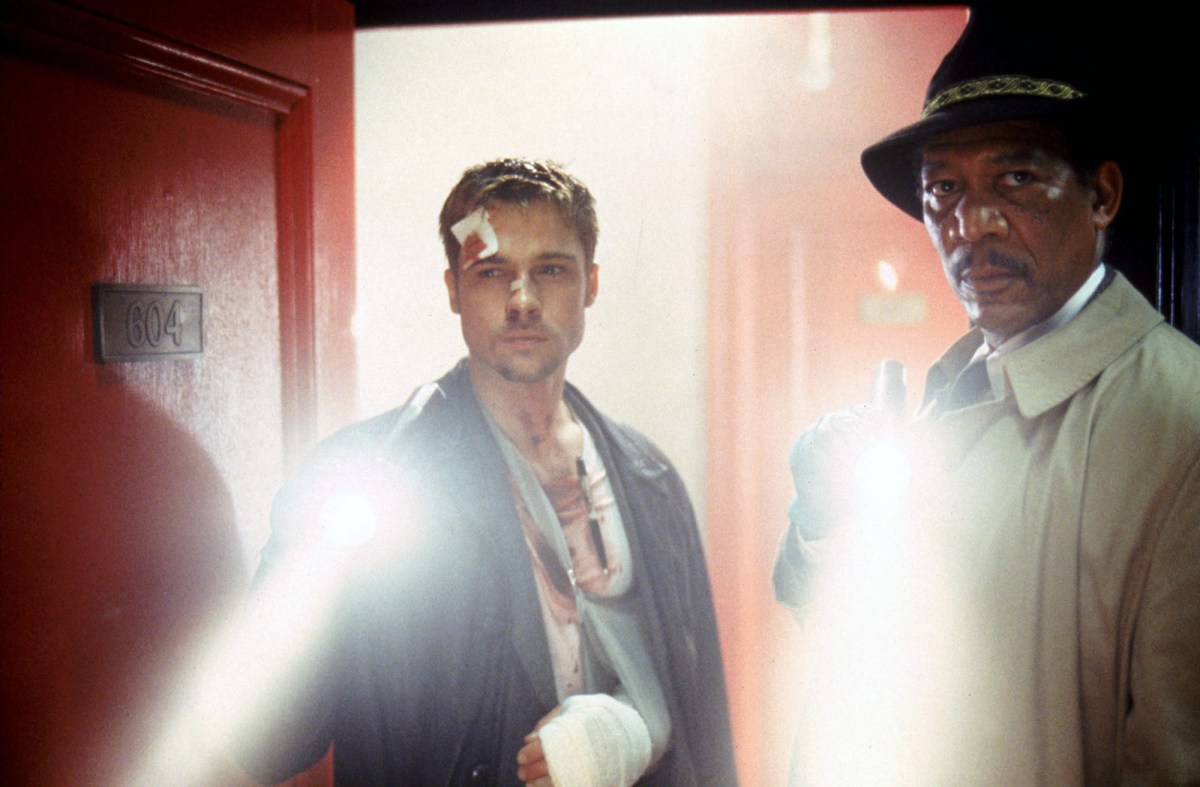
David Fincher’s gritty thriller commented on the urban blight and religious conservatism of the Reagan era. But it also predicted our obsession with true crime today.
Tom Joudrey
November 17, 2025
BBC
Thirty years after its release, David Fincher‘s Seven is now celebrated as the zenith of neo-noir crime thrillers. It raked in a whopping $327m (£250m) at the box office on a $34m (£26m) budget and earned raves from most critics when it came out in 1995. Still, the persistent argument against the film is that it relies too heavily on shock-and-awe gruesomeness to distract from its paper-thin ideas and shopworn crime tropes. A Washington Post critic lambasted Seven for disguising “formulaic writing” with gratuitous “bloodletting”, while a New York Times reviewer lamented that “not even bags of body parts… keep it from being dull”.
Three decades on, however, it’s clear that some critics missed a different layer to the film – namely, how it interpreted the US’s social crises of the 1980s. There was a worldwide recession at the start of the decade, and this coincided with high urban crime rates, a crack cocaine epidemic and the spread of Aids. The US’s new president, Ronald Reagan, responded to these issues with talk of being “tough on crime”, and his high-profile supporters included various influential Christian figures – leaders of what was known as the Christian right or the religious right – who preached the importance of traditional family values.
All of this fed into Seven. On one level, the film is an exquisitely well-made thriller about a psychopathic serial killer, but beneath its noir-style veneer lies a fascinating take on the way the US responded to some of its most divisive social issues.
 The Fincher Analyst