
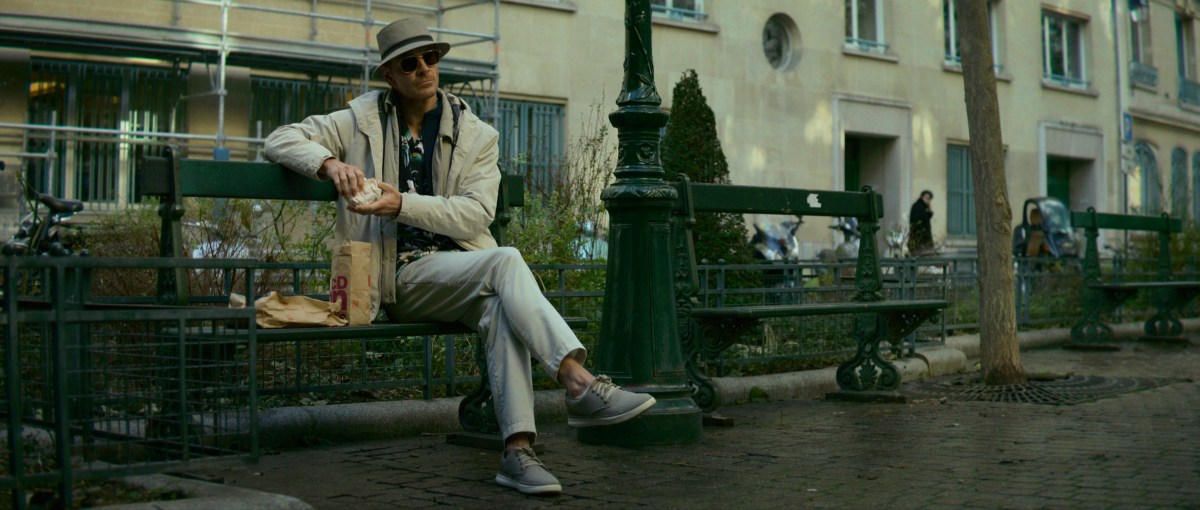
With his latest thriller, Fincher further develops his practice of digitally molding the real world in his own image.
Vadim Rizov
February 8, 2024
downtime
In chapter one of The Killer (2023), Michael Fassbender sits in a Paris WeWork office, rented as the base of operations for his nameless hitman’s latest job. While waiting for the target, pigeons fly past, their wings loudly breaking his forced concentration. The odds they entered the frame at a serendipitous moment are low, and there’s no reason to pay for a bird wrangler given the advanced state of CG. Once you see them, they’re impossible to unsee as they follow Fassbender’s character from city to city, segment to segment. It’s clear that they must be a digitally created motif, a fresh reminder of David Fincher’s unwillingness to let the real world preclude his very precise vision.
Initial responses to The Killer included many variants on “minor Fincher,” which raises an obvious question: what’s the perceptible gap between a major and minor David Fincher film? Surely it’s not a question of craft; second for second, Fincher’s films have to be in the top 0.5% of technically-worked-over products. Control, famously, is his thing, to the extent that even The Killer’s seemingly handheld shots were, in fact, static shots made shaky to a exact degree in post. “Minor,” then, refers to the ostensible worthiness of the material: why all this effort to so little end, i.e., the umpteenth variant on “hitman cleans up after a job gone wrong”? When you’ve begun your directing career coming up with compelling images for lower-tier Rick Springfield singles everything after is, presumably, a breeze to elevate. Still, that doesn’t answer the “why bother” question.
 The Fincher Analyst