
Clarence Moye
December 18, 2023
AwardsDaily
Cinematographer Erik Messerschmidt began his acclaimed collaboration with iconic director David Fincher as a gaffer on Fincher’s 2014 thriller Gone Girl. That initial introduction led to Messerschmidt lensing 16 episodes of the acclaimed Netflix crime drama Mindhunter for which he received a Primetime Emmy Award nomination. That close collaborative relationship with Fincher then morphed into Messerschmidt’s breakout moment as a celebrated cinematographer, his Oscar-winning lensing of Fincher’s 2020 Mank. His black-and-white cinematography not only echoed Gregg Toland’s Oscar-nominated work on Citizen Kane, but it also fully immersed viewers in 1940s cinema, a goal for the film that Messerschmidt shared with other Mank artisans.
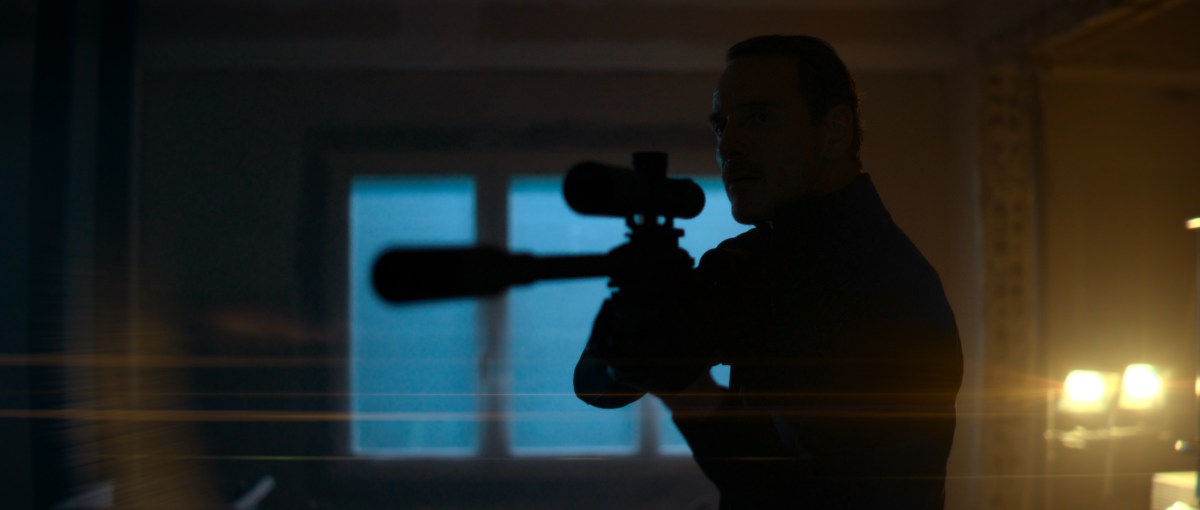
Now, Messerschmidt again collaborates with Fincher on an entirely different project, Netflix’s The Killer. The film thrusts both artists into a modern day world of a hired assassin (Michael Fassbender) as he botches a hit job and travels across the world to seek retribution. Traditionally, when approaching a project of this caliber, Messerschmidt would prep a “lookbook,” a collection of photographs intended to outline visual references for multiple aspects of the filmmaking craft.
But with The Killer, Fincher and Messerschmidt approached things differently.
“In the past when I’ve worked with [Fincher], I have sent him lookbooks, we’ll have references, or we’ll start with paintings or photography or other movies. We didn’t do that on this movie. We talked about pacing and timing and scene structure and point of view,” Messerschmidt shared. “The aesthetics of the look of the movie ended up being born through the process of exploration and scouting and location selection. Even though the movie is stylistic, it all comes from a place of realism, and that was always the intent.”
To follow The Killer on his world-wide journey, Fincher segments the film into chapters. Not only does this structure echo the graphic novel roots of the story (the film is based on the French comic by Alexis “Matz” Nolent and Luc Jacamon), but it also sets the tone within the larger world of its edgy, pulp fiction ancestors. Given that structure, Messerschmidt faced unique lensing challenges as The Killer moves from chapter to chapter.
 The Fincher Analyst