
Todd Vaziri, VFX Compositing Supervisor at Industrial Light & Magic
October 16, 2024
FXRant
A filmmaker friend reached out to me with a question about one of our shared favorite movies of all time, so I did what I sometimes do – I went totally overboard to find a satisfying answer and then wrote a long-winded article about it.
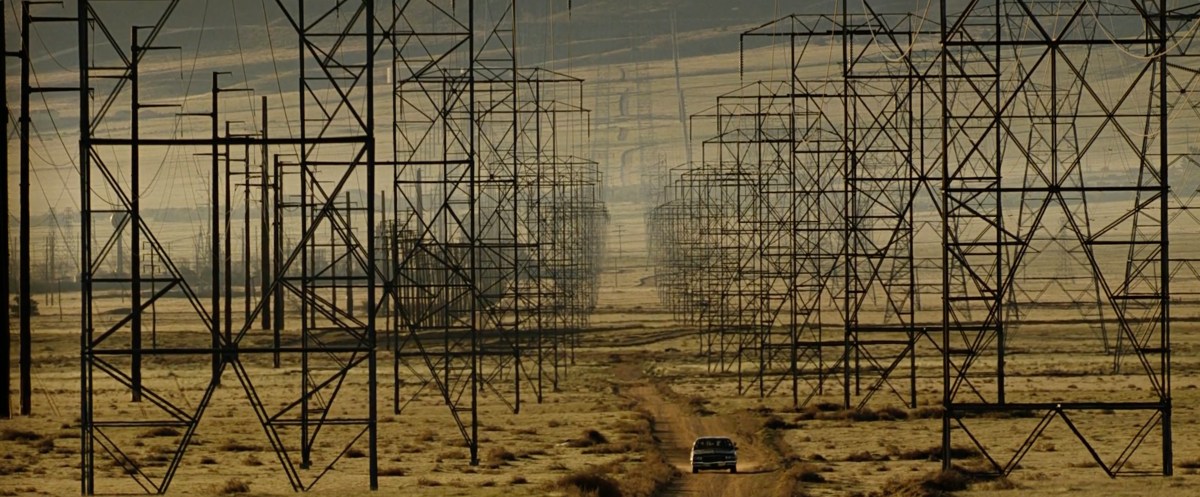
Near the end of David Fincher‘s 1995 masterpiece Seven, John Doe takes Somerset and Mills to the middle of nowhere to reveal his final surprise. They drive to a desolate area surrounded by high-tension power lines and towers. A combination of long lenses and wide lenses were used to alternate between images of long-lens compression of the space, and scattered wider lenses to illustrate the desolation of the environment.
Then comes this gorgeous shot. A simple, slow tilt down of the car racing down the road, filmed with a long lens. It’s breathtaking because it looks other-worldly, and some of that is due to the visual “compression” that happens to a scene filmed with a telephoto lens: objects that are far apart from each other “compress” in depth to look like they’re actually existing very close together in real-world space. Filmmakers make lens choices to give a scene a deliberate, artistic feel. It’s one of the many tools in a filmmaker’s toolbox.
 The Fincher Analyst