
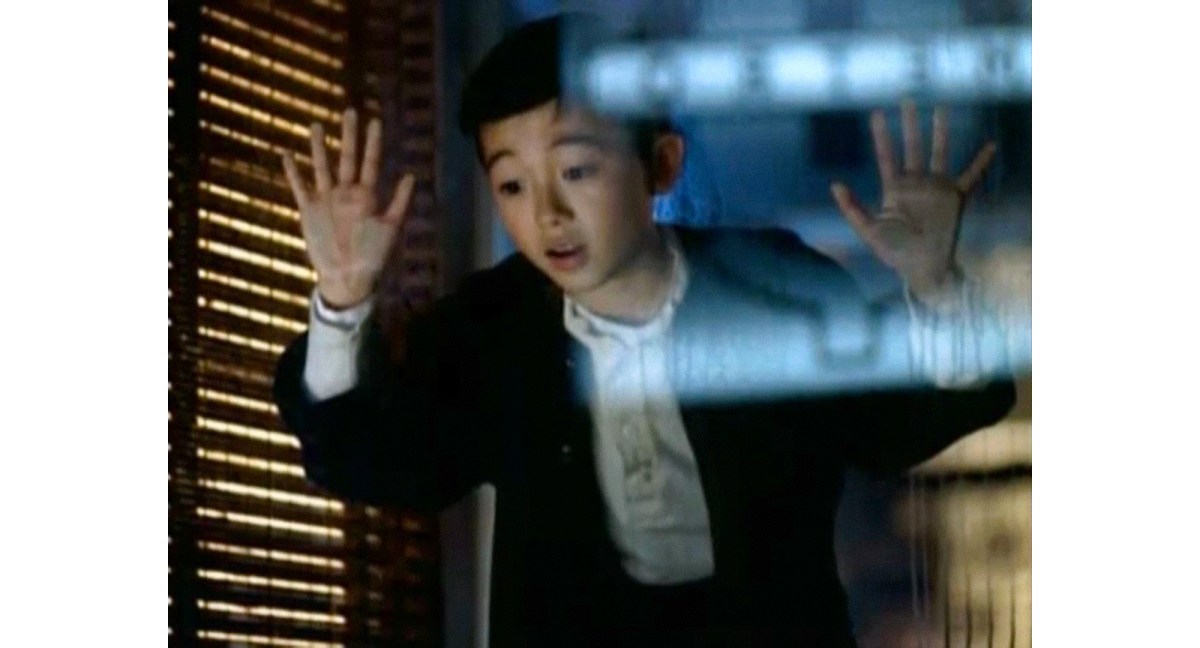
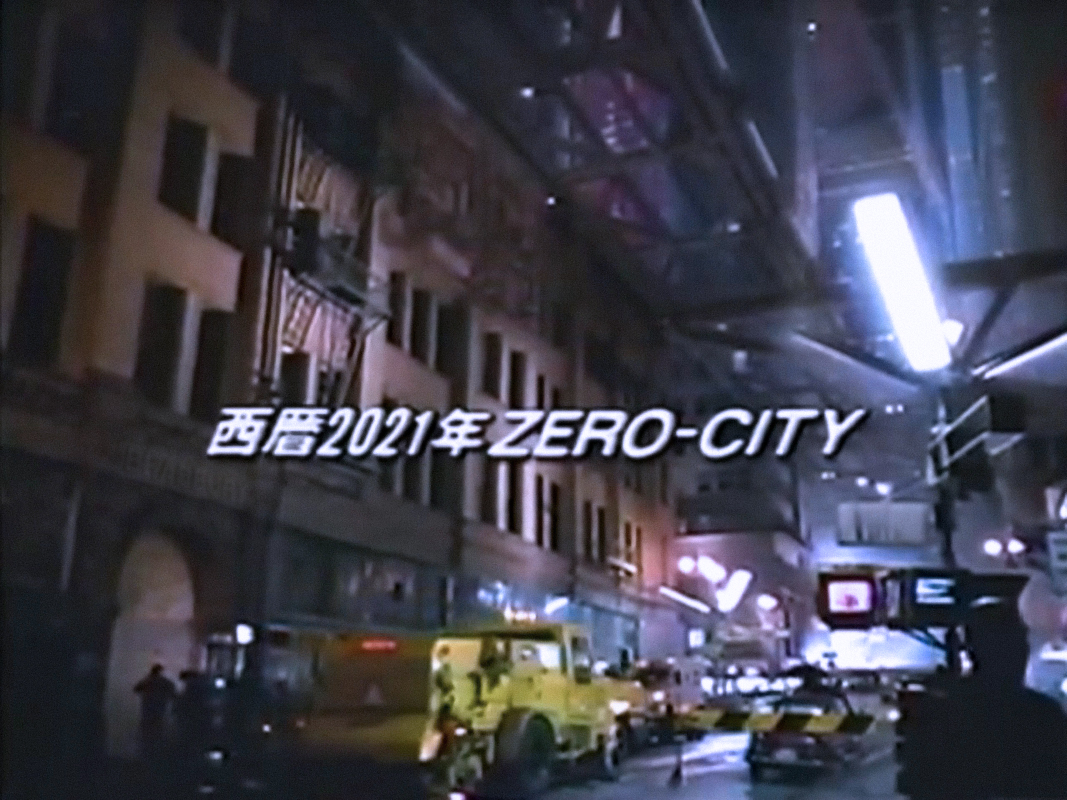
In 2021 AD, the futuristic megalopolis of ZERO-CITY is under martial law. When the authorities try to enforce a curfew, a gang of renegade “Blade Rollers” defy it, rollerblading daredevil-style through the deserted rain-slicked streets and raiding a locked vending machine for an icy cold supply of Coca-Cola, which they quaff on the go. Akira, a young boy, watches the scene from the windows of an apartment and calls for their attention while his mother tries to stop him. One of the rollerbladers tosses an empty Coke bottle to him. He proudly catches it and gazes at it as a symbol of the taste of freedom while the Blade Rollers disappear into the night.
For this stylistic homage to Blade Runner (Ridley Scott, 1982), director David Fincher recruited the cinematographer of the classic film, Jordan Cronenweth, ASC, one of his all-time heroes. Future Fincher’s Director of Photography, Jeff Cronenweth, was his father’s assistant.
It was also the first collaboration between Fincher and Producer Ceán Chaffin.
End title card 1
End title card 2
Japanese version 1
Japanese version 2
Japanese version, 30”
Credits
| Company | The Coca-Cola Company |
| Advertising Agency | McCann-Erickson Hakuhodo (Tokyo, Japan) |
| Creative Directors | Douglas (Doug) Biro, M. Aoki |
| Director | David Fincher |
| Director of Photography | Jordan Cronenweth, ASC |
| Production Company | Propaganda Films |
| Producer | Ceán Chaffin |
| Production Design | Jeffrey (Jeff) Beecroft |
| Costumes and Armor | StudioADI (Amalgamated Dynamics, Inc.) |
| Stunt Coordinator | Charles Picherini Jr. |
| Editor | James (Jim) Haygood |
| Visual Effects | Sean Naughton |
| Music and Sound | Ren Klyce |
Cast
| Akira (boy) | Norihito Ohno |
| Blade Roller | Hidenori Inaba |
Technical Specifications
| Runtime | 60 s, 30 s |
| Aspect Ratio | 1.33:1 |
| Acquisition | Film |
| Color | Color |
| Film Negative Format | 35 mm |
| Cinematographic Process | Spherical |
| Delivery | Video Tape |
| Sound Mix | Stereo |
Production Details
| Country | Japan |
| Language | English |
| Principal Photography | 7 nights |
| December 1992 | |
| Budget | $2,300,000 |
| Release Date | 1993 |
Filming Locations
Los Angeles, California
259 West 3rd Street, by the Bradbury Building
304 South Broadway
Downtown Los Angeles, CA 90013

Film References
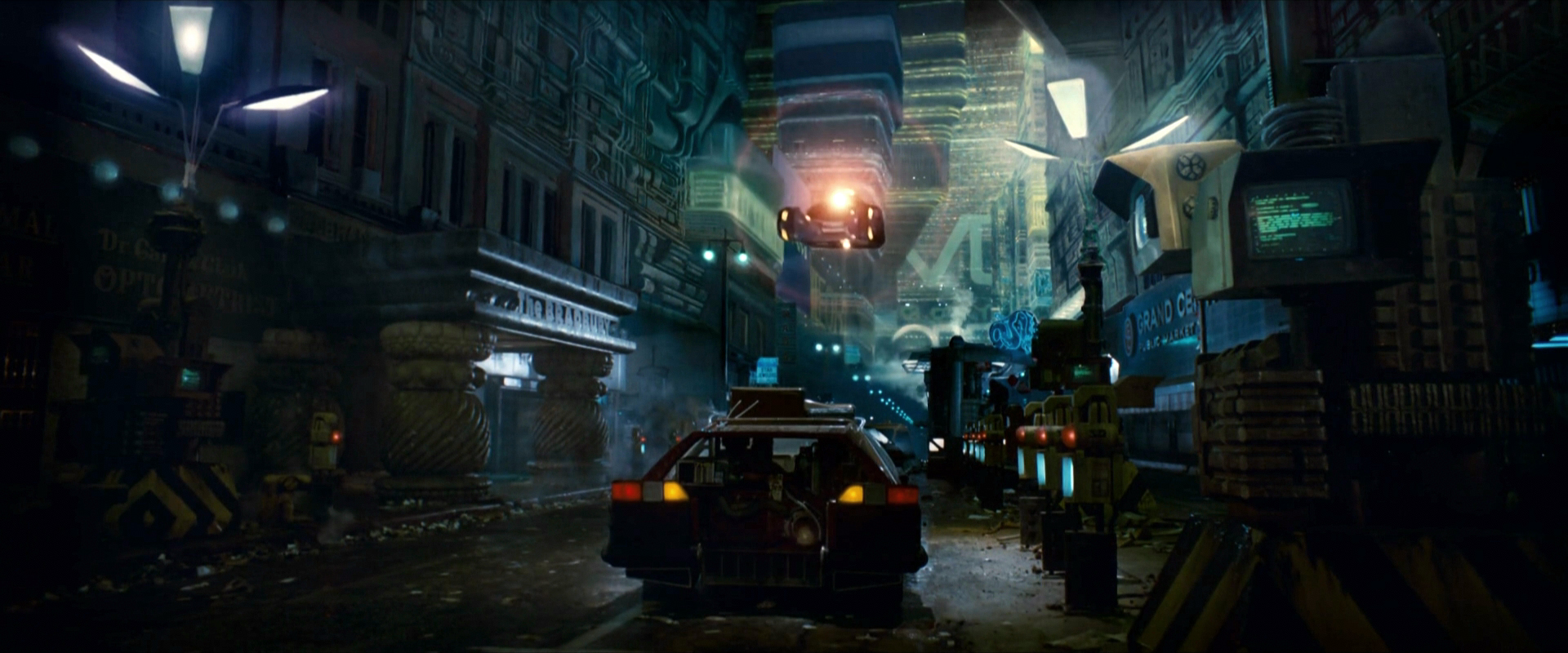
Blade Runner (Ridley Scott, 1982)
Blade Runner features iconic scenes filmed at the Bradbury Building (1893). The shots of the street and the façade, with the extended entrance, are composites of a studio set and matte paintings. But the scenes in the atrium, with its marble floors, rod iron staircases, elevators, and the big glass skylight ceiling, leading to J. F. Sebastian’s apartment and Deckard’s final showdown with Batty on the rooftops, were filmed in the actual building. The Bradbury also appears in another Fincher favorite: Chinatown (Roman Polanski, 1974).
Awards
Winner of the 1993 inaugural AICP Awards for Production Design, Cinematography, and Editorial, and thus preserved in the archives of the Department of Film at the Museum of Modern Art (MoMA) in New York City.
Notes
Part of “Always Coca-Cola” 1993 big international commercial campaign of numerous spots, some of them directed by famous film and TV directors, displaying different styles and aimed at a variety of target groups.
Mr. Fincher’s Neighborhood
James Kaminsky
November 1, 1993
Advertising Age (17)
It was, recalls Creative Director Doug Biro, a difficult shoot, given the acrobatic stunts required and the seven successive nights of rain and cold that pelted the crew. Shooting in a desolate section of downtown L.A., the agency team and Fincher worked despite the weather, using the rain to add to the stark mood of the piece. A problem arose with the final shot, where a lone skater tosses his bottle to the kid.
It’s the emotional payoff of the whole commercial, and they almost didn’t get it. A fifty-foot, backlit prop sign, which was supposed to be in the background of this shot, providing an eerie neon-like effect, had blown down the night before.
Fincher and his crew were reduced to cruising the streets of Hollywood in a camera car with a skater, in costume, fastened on the hood, trying to find the right spot to shoot it. Almost out of time, Fincher finally got the shot needed with an improvised lighting arrangement while at his final setup. “And this from a guy who doesn’t like to improvise,” Biro says. “He came up with the solution at the eleventh hour.”
Génération Propaganda
Benoît Marchisio
Playlist Society, 2017
[TRANSLATED FROM FRENCH]
[Fincher] is best when he summons his own references. Doug Biro, creative director for Tokyo-based Coca-Cola and Levi’s, is given a simple assignment by the soda brand: for their next campaign, they want the best. “And the best is Fincher,” he decides. Biro pitches the commercial to the director, who is excited about the idea of filming young people on rollerblades, very fashionable in 1992, the year it is being shot. But Fincher is thinking big. “We had a $1.3 million budget, and Fincher wanted one more. It was huge, for the time. It was during a dinner that he convinced the top brass at Coca-Cola Japan to sign the check. He knew how to pitch!”
“This commercial is Fincher’s homage to Blade Runner. It was clearly David’s intention to do this,” says Biro. “Everyone who worked on this spot, seven freezing nights in the middle of December, from the set designer to the cinematographer, had all worked on Ridley Scott’s film. The technical team even built neon light sources to replicate the intense but almost bleak light of the film.” The client is delighted with the final product: “Coca-Cola wanted exactly this kind of spot, with a very simple story and a very strong aesthetic impact”, says Biro. “It was all about making stories with a very clear high concept“, confirms Stephen Dickstein; “when you added the Propaganda aesthetic, it was a jackpot.” “They revolutionized the way advertising was done,” Biro concludes. “They changed the look of commercials. They really did. All of a sudden, the lighting became important, the angles too, the cinematography imposed itself, it was sexy, daring, very stylized, very powerful… No one was going to do classic commercials there. And they worked for Nike, Pepsi, Coke, brands for young people, a demographic they understood.”
Alec Gillis (studioADI)
September 14, 2019
Instagram
After Alien3, we worked with David Fincher on a few commercials like this Coke commercial for Japan. Fincher used spots like this to experiment and grow as a director, and this is his tribute to Blade Runner. studioADI designed and created the costumes of the Rollerbladers (Rollerbladerunners?) with us handing the body armor off to Chris Gilman’s Global Effects to use in the actual build of the body suits.
Fincher has a wonderfully acerbic sense of humor. When he looked at some of my helmet sketches, he said ‘I can’t have guys skating around with gravy boats on their heads.’ Anybody can give notes like ‘too bulky’ or ‘not elegant’ but to put it into a context of Granma’s dinnerware just says so much more.
Jeff Cronenweth, ASC on Tales from the Loop & How Story Drives the Visuals
(Outtake)
Derek Stettler
April 27, 2020
Art of the Shot
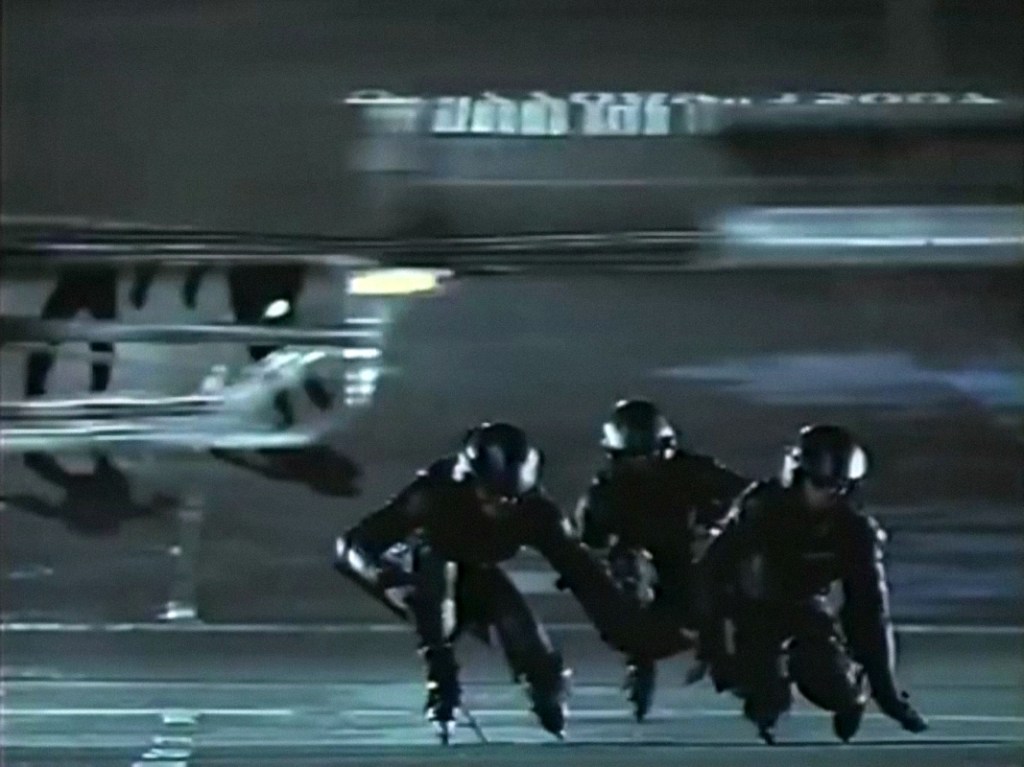
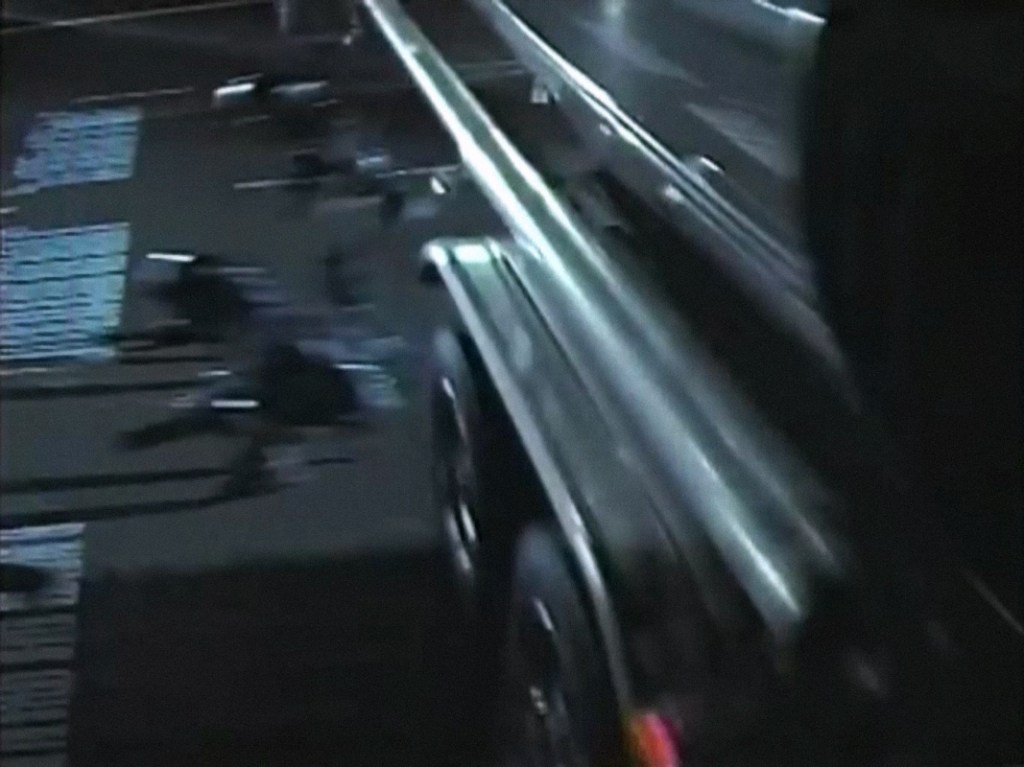
The rollerbladers passing under the truck isn’t a dangerous stunt. It’s a VFX composite shot achieved via double pass against green screen.
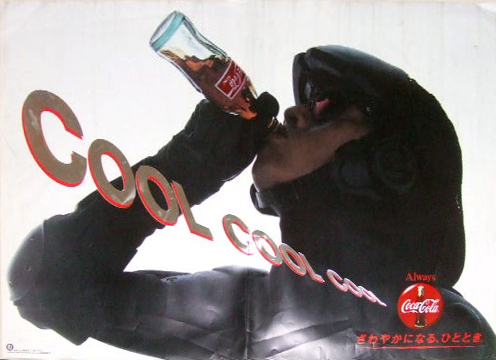
Print and Billboard Ad Campaign
 The Fincher Analyst